Table of Contents >> Show >> Hide
- 1. It may have been the first truly massive plague pandemic in recorded history
- 2. It likely traveled through trade routes, which turned prosperity into a delivery system for disaster
- 3. Constantinople was hit so hard that the city struggled to handle the dead
- 4. Scientists now have genetic evidence linking the pandemic to Yersinia pestis
- 5. It did not vanish after one outbreak. It kept coming back
- 6. The death toll is still debated, which is somehow scarier than certainty
- 7. It may have helped derail Justinian’s imperial ambitions
- 8. Contemporary witnesses described a world that felt socially unrecognizable
- 9. The plague’s reach stretched far beyond one city or one empire
- 10. Plague never fully disappeared from the human story
- Why the Justinian Plague still matters
- 500 More Words on the Experience of Confronting the Justinian Plague
- Conclusion
The Justinian Plague sounds like something pulled from a gloomy history documentary with dramatic music and too many shots of candlelit ruins. Unfortunately, it was real, it was devastating, and it helped remind the ancient world that disease can move faster than empires can think. Beginning in the sixth century during the reign of Byzantine emperor Justinian I, this outbreak became the first well-documented plague pandemic in history. It swept through cities, ports, farms, and trade networks with terrifying efficiency.
What makes the Justinian Plague especially unsettling is not just the body count, though that part is plenty horrifying. It is the way the pandemic exposed every weak point in society: crowded cities, fragile food systems, limited medicine, political ambition, and the very human habit of assuming tomorrow will probably look like today. Spoiler: it did not.
Below are 10 scary facts about the Justinian Plague that show why this ancient pandemic still fascinates historians, scientists, and anyone who has ever read one sentence about plague ships and immediately needed better lighting in the room.
1. It may have been the first truly massive plague pandemic in recorded history
The Justinian Plague is widely considered the opening act of what scholars call the First Plague Pandemic. The outbreak began in 541 CE and is named after Emperor Justinian I, who ruled the Byzantine Empire at the time. It was not a short, one-season disaster that came and went like a bad flu year. It was the beginning of a much longer cycle of recurrence that haunted parts of the Mediterranean and surrounding regions for generations.
That alone is scary. Ancient people were not dealing with one bad year. They were dealing with the possibility that plague could return just when they thought life was stabilizing again. It is hard to rebuild confidence when the apocalypse keeps showing up uninvited.
2. It likely traveled through trade routes, which turned prosperity into a delivery system for disaster
The Byzantine world depended heavily on long-distance trade, especially grain shipments from Egypt. That was excellent for feeding a large capital city like Constantinople. It was less excellent when the same trade networks may have helped infected rodents and fleas move disease across the empire.
One of the most disturbing facts about the Justinianic Plague is how ordinary the mechanism of spread may have looked at first. Ships arrived. Goods moved. Markets stayed busy. People did what they always did. Then the disease followed the same commercial routes that normally carried wealth, food, and imperial power. In other words, the infrastructure that made the empire strong may also have made it vulnerable.
Why this still feels modern
Plague did not need fantasy-level evil to spread. It just needed mobility, density, and a connected world. That is what makes the Justinian Plague feel uncomfortably familiar even now.
3. Constantinople was hit so hard that the city struggled to handle the dead
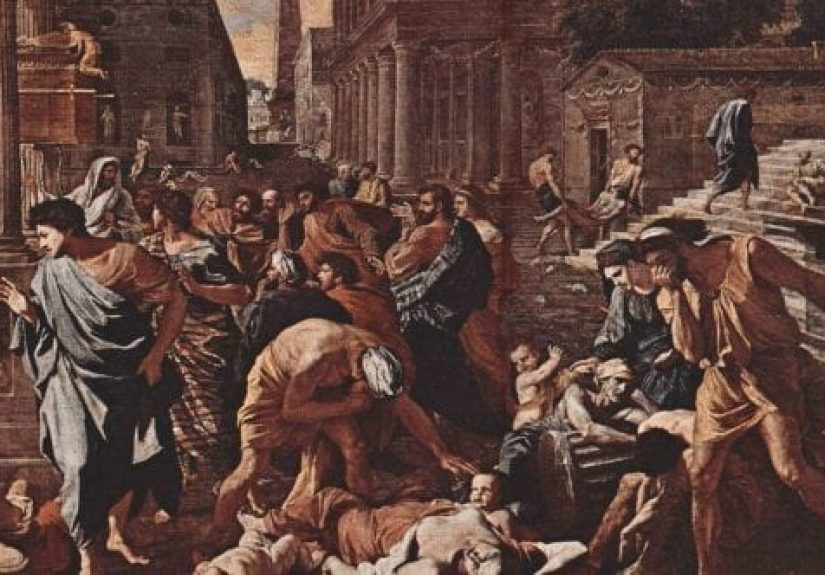
When the plague reached Constantinople in 542 CE, the Byzantine capital faced a crisis on a scale that overwhelmed normal city life. Contemporary writers described a terrifying rise in deaths, and later retellings often cite shocking daily tolls. Even if exact numbers remain debated, the broad picture is clear: mortality surged so dramatically that burial and disposal systems could not keep up.
This is one of the creepiest recurring themes in plague history. Civilization likes routines. Disease likes breaking them. Once the number of deaths outruns the city’s ability to manage bodies, the catastrophe becomes visible everywhere. Homes, streets, labor, sanitation, religion, and government all start buckling at once.
4. Scientists now have genetic evidence linking the pandemic to Yersinia pestis
For years, historians argued over what exactly caused the Justinian Plague. Was it truly bubonic plague? Was it some other disease? Ancient descriptions can be dramatic, confusing, and medically frustrating. But modern science has changed the conversation. Ancient DNA research has identified Yersinia pestis, the bacterium that causes plague, in human remains associated with the First Pandemic.
That means this is not just a story stitched together from frightened chroniclers. We now have biological evidence tying the Justinian Plague to the same bacterial species responsible for later plague catastrophes, including the Black Death. Somehow that makes it even scarier. The villain has a name now, and it has been bothering humanity for a very long time.
Why the DNA evidence matters
It confirms that the Justinian Plague was not merely a literary legend inflated over the centuries. It was a real infectious event with a real pathogen, which pushes the story out of the realm of myth and firmly into the realm of microbiology with a side of imperial panic.
5. It did not vanish after one outbreak. It kept coming back
If the first wave were the whole story, the Justinian Plague would already be grim enough. But it did not stop there. Historians generally place the First Pandemic from roughly 541 to 750 CE, with repeated outbreaks over about two centuries. Think about what that means for daily life. Entire generations grew up knowing plague was not just a past event. It was a recurring threat.
That kind of repetition is psychologically brutal. A single disaster shocks a society. A disaster that keeps returning reshapes it. Families make different choices. Trade changes. labor shortages worsen. Military plans become less stable. Religious interpretations intensify. Fear becomes a long-term roommate.
6. The death toll is still debated, which is somehow scarier than certainty
Some traditional estimates put the total number of deaths in the tens of millions, with older popular accounts reaching astonishingly high figures. More recent scholarship has questioned whether the pandemic was quite as demographically catastrophic everywhere as once believed. In other words, historians are still arguing about just how destructive it was.
Normally, debate sounds reassuring. Here, it is not. The frightening part is that the Justinian Plague was large enough to leave a huge historical footprint, yet ancient records are uneven enough that we still cannot pin everything down neatly. Whether the total toll was lower than older estimates or as massive as earlier historians claimed, it was unquestionably severe. And that uncertainty reminds us how hard it is to measure human disaster in a fragmented historical record.
So yes, the numbers are debated. The suffering is not.
7. It may have helped derail Justinian’s imperial ambitions
Emperor Justinian I was trying to restore Roman greatness. He pursued wars, legal reforms, grand building programs, and ambitious statecraft. Then plague arrived like history’s least helpful policy adviser. Scholars debate exactly how much the pandemic changed the empire’s trajectory, but many agree it likely worsened existing pressures by shrinking the workforce, cutting tax revenue, straining food supply, and complicating military logistics.
This is one of the biggest scary facts about the Justinian Plague: disease does not merely kill individuals. It can interrupt the momentum of entire states. Empires depend on bodies to farm, haul, build, fight, govern, and pay taxes. A pathogen does not need to overthrow a government to alter history. It only needs to make normal functioning painfully difficult.
8. Contemporary witnesses described a world that felt socially unrecognizable
Some of the most haunting details come from writers who lived through the pandemic, including Procopius, John of Ephesus, and Evagrius Scholasticus. Their accounts differ in tone and detail, but together they paint a picture of fear, confusion, and social breakdown. People watched friends vanish, neighborhoods empty, and normal assumptions collapse.
One reason the Justinian Plague remains so haunting is that it was experienced not as an abstract historical event but as a daily reality. People did not know about bacteria, vectors, or epidemiology. They saw sudden illness, swelling, death, and recurring waves of loss. Imagine trying to explain a pandemic when you do not have germ theory, microscopes, antibiotics, or even a reliable sense of why one house is hit and another is spared. That is horror with paperwork.
9. The plague’s reach stretched far beyond one city or one empire
The Justinianic Plague did not politely stay in one place. Evidence from texts, archaeology, and ancient DNA suggests the disease spread across large parts of the Mediterranean world and into regions of Europe, North Africa, the Near East, and beyond. Research on skeletal remains has also strengthened the case that plague circulated more widely in western Europe than older textbooks sometimes implied.
This matters because it shows how connected the late antique world really was. Even without airplanes, refrigerated logistics, or modern highways, disease could still move across continents with unsettling speed. Human networks were already powerful enough to globalize danger.
The map is part of the nightmare
A localized epidemic is awful. A networked epidemic is civilization-level stress. The Justinian Plague belongs to the second category.
10. Plague never fully disappeared from the human story
Perhaps the most chilling fact of all is that the organism behind the Justinian Plague is not a ghost from a sealed-off past. Plague still exists today. Modern cases are rare compared with historic pandemics, and antibiotics make a huge difference when treatment is prompt, but the disease has never been completely erased from nature. It survives in animal reservoirs and can still infect humans under the wrong conditions.
That does not mean we are reliving the sixth century. Far from it. Modern public health, diagnostics, and antibiotics dramatically change the picture. But it does mean the Justinian Plague is not just a museum piece. It is part of the long biography of a pathogen that humanity has been meeting, fearing, studying, and treating for centuries.
Why the Justinian Plague still matters
The Justinian Plague matters because it sits at the crossroads of history, disease, politics, religion, trade, and memory. It reminds us that pandemics are never just medical events. They are stress tests for entire societies. They reveal who depends on whom, which systems are brittle, and how quickly confidence can dissolve when the ordinary machinery of life jams all at once.
It also matters because the story is still evolving. New genetic studies, archaeological work, and historical reanalysis keep refining what we know. The Justinian Plague is not a closed chapter. It is an active field of research, which means one of the oldest pandemic stories on record is still teaching us new tricks. Honestly, that is both exciting and mildly unnerving.
500 More Words on the Experience of Confronting the Justinian Plague
Reading about the Justinian Plague today is a strange experience because it feels both incredibly distant and weirdly personal. On one hand, it belongs to a world of emperors, grain fleets, walled cities, and chroniclers writing in a universe without modern medicine. On the other hand, the emotional architecture of the crisis feels very recognizable. Fear spreads faster than certainty. Rumors race ahead of evidence. People try to interpret what is happening using whatever explanations their culture can provide. Leaders attempt control. Ordinary families just want to survive the week.
The experience of studying the Justinian Plague is also unsettling because the evidence comes in fragments. You do not get a perfect spreadsheet of suffering. You get voices, clues, bones, genomes, burial patterns, and debates. One source sounds apocalyptic. Another urges caution. A scientific paper confirms the pathogen. A historian questions the scale. Instead of making the story feel weaker, those gaps make it feel more human. Real disaster is often messy, partial, and difficult to measure while it is unfolding or even centuries later.
There is also something eerie about realizing how normal life probably looked right before everything changed. Merchants were unloading cargo. Officials were issuing orders. Bakers were baking. Sailors were docking ships. Parents were worrying about ordinary household problems, not knowing they were standing near the edge of a demographic cliff. That is part of what gives the Justinianic Plague its lasting power. Catastrophe rarely arrives with a villain speech and thunder in the background. Sometimes it arrives in the middle of commerce, routine, and administrative confidence.
Another powerful experience tied to this topic is the feeling of scale. The Justinian Plague was not just a medical event affecting isolated victims. It was an empire-wide strain that likely touched labor, taxation, military campaigns, urban management, and religious imagination. When modern readers encounter that, they are forced to think bigger. Disease is not only about symptoms. It is also about supply chains, leadership, communication, public behavior, and social trust. That broader lens is one reason this old pandemic still feels intellectually alive.
Finally, there is the deeply human experience of humility. The Justinian Plague reminds us that even sophisticated societies can be blindsided. The Byzantine Empire was organized, wealthy, and connected. It had law, bureaucracy, trade, and ambition. Yet none of that made it invulnerable. Studying this pandemic can leave a reader with a quieter, more reflective mood. History stops feeling like a parade of dates and starts feeling like a record of fragile people doing their best in conditions they did not choose. That may be the most haunting experience of all: realizing that the people living through the Justinian Plague were not ancient abstractions. They were ordinary humans caught in an extraordinary wave of fear, loss, and uncertainty.
Conclusion
The Justinian Plague remains one of history’s most unsettling pandemics because it combines all the ingredients of a true nightmare: a deadly bacterium, a highly connected world, repeated waves of infection, overwhelmed cities, and an empire already balancing ambition with fragility. Whether you focus on ancient DNA, trade routes, eyewitness accounts, or the ongoing debate over its total death toll, one thing is clear: this was no minor historical footnote. It was a terrifying turning point that still shapes how we think about plague, pandemics, and the vulnerability of complex societies.
If history has a horror section, the Justinian Plague definitely earns its own shelf.