



Table of Contents >> Show >> Hide
- Why Sidewalks Turn Into Ice Rinks
- The Big Idea: Prevent Bonding, Not Just Slipping
- Step 1: Fix the “Always Icy” Spots Before Winter Hits
- Step 2: Shovel Like You Mean It (Timing Beats Muscles)
- Step 3: Anti-Icing (Pre-Treat) So Ice Never Gets a Grip
- Step 4: Choose the Right Ice Melt for the Temperature
- Step 5: Apply Deicer the Smart Way (Yes, You Can Use Too Much)
- Step 6: When It’s Too Cold to MeltSwitch to Traction
- Step 7: Protect Concrete, Pavers, and Landscaping
- Step 8: Pet-Safe Sidewalk Ice Prevention
- Quick Sidewalk Ice Prevention Checklist
- FAQ: Sidewalk Ice Prevention Questions People Actually Ask
- Conclusion
- Real-World Experiences and Lessons Learned (500+ Words)
Sidewalk ice is basically winter’s way of saying, “Remember gravity? Surprise!” One minute you’re carrying a coffee,
the next you’re auditioning for a slapstick film on a sheet of invisible glass. The good news: preventing icy sidewalks
isn’t rocket scienceit’s more like good timing, the right materials, and a tiny bit of strategy (plus a dash of humility
toward weather forecasts).
This guide walks you through sidewalk ice prevention from the ground up: why sidewalks ice over, how to
stop ice before it starts, what to use when it’s brutally cold, and how to avoid turning your concrete, landscaping,
and pet’s paws into collateral damage. Let’s keep your walkway safe, grippy, and less… dramatic.
Why Sidewalks Turn Into Ice Rinks
Ice forms on sidewalks for a few predictable reasons. If you know the “why,” you can fix the “oh no.”
- Snow compacts into ice: Foot traffic presses snow into a dense layer that’s harder to remove and easier to refreeze.
- Freeze–thaw cycles: Daytime melting + nighttime freezing = a glossy coat of trouble.
- Shade and “cold sinks”: North-facing walks, shaded areas, and spots between buildings stay colder longer.
- Drainage problems: Downspouts, melting piles, and low spots send water across the walkwaythen it freezes.
- Slush left behind: That thin slushy layer is basically ice in training.
The Big Idea: Prevent Bonding, Not Just Slipping
Here’s the mindset shift that changes everything: the goal isn’t “melt a thick sheet of ice later.” The goal is
“stop snow and water from bonding to the sidewalk in the first place.” That means:
- Get snow off early (before it packs down).
- Pre-treat when it makes sense (anti-icing).
- Use the right deicer for the temperature (salt isn’t magic below certain temps).
- Use less than you think (more isn’t betterit’s just saltier).
Step 1: Fix the “Always Icy” Spots Before Winter Hits
If the same patch freezes every year, it’s not cursed. It’s physics and plumbing.
Redirect water away from the sidewalk
- Extend downspouts so runoff doesn’t cross your path.
- Regrade or add a small channel so meltwater drains away instead of pooling.
- Don’t pile shoveled snow where it melts and runs back across the walkway.
Improve traction in high-risk zones
- Add outdoor stair treads or anti-slip strips on steps and steep slopes.
- Consider rubber mats designed for winter traction (great near doors).
- Keep a small bucket of sand/traction grit by entrances for fast spot-treatment.
Step 2: Shovel Like You Mean It (Timing Beats Muscles)
The most underrated ice-prevention tool is not a fancy deicerit’s your shovel showing up on time.
The earlier you clear snow, the less it compacts, the less it melts into slush, and the less it refreezes into a
stubborn ice layer.
Shovel early and often
- During storms, do multiple quick passes instead of one heroic (and exhausting) final dig-out.
- Clear to the full width of the walkway, especially near steps, ramps, and transitions.
- Scrape down to the pavement. Leaving a thin layer is basically “pre-ice.”
Prevent refreeze by clearing slush
Slush is water with ambition. If temperatures drop, it becomes ice fast. When you see slush:
shovel it off, squeegee it away, or push it to a draining area.
Step 3: Anti-Icing (Pre-Treat) So Ice Never Gets a Grip
Anti-icing is the “nonstick spray” approach: apply a thin layer of liquid treatment before snow/ice forms so
precipitation doesn’t bond to the sidewalk. This can make shoveling dramatically easier and reduce how much
product you need later.
Simple homeowner-friendly anti-icing options
- Brine (salt water): A common professional approach scaled down for sidewalks.
- Store-bought liquid deicer: Convenient, consistent, and easy to apply with a sprayer.
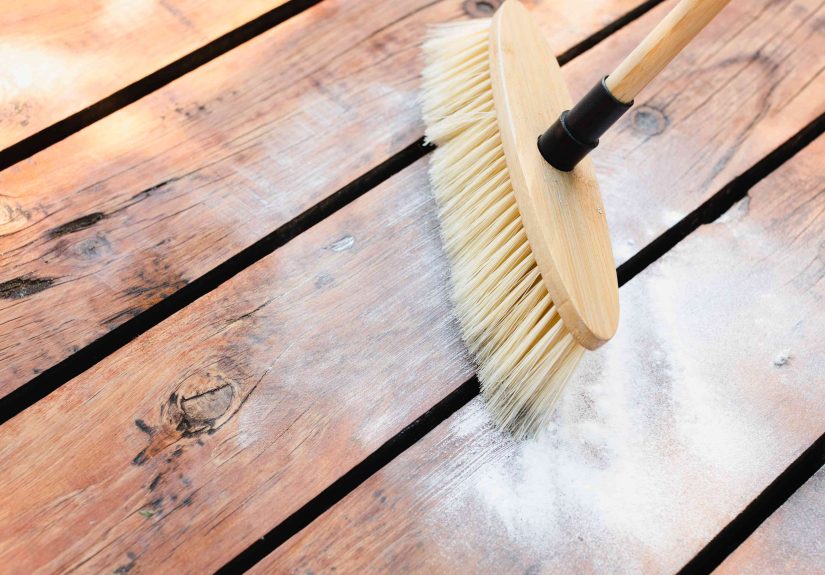
- Light granular pre-treat: A very thin, even dusting can help if applied right before icing conditions.
When to pre-treat
- Before light snow events
- Before frost/black ice conditions (common on clear, cold nights)
- Before daytime melt + nighttime freeze patterns
When NOT to pre-treat
- Before freezing rain (it can be ineffective or create slick conditions depending on timing and dilution)
- When heavy rain will wash it away
- When you can’t apply evenly (patchy application can create patchy traction)
A practical brine approach (without turning your garage into a chemistry lab)
Many winter maintenance programs use a brine concentration around 23% salt by weight because it freezes around 0°F,
making it useful for many winter conditions. For homeowners, the key is light, even coverage. You’re not
watering your lawnyou’re creating a thin prevention layer.
- Use a simple pump sprayer (masonry/yard sprayer) dedicated to brine.
- Apply a few hours before the event (or per product instructions).
- Keep some pavement baredon’t flood the surface.
Step 4: Choose the Right Ice Melt for the Temperature
The biggest reason people “salt and still slip” is using the wrong product for the temperature. Every deicer has a
practical limit. Below that, you’ll waste product, harm concrete/landscaping, and still have ice.
Common deicers (and what they’re good at)
-
Sodium chloride (rock salt): Affordable and common. Works best when it’s not extremely cold.
Great for many everyday storms, especially near the freezing point. -
Magnesium chloride: Often works at lower temps than rock salt and can act faster in some conditions.
Can be a good option for colder snaps. - Calcium chloride: Very effective in colder temperatures and tends to work fast. Often pricier but powerful.
- Potassium chloride: Less effective in colder weather; sometimes chosen when chloride concerns matter.
-
Calcium magnesium acetate (CMA) / acetates: Lower-chloride options often marketed as gentler on concrete,
but typically more expensive and performance varies by conditions.
Rule of thumb: match the product to the cold
If temperatures are hovering near 30°F, standard rock salt can work fine with good technique.
When temps plunge, upgrade to a product designed for colder weatheror skip melting and focus on traction.
Step 5: Apply Deicer the Smart Way (Yes, You Can Use Too Much)
Here’s the truth nobody wants to hear: that crunchy layer of salt underfoot doesn’t automatically mean “safe.”
It often means “overapplied.” Deicer works by forming brine; once the surface is treated and melting happens,
extra product just waits around to get tracked inside or washed into soil and storm drains.
How much should you use?
Aim for a thin, even scatteryou should still see pavement between grains. For many sidewalks, a surprisingly
small amount covers a large area. If you can see piles or lines, you’re probably overdoing it.
Pro application tips
- Shovel first. Deicer is not a substitute for snow removal; it’s a helper after you clear the surface.
- Target high-traffic zones. You don’t need to treat every square inchfocus on steps, slopes, and walk lines.
- Wait and watch. Give it time to work. Reapply only if necessary, and only after clearing meltwater/slush.
- Sweep up leftovers. If the surface dries and you still see product, sweep it and reuse it later.
Step 6: When It’s Too Cold to MeltSwitch to Traction
When it’s bitterly cold, melting becomes slow and inefficient. That’s when traction materials shine.
They don’t melt icethey help you walk on it safely.
Traction options
- Sand: Classic, inexpensive, effective traction.
- Fine gravel/grit: Great for grip, easy to spread.
- Non-clumping cat litter: Handy in a pinch for small areas.
Tip: store traction material dry. If it gets wet and freezes into a brick, it becomes a winter-themed paperweight.
If needed, mix a tiny amount of deicer into sand to prevent freezing and improve performance.
Step 7: Protect Concrete, Pavers, and Landscaping
Ice prevention shouldn’t come with a side of crumbling concrete and dead shrubs.
Many deicers can damage surfacesespecially with overuse, repeated freeze–thaw cycles, or on vulnerable materials.
Concrete-friendly habits
- Avoid heavy salting on new concrete (fresh pours are more vulnerable).
- Use the smallest effective amount; more salt can accelerate surface wear.
- Choose products thoughtfully for pavers, brick, or natural stone (some deicers are not recommended for these surfaces).
- In spring, rinse residue where practical and check joints and edges for wear.
Landscaping protection
- Keep treated areas narrow and targeteddon’t broadcast deicer into planting beds.
- Shovel snow away from garden edges when possible (to reduce salty meltwater soaking roots).
- Consider salt-tolerant plants near walkways if winter salting is unavoidable.
Step 8: Pet-Safe Sidewalk Ice Prevention
Pets and deicers are a tricky combo. Some ingredients can irritate paws, and ingestion can cause stomach upset or worse.
The safest approach is a blend of minimal chemical use, smart placement, and paw hygiene.
Practical pet-safe habits
- Use the least amount needed and focus on human walking lanes (not the entire yard perimeter).
- Wipe or rinse paws after walksespecially if your dog licks feet.
- Consider booties (yes, your dog may do “the dance,” but it works).
- Use traction materials (sand/grit) for super-cold days to reduce chemical reliance.
- Be skeptical of “pet safe” labelsstill use care and follow directions.
Quick Sidewalk Ice Prevention Checklist
- Before: Fix drainage, stock supplies, pre-treat for known frost/black ice nights.
- During: Shovel early and often; scrape down; keep slush from refreezing.
- After: Light, targeted deicer if needed; sweep leftovers; spot-treat refreeze zones.
- Extreme cold: Shift to traction instead of trying to “melt the impossible.”
FAQ: Sidewalk Ice Prevention Questions People Actually Ask
Should I salt before it snows?
Sometimesif you’re anti-icing with a thin, even pre-treatment (especially liquid brine) before light snow or frost.
But throwing down a heavy layer of granular salt too early can be wasteful or get kicked away before it helps.
If you’re unsure, focus on fast shoveling and then treat after clearing.
What about black ice?
Black ice is usually thin, transparent, and forms from refreeze. It loves shaded spots, bridges, and areas near downspouts.
The best prevention is drainage control and pre-treatment on nights with expected refreeze.
Is sand better than salt?
Sand is better for traction, not melting. In very cold weather, traction can be the safer and more practical choice.
The downside: you may need spring cleanup.
Conclusion
Preventing sidewalk ice is less about dumping more product and more about working the sequence:
remove snow early, stop bonding with anti-icing, use the right deicer for the temperature,
and switch to traction when it’s too cold to melt. Add a little drainage prep and a lot less over-salting, and your winter
walks can be boringin the best possible way.
Real-World Experiences and Lessons Learned (500+ Words)
Ask a group of homeowners (or anyone who’s ever been the unofficial “sidewalk captain” of their block), and you’ll hear
the same themes repeatedusually right after someone says, “I thought I didn’t need to shovel yet.”
Real-world winter maintenance is rarely about one perfect product. It’s about noticing patterns, acting early, and keeping
a few “save the day” tricks ready.
One common lesson: the first pass matters more than the final pass. People who shovel twice during a storm often use
far less ice melt than people who wait until the end. Why? Because light snow is easy to scrape clean, and clean pavement
doesn’t form that stubborn, compressed layer that turns into sidewalk armor. Folks who wait tend to end up “treating” an
ice sheet instead of preventing it. The result is more product, more mess, and more refreeze when meltwater spreads and
cools again.
Another recurring experience is the mystery of the one icy patchthe spot that stays slippery even when everything else is fine.
Almost always, it traces back to water: a downspout that dumps across the walkway, a sloped driveway that drains onto the
sidewalk, a snow pile placed in the wrong spot, or a shallow dip that collects meltwater like a tiny backyard skating pond.
Once people identify the “water source,” the fix often isn’t more saltit’s a $12 downspout extension, a small regrade, or
simply piling shoveled snow somewhere that won’t melt back onto the path.
Many winter veterans also swear by the “thin and even” rule. In practice, it looks like this: instead of dumping granules in a line,
they scatter lightly so pavement is still visible. The funny part is how counterintuitive it feels the first timeyou expect
a dramatic “salt carpet.” But the people who get the best results treat ice melt like seasoning. You want coverage, not clumps.
When applied evenly, it forms brine faster, spreads its melting effect, and reduces the chance of salty puddles that refreeze
into slick spots later.
There’s also the “tool by the door” habit. People who keep a small shovel, a stiff broom/scraper, and a little container of traction
grit right by the main exit can respond in 60 seconds when conditions change. That’s huge because ice prevention is a timing
game: clear slush before it freezes, spot-treat a shady step when temperatures drop, or throw down grit during a sudden cold snap.
If your supplies are buried in the shed behind the snowblower, you’ll “get to it later,” and later is when the ice shows up.
Pet owners often develop their own routine: short leashes on icy nights, booties for salt-heavy neighborhoods, and a quick
paw rinse at the door. A common story is someone buying a “pet-friendly” melt and still noticing paw irritationleading to the
realization that label claims don’t replace good habits. Most end up combining minimal chemical use with traction products and
cleanup (wiping paws), which tends to reduce both slipping and irritation.
Finally, experienced folks learn to accept an unpopular truth: “perfectly bare pavement” isn’t always realistic.
The safer goal is “predictable footing.” That might mean a scraped surface with grit on top during deep freezes, rather than chasing
melt that won’t happen. When you shift from perfection to prevention, you use fewer chemicals, protect your concrete and plants,
and still keep the walkway safewithout needing a personal relationship with your chiropractor.