Table of Contents >> Show >> Hide
- How Multi-Screen Life Became Normal
- Why You Keep Looking at Another Screen
- The Real Cost of Constant Screen Switching
- Why Companies Want You on Multiple Screens
- What America’s Multi-Screen Addiction Looks Like in Real Life
- How to Push Back Without Moving to a Cabin
- Experiences From a Nation of Screen-Jugglers
- Conclusion
Welcome to modern American life, where one screen is never invited to the party alone. The TV is on. The phone is glowing. The laptop is open “for work,” which somehow also means three tabs of email, a group chat, a shopping cart, a sports score, and a recipe you swear you’ll cook someday. Even downtime now arrives with backup dancers.
This is not just a bad habit or a personal failure of willpower. America’s multi-screen addiction is a full ecosystem. It is powered by smartphones in our pockets, streaming services in our living rooms, algorithm-driven feeds in our hands, and business models that reward constant engagement. The result is a culture where attention is no longer something you own outright. It is something companies compete to rent.
That competition is fierce. Americans are online all the time, and for many people, “all the time” is not a figure of speech anymore. The internet is no longer a place we visit. It is the wallpaper of daily life. We work on screens, relax on screens, socialize on screens, shop on screens, watch screens while using other screens, and then act surprised when our brains feel like browser windows with 47 tabs open and one mysterious song playing from nowhere.
How Multi-Screen Life Became Normal
The shift happened so gradually that it barely felt like a shift. First came the TV. Then the computer. Then the laptop made media portable, and the smartphone made attention permanently reachable. Add tablets, smartwatches, streaming boxes, connected TVs, wireless earbuds, and app notifications that behave like tiny digital woodpeckers, and you get a world designed for overlap.
In the United States, internet use and smartphone ownership are now mainstream to the point of invisibility. Streaming has also become a dominant part of home entertainment, which means media is no longer tied to a single living-room device or a single schedule. Your show follows you from television to phone to tablet, and so do the ads, the recommendations, and the prompts asking whether you’d also like to watch this, buy that, click here, react now, and definitely not leave.
That is the crucial point: multi-screen behavior did not explode simply because people became weaker. It expanded because technology became frictionless. Devices sync automatically. Videos resume instantly. Notifications jump across platforms. Social apps are built for quick return visits that somehow stretch into twenty-minute detours. The design is elegant. The effect is messy.
Why You Keep Looking at Another Screen
The brain likes novelty, and screens sell it wholesale
Every screen offers a slightly different reward. The TV gives you passive entertainment. The phone gives you social updates, breaking news, text messages, memes, short videos, and the irresistible possibility that something new has happened in the last 18 seconds. The laptop offers work, but also the chance to escape work in a more respectable-looking format.
When those rewards sit side by side, your brain learns to hunt for the most stimulating option in the moment. Maybe the show slows down, so you grab the phone. Maybe the email is boring, so you switch to a news tab. Maybe the news is depressing, so you open social media. Maybe social media is annoying, so you return to streaming. Congratulations: you are not relaxing. You are rotating.
The second screen is not a side habit anymore
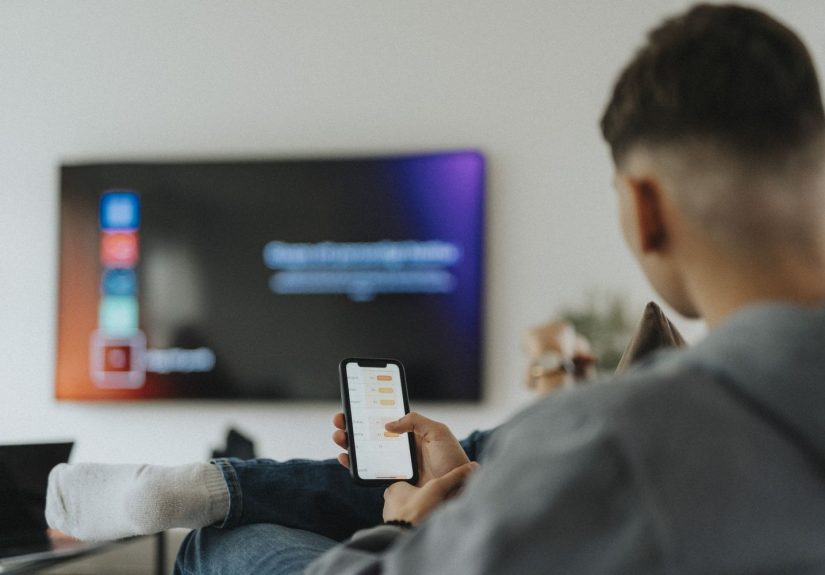
The old image of television assumed one focal point in the room. Today, that is often not how media works. Many viewers watch TV while also using digital devices, especially phones. In practical terms, that means entertainment no longer commands full attention by default. It shares the stage with messaging, shopping, scrolling, sports checking, online commentary, and what might generously be called “parallel living.”
That changes how Americans consume everything from sports and politics to reality TV and ads. A game becomes a game plus social media reactions plus betting apps plus text threads plus highlights on another platform. A drama becomes a drama plus Wikipedia plus cast gossip plus a search for “wait, where have I seen that actor before?” We are not just watching content. We are surrounding it.
The Real Cost of Constant Screen Switching
Attention gets chopped, not stretched
Many people still describe this behavior as multitasking, which sounds efficient and slightly heroic, like you are captaining a ship while filing taxes and sautéing onions. In reality, much of what we call multitasking is rapid task switching. And task switching comes with a cost.
Psychologists have long noted that when people shift between tasks, performance can drop because the mind has to reorient. That means the “quick check” of your phone during work or conversation is not always quick in mental terms. It leaves residue. Your body may still be present, but your attention needs a minute to walk back into the room, coffee in hand, muttering about how it was interrupted again.
This helps explain why multi-screen days can feel strangely exhausting even when they seem sedentary. You may not have lifted anything heavier than your phone, but your mind has been starting, stopping, scanning, comparing, reacting, and recovering for hours.
Sleep gets ambushed too
Multi-screen habits do not clock out at bedtime. Screens are often the last thing Americans see before sleep and the first thing they check after waking up. That is bad news because late-night device use can push the brain toward alertness instead of rest. Light exposure is part of the issue, but stimulation matters too. Even if the screen is dim, the content often is not. A late-night email, argument, or doomscroll spiral is not exactly a lullaby.
And then there is the night-check reflex. Many people wake up and look at their phones in the middle of the night, which turns a brief sleep interruption into a mini reentry into the digital world. One glance at the time becomes a glance at a message, then a headline, then a feed, then suddenly it is 2:13 a.m. and your brain is holding a town hall meeting.
Kids and teens are growing up inside the pattern
Young people are not merely exposed to screen culture. They are being socialized by it. That matters because digital habits formed early can shape sleep, school focus, mood, and social behavior. Teen screen use in the United States remains high, and health authorities have warned that the broader evidence on youth, social media, and mental well-being deserves serious attention rather than shrugs and clichés.
The challenge is not that screens are automatically evil. They can educate, connect, entertain, and help people find communities they might never access offline. The problem is dose, design, timing, and context. A video call with grandparents is not the same as compulsive scrolling at midnight. An educational tutorial is not the same as an endless feed optimized to keep a teen emotionally activated. “Screen time” sounds like one thing, but it contains many different experiences with very different effects.
Why Companies Want You on Multiple Screens
Here is the part that makes the whole story click: your scattered attention is not just a byproduct of technology. It is also an asset in the modern media economy.
Platforms and advertisers want to understand where you are, what you watch, what you click, how long you pause, what you buy, and what kind of content keeps you coming back. The more connected your devices are, the easier it becomes to map behavior across them. That is why marketing talk is full of phrases like cross-platform measurement, personalized targeting, customer journeys, omnichannel engagement, and other terms that all translate loosely to, “We would really like to follow your eyeballs everywhere.”
Design choices matter here. Auto-play, infinite scroll, streaks, push notifications, social rewards, algorithmic recommendations, and confusing opt-out flows are not random decorations. They are features that reduce stopping points. In some cases, regulators and researchers describe these manipulative design moves as dark patterns. In plain English, they are the digital equivalent of a casino removing clocks and then asking if you’d like another free drink.
The result is a system that nudges people to stay engaged longer than they intended. Not always. Not for everyone. But often enough that it shapes the culture. You think you are choosing content. Sometimes content is choosing you right back, then texting your other device to make sure you do not escape.
What America’s Multi-Screen Addiction Looks Like in Real Life
It looks like a family dinner where everyone means well, but someone keeps checking a buzzing phone under the table. It looks like a couple half-watching a series while each person scrolls something entirely unrelated. It looks like a worker trying to finish one report while eight pings arrive from email, chat, calendar reminders, and a friend sending a video titled “you have to watch this.” It looks like a teenager doing homework on a laptop while a phone delivers a steady drip of social pressure from the edge of the desk.
It also looks normal because it is normal. That is part of the trap. When everyone is divided, divided attention stops feeling like a problem and starts feeling like the baseline. We laugh about having no attention span while consuming media specifically engineered to erode it. We call ourselves distracted as if distraction were weather, not infrastructure.
Even leisure has been reshaped by the expectation of partial presence. Watch the game, but also post about it. Follow the debate, but also react in real time. Take the vacation, but also document it. Read the article, but also scan the comments. Nothing gets to be the only thing.
How to Push Back Without Moving to a Cabin
The goal is not to become a monk who owns one lamp and reads a paper atlas for fun. Screens are useful. They are necessary for work, school, health information, navigation, and connection. The smarter goal is to create boundaries that make your attention less available for casual theft.
Make one screen the boss
When you are watching something, try actually watching it. When you are working, make the work screen the primary one and exile the phone for blocks of time. Not forever. Just long enough to remember that your brain can still complete a thought without being interrupted by a sale alert for sneakers you never wanted.
Reduce triggers, not just time
Most people focus on screen time totals, but triggers matter more in daily life. Turn off nonessential notifications. Move tempting apps off the home screen. Use grayscale if color-rich icons keep pulling you in. Keep the phone out of reach during meals, study blocks, and conversations. Friction is your friend.
Protect the edges of the day
Mornings and nights are especially important. Starting the day with a flood of feeds can put your attention into reactive mode before breakfast. Ending the day with multiple screens can carry stimulation into sleep. A simple rule, like no phone in bed or no social apps for the first 30 minutes after waking, can do more than a dozen motivational quotes ever will.
Replace, do not just remove
The hardest part of reducing screen overload is the empty space it leaves behind. Fill that space with something real: a walk, a call with one person instead of ten group messages, music without scrolling, a printed book, cooking, exercise, or even boredom. Boredom is underrated. It is where original thought sneaks back in.
Experiences From a Nation of Screen-Jugglers
To understand this topic, it helps to look beyond studies and into the rhythms of ordinary life. Picture a commuter on a train in Chicago wearing earbuds, checking email on a phone, glancing at a smartwatch, and streaming a show on a tablet balanced on a backpack. Nothing about that scene feels dramatic anymore. It feels efficient, modern, maybe even productive. But it also captures the central tension of multi-screen life: even our in-between moments are now monetized, stimulated, and packed tight with content.
Think about a parent in the suburbs after dinner. The television is on for background noise. A laptop sits open on the kitchen counter because one last work task has to be handled. A child is on a tablet. Another person in the room is replying to texts. Everyone is technically home together, yet each person is partially elsewhere. No villain is needed for this scene. There is no dramatic collapse. Just a quiet thinning of shared attention.
Or consider the young professional who genuinely wants to focus. They start the morning with good intentions. Then comes a message notification, a calendar alert, a breaking-news banner, a coworker ping, a quick check of social media, and a video clip sent by a friend. By noon, the day feels busy, but not always meaningful. The strangest part is that this pattern can create guilt without satisfaction. People often feel both overstimulated and oddly underfed, like they consumed a buffet made entirely of appetizers.
Students know this experience too. Homework happens on a screen that also contains entertainment, gossip, games, shopping, and infinite opportunities for escape. The same device needed to finish an assignment is also a vending machine for distraction. That is a very different challenge from the old-school version of procrastination, where at least you had to physically get up and wander somewhere else.
Even relaxation has become layered. Many Americans no longer sit down to watch a movie with full attention. They half-watch. They browse cast trivia. They text reactions. They pause to check scores. They rewind because they missed a plot point while reading a comment thread about something unrelated. The body is on the couch, but the mind is doing laps.
What makes these experiences powerful is their familiarity. They are not rare edge cases. They are increasingly how life feels. That is why the issue deserves more than jokes about addiction or weak willpower. People are responding to an environment built to capture every spare second. Once you see that clearly, the problem stops looking like a personal glitch and starts looking like a national habit shaped by design, economics, and culture.
Conclusion
America’s multi-screen addiction is not just about too much technology. It is about what happens when every screen in your life competes for the same limited resource: your attention. The pull feels personal because it shows up in private moments, but the system behind it is industrial. Devices have become more portable, platforms more persuasive, and media more interconnected. Meanwhile, Americans have adapted by learning to split attention so often that fragmentation feels normal.
But normal is not the same as healthy. If your mind feels tired, jumpy, scattered, or constantly “on,” that may not be a character flaw. It may be the predictable result of living inside an attention economy that rewards interruption. The good news is that attention can still be protected. With a few deliberate boundaries, one screen can stop recruiting the other three, and your brain can finally get a chance to finish a sentence before another notification barges in wearing clown shoes.