Table of Contents >> Show >> Hide
- Why a squeegee works on so many messes
- 1) Clean up broken glass without sacrificing your vacuum
- 2) Pull stuck-on pet hair off carpet, rugs, couches, and car seats
- 3) Speed-dry showers, glass doors, and tile to prevent water spots and soap scum
- 4) “Sweep” dusty bathroom floors and baseboards (yes, even when dry)
- 5) Clean windows and glass like a pro (and cut drying time on cars)
- Choosing the right squeegee for each job
- Common squeegee mistakes (and how to avoid them)
- Conclusion
- Real-life experiences related to “5 Genius Ways to Use a Squeegee”
The squeegee is one of those humble tools that looks like it has exactly one job: dragging water off glass while making that
oddly satisfying shhht sound. But the secret superpower isn’t the handleit’s the blade. That strip of rubber (or silicone)
acts like a tiny, flexible bulldozer: it pushes, gathers, clumps, and lifts gunk in a way a broom, paper towel, or vacuum often can’t.
If you’ve got one in the shower, congratsyou already own a multi-surface cleanup machine. If you don’t, you’re about to understand why
pro cleaners treat squeegees like the “one weird tool” that actually lives up to the hype.
Why a squeegee works on so many messes
A good squeegee blade has just enough give to stay in contact with tiny surface dips, grout edges, and fabric texture. That means it can:
- Corral debris into a neat line instead of scattering it (hello, broken glass).
- Grab fibers like pet hair and lint that cling to upholstery and carpet.
- Remove moisture fast, cutting down water spots, soap scum, and that “why does my bathroom smell like a swamp?” vibe.
- Leave fewer streaks because it physically removes liquid instead of smearing it around.
Think of it like a snowplow, but for your homeminus the road salt and existential dread.
1) Clean up broken glass without sacrificing your vacuum
Broken glass is a two-part problem: the obvious shards you can see, and the tiny slivers that hide like they’re auditioning for a spy movie.
A broom can flick pieces into grout lines, and a vacuum can get damaged (or trap sharp bits in the hose and surprise you later).
A squeegee helps you gather shards into a controlled line so you can remove them safely.
How to do it (the “I enjoy having feet” method)
- Suit up: Put on shoes (not socks), and consider gloves if you’ll be handling anything sharp.
- Pick up the big pieces first: Use tongs, a thick folded paper towel, or a dustpan edge to lift large shards.
- Create a safe zone: Keep kids and pets out. Glass has a talent for traveling.
- Squeegee in slow passes: Hold the blade at a low angle and pull the glass into a straight line. Work from the outside toward the center.
- Lift the line: Use a damp paper towel to pick up the gathered slivers, then toss it in a sturdy bag.
- Finish the “invisible shard” sweep: Press a strip of packing tape (or a damp paper towel) on the area to grab micro pieces.
Where it works best
- Tile and sealed hard floors
- Hardwood (as long as you’re gentle and avoid grinding shards across the finish)
- Concrete and other smooth outdoor surfaces
Safety notes
If the glass landed on thick carpet, don’t drag shards through the fibers. Start with careful hand pickup, tape, and a thorough vacuum using
a hose attachment (and consider emptying the canister/bag afterward). When in doubt, prioritize your hands and your vacuum’s dignity.
2) Pull stuck-on pet hair off carpet, rugs, couches, and car seats
Pet hair has a PhD in clinging. It weaves into fabric, grabs onto upholstery like it pays rent, and laughs at “high suction” marketing claims.
A rubber or silicone blade changes the game by creating friction that clumps hair into rollable little tumbleweeds you can pick up fast.
Best surfaces for this trick
- Carpeted stairs: Tight corners and edges are where pet hair goes to retire.
- Area rugs: Especially low to medium pile.
- Upholstery: Couch cushions, fabric chairs, ottomans.
- Fabric car seats and mats: Great for sand + hair combos (the worst genre of confetti).
Step-by-step: make the fur surrender
- Lightly dampen the blade (optional but powerful): Wipe it with a slightly wet microfiber cloth. This helps hair clump instead of flying.
- Use short, firm strokes: Pull the squeegee toward you in small passes. You’ll see hair gather almost immediately.
- Wipe the blade often: Clean it with your damp cloth so you’re not just redistributing fuzz.
- Finish with a vacuum: After you’ve lifted the bulk, vacuum to remove the fine stuff and whatever crumbs your dog didn’t confess to.
Pro tip: keep a “pet-only” squeegee
Cross-contamination is real. A squeegee that just dragged up hair from carpet should not be the same one you use on your shower walls unless
you enjoy living dangerously.
3) Speed-dry showers, glass doors, and tile to prevent water spots and soap scum
Most shower grime isn’t “mystery dirt.” It’s minerals + soap residue + moisture that’s allowed to hang out long enough to become a problem.
Squeegeeing right after you shower removes the water that would otherwise dry into spots, feed mildew, and cement soap scum onto your glass.
A fast routine that takes less than a minute
- Start at the top: Work from top to bottom so drips don’t ruin your progress.
- Use overlapping passes: Each stroke should slightly overlap the last to avoid missed stripes.
- Wipe the blade every few strokes: A quick wipe with a microfiber cloth keeps it moving cleanly.
- Don’t forget “water hoarder” zones: Door tracks, corners, grout lines, and ledges.
Why this is genius (besides the sparkle)
- Less deep cleaning: You’re removing the raw ingredients of buildup before they bake on.
- Fewer harsh chemicals: Prevention means you don’t need to “nuke it from orbit” every weekend.
- Happier grout: Less lingering moisture can mean fewer mildew issues in corners and seams.
Make it actually sanitary
The tool needs cleaning too. Rinse the blade after use, wash it with warm soapy water regularly, and let it dry fully. If you store it damp in a
dark corner, it can start smelling like a forgotten gym bagan impressive achievement for rubber.
4) “Sweep” dusty bathroom floors and baseboards (yes, even when dry)
Bathrooms collect lint, hair, and dust at a legendary pace. Traditional sweeping can kick up debris, and vacuuming can miss what’s pressed into
grout lines or stuck along edges. A squeegee can pull dry dust and hair into a pile with surprising speedespecially on tile and vinyl.
Dry-floor method (quick and weirdly satisfying)
- Start with a dry floor: Use the squeegee like a floor scraper, pulling debris toward one spot.
- Angle into corners: Use the blade edge to chase hair from along the tub, behind the toilet, and near baseboards.
- Pick up the pile: Grab it with a microfiber cloth or paper towel and toss.
- Optional “level up”: After the dry pull, spray your floor cleaner, let it sit briefly, then squeegee again to remove dirty liquid fast.
Where this shines
- Bathrooms and laundry rooms
- Entryways (especially in shedding season)
- Kitchen floors after a messy cooking session
If you have textured tile and deep grout, you may need extra pressure over grout linesor follow up with a brush in the most stubborn areas.
But for daily hair tumbleweeds? This is a cheat code.
5) Clean windows and glass like a pro (and cut drying time on cars)
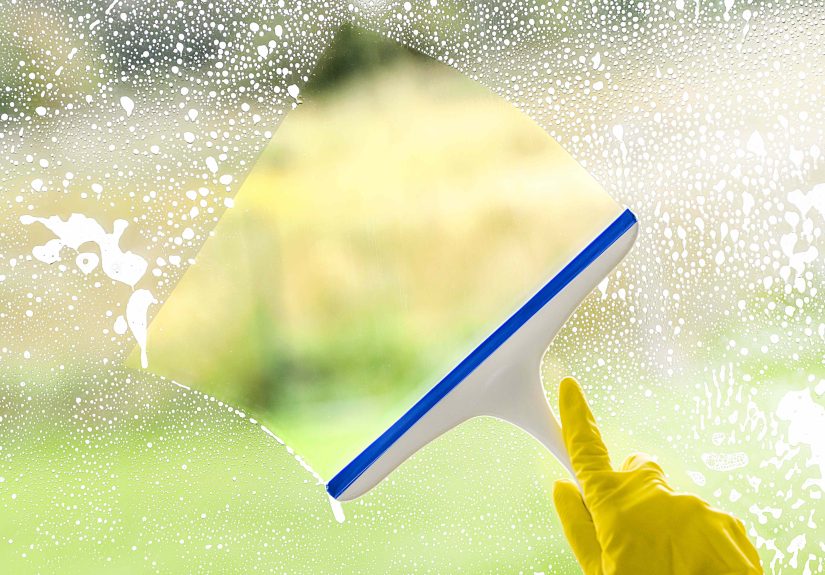
“Streak-free” isn’t a magical gift bestowed upon a chosen few. It’s mostly technique: the right angle, consistent pressure, and wiping the blade
so you’re not dragging dirty water across clean glass. A squeegee is the fastest way to remove the cleaning solution completelymeaning fewer
streaks and less lint than paper towels.
A simple, reliable window routine
- Dust first: Remove dry dust and cobwebs so you don’t create muddy streaks.
- Use a mild solution: A small amount of dish soap in warm water often works better than overly soapy mixes.
- Hold the blade at an angle: Keep the leading edge slightly ahead so water doesn’t trail behind the rubber.
- Work top to bottom: Use straight passes or a controlled “S” pattern. Overlap slightly.
- Wipe after each pass: A quick wipe on a lint-free towel prevents lines.
- Detail edges: Use a microfiber cloth to catch any remaining drips along frames and corners.
Bonus: car detailing without the water-spot drama
After washing your car, a squeegee can remove water from glass and smooth panels quickly, reducing drying time and helping prevent spots. Just use a
clean blade and light pressuregrit trapped under rubber can scratch. (Translation: rinse the blade often, and don’t drag it across a sandy door like
you’re auditioning for a car-wash commercial.)
Choosing the right squeegee for each job
Not all squeegees are created equal. Matching the tool to the mess makes everything easier.
- Small handheld: Upholstery, stairs, tight corners, car interiors.
- Wide shower squeegee: Glass doors, tile walls, large mirrors.
- Long-handled floor version: Floors, big spills, fast bathroom “hair sweeps.”
- Soft silicone blade: Great for delicate surfaces and quiet use; often less likely to chatter on glass.
Common squeegee mistakes (and how to avoid them)
- Using a dirty blade: Rinse it. Wipe it. Your streaks are mostly old grime and leftover soap.
- Pressing too hard: Let the rubber do the work. Heavy pressure can cause skipping and can scratch if debris is present.
- Cross-contaminating surfaces: Keep separate squeegees (or at least sanitize between bathroom and upholstery jobs).
- Skipping the edges: Water loves to camp out along frames and tracks. Detail those spots with a cloth.
Conclusion
A squeegee is basically the Swiss Army knife of “I don’t want to spend my weekend scrubbing.” It can safely gather broken glass, lift pet hair that laughs
at vacuums, keep showers clearer with less effort, pull dust bunnies off bathroom floors in seconds, and leave windows (and cars) looking crisp and streak-free.
The best part? It’s simple. No batteries, no subscriptions, no app that needs “one quick update” right when you’re finally motivated to clean.
If you try just one habit from this list, make it the shower squeegee routineit’s the rare cleaning task that takes under a minute and pays you back all week.
Then graduate to pet hair, because your couch deserves rights too.
Real-life experiences related to “5 Genius Ways to Use a Squeegee”
In a lot of homes, the squeegee starts as a “shower thing” and accidentally becomes a “how did I live without this?” tool. One common scenario:
a glass tumbler slips from a wet hand, hits tile, and explodes into what feels like a million tiny triangles. The first instinct is often to grab a broom
and push everything into a pilebut that can send micro-shards skating into grout lines or under the vanity. People who switch to the squeegee method
notice an immediate difference: the rubber edge doesn’t flick pieces outward the way stiff bristles can. Instead, it gently gathers fragments into a neat line,
making pickup more controlled. The moment that usually sells them is the “second pass,” when the blade pulls up tiny slivers they didn’t even notice at first.
That’s when it clicks: this isn’t just tidierit’s safer.
Another repeat experience shows up in living rooms with fabric couches and pets who shed like it’s their full-time job. Many people vacuum couch cushions,
feel satisfied, and then sit down only to stand up looking like they’ve been hugged by a linty sweater. Using a squeegee on upholstery tends to produce a
dramatic before-and-after: hair gathers into thick rolls within a few strokes, especially along seams and the back edge of cushions where fur hides.
The “aha” moment is realizing the vacuum wasn’t failingit just wasn’t designed to beat friction at the surface level the way rubber can.
Once someone sees a pile of hair the size of a small hamster (no hamsters harmed), they often keep a dedicated squeegee in a nearby closet like a secret weapon.
Bathrooms create their own set of “how is it already messy?” stories. It’s common for people to deep-clean the shower on Saturday, feel proud,
and then by Wednesday the glass looks dull againwater spots, soap film, the usual suspects. The first week someone commits to a quick squeegee routine,
they often report a surprising shift: the shower still looks clean by the end of the week, and the next deep-clean is faster because there’s less buildup to fight.
The experience is less “scrub until your shoulders file a complaint” and more “wipe once, enjoy sparkle.” In homes with hard water, this can feel like unlocking
an entire new level of bathroom peace, because mineral spots simply don’t get as much time to set up camp.
Floors can be the sneakiest win. A lot of people sweep bathroom tile and wonder why it still feels dustyespecially around the toilet base and along the tub.
The dry-floor squeegee method often changes that perception instantly. Pulling a squeegee across tile tends to collect hair and dust into a pile faster than a broom,
and it doesn’t send lint flying into the air. The “experience factor” people mention is the speed: it feels like it takes seconds to get visible results.
Some even extend the method to laundry rooms and entryways, where lint and grit collect daily. After dry-squeegeeing, following with a quick spray cleaner and another
squeegee pass can make the floor dry fasteruseful when you don’t want to tiptoe around a wet bathroom like you’re crossing a swamp on lily pads.
And then there’s the glass: windows, sliding doors, even car windshields. A common story is someone trying to clean windows with paper towels, getting streaks,
switching brands of glass cleaner, getting more streaks, and eventually deciding their windows are just… destined to look “fine.” When people try a squeegee technique
and wipe the blade between passes, the outcome often surprises them: fewer streaks, faster drying, and less lint. On cars, the experience is similarespecially for people
who wash their vehicle in direct sun and end up with water spots before they can even put the hose down. Using a squeegee for a quick pull-off can reduce the “spot race,”
as long as the blade is clean and rinsed often. In each of these scenarios, the pattern is the same: the squeegee doesn’t just cleanit simplifies the whole process.