Table of Contents >> Show >> Hide
- The Discovery That Stood Out in a Sea of Soldiers
- Why a Commander Matters More Than Another Soldier
- The Bigger Story Behind the Terracotta Army
- What Made the Terracotta Army So Revolutionary
- The Commander’s Armor Says More Than “Important Guy”
- Why the Discovery Resonates Beyond Archaeology
- What Archaeologists Still Do Not Know
- The Experience of Encountering the Terracotta Army Today
- Conclusion
If the Terracotta Army needed a promotion board, it just got one. Archaeologists working at the mausoleum of China’s first emperor have reportedly uncovered a rare life-size figure believed to represent a high-ranking commander buried among the emperor’s famous clay troops. That may sound like one more impressive statue in a site already packed with jaw-dropping ones, but this discovery is different. Command-level figures are extraordinarily rare, and every new example helps scholars understand how Qin Shi Huang imagined power, hierarchy, and military order extending beyond death itself.
The headline is flashy, sure, but the archaeology underneath it is even better. This is not just another warrior with a stern face and dramatic posture. The newly discussed statue appears to represent a senior officer in the Terracotta Army, a rank identified through details such as armor, ornament, posture, and placement. In other words, this figure is not just clay. It is a clue. And in archaeology, clues are the closest thing to gossip from 2,000 years ago.
The Discovery That Stood Out in a Sea of Soldiers
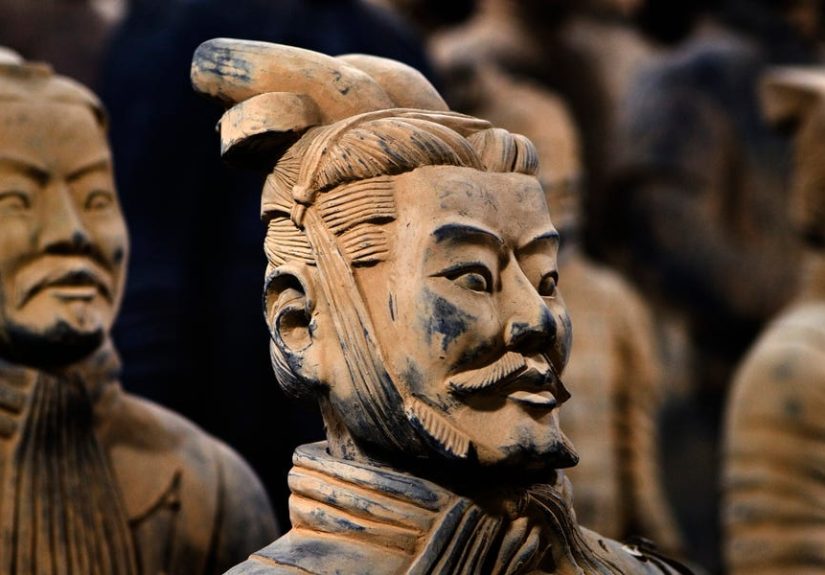
Recent reports on work at the mausoleum complex describe the find as a rare terracotta figure of a senior military officer unearthed in Pit 2, one of the major excavation areas associated with the Terracotta Army. Archaeologists believe the statue likely represented the highest-ranking commander in that particular formation. That is a major deal because high-ranking officer figures are incredibly uncommon compared with ordinary soldiers, archers, cavalrymen, and charioteers.
Part of what makes the statue so striking is its decoration. Unlike the simpler armor found on many of the rank-and-file warriors, this officer figure is associated with more elaborate visual details, including ornamental patterns and a richer decorative scheme. Archaeologists and experts have pointed to these adornments as markers of rank and status. In a buried army made to serve the emperor in the afterlife, appearance was not just fashion. It was military language.
The context of the discovery matters, too. Reports say the figure was found alongside chariots, horses, and additional terracotta figures, which gives archaeologists more than an isolated statue to study. It gives them a formation. That is the real prize. A commander standing alone is interesting. A commander positioned within a broader tactical arrangement is historical gold wrapped in fired clay.
Why a Commander Matters More Than Another Soldier
The Terracotta Army is already famous for its scale, but scale is only half the story. The real fascination lies in structure. Qin Shi Huang did not order thousands of statues just to create a spooky underground art project. He commissioned an army organized by rank, role, and likely battlefield logic. Every time archaeologists identify a rare senior officer, they get closer to reconstructing the chain of command represented inside the pits.
Rank Was Built Into the Design
Terracotta warriors were not made as generic copies. Their clothing, hairstyles, armor, headdresses, and poses vary according to their military function and status. That means an officer can often be identified not by a name tag, unfortunately lost to history, but by carefully studied visual codes. A senior commander would not have looked like a standard infantryman, and the sculptors made sure of that.
This is one reason the newly reported commander statue matters so much. It reinforces the idea that the army was arranged with real attention to command hierarchy. These were not random sculptures dropped into the ground like spare furniture in an imperial basement. They were placed to reflect an organized force. The Qin state was famous for discipline, centralization, and administrative control, so it makes perfect sense that even its funerary army would be structured like a machine with a clear chain of authority.
Pit 2 Offers a Tactical Snapshot
Pit 2 has long been important because it appears to preserve a more varied military mix than some other parts of the site. It includes combinations of cavalry, archers, infantry, and chariot elements. That makes it especially useful for archaeologists trying to understand how different units might have been arranged together. Finding a commander in this pit adds another layer to that puzzle.
In practical terms, the officer figure helps scholars think less about “a lot of statues” and more about “a planned military system.” It suggests command was visually staged within the burial complex. That is powerful evidence of how the Qin court imagined order: ranked, centralized, and unmistakably imperial.
The Bigger Story Behind the Terracotta Army
To understand why one statue can make international headlines, it helps to zoom out. The Terracotta Army was created for Qin Shi Huang, the ruler who unified China in 221 B.C.E. and became its first emperor. His reign transformed the region through standardization, large infrastructure projects, and the consolidation of political power. He is often remembered as both a visionary state-builder and a famously hard-edged ruler. History, as usual, contains multitudes.
His mausoleum complex is massive. The broader site includes not only the famous warrior pits but also a far larger funerary landscape with numerous accompanying pits and archaeological remains spread across a huge area. The main tomb mound itself remains unopened, in part because of preservation concerns and in part because archaeologists know that once something is excavated, it can begin deteriorating almost immediately. Ancient objects do not always enjoy fresh air as much as tourists do.
The Terracotta Army first came to light in 1974, when farmers digging a well in Shaanxi province uncovered fragments of clay figures. What followed became one of the most important archaeological discoveries of the modern era. Since then, archaeologists have excavated thousands of artifacts and roughly 2,000 terracotta figures, while estimates suggest that as many as 8,000 soldiers may exist across the major pits and associated areas.
That combination of scale, artistry, and mystery explains why every fresh discovery still lands with such force. Even after decades of excavation, the site remains active, incomplete, and full of unanswered questions. The story is not over. Archaeology here is not a finished chapter. It is an ongoing series with a very high production budget and zero spoilers from the tomb itself.
What Made the Terracotta Army So Revolutionary
One reason the Terracotta Army still feels astonishing is that it blends mass production with individuality. Scholars have long noted that the figures were made through a workshop system that likely combined standardized parts with hand-finished details. Bodies, limbs, and heads were produced through efficient processes, then refined to create distinct appearances. The result is something that feels surprisingly modern: large-scale state manufacturing with luxury-level customization.
That matters because it tells us something about Qin power. This was not only an emperor with enormous resources. It was a state capable of coordinating labor, materials, craft specialization, and symbolic messaging on a breathtaking scale. The army is a funerary monument, yes, but it is also a statement of industrial organization, military ideology, and imperial confidence.
The warriors were also originally painted in bright colors, a fact that still startles people who are used to seeing them in muted earth tones. Modern viewers often imagine the army as solemn brown clay, but freshly excavated figures once displayed vivid pigments layered over lacquer. Preserving those colors has been one of archaeology’s biggest challenges because the paint can crack and flake rapidly once exposed. That preservation problem is one reason archaeologists proceed carefully and why the unopened sections of the complex remain so tantalizing.
The Commander’s Armor Says More Than “Important Guy”
The newly discussed officer figure offers a reminder that rank in the Qin world was visible, coded, and performative. Decorative armor was not an extra flourish tossed in by a bored sculptor. It communicated authority. The figure’s richer ornamentation, compared with ordinary soldiers, likely signaled command status to anyone who could read the visual vocabulary of the time.
That is one of the most compelling things about the discovery. It turns ancient military rank from an abstract historical concept into something material and immediate. You can imagine artisans shaping insignia into clay, deliberately marking this man as someone who gave orders rather than merely received them. In a buried army intended to serve the emperor forever, command still had to look like command.
And yet, scholars remain careful. Archaeologists do not claim to know the name of the individual represented. This is almost certainly not a literal portrait of a historically documented commander we can identify with confidence. Instead, the figure likely represents a rank or role within the imperial military system. That distinction matters. Good archaeology is exciting, but it also knows when to keep its helmet on and avoid charging too far ahead of the evidence.
Why the Discovery Resonates Beyond Archaeology
This is the kind of discovery that spreads quickly because it combines three irresistible ingredients: rarity, mystery, and visual drama. A hidden commander buried for more than two millennia sounds cinematic because, frankly, it is cinematic. But the deeper appeal is intellectual. People are drawn to finds like this because they make ancient states feel legible again. Suddenly, the Qin empire is not just a name in a textbook. It is an army with command structure, symbolism, logistics, and ambition.
The officer statue also reminds us that the Terracotta Army is not frozen in meaning. Every new excavation subtly changes how historians interpret the site. A rare commander can shift discussions about formation, hierarchy, or ritual function. That is the beauty of archaeology: one object can revise an entire conversation without saying a single word.
What Archaeologists Still Do Not Know
For all the attention the discovery has received, much remains uncertain. Archaeologists are still working through restoration, conservation, and contextual analysis. Reports indicate that parts of the figure, including the head, have required careful preservation treatment. That alone shows how fragile the evidence can be. A headline may arrive in a day, but the real scholarship takes years.
There are also bigger mysteries hanging over the entire mausoleum. The central tomb of Qin Shi Huang has never been fully excavated. Historical texts describe extraordinary features, including modeled landscapes and rivers of mercury, and scientific surveys have added intrigue to those ancient claims. But until technologies improve further or excavation conditions change, the tomb remains largely sealed. So yes, the commander statue is exciting. It is also a reminder of how much remains underground, waiting patiently while historians and archaeologists try not to mess it up.
The Experience of Encountering the Terracotta Army Today
Even if you have seen photographs a hundred times, the experience of confronting the Terracotta Army, whether in person or through detailed museum interpretation, has a way of resetting your sense of scale. At first, many people expect a gallery experience: a few famous statues under lights, perhaps a gift shop somewhere nearby trying very hard to sell tiny ceramic souvenirs. Then the visual reality lands. Row after row of figures stretches outward in disciplined formation, and the emotional effect is less like looking at sculpture and more like walking into a paused act of history.
What makes the experience so memorable is not just size. It is repetition with variation. From a distance, the army reads as a mass. Up close, it breaks into individuals. One warrior’s expression feels severe, another thoughtful, another almost tired. A hairstyle shifts. A sleeve falls differently. Armor plates catch the eye in new ways. The longer you look, the more the monument stops behaving like a monument and starts acting like a crowd. That is deeply unsettling in the best possible way.
The newly discussed commander figure intensifies that effect because it gives viewers and readers a human entry point into the hierarchy. It is one thing to hear that the Qin state was organized and militarized. It is another to imagine an officer, visually marked by status, standing amid a formation meant to endure beyond death. Suddenly the site feels less like an archaeological wonder and more like a statement about control. The emperor did not just want protection in the afterlife. He wanted order, obedience, and recognizable rank to survive with him.
There is also a strange emotional tension in knowing how much has survived and how much has vanished. The warriors once carried brighter colors. Many held real weapons. Wooden structures, organic materials, and delicate surfaces have been damaged by time, collapse, looting, and exposure. So the visitor experience, even at its most awe-filled, includes loss. You are seeing grandeur, but you are also seeing the remains of grandeur. That mix of presence and absence gives the site much of its power.
For archaeology lovers, the commander discovery adds another layer of excitement because it shows the site is still intellectually alive. This is not a closed museum case with a neat label and a solved story. It is an active field of research. New work continues to reshape what scholars think they know about production systems, pigments, preservation, and military organization. In that sense, the experience of following the Terracotta Army today mirrors the experience of visiting it: the closer you look, the less static it becomes.
Maybe that is why stories like this travel so well. They offer spectacle, yes, but also continuity. The Terracotta Army links ancient empire, modern science, museum conservation, and public imagination in one enormous underground drama. A newly identified commander does not merely add one more statue to the count. It gives modern audiences another way to feel the ambition of the Qin world: a place where power was organized down to the pose of a clay hand and buried with enough confidence to last two thousand years.
Conclusion
The discovery of a rare commander statue in the Terracotta Army is more than an eye-catching archaeological update. It is a meaningful piece of evidence from one of the world’s most remarkable burial complexes. By identifying a figure likely associated with high command, archaeologists gain a sharper view of how the Qin empire imagined hierarchy, military organization, and imperial authority in both life and death.
That is why this story keeps resonating. It is not only about a hidden statue. It is about how a long-buried army continues to reveal the logic of the empire that created it. More than 2,000 years later, Qin Shi Huang’s mausoleum is still doing what it was built to do: commanding attention, projecting power, and refusing to be ignored.