Table of Contents >> Show >> Hide
- Why Amelia Earhart’s Disappearance Still Captivates the World
- The Official Theory: Crash and Sink Near Howland Island
- Nikumaroro: The Pacific Island at the Center of the Mystery
- The 1940 Bones: What Was Actually Found?
- The 2018 Forensic Reanalysis
- Why Dr. Hoodless May Have Been Wrong
- The Case for the Bones Belonging to Earhart
- The Case Against Calling the Mystery Solved
- What the Forensic Analysis Really Means
- Why Amelia Earhart’s Story Still Matters
- Modern Searches and Renewed Interest
- So, Did the Bones Belong to Amelia Earhart?
- Conclusion: A Mystery Measured in Bones, Distance, and Doubt
- Additional Experience-Based Reflections: What This Mystery Teaches Us About Evidence, Memory, and Patience
Amelia Earhart’s disappearance is one of those historical mysteries that refuses to sit quietly in the back of the classroom. It raises its hand every few years, clears its throat, and says, “Actually, we may have a new clue.” The latest clue is not a glittering aircraft wing pulled from a lagoon or a dramatic final diary entry sealed in a bottle. It is something far less cinematic but potentially more important: measurements of bones found in 1940 on Nikumaroro, a remote Pacific island once known as Gardner Island.
A modern forensic analysis has suggested that those long-lost bones may have belonged to Amelia Earhart, the legendary American aviator who vanished with navigator Fred Noonan on July 2, 1937, while attempting to fly around the world. The claim is fascinating, controversial, and not quite a courtroom-level “case closed.” But it does add serious weight to the theory that Earhart and Noonan may not have crashed directly into the ocean near Howland Island, as the official explanation has long suggested. Instead, they may have landed on Nikumaroro and survived for a time as castaways.
Like many good mysteries, this one comes with a map, a missing object, conflicting expert opinions, and just enough evidence to keep everyone arguing at family dinners. Let’s unpack what the forensic analysis says, why the bones matter, and why the Amelia Earhart mystery still has historians, scientists, aviation fans, and armchair detectives leaning forward.
Why Amelia Earhart’s Disappearance Still Captivates the World
Amelia Earhart was not just a pilot. She was a symbol of nerve, independence, and the deliciously stubborn idea that the sky did not belong only to men with leather helmets and serious mustaches. Before her final flight, she had already become the first woman to fly solo across the Atlantic Ocean and one of the most famous aviators in the world.
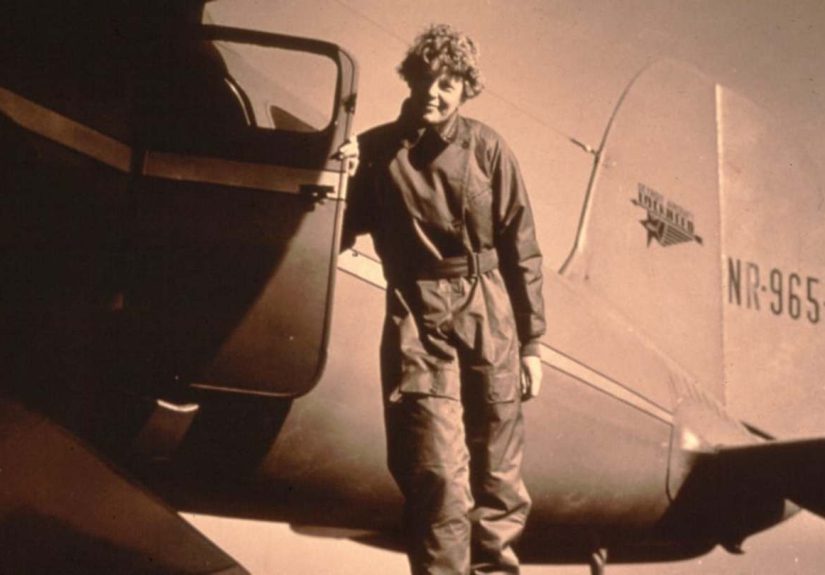
In 1937, Earhart set out to complete an ambitious circumnavigation of the globe in a Lockheed Electra 10-E. Her navigator, Fred Noonan, was experienced and capable, especially in long-distance navigation. The journey had already covered thousands of miles when the pair left Lae, New Guinea, headed for Howland Island, a tiny speck in the central Pacific. Calling Howland “hard to find” is generous. It was basically the aviation equivalent of looking for a raisin on a blue bedsheet while running out of gas.
Radio communication with the U.S. Coast Guard cutter Itasca became increasingly strained. Earhart reported that she was near Howland but could not see it. Her final confirmed transmission indicated that the aircraft was flying on a navigational line, but after that, the signal vanished. A massive search followed, yet neither Earhart, Noonan, nor the Electra was found.
The Official Theory: Crash and Sink Near Howland Island
The most widely accepted explanation is straightforward: Earhart and Noonan ran out of fuel, crashed into the Pacific near Howland Island, and sank. It is a practical theory because it fits the radio distress, the fuel problem, and the failure to locate the island. It also has one giant problem: the plane has never been conclusively found.
That missing aircraft has left room for alternative theories. Some are serious. Some are colorful enough to deserve their own late-night documentary narrated over thunder sounds. The Nikumaroro theory is among the more evidence-based alternatives. It proposes that Earhart and Noonan, unable to find Howland, followed their navigational line southeast and landed on the reef flat of Nikumaroro. From there, the aircraft may have transmitted radio signals before being washed into the ocean, while the crew attempted to survive on the island.
Nikumaroro: The Pacific Island at the Center of the Mystery
Nikumaroro is an uninhabited coral atoll in the Republic of Kiribati. It lies hundreds of nautical miles from Howland Island and was known as Gardner Island during the colonial period. To the casual traveler, it sounds tropical. To a stranded aviator in 1937, it would have been a brutal place: hot, isolated, short on fresh water, and surrounded by reef, birds, fish, crabs, and danger.
In 1940, British colonial officer Gerald Gallagher reported the discovery of human bones on the island. The bones were found near the remains of a campfire. Other objects were reportedly found in the area, including shoe remnants and a box associated with a sextant, a navigational instrument. That combination immediately sounds interesting because Earhart and Noonan were missing aviators, and Noonan was a navigator. History rarely hands over clues wrapped in ribbon, but this was at least enough to make officials look closer.
The bones were sent to Fiji, where they were examined by Dr. D. W. Hoodless, then principal of the Central Medical School. Hoodless concluded that the remains belonged to a male, not Amelia Earhart. That assessment helped push the bones out of the spotlight. Eventually, the bones were lost, which is the sort of historical accident that makes modern researchers sigh deeply into their coffee.
The 1940 Bones: What Was Actually Found?
The recovered remains were not a complete skeleton. Reports described a partial set of bones, including skull and limb measurements. Because the original bones disappeared, today’s researchers cannot perform DNA testing, isotope analysis, or direct physical reexamination. Instead, they must work with surviving records of measurements taken at the time.
That limitation matters. Forensic science is powerful, but it is not magic wearing a lab coat. A complete skeleton can reveal sex, ancestry, stature, trauma, age range, and sometimes personal identification. A handful of measurements copied from a 1940s report is far less certain. Still, measurements can be valuable when compared carefully with modern reference samples and known information about a missing person.
The 2018 Forensic Reanalysis
In 2018, forensic anthropologist Richard L. Jantz revisited the Nikumaroro measurements using modern quantitative techniques. His analysis compared the recorded bone measurements with what is known or can be estimated about Amelia Earhart’s body size and proportions. He also considered that forensic anthropology in 1940 was not as developed as it is today, especially when it came to estimating sex from skeletal remains.
The headline-grabbing conclusion was striking: Earhart was found to be more similar to the Nikumaroro bones than 99 percent of individuals in a large reference sample. In plain English, the measurements did not prove the bones were Earhart’s, but they made her a surprisingly good match. Or, to put it less scientifically: if those bones were not Amelia Earhart’s, they belonged to someone whose body proportions were unusually close to hers and who happened to die on a remote island connected to her possible flight path. That is not impossible, but it is certainly eyebrow-raising.
Why Dr. Hoodless May Have Been Wrong
One of the most important points in the modern analysis is that Hoodless was working with the tools and assumptions of his time. Forensic osteology had not yet developed the statistical methods, reference databases, and computer-assisted tools used by anthropologists today. Modern researchers are also more aware of how skeletal variation can mislead the eye.
Earhart was tall, lean, and long-limbed. In old photographs, she often appears angular and athletic. A partial skeleton with long bones might have seemed “male” to an examiner using older methods. That does not mean Hoodless was careless. It means the science around him was still growing up. Like aviation itself in the 1930s, forensic anthropology was advancing fast but had not yet reached its modern instrument panel.
The Case for the Bones Belonging to Earhart
The argument in favor of the bones belonging to Amelia Earhart rests on several connected points. First, the location makes sense under the Nikumaroro hypothesis. The island sits along a plausible navigational line from the area where Earhart believed she was flying. Second, human remains were found there only three years after her disappearance. Third, items near the site may fit a castaway scenario involving people with Western objects.
Fourth, the modern bone-measurement analysis indicates that the recorded measurements are consistent with Earhart’s estimated body proportions. This is the core forensic claim. It does not stand alone like a Hollywood confession scene, but it works as part of a larger circumstantial case.
The theory also gains emotional power because it offers an ending that feels tragically human. Instead of vanishing instantly beneath the waves, Earhart and possibly Noonan may have landed, survived briefly, signaled for help, and then died beyond the reach of rescue. That possibility is haunting. It changes the mystery from “Where did the plane go?” to “How close did rescuers come to finding them?”
The Case Against Calling the Mystery Solved
As tempting as it is to declare victory, responsible analysis requires a cooler head. The biggest weakness is obvious: the bones themselves are missing. Without the original remains, there can be no DNA test, no direct remeasurement, and no independent modern examination. Researchers are working from historical measurements, and historical records can contain errors.
There is also scholarly disagreement. Some critics have argued that Hoodless’s original conclusion should not be dismissed so easily and that the evidence does not justify identifying the bones as Earhart’s. In forensic terms, “consistent with” is not the same as “confirmed as.” That distinction may sound boring, but it is the guardrail that keeps science from driving straight into the swamp of wishful thinking.
The Nikumaroro theory also has to compete with the crash-and-sink theory, which remains simple and plausible. Earhart was low on fuel, could not locate Howland, and disappeared in open ocean. The Pacific is enormous, deep, and not particularly generous about returning missing aircraft.
What the Forensic Analysis Really Means
The best way to understand the 2018 analysis is as a major clue, not a final verdict. It strengthens the possibility that the Nikumaroro bones belonged to Earhart. It challenges the older assumption that the bones were definitely male. It also shows how modern forensic anthropology can reopen historical cases even when the original evidence is incomplete.
But it does not close the file. Science rarely works like a detective novel where the final chapter neatly explains every footprint, button, and suspicious teacup. Real investigations are messier. Evidence is lost. Witnesses die. Records are incomplete. The ocean has no customer service desk.
Still, the forensic reanalysis matters because it changes the quality of the conversation. The Nikumaroro hypothesis is not merely a campfire story for aviation buffs. It is supported by measurable evidence, archaeological context, and a chain of historical documents. Whether that evidence is strong enough to identify Earhart is the question.
Why Amelia Earhart’s Story Still Matters
Part of the public fascination comes from the mystery, of course. Humans love unanswered questions. But Earhart’s story lasts because she represented a larger shift in American culture. She challenged expectations about women, technology, travel, and public life. She was famous not because she disappeared, but because she lived boldly before she disappeared.
Her final flight was risky, but risk was woven into early aviation. Pilots were still learning what aircraft, navigation, weather forecasting, and radio systems could and could not do. Earhart’s Electra was advanced for its day, but by modern standards the flight required extraordinary nerve. There was no GPS, no satellite phone, no emergency locator beacon, and no cheerful app saying, “In 500 miles, turn left at the tiny island.”
Modern Searches and Renewed Interest
Interest in Earhart’s disappearance has surged repeatedly as new searches, sonar images, archival releases, and island expeditions appear. Some leads have faded. Others remain open. Purdue University, which had a deep connection to Earhart and helped support her aircraft, has continued to show interest in efforts related to the missing Electra and the Nikumaroro area.
Every renewed search proves one thing: the mystery still has fuel. Researchers are not just chasing legend. They are testing hypotheses with archaeology, archival research, ocean exploration, forensic anthropology, and technology that Earhart herself could scarcely have imagined. Somewhere between the ocean floor, island records, and old measurements may be the answer.
So, Did the Bones Belong to Amelia Earhart?
The honest answer is: possibly, maybe even plausibly, but not definitively. The forensic analysis suggests that the Nikumaroro bones are a strong match for Amelia Earhart’s body proportions. The historical circumstances make that match intriguing. The island’s location and the reported artifacts deepen the mystery.
But the missing bones prevent the kind of confirmation that would satisfy everyone. Until physical remains, aircraft wreckage, or other conclusive evidence emerges, the Earhart case remains open. That is frustrating, but it is also why the story endures. It sits at the crossroads of science, history, aviation, and imagination.
Conclusion: A Mystery Measured in Bones, Distance, and Doubt
The forensic analysis of bones discovered on Nikumaroro does not give us a simple ending to Amelia Earhart’s story. Instead, it gives us something more realistic and, in some ways, more compelling: a serious clue. The measurements suggest that the bones may have belonged to Earhart. The location fits one of the strongest alternative theories. The historical record keeps pointing researchers back to the same lonely Pacific island.
Yet the final answer remains just out of reach. The bones are gone. The aircraft is still missing. The ocean keeps its secrets with impressive stubbornness. But each careful analysis brings the world a little closer to understanding what may have happened after Earhart’s final radio call faded into static.
Amelia Earhart once made history by flying beyond the boundaries people tried to set for her. Nearly a century later, she is still pushing researchers beyond easy assumptions. Whether the Nikumaroro bones were hers or not, the investigation reminds us that history is not fixed in stone. Sometimes, it is hidden in measurements, documents, coral sand, and questions brave enough to be asked again.
Additional Experience-Based Reflections: What This Mystery Teaches Us About Evidence, Memory, and Patience
There is something uniquely humbling about the Amelia Earhart case. Anyone who has ever tried to solve a family mystery, research an old photograph, trace a missing document, or figure out what really happened in a half-remembered story can relate to the frustration. The evidence never arrives in perfect condition. Someone misplaced the key paper. A name was spelled three different ways. A photo has no date. The one person who knew the answer passed away before anyone thought to ask. History, like a cluttered attic, rarely labels its boxes properly.
The Nikumaroro bones story is a powerful reminder that evidence can be both valuable and fragile. When the bones were examined in the early 1940s, officials likely did not imagine that future scientists would still be debating them nearly a century later. To them, it may have seemed like a minor colonial investigation on a remote island. Today, those missing remains could be among the most important lost pieces in aviation history. That is a lesson for museums, archives, families, and researchers: preserve first, decide later. The boring file in the drawer may become tomorrow’s headline.
This mystery also shows why patience matters in research. The modern forensic analysis did not appear because someone waved a magnifying glass dramatically over a map. It came from comparing old measurements, studying body proportions, questioning assumptions, and using improved statistical methods. That process is slow. It is not flashy. It does not always make good television. But it is how real knowledge advances. A careful researcher can sometimes do more with seven measurements than a sensationalist can do with a thousand exclamation points.
There is also a useful lesson in uncertainty. Many people want historical mysteries to end with a clean answer: yes, no, guilty, innocent, found, lost. The Earhart case refuses to behave that neatly. The forensic evidence may support the Nikumaroro theory, but it does not eliminate every other possibility. That can feel unsatisfying, especially in an online world where everyone wants instant certainty served hot. Yet uncertainty is not failure. In good research, uncertainty is a sign that the evidence is being treated honestly.
For writers, educators, and curious readers, the Earhart bones story is a masterclass in balanced storytelling. It has drama, science, conflict, and emotional pull. But the best version of the story does not oversell the evidence. It says, “Here is what we know, here is what we think, and here is what we still cannot prove.” That approach builds trust. It also respects Earhart herself, who deserves better than being turned into a clickbait ghost story.
Finally, this case reminds us why Amelia Earhart remains such a magnetic figure. People are not only searching for a plane or a set of bones. They are searching for closure, for meaning, and for a final chapter worthy of a woman who spent her life refusing to stay grounded. Whether the Nikumaroro bones belonged to her or not, the investigation keeps her legacy alive in a surprisingly modern way: through science, skepticism, and the courage to keep asking difficult questions.