Table of Contents >> Show >> Hide
- Generation Next Is Already Here
- Who Belongs to Generation Next?
- The Digital World Is Their Default Setting
- AI Is the New Calculator, Tutor, and Debate Partner
- Education Is Moving Beyond the One-Track Road
- Work Will Need to Earn Their Trust
- Mental Health Is Part of the Conversation Now
- Generation Next Is Redefining Culture
- The Big Challenges Facing Generation Next
- The Strengths That Make Generation Next Powerful
- How Parents, Teachers, and Leaders Can Support Generation Next
- Experience Section: What Generation Next Feels Like in Real Life
- Conclusion: Generation Next Is Not Waiting
Note: This article is written for web publishing in standard American English, based on real research and current public data about Gen Z, Gen Alpha, education, work, technology, media habits, and the future of youth culture.
Generation Next Is Already Here
Every generation gets a nickname, a stereotype, and at least one adult shaking their head in a grocery store aisle saying, “Kids these days.” The funny thing is, “kids these days” usually grow up and build the next version of the world while everyone else is still complaining about their headphones. That is the story of Generation Next: a wave of young people shaped by smartphones, artificial intelligence, social change, economic uncertainty, online creativity, and a very low tolerance for boring PowerPoint presentations.
Generation Next is not one single age group. It is a useful umbrella for the young people now moving through school, entering the workforce, influencing culture, and redefining what “normal” looks like. It includes the younger end of Gen Z, many of whom are already choosing colleges, jobs, trades, businesses, and life paths. It also includes Generation Alpha, the children born fully inside the 21st century, who have never known a world without touchscreens, streaming, video calls, and answers that arrive faster than a microwave burrito.
This next generation is not simply “more digital.” That description is too small, like calling the ocean “a bit damp.” They are growing up at the intersection of technology, identity, education reform, climate anxiety, financial pressure, mental health awareness, and global culture. They are learning from teachers, parents, peers, influencers, creators, algorithms, chatbots, and, occasionally, a mysterious person in a comments section who insists they “did their own research.”
To understand Generation Next, we need to look past lazy labels. They are not just screen addicts, job hoppers, activists, gamers, or future employees. They are a generation trying to build a life while the instruction manual keeps updating.
Who Belongs to Generation Next?
Gen Z: The Bridge Generation
Gen Z is often described as the first truly smartphone-native generation. Many older Gen Zers remember life before every classroom, workplace, and family dinner had a digital layer, but younger Gen Z grew up with social media as background noise. They are the bridge between the analog habits of millennials and the fully digital childhood of Generation Alpha.
In the United States, Gen Z has already become a major presence in the labor force. Younger workers are entering workplaces that are still trying to decide whether remote work is freedom, chaos, or both wearing business casual. This generation is also reshaping expectations around leadership, flexibility, learning, and purpose. They want jobs that pay the bills, yes, but they also want work that does not quietly eat their soul like a printer that only jams on Mondays.
Research on younger workers shows a consistent pattern: money matters, but so do meaning, growth, and well-being. That does not mean Gen Z lacks ambition. It means many young people are suspicious of the old bargain: sacrifice your health now, maybe enjoy life later, and please respond to emails during dinner. Generation Next is asking a different question: What if success includes having a life while building one?
Generation Alpha: The Touchscreen Childhood
Generation Alpha is even more immersed in technology. Many children in this group have grown up with tablets, smart speakers, streaming cartoons, learning apps, and video calls with grandparents. To them, a phone without a touchscreen may seem like a museum artifact, right next to floppy disks and adults saying “MapQuest.”
But Generation Alpha’s story is not only about devices. These children are growing up in more diverse families and communities, with earlier exposure to global media, hybrid learning tools, and conversations about identity, fairness, health, and the environment. Many also experienced early childhood during or after the COVID-19 era, which affected schooling, social development, family routines, and the way adults think about safety and resilience.
Generation Alpha will inherit the results of decisions being made now: how schools use AI, how families manage screen time, how communities support mental health, and how employers adapt to new expectations. In other words, today’s “little kids with sticky tablet screens” will eventually become tomorrow’s voters, designers, nurses, coders, electricians, artists, teachers, founders, and managers. Someone should probably make sure they also know how to hold a conversation without a notification sound effect.
The Digital World Is Their Default Setting
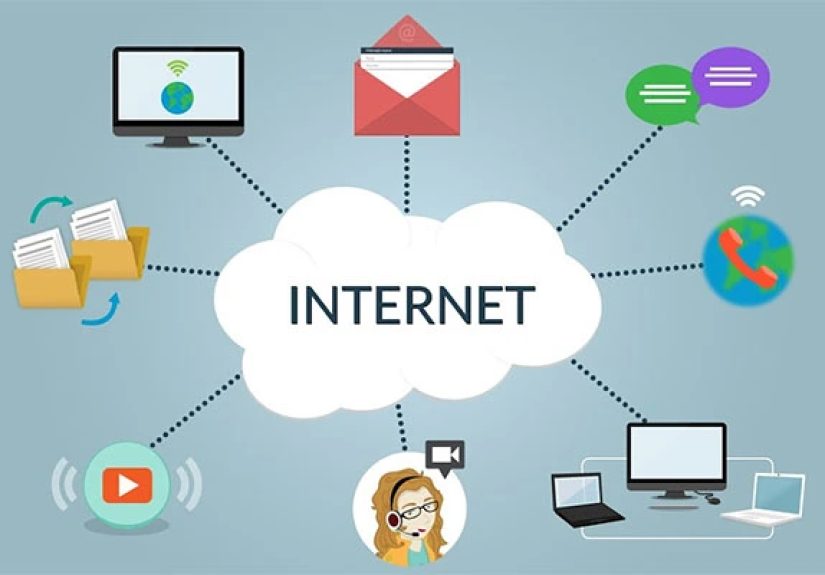
For Generation Next, the internet is not a place they “go.” It is part of the room. Teenagers use platforms like YouTube, TikTok, Instagram, Snapchat, Discord, and messaging apps to learn, laugh, research, organize, gossip, create, and occasionally fall into a three-hour rabbit hole about how vending machines work. Their digital lives are social, educational, commercial, and emotional all at once.
This creates enormous opportunity. A motivated teenager can learn video editing, coding, music production, personal finance basics, language skills, or college application tips from free or low-cost online resources. A young artist can build an audience without waiting for a gatekeeper. A student in a small town can connect with communities and ideas far beyond their ZIP code. The internet can be a library, a studio, a classroom, a stage, and a career launcher.
Of course, the internet can also be a carnival funhouse with Wi-Fi. Algorithms reward attention, not always wisdom. Social platforms can amplify comparison, misinformation, outrage, and unrealistic lifestyles. Young people may be fluent in apps but still need help understanding privacy, credibility, persuasion, and emotional boundaries. Being “digital native” does not automatically mean being digitally wise. A fish is native to water, but that does not mean it can explain oceanography.
The challenge for parents, schools, and communities is not to pretend the digital world can be erased. It cannot. The better goal is to help Generation Next become skilled digital citizens: curious, skeptical, creative, safe, and able to unplug without feeling like civilization has collapsed.
AI Is the New Calculator, Tutor, and Debate Partner
Artificial intelligence is one of the defining forces shaping Generation Next. Today’s teenagers are already using AI chatbots for research, homework support, brainstorming, summarizing, image creation, and entertainment. Some students see AI as a helpful tool. Others worry it can make learning too easy, blur academic honesty, or weaken original thinking. Both reactions can be true at the same time, which is very annoying for anyone hoping for a simple answer.
AI in education is not just about catching cheaters. That framing is too narrow. The bigger question is how schools can teach students to use AI responsibly while still developing memory, reasoning, writing, creativity, and problem-solving skills. A calculator can help with math, but it cannot replace understanding what the numbers mean. In the same way, AI can speed up research or generate ideas, but students still need judgment, context, ethics, and the ability to say, “That answer sounds confident, but it may be wrong.”
Generation Next will not compete against AI alone. They will compete and collaborate with people who know how to use AI well. That makes AI literacy a core future skill. Students need to understand prompts, bias, hallucinations, data privacy, intellectual property, and the difference between assistance and outsourcing their brain. The goal is not to raise a generation that lets machines think for them. The goal is to raise people who can think better with powerful tools nearby.
Employers are already paying attention. As generative AI changes how work gets done, technical skills matter, but so do communication, empathy, adaptability, leadership, and ethical decision-making. In a world full of automation, human skills become less like “soft skills” and more like survival gear.
Education Is Moving Beyond the One-Track Road
For decades, American students were often handed a simple life map: graduate high school, attend a four-year college, get a stable job, buy a house, and try not to panic when the washing machine makes a weird noise. Generation Next is looking at that map and asking, “Are there other routes?”
The answer is yes. More young people are considering career and technical education, apprenticeships, community college, certificates, entrepreneurship, military service, gap years, online learning, and hybrid pathways. This does not mean college is dead. College remains valuable for many careers and can be life-changing when the fit is right. But the old idea that every successful person must follow the same academic road is losing its grip.
This shift is partly practical. College costs are a serious concern for families. Students want a clearer connection between education and employment. They are asking better questions: What skills will I gain? What debt will I carry? What jobs does this path lead to? Can I change direction later? Will this program prepare me for a real economy or just give me a diploma fancy enough to frame?
Schools that serve Generation Next well will connect learning to life. That means stronger career counseling, hands-on projects, financial literacy, internships, mentorship, and exposure to multiple definitions of success. A student who becomes a skilled welder, nurse, software developer, teacher, designer, lab technician, or small business owner should not be treated as someone who chose a “lesser” path. The future needs talent in many forms, not just people who can survive a lecture hall with fluorescent lighting.
Work Will Need to Earn Their Trust
Generation Next is entering the workforce with different assumptions than previous generations. They have watched adults deal with layoffs, inflation, burnout, remote work experiments, side hustles, rising housing costs, and career pivots. Many have learned that stability is not guaranteed, even when people do everything “right.” So they are cautious. They want opportunities, but they also want transparency.
Employers sometimes describe younger workers as demanding. A more useful word might be observant. They notice when a company talks about values but rewards exhaustion. They notice when “entry-level job” somehow requires three years of experience and the wisdom of a retired executive. They notice when managers confuse constant availability with commitment.
To attract and retain Generation Next, workplaces will need to offer more than slogans. Competitive pay matters. So does training. So does flexibility. So does mentorship. So does a culture where feedback goes both ways and professional growth is not treated like a secret menu item.
Young workers also need to adapt. Every generation brings strengths and blind spots. Generation Next may be tech-savvy and values-driven, but they still need workplace communication, patience, teamwork, resilience, and the ability to handle feedback without immediately updating their résumé. The healthiest future workplace will not be one generation defeating another. It will be a better exchange: experienced workers sharing judgment and context, younger workers bringing new tools and perspectives, and everyone agreeing that “reply all” should be used with extreme caution.
Mental Health Is Part of the Conversation Now
One of the biggest differences between Generation Next and many older generations is how openly young people talk about mental health. They are more likely to name stress, anxiety, burnout, loneliness, and emotional pressure. They are also more likely to expect schools, employers, and communities to take well-being seriously.
This openness is progress, but it also reflects real strain. Young people are growing up amid academic pressure, online comparison, economic uncertainty, family stress, safety concerns, and a nonstop news cycle that can make the world feel like a browser with 97 tabs open. Digital life can provide support and connection, but it can also intensify pressure.
Supporting Generation Next means building healthier environments, not simply telling young people to “be resilient” and then handing them a schedule that looks like a competitive sport. Schools can help by creating belonging, reducing unnecessary pressure, teaching emotional skills, and connecting students with trusted adults. Families can help by making room for honest conversations, routines, sleep, outdoor time, and device boundaries that do not turn every evening into a courtroom drama.
The goal is not to make young people fragile. It is to make support normal. A generation that can talk about mental health can also build better systems around it.
Generation Next Is Redefining Culture
Culture used to move through a few big gates: television networks, record labels, magazines, movie studios, newspapers, and schools. Now culture moves through millions of screens, creators, group chats, fan edits, podcasts, memes, livestreams, and niche communities. Generation Next does not wait for culture to be delivered. They remix it, subtitle it, stitch it, parody it, review it, and sell merch for it.
This has changed how trends are born. A song can explode because of a dance challenge. A book can become a bestseller because readers cry about it online. A small brand can go viral after one creator mentions it. A social issue can gain momentum because young people translate complex topics into shareable, emotional, visual content.
Generation Next is also more comfortable with fluid identity, diverse representation, and global influence. Their playlists cross languages. Their fashion references jump decades. Their humor is fast, layered, and sometimes completely incomprehensible to anyone over 35, which may be part of the point.
For brands, educators, and media companies, the lesson is simple: do not talk down to young audiences. They can smell fake authenticity the way a dog smells a sandwich. They value honesty, creativity, speed, and participation. They do not want to be “targeted” as much as they want to be understood.
The Big Challenges Facing Generation Next
It would be easy to paint Generation Next as unstoppable, brilliant, and ready to fix everything before lunch. That would be flattering, but unfair. This generation faces serious challenges that require adult responsibility, not just youthful optimism.
First, the attention economy is intense.
Young people are growing up inside systems designed to capture time and emotion. Notifications, short videos, infinite scroll, and algorithmic feeds can make focus feel like a superpower. Learning to manage attention may become one of the most important skills of the next decade.
Second, the future of work is uncertain.
AI, automation, remote work, global competition, and changing industries mean that students need flexible skills. Memorizing facts will not be enough. They need problem-solving, communication, technical confidence, creativity, and the ability to keep learning after formal school ends.
Third, trust is fragile.
Generation Next is growing up in a world full of information but short on shared reality. Deepfakes, misinformation, influencer marketing, and polarized media can make truth feel negotiable. Media literacy is no longer an elective; it is civic armor.
Fourth, opportunity is uneven.
Not every young person has the same access to safe schools, high-speed internet, strong mentoring, advanced classes, health care, stable housing, or career networks. Talking about Generation Next as if everyone has the same launchpad ignores the real gaps that shape futures. Equity is not a slogan here. It is infrastructure.
The Strengths That Make Generation Next Powerful
Despite the challenges, Generation Next brings remarkable strengths. They are adaptable because change has been their normal. They are resourceful because they have grown up with tools for learning almost anything. They are expressive because digital platforms reward creativity and voice. They are collaborative because online communities have taught them to build around shared interests, even across distance.
They are also skeptical in a useful way. They question institutions, career scripts, marketing claims, and traditions that no longer make sense. This can be uncomfortable for older generations, especially when the questioning happens at Thanksgiving. But skepticism can drive reform. Every generation improves the world partly by refusing to accept every inherited rule as sacred.
Generation Next cares about practical outcomes. They want education that connects to careers. They want employers that invest in people. They want technology that helps more than it harms. They want communities where identity, safety, opportunity, and belonging are not treated as luxuries.
In short, they are not waiting politely at the door of the future. They are already inside, rearranging the furniture.
How Parents, Teachers, and Leaders Can Support Generation Next
Supporting Generation Next does not require adults to become TikTok experts, learn every slang term, or pretend to enjoy 14-second videos of capybaras wearing hats. It requires listening, guidance, and better systems.
Parents can start by replacing panic with curiosity. Ask young people what they are learning online, who they follow, what makes them laugh, what stresses them out, and what they wish adults understood. Boundaries still matter, but rules work better when they come with trust and explanation.
Teachers can help by making learning active and relevant. Students are more engaged when they see the purpose behind what they are doing. Projects, discussions, career connections, and creative assignments can make school feel less like a waiting room for adulthood.
Employers can support young workers by offering clear expectations, mentorship, fair pay, and opportunities to grow. Do not assume a young employee knows every workplace norm. Teach the unwritten rules. Also, be willing to update rules that only exist because “we have always done it this way,” the official motto of many broken systems.
Policymakers and community leaders can invest in broadband access, youth mental health, safe learning environments, career pathways, libraries, arts programs, apprenticeships, and affordable education. Generation Next does not need speeches about being the future. They need the tools to build it.
Experience Section: What Generation Next Feels Like in Real Life
The experience of Generation Next is best understood through everyday scenes, not just statistics. Picture a high school student working on a history project. She has a textbook open, a group chat buzzing, a teacher’s rubric on her laptop, a video explainer paused at 1.25 speed, and an AI tool helping her outline ideas. Her parent walks by and says, “Are you studying or watching videos?” The honest answer is yes.
That is the strange reality of learning now. The tools are blended together. Research, entertainment, social life, and productivity sit on the same screen. For adults, this can look like distraction. For young people, it often feels like normal multitasking. The challenge is that multitasking can be useful for quick tasks but harmful for deep thinking. Generation Next is learning how to balance speed with focus, and that lesson may take years.
Now imagine a young worker starting a first job. He wants feedback, flexibility, and a sense that his work matters. His manager, who came up in a very different workplace culture, may interpret questions as disrespect or requests for balance as lack of drive. But from the young worker’s point of view, he is not rejecting hard work. He is rejecting confusion, burnout, and fake urgency. He wants to know what success looks like, how to improve, and whether the company sees him as a person or just a calendar invite with shoes.
Or consider a middle school student from Generation Alpha. She learns math through a mix of classroom teaching, digital practice, YouTube-style explanations, and help from family. She may be more comfortable tapping a screen than writing in cursive, which will deeply alarm someone at a family gathering. But the real question is not whether she can write a perfect looped capital “G.” The question is whether she can reason, communicate, collaborate, create, and stay curious.
Families are also living the Generation Next experience. Parents are trying to set screen-time rules while using phones for work, maps, banking, recipes, photos, school messages, and ordering pizza. That makes “just put the phone away” a little more complicated. Children notice when adults preach balance while checking email during dinner. The most powerful lessons come from shared habits: device-free meals, bedtime routines, outdoor time, reading time, and honest conversations about what technology gives and takes.
Teachers experience Generation Next as both inspiring and exhausting. Students can be creative, funny, socially aware, and quick to find information. They can also struggle with attention, confidence, and patience when answers are not instant. A strong classroom today needs more than content delivery. It needs relationships, structure, relevance, and room for students to practice being human in a world that keeps automating the easy parts.
For brands and media creators, Generation Next feels like a tough audience because they are allergic to obvious manipulation. They do not mind being marketed to if the value is real, the voice is honest, and the experience is entertaining. But they dislike corporate language that sounds like it was assembled in a basement by three buzzwords wearing a trench coat. The winning approach is simple: be useful, be clear, be creative, and do not pretend to be young if you are not.
The most important experience, though, is the internal one. Many young people feel excited and pressured at the same time. They know opportunity is everywhere, but so is comparison. They can learn almost anything, but they are also told they must constantly optimize themselves. They can connect with thousands of people, yet still feel lonely. They are asked to prepare for jobs that may change before they graduate.
That is why Generation Next deserves more than criticism or applause. They need guidance without condescension, freedom without abandonment, and technology without losing the human center. Their future will not be built by screens alone. It will be built by relationships, skills, judgment, courage, and communities that decide young people are worth serious investment.
Conclusion: Generation Next Is Not Waiting
Generation Next is not a distant prediction. It is already shaping classrooms, workplaces, entertainment, technology, politics, family life, and culture. Gen Z is entering adulthood with new expectations about work, learning, identity, and well-being. Generation Alpha is growing up in a world where digital tools are ordinary, AI is increasingly common, and change is the background music.
The smartest response is not panic. It is preparation. Young people need strong schools, practical career pathways, healthy digital habits, AI literacy, emotional support, and adults who can guide without sneering. They also need room to experiment, fail, recover, and build.
Every generation inherits a messy world. Generation Next is no exception. But they also inherit extraordinary tools, wider networks, and a powerful instinct to question what is not working. If we support them well, they will not just adapt to the future. They will improve it, update it, and probably rename it something shorter.