Table of Contents >> Show >> Hide
- Why This Moment Mattered So Much
- What Was Actually Seen, and When?
- What “Fuel Debris” Really Means
- Why Seeing It Is Easier Than Removing It
- What Scientists Learned from the First Samples
- What Happens Next at Fukushima
- The Bigger Lesson Behind the Headlines
- Experiences, Emotions, and the Human Side of Seeing Fukushima’s Melted Fuel
- Conclusion
For years, Fukushima’s melted nuclear fuel has lived in the public imagination like some radioactive ghost story: everyone knew it was there, nobody could get a clean look at it, and every attempt to find it seemed to involve robots doing jobs that would make most action heroes politely resign. Then the images finally came. First there were hints, then stronger visuals, and eventually something even more important than a photo: a real, physical sample pulled from inside the wreckage.
That is why the phrase “melted Fukushima nuclear fuel seen for the first time” still grabs attention. It captures a genuine breakthrough, even if the full truth is more complicated than a dramatic headline. The reality is a series of milestones. Investigators first found likely visual evidence of fuel debris with robotic probes. Later, underwater and drone missions revealed clearer shapes and deposits. And then, in a historic step, engineers retrieved a tiny piece of the material itself.
In other words, this was not one single ta-da moment with trumpets and cinematic lighting. It was more like the world’s most dangerous jigsaw puzzle, solved piece by piece by cameras, sensors, robot arms, and a lot of patient engineering.
Why This Moment Mattered So Much
The Fukushima Daiichi disaster in 2011 left three reactors with melted cores after an earthquake and tsunami knocked out power and cooling systems. Since then, one of the biggest unanswered questions has been simple to ask and extremely difficult to answer: where exactly did the melted fuel end up, what shape is it in, and how can it be removed safely?
That question is not academic. The melted material, often called fuel debris, is central to the plant’s long-term decommissioning. Until experts understand its location, composition, and stability, they cannot design full-scale removal strategies with confidence. Cleanup at Fukushima is not just about sweeping up rubble and calling it a day. It is a decades-long effort involving radiation control, structural assessment, waste handling, remote robotics, and public trust.
So when cameras finally captured what appeared to be the debris, and later when robots brought some of it back, the significance was huge. This was the difference between guessing at the monster under the bed and finally turning on the flashlight.
What Was Actually Seen, and When?
The title makes it sound like scientists opened a hatch one afternoon and said, “Well, there it is.” The real timeline is more layered, and honestly, more interesting.
The early breakthrough: likely debris identified
In 2017, robotic investigations inside the damaged reactors began producing the first serious signs of what officials believed was melted nuclear fuel. Cameras and probes revealed damaged structures, unusual deposits, and debris mixed with broken reactor parts. This was the first major turning point because it moved the conversation from theory toward observation.
Those early findings were messy, partial, and frustratingly indirect. But that is how frontier engineering usually works. Nobody gets the perfect shot on day one. First you get clues, then patterns, then enough confirmation to stop using the phrase “we think maybe perhaps” every five minutes.
The 2022 images: a clearer look at the wreckage
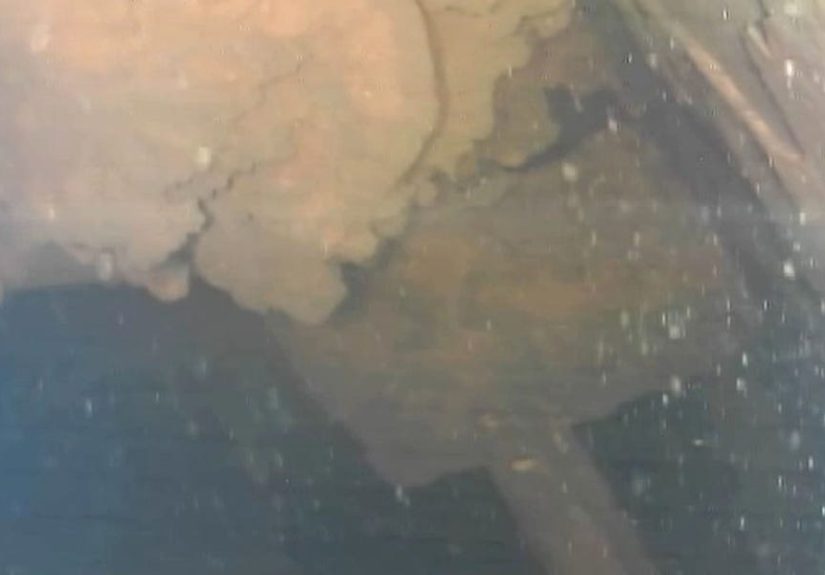
By 2022, remote-controlled submersible robots captured stronger images inside the most heavily damaged reactor. Officials said the pictures appeared to show mounds of material that had melted and fallen to the bottom. These visuals were important because they offered a more concrete look at the aftermath inside the containment area, reinforcing what experts had suspected for years.
Those images also reminded the world that the fuel debris was not sitting there neatly labeled for pickup. It appeared mixed with structural materials and solidified in irregular, hardened forms. Think less “stack of fuel rods” and more “radioactive lava after a very bad week.”
The 2024 milestone: first sample retrieved
Then came the milestone that changed everything: in late 2024, a remote-controlled robot successfully retrieved a tiny piece of melted fuel debris from Unit 2. It was a very small sample, but symbolically it was enormous. For the first time since the meltdowns, engineers had actual debris in hand for analysis.
That may sound modest if you are imagining dramatic chunks of glowing material. It was not that. It was tiny. But in nuclear cleanup, tiny is often terrific. A small sample can reveal how the debris formed, what materials mixed together during the meltdown, how radioactive it remains, and what kind of tools may be needed for larger removal operations later.
What “Fuel Debris” Really Means
The phrase melted Fukushima nuclear fuel is accurate, but it can also be misleading if it makes people picture only liquefied uranium. In practice, fuel debris is a complex mixture. During a severe accident, nuclear fuel, cladding, steel, concrete-related materials, and internal reactor structures can all melt, react, break, mix, and resolidify.
That matters because the stuff inside Fukushima is not uniform. It is not one clean material with one convenient behavior. Some of it may be dense. Some may be brittle. Some may be porous. Some may be more chemically altered near the surface than inside. From a cleanup perspective, that is a nightmare wrapped in a materials-science exam.
The first retrieved sample helped confirm that complexity. Publicly released analysis indicated the material included uranium as well as zirconium, iron, chromium, and nickel. That combination makes sense in light of reactor fuel, cladding, and structural metals mixing together during the meltdown and cooling process. It is a reminder that Fukushima’s debris is not simply “fuel.” It is the physical record of the accident itself.
Why Seeing It Is Easier Than Removing It
Finding the debris was hard. Removing it will be harder.
Radiation changes the rules
The most obvious problem is radiation. People cannot simply walk in with flashlights, gloves, and optimistic attitudes. Even robots struggle. Electronics degrade, cameras fail, cables snag, visibility drops, and delicate machines have to operate in tight, damaged spaces where almost nothing is normal anymore.
In other words, Fukushima is one of the few places on Earth where a robot can have a worse workday than a human.
The geometry is ugly
The interiors of the damaged units are cluttered, distorted, and in places partly flooded. Structures are bent, coatings are damaged, surfaces are coated with contamination, and debris is not necessarily sitting in easy-to-reach piles. Even identifying the safest access path becomes a major engineering project.
That is why TEPCO and its partners have relied so heavily on remote technologies: telescoping robotic arms, underwater probes, miniature drones, cameras, radiation sensors, and imaging tools. The operation is less like ordinary industrial cleanup and more like a cross between surgery, cave exploration, and bomb disposal.
Sampling is not the same as full-scale removal
Retrieving a tiny fragment is an essential proof of concept, but it is not the same as removing hundreds of tons of debris. Trial retrieval gives engineers data. Large-scale retrieval will demand an entirely different level of logistics, shielding, waste packaging, transport planning, worker protection, and long-term storage design.
That is one reason the official cleanup timeline still stretches across decades. The first sample is a breakthrough, yes. But it is the start of a more informed phase, not the end of the story.
What Scientists Learned from the First Samples
One of the most useful things about the first retrieved sample was not its size but its information density. TEPCO and the Japan Atomic Energy Agency reported that the first sample weighed less than a gram and carried a notable dose rate. Analysis found uranium-bearing material along with zirconium and common structural metals such as iron, chromium, and nickel. That mix supports the understanding that fuel and surrounding reactor materials melted together and then hardened into heterogeneous debris.
Researchers also used non-destructive, solid, and liquid analysis methods to examine appearance, density-related structure, radioactive nuclides, and isotopic ratios. In plain English, they were trying to answer three giant questions: what is this stuff made of, how did it form, and what does that tell us about the much larger mass still inside the reactor?
The answer, so far, is that the debris is both scientifically revealing and operationally inconvenient. The sample appears to preserve clues about oxidation, mixing, and thermal history. That makes it valuable not only for cleanup planning but also for understanding severe nuclear accidents in the real world, not just in models and simulations.
A second sample retrieved in 2025 added another layer of detail. Reports indicated it was smaller, lighter in color, more porous, and had a lower dose rate than the first. That suggests conditions may vary significantly even within a relatively small area. For engineers, that is a caution flag and a gift at the same time: the job is more complicated than a one-size-fits-all plan, but each sample helps refine the strategy.
What Happens Next at Fukushima
The next chapter in the Fukushima Daiichi cleanup is all about scaling up carefully. Officials have made clear that Unit 2 is the first test case because it currently offers the most practical conditions for trial retrieval. More investigation inside other units, including Unit 3, continues through drones and robotic surveys.
The long-term goal is not just to grab a few scientifically interesting crumbs. It is to create a repeatable, safe system for debris removal, storage, and eventual decommissioning of the site. That means learning from every delay, every equipment failure, every successful robot pass, and every gram of material that reaches a lab bench.
None of this is fast. Some timelines for Fukushima’s broader decommissioning still point to roughly 30 to 40 years of work. That number sounds enormous until you consider the scale of the challenge: multiple melted reactors, huge quantities of debris, intense radiation, difficult access, waste management questions, and the need to avoid creating new risks during cleanup.
So yes, the first real sight and retrieval of melted fuel are major achievements. But they also underline how far the project still has to go. Fukushima is no longer a mystery in the way it once was. It is now something perhaps even harder: a problem that is becoming clearer in detail.
The Bigger Lesson Behind the Headlines
Stories about Fukushima often swing between two extremes. One is apocalyptic panic. The other is cleanup-as-usual optimism. Neither tells the full story. What the recent images and samples really show is something more grounded: progress through painstaking, highly technical work.
That matters because nuclear accidents do not end when the cameras leave. Their hardest phase can come later, in the long years of stabilization, analysis, dismantling, waste control, and community recovery. The public tends to remember the explosion, the evacuation, the breaking news banner. Engineers, meanwhile, inherit the next four decades.
The first sight of Fukushima’s melted fuel is important not because it gives the internet a dramatic before-and-after image, but because it narrows the gap between uncertainty and evidence. In any cleanup of this scale, evidence is gold. Or, in this case, a rather less glamorous but much more radioactive cousin of gold.
Experiences, Emotions, and the Human Side of Seeing Fukushima’s Melted Fuel
There is also a human dimension to this story that gets lost when coverage becomes all robots, reactors, and retrieval devices. Seeing Fukushima melted fuel for the first time was not just a technical milestone. It was an emotional one. For engineers, it meant years of abstract planning finally met visible reality. For local residents, it was a reminder that the disaster was still physically present, still unfinished, still sitting there inside the plant like history that refused to stay in the past.
Imagine spending more than a decade hearing about “fuel debris” as a term in reports, press conferences, and safety briefings. Then one day, there it is in an actual image, or better yet, in a retrieved sample that proves the work has moved from theory to touchable evidence. That kind of moment changes how people feel about a cleanup. It makes the problem real in a new way, but it can also make progress feel real for the first time in years.
For workers involved in decommissioning, the experience is probably a mix of pride and pressure. Pride, because every successful robotic mission inside Fukushima is a triumph of persistence. Pressure, because every success raises the next question immediately: great, now how do you do it again, more safely, more efficiently, and at a larger scale? At Fukushima, nobody gets to spike the football. The next engineering headache is always already on the calendar.
For the broader public, the images create a strange emotional contrast. On one hand, they are evidence of scientific progress. On the other hand, they are unsettling because they reveal how violent the accident really was. Twisted structures, collapsed materials, and hardened deposits tell a story that no press release can soften. The reactors are not merely damaged buildings. They are accident sites frozen in industrial time.
There is also a deeper experience here about patience. Modern audiences are used to instant results, rapid updates, and neat endings. Fukushima offers none of that. Its cleanup has unfolded in increments so slow that each small victory carries outsized meaning. A camera reaching a new area matters. A robot surviving its route matters. A sample smaller than a paperclip matters. In ordinary life, that might sound absurd. In Fukushima, it is how progress works.
And then there are the communities around the plant, many of whom have spent years rebuilding routines, businesses, and trust. For them, news about the fuel can stir fatigue, anxiety, skepticism, or cautious hope. Some people hear “first sample retrieved” and think, finally, movement. Others hear it and think, wow, this really is going to take most of a lifetime. Both reactions are understandable.
Maybe that is the real experience tied to this moment: Fukushima teaches humility. It reminds us that technology can fail, that cleanup can take generations, and that progress often looks less like a dramatic rescue scene and more like a patient robot inching forward through darkness. It is not flashy. It is not comforting. But it is real. And after all these years, real is exactly what people needed to see.
Conclusion
The first sight of melted fuel at Fukushima was never just about getting a photo. It was about crossing a line from uncertainty into evidence. From the early robotic clues to the clearer internal images and finally the first retrieved samples, the story has evolved from “Where is it?” to “What exactly is it, and how do we move it safely?” That is real progress, even if it comes in millimeters instead of miles.
So yes, the headline works: here it is. But the more important line might be this one: now the hard part gets even more real. Fukushima’s fuel debris is no longer only an engineering unknown. It is a visible, testable, measurable obstacle in one of the most complex cleanup projects in modern history. And while the road ahead is long, the world is finally looking at the problem more clearly than ever before.