Table of Contents >> Show >> Hide
- 11 Steps to Care for an Aquatic Newt
- Step 1: Make Sure You Actually Have an Aquatic Newt
- Step 2: Choose a Tank That Gives Your Newt Space to Breathe, Swim, and Hide
- Step 3: Keep the Water Cool, Clean, and Dechlorinated
- Step 4: Use Gentle Filtration and Stable Water Parameters
- Step 5: Create a Safe Layout with Hides, Resting Spots, and Easy Access to the Surface
- Step 6: Pick Safe Substrate and Smart Decor
- Step 7: Feed a Varied Carnivorous Diet
- Step 8: Remove Leftovers and Do Not Let the Tank Become a Soup of Regret
- Step 9: Handle Your Newt as Little as Possible
- Step 10: Follow a Maintenance Routine Instead of Waiting for a Crisis
- Step 11: Watch for Stress, Illness, and Long-Term Needs
- Common Mistakes to Avoid
- Final Thoughts
- Experiences and Real-World Lessons from Keeping an Aquatic Newt
- SEO Tags
If you have decided to share your home with an aquatic newt, congratulations: you have chosen one of the most fascinating little roommates in the animal kingdom. A newt is part dragon, part noodle, part underwater introvert, and all attitude. But while aquatic newts are rewarding to keep, they are not pets you can set up like a goldfish bowl and hope for the best. Their health depends on cool, clean water, a calm environment, and a diet that makes sense for a tiny carnivorous amphibian.
The good news is that aquatic newt care is not impossibly complicated. The bad news is that shortcuts usually backfire. Newts are sensitive to heat, toxins, bad water quality, and overhandling. In other words, they are not dramatic on purpose; they are just built that way. Get the basics right, though, and your newt can thrive for years while giving you a front-row seat to one of the coolest pets on the planet.
This guide breaks the process into 11 practical steps so you can build a healthy setup, avoid common mistakes, and care for your aquatic newt with confidence.
11 Steps to Care for an Aquatic Newt
Step 1: Make Sure You Actually Have an Aquatic Newt
Before you buy supplies, confirm the species you are keeping. This matters more than many beginners realize. Some newts are fully aquatic as adults, some are semi-aquatic, and some spend part of their lives behaving like tiny swamp philosophers who change their minds about land and water. If you assume every newt wants the same setup, you can create stress before the animal even settles in.
Popular pet species such as fire-bellied newts are often kept in aquatic or mostly aquatic enclosures, but many still appreciate a resting area, floating platform, or easy way to climb out of the water. Buy from a reputable breeder or rescue when possible, and avoid impulse purchases from vague labels like “assorted newt.” That is not a species name. That is a warning label wearing a fake mustache.
Step 2: Choose a Tank That Gives Your Newt Space to Breathe, Swim, and Hide
Small animal does not mean tiny tank. A larger aquarium is usually easier to maintain because the extra water volume helps dilute waste and keeps conditions more stable. For many small aquatic newts, a tank in the 15- to 20-gallon range is a smart place to start, especially if you plan to keep more than one. Bigger is often better, as long as the setup remains secure and easy to maintain.
Choose a tank with a tight-fitting lid because newts are talented escape artists. If there is a gap, they will investigate it like furry pets investigate an open sandwich. Include hides, plants, and visual barriers so your newt feels secure instead of exposed on stage 24 hours a day.
Step 3: Keep the Water Cool, Clean, and Dechlorinated
If aquatic newts could leave online reviews, hot water would get one star and a strongly worded complaint. Most commonly kept aquatic newts do best in cool water, and prolonged warmth can cause stress and make illness more likely. Room temperature may be acceptable in some homes, but many keepers need to pay close attention during hot weather.
Use dechlorinated water, not untreated tap water. Amphibians absorb water and dissolved substances through their skin, which means they are far more sensitive than many other pets to chlorine, chloramines, and other contaminants. Distilled water is also not ideal as a long-term default because it lacks the minerals amphibians need. Treated tap water or appropriate spring water is usually the better choice.
Place the tank away from direct sunlight, radiators, and heat-producing electronics. Your newt does not want a spa day. Your newt wants a cool pond vibe.
Step 4: Use Gentle Filtration and Stable Water Parameters
Good filtration matters, but newts are not fans of a roaring river current blasting them into the decor. Choose a filter that maintains water quality while creating only slow to moderate flow. Sponge filters, air-powered corner filters, or adjustable internal filters are often good options for smaller species. The goal is clean water without turning the enclosure into an amphibian treadmill.
Water quality is one of the biggest factors in aquatic newt health. Check ammonia, nitrite, nitrate, and pH regularly with an aquarium test kit. Stable conditions matter more than perfection-chasing. Sudden changes in chemistry can stress a newt even when your intentions are excellent. A cycled tank, regular testing, and a predictable routine will save you far more trouble than last-minute panic cleaning.
Step 5: Create a Safe Layout with Hides, Resting Spots, and Easy Access to the Surface
Aquatic newts need more than open water. Build a tank that lets them rest, explore, and feel secure. Smooth rocks, cork bark, sturdy aquatic plants, and caves all help create a calm environment. Many keepers add a floating platform, shallow ledge, or land section because even highly aquatic newts often appreciate a place to rest above water.
Make sure all hardscape is stable and smooth. Sharp edges and unstable rock piles can injure delicate amphibian skin faster than you can say, “That looked decorative online.” Your newt should be able to move easily through the tank without getting trapped, scraped, or exhausted.
Step 6: Pick Safe Substrate and Smart Decor
Substrate choice matters because curious newts may snap at food and accidentally swallow whatever is nearby. Avoid tiny gravel that can be ingested. If you use gravel, choose pieces too large to swallow. Many keepers prefer bare-bottom tanks, large smooth stones, or slate because they are easier to clean and reduce the risk of impaction.
Live plants can be excellent in an aquatic newt enclosure because they provide cover, help create a more natural look, and may support water quality. Artificial plants also work if they are soft and have no sharp points. Skip cedar or pine products, scented materials, and any decor that leaches chemicals. Amphibians are not the audience for “mystery coating” home decor.
Step 7: Feed a Varied Carnivorous Diet
Aquatic newts are carnivores, and their menu should reflect that. Good staple foods often include earthworms, bloodworms, brine shrimp, blackworms, and other appropriately sized invertebrates. Some individuals will also accept quality commercial foods made for amphibians or carnivorous aquatic species, but those should support the diet rather than define it.
Variety is important. Feeding the same food every day is like trying to raise an athlete on nothing but crackers. Earthworms are widely considered one of the best staple options when size-appropriate. For smaller newts, chop larger worms into manageable pieces. Juveniles usually need more frequent feeding than adults, and thin or growing animals may need daily meals while healthy adults often do well every other day or every few days depending on species, size, and temperature.
Step 8: Remove Leftovers and Do Not Let the Tank Become a Soup of Regret
Uneaten food breaks down quickly in water, which can send your water quality in the wrong direction. Remove leftovers promptly, especially bloodworms and other soft foods that disappear into the substrate like tiny biological land mines. A turkey baster, siphon, or feeding dish can make cleanup easier.
Newt care becomes dramatically easier when you feed with intention. Offer an amount the animal can finish reasonably quickly, observe whether your newt is actually eating, and adjust the schedule based on body condition. A slightly hungry newt is easier to manage than a tank full of decomposing “just in case” snacks.
Step 9: Handle Your Newt as Little as Possible
This is one of the most important rules in aquatic newt care. Newts are display pets, not cuddle pets. Their skin is sensitive, absorbent, and easy to damage. Oils, soap residue, lotion, and even plain warm hands can create problems. Handling also raises stress and, in some cases, exposes the animal to heat from your skin.
If you absolutely must move your newt, use moistened, powder-free, latex-free gloves or a soft net only when necessary. Wash your hands after contact, and do not touch your eyes, nose, or mouth until you do. Some newts produce skin toxins that can irritate people and are especially risky if ingested. Admire your newt the same way you admire a museum exhibit: with enthusiasm and a respectful lack of grabbing.
Step 10: Follow a Maintenance Routine Instead of Waiting for a Crisis
Aquatic newts reward consistency. Daily checks should include temperature, filter function, water level, and a quick look at your newt’s posture, appetite, and skin. Weekly tasks often include water testing and spot cleaning. Partial water changes should happen on a regular schedule based on tank size, stocking level, and filter performance.
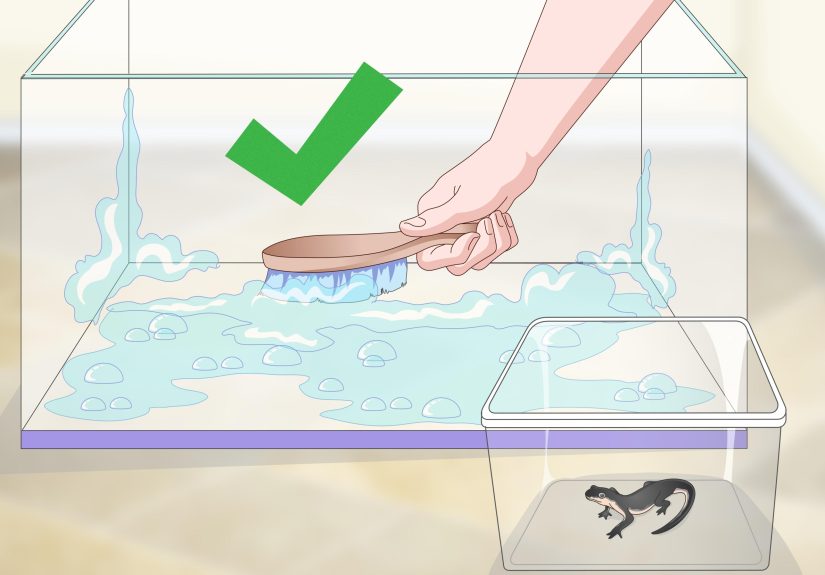
Do not perform sudden total cleanouts unless a veterinarian specifically instructs you to do so for a medical reason. Large, abrupt changes can destabilize beneficial bacteria and shock the animal. In most cases, partial water changes and steady maintenance beat dramatic deep cleans. Your goal is a stable ecosystem, not a sterile showroom.
Step 11: Watch for Stress, Illness, and Long-Term Needs
A healthy aquatic newt usually has clear eyes, intact skin, a reasonable appetite, and normal activity for its species. Red flags include skin lesions, unusual floating, persistent refusal to eat, swelling, visible fungus-like patches, rapid weight loss, difficulty submerging, or frantic escape behavior. Bad water quality is a common trigger, so always check the environment first when something seems off.
It is also wise to think long term. Many newts can live for well over a decade with proper care. That means your cute little amphibian is not a weekend project; it is a commitment with gills-adjacent energy. If you add a new animal to an existing collection, quarantine it first and avoid mixing species casually. Also, never release a pet newt into the wild. That can harm native wildlife through disease spread or invasive establishment.
Common Mistakes to Avoid
The biggest mistakes in aquatic newt care are surprisingly predictable: water that is too warm, strong filter current, poor water quality, overhandling, and feeding whatever happens to be in the freezer. Another frequent mistake is assuming a newt tank works like a tropical fish tank. It usually does not. Newts often prefer cooler water, calmer flow, and a setup designed around amphibian behavior rather than fish aesthetics.
Another trap is buying first and researching later. Aquatic newts are easy to find online, but not every seller provides good information. Spend more time checking species needs, breeder reputation, and setup requirements before the animal arrives. Your future self will thank you, and your newt will avoid becoming the unwilling star of a husbandry rescue mission.
Final Thoughts
Caring for an aquatic newt is really about mastering the quiet details. Keep the water cool, clean, and gentle. Feed a varied carnivorous diet. Handle rarely. Maintain the tank consistently. Learn your species instead of guessing. Do that, and your newt will reward you with healthy behavior, better color, calmer routines, and the kind of weird underwater charm that makes amphibian keepers hopelessly devoted.
In other words, successful aquatic newt care is less about doing something flashy and more about becoming the calm, organized pond manager your tiny salamander never knew it needed.
Experiences and Real-World Lessons from Keeping an Aquatic Newt
One of the most interesting things about caring for an aquatic newt is that the experience often changes how people think about pet care in general. At first, many beginners expect a newt to behave like a fish, a lizard, or some cute blend of both. Then they realize it is its own weird and wonderful category. A newt does not beg at the glass like a dog, perform tricks like a parrot, or bask dramatically like a reptile. Instead, it teaches patience. You start noticing small things: where it likes to rest, how it stalks food, when it becomes active, and how even subtle water changes affect behavior.
Many keepers describe a turning point that happens after the tank matures. Early on, the experience can feel technical: testing water, adjusting decor, learning feeding routines, and double-checking temperatures during warm weather. But once the enclosure becomes stable, the care routine feels more intuitive. The newt begins using favorite hiding spots, floating under leaves, or gliding through the water with that ridiculous level of grace only amphibians seem able to pull off. That is usually the moment when the setup stops feeling like a project and starts feeling like a miniature ecosystem.
Another common experience is learning that less interference often leads to better results. People want to help, fix, rearrange, and improve things constantly, but aquatic newts usually prefer a keeper who does not redecorate every weekend like an indecisive home renovation show host. Once the environment is safe and stable, the best thing you can do is maintain it consistently. Small adjustments are helpful; constant disruption is not.
Feeding time also becomes its own form of entertainment. Some newts are bold and will snap up worms with surprising enthusiasm. Others inspect every bite like food critics at an expensive restaurant. Keepers often learn to read individual quirks: one newt may love earthworms, another may prefer bloodworms, and another may act personally offended by anything unfamiliar. Over time, these patterns help you spot illness early, because appetite changes are often one of the first signs that something is wrong.
Perhaps the most valuable lesson people gain from keeping an aquatic newt is respect for environmental stability. Because newts are so sensitive, they force you to pay attention to water chemistry, temperature, stress, and cleanliness in a way that many other pets do not. That can make you a better animal keeper overall. You stop chasing shortcuts and start building routines that actually support health. And yes, you may also become the kind of person who talks about ammonia levels at dinner, which is a social side effect nobody warns you about.
Still, for people who enjoy observing behavior, building naturalistic tanks, and caring for unusual animals with real precision, aquatic newts are deeply rewarding pets. They are not loud. They do not need walks. They rarely trash the furniture. They mostly ask for cool water, decent meals, and a peaceful life. Honestly, that is a better roommate agreement than many humans offer.