Table of Contents >> Show >> Hide
- What Is an Arc Fault Circuit Interrupter?
- AFCI vs. GFCI: Do Not Mix Up the Alphabet Soup
- When Are AFCIs Required in Modern Homes?
- How to Determine When to Use Arc Fault Circuit Interrupters
- 1. Start With the Room or Area
- 2. Check Whether the Work Is New Construction
- 3. Use AFCIs When Extending or Modifying Covered Circuits
- 4. Consider AFCIs During Receptacle Replacement
- 5. Use AFCIs Where Aging Wiring Increases Fire Risk
- 6. Pay Attention to Circuits Serving Bedrooms and Sleeping Areas
- 7. Use Dual-Function Protection When Both Fire and Shock Rules Apply
- Common Signs That AFCI Protection Should Be Discussed
- Where AFCIs May Not Be the Main Requirement
- AFCI Breaker or AFCI Receptacle: Which One Makes Sense?
- Practical Examples
- Experience Notes: Real-World Lessons About Using AFCIs
- Conclusion
Arc fault circuit interrupters, better known as AFCIs, are one of those electrical safety devices that sound suspiciously like they were named by a committee after too much coffee. But behind the clunky name is a very practical idea: stop dangerous electrical arcing before it becomes a fire. If standard circuit breakers are the bouncers watching for overloads and short circuits, AFCIs are the sharp-eyed security cameras looking for sparks behaving badly behind the walls.
Knowing when to use arc fault circuit interrupters matters for homeowners, remodelers, landlords, real estate buyers, and anyone planning electrical work in a dwelling. AFCI requirements have expanded over time in the National Electrical Code, and many modern residential circuits now need this protection. However, code rules can vary by state, city, project type, and local amendments. That means the smartest answer is not “put them everywhere and hope for the best,” but “understand where they are required, where they are recommended, and when to call a licensed electrician before your breaker panel becomes an expensive mystery novel.”
What Is an Arc Fault Circuit Interrupter?
An arc fault circuit interrupter is a safety device designed to detect dangerous electrical arcing and shut off power to the circuit. An arc fault can happen when electricity jumps across a damaged connection, cracked insulation, loose terminal, pierced cable, or worn cord. That tiny jump may generate intense heat. Given the wrong conditions, it can ignite nearby materials such as wood framing, insulation, dust, or plastic.
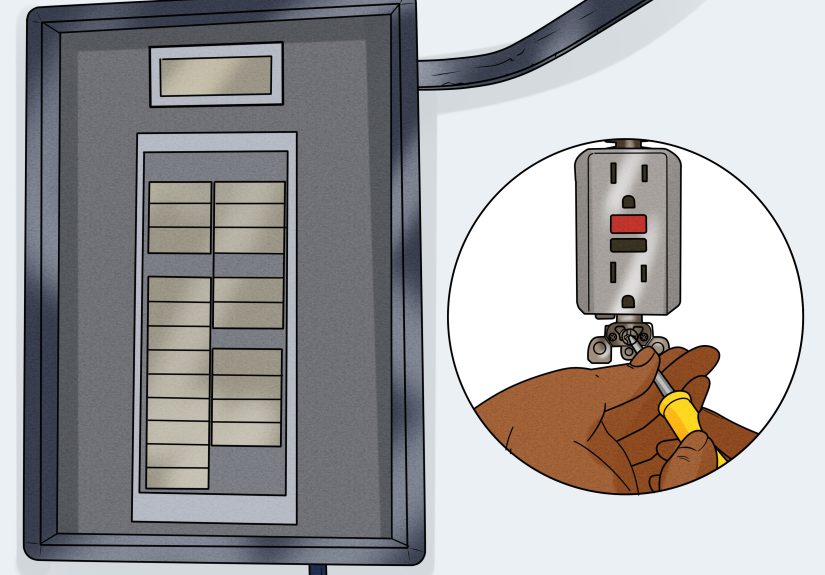
AFCIs are commonly available as circuit breakers installed in the electrical panel, receptacle-type devices installed at outlets, and dual-function devices that combine AFCI and GFCI protection. In many homes, the AFCI breaker is the most familiar option because it can protect the branch circuit from the panel onward, depending on the installation method and the applicable code.
AFCI vs. GFCI: Do Not Mix Up the Alphabet Soup
AFCIs and GFCIs are both safety devices, but they do different jobs. A ground fault circuit interrupter, or GFCI, helps protect people from electric shock by detecting current leakage to ground. That is why GFCI protection is common in kitchens, bathrooms, garages, laundry areas, basements, outdoor outlets, and other locations where moisture increases shock risk.
An AFCI, on the other hand, focuses on fire prevention. It looks for electrical patterns associated with hazardous arcing. A circuit may need AFCI protection, GFCI protection, or both. Kitchens and laundry areas are classic examples where both protections may apply, so electricians often use dual-function AFCI/GFCI breakers or combine an AFCI breaker with properly placed GFCI receptacles.
When Are AFCIs Required in Modern Homes?
In current U.S. residential electrical practice, AFCI protection is generally required for many 120-volt, single-phase, 10-, 15-, and 20-amp branch circuits supplying outlets or devices in common dwelling areas. These typically include kitchens, family rooms, dining rooms, living rooms, parlors, libraries, dens, bedrooms, sunrooms, recreation rooms, closets, hallways, laundry areas, and similar rooms or areas.
The phrase “outlets or devices” is important. Many people hear “outlet” and picture only the receptacle where a phone charger goes to retire. In electrical code language, an outlet can include any point where electricity is taken to supply equipment. That may include receptacles, lighting outlets, smoke alarms, dishwashers, disposals, and other hardwired equipment, depending on the circuit and location.
How to Determine When to Use Arc Fault Circuit Interrupters
1. Start With the Room or Area
The first question is simple: where is the circuit located? If the branch circuit supplies a bedroom, hallway, living room, dining room, kitchen, laundry area, closet, family room, den, library, recreation room, sunroom, or a similar interior dwelling space, AFCI protection is usually required in new work under modern code rules. These are the everyday spaces where people sleep, relax, cook, clean, plug in lamps, charge devices, and unknowingly hide damaged cords behind furniture like tiny electrical villains.
Bathrooms, garages, exterior outlets, and some unfinished areas are often discussed separately because GFCI rules dominate those locations, and AFCI rules may not apply in the same way. Still, local jurisdictions can amend national rules, so homeowners should not assume. A permit office or licensed electrician can confirm the adopted code in your area.
2. Check Whether the Work Is New Construction
If a home is being newly built, AFCI protection is usually part of the electrical design from the beginning. This is the cleanest scenario. The electrician can select compatible AFCI breakers, plan the panel layout, identify circuits requiring dual protection, and install everything according to manufacturer instructions and local inspection standards.
New construction is also where misunderstandings are easiest to avoid. Instead of asking, “Can we skip AFCIs?” the better question is, “Which circuits require AFCI, which require GFCI, and where do dual-function devices make sense?” Good planning saves callbacks, failed inspections, and the soul-crushing moment when someone realizes the brand-new kitchen needs rework.
3. Use AFCIs When Extending or Modifying Covered Circuits
Many homeowners run into AFCI rules during remodels. If you extend, replace, or modify an existing branch circuit in an area where AFCI protection is required, the updated portion may trigger the need to add AFCI protection. For example, adding receptacles in a bedroom, extending a living room circuit for a media wall, or modifying kitchen wiring during a remodel can bring current AFCI requirements into the conversation.
This does not always mean an entire older home must be upgraded overnight. Existing installations are often handled differently from new work. But once a circuit is altered, the local code may require protection to be added. That is why a small electrical project can become more complicated than expected. The wall may be open, the drywall dust may be floating, and suddenly the breaker panel has entered the chat.
4. Consider AFCIs During Receptacle Replacement
Replacing receptacles can also raise AFCI questions. In many cases, replacement receptacles in locations that require AFCI protection must be protected by an approved AFCI method. This may be accomplished with a listed outlet branch-circuit AFCI receptacle, an AFCI breaker, or another code-approved arrangement.
This is especially important in older homes where outlets are being refreshed for appearance or function. Swapping a worn receptacle for a new one may look like a five-minute cosmetic upgrade, but electrical safety requirements are not interested in your weekend schedule. If the location falls under AFCI rules, the replacement may need proper protection.
5. Use AFCIs Where Aging Wiring Increases Fire Risk
Even when AFCI protection is not strictly required for untouched existing circuits, it can be a wise safety upgrade. Older homes may have wiring that has experienced decades of heat, vibration, rodents, remodeling mistakes, loose connections, overfilled boxes, or enthusiastic previous owners with a toolbox and too much confidence.
AFCIs can provide added protection against arcing conditions that ordinary breakers may not detect early enough. A standard breaker is designed primarily to respond to overloads and short circuits. It may not trip for low-level arcing that generates heat but does not draw enough current to look like a traditional fault. AFCIs help cover that gap.
6. Pay Attention to Circuits Serving Bedrooms and Sleeping Areas
Bedrooms were among the earliest residential locations where AFCI protection became a major code requirement, and the reason is not hard to understand. People are asleep. Cords are often hidden behind beds, dressers, nightstands, and rugs. Space heaters, chargers, lamps, and extension cords may gather in one corner like a small electrical convention.
When evaluating an older home, bedroom circuits deserve special attention. If outlets are loose, plugs fall out, lights flicker, breakers trip, or cords feel warm, those are warning signs that should be inspected by a qualified electrician. AFCI protection is not a substitute for repairing damaged wiring, but it can be an important layer of protection.
7. Use Dual-Function Protection When Both Fire and Shock Rules Apply
Some locations need both AFCI and GFCI protection. Kitchens and laundry areas are the usual suspects. In these spaces, the fire risk from electrical faults and the shock risk from water or grounded surfaces both matter. A dual-function AFCI/GFCI breaker may simplify compliance by providing both types of protection from one device.
That said, device compatibility matters. AFCI breakers must be matched to the panel brand and type. Not every breaker fits every panel, and using the wrong device can create safety and listing problems. This is not the place for “close enough.” Electrical panels are not fashion accessories; they do not appreciate improvisation.
Common Signs That AFCI Protection Should Be Discussed
AFCI protection should be part of the discussion if you notice frequent breaker trips, buzzing switches, flickering lights, warm receptacles, damaged cords, scorch marks, loose plugs, cracked outlet faces, or a burning smell. These symptoms do not automatically mean an arc fault is present, but they do mean the electrical system is asking for attention in the least charming way possible.
AFCIs can also trip because they detect a real problem, because of a wiring issue, because of shared neutrals, because of incompatible equipment, or because of a faulty device. Nuisance tripping should never be solved by replacing the AFCI with a standard breaker just to “make the problem go away.” That is like removing the smoke alarm because it keeps complaining about smoke. The better move is to diagnose the circuit.
Where AFCIs May Not Be the Main Requirement
Not every circuit in a home is automatically governed by AFCI rules. Large 240-volt appliances, dedicated equipment circuits, garages, bathrooms, outdoor circuits, and unfinished utility spaces may follow different rules, especially where GFCI protection is the primary concern. Some special circuits, such as certain fire alarm circuits installed by approved methods, may have exceptions.
The key is not to memorize every possible exception like you are training for an electrical code spelling bee. Instead, identify the circuit type, location, voltage, amperage, and scope of work. Then compare those facts with the code adopted by your local authority having jurisdiction. For homeowners, that usually means asking the inspector or hiring a licensed electrician who works under that local code every week.
AFCI Breaker or AFCI Receptacle: Which One Makes Sense?
A combination-type AFCI breaker is often preferred for new circuits because it can protect the entire branch circuit. It is installed in the panel and monitors the circuit from the source. An outlet branch-circuit AFCI receptacle may be used in certain applications, especially when installed as the first outlet in the circuit and when the wiring method between the panel and first outlet meets code conditions.
For remodels, the right choice depends on the panel, wiring method, circuit layout, local rules, and whether GFCI protection is also required. If the panel is older or has limited compatible AFCI options, the solution may require more planning. This is another reason electrical work should not be treated as a puzzle solved entirely by watching three videos and squinting at the breaker box.
Practical Examples
Example 1: Adding Outlets in a Bedroom
A homeowner wants two new receptacles on the wall behind a bed. Because the work modifies or extends a bedroom branch circuit, AFCI protection is typically required. If the circuit does not already have AFCI protection, the electrician may install a compatible AFCI breaker or another approved method.
Example 2: Remodeling a Kitchen
A kitchen remodel includes new receptacles, lighting, a dishwasher, and disposal. Kitchen circuits commonly require AFCI protection, and many receptacles or appliances may also need GFCI protection. Dual-function breakers may be an efficient solution, but the final design depends on the panel, circuits, and local code.
Example 3: Replacing a Living Room Receptacle
A worn living room receptacle is being replaced. If the living room falls under AFCI requirements for replacement receptacles in the local code, AFCI protection may need to be added. The homeowner should not assume that a simple device swap avoids all safety rules.
Example 4: Updating an Older Home
A 1970s home has no AFCI protection. The owner is not remodeling but wants to improve safety. A licensed electrician can evaluate whether adding AFCI breakers is practical, whether the panel supports them, and whether existing wiring issues need repair first.
Experience Notes: Real-World Lessons About Using AFCIs
In real-world residential work, the hardest part about AFCIs is rarely understanding what they do. Most homeowners can grasp the concept quickly: dangerous sparks are bad, and a device that shuts them down is good. The tricky part is applying the rule to messy houses, old wiring, half-finished remodels, and breaker panels that look like they have been through three generations of “my cousin knows electrical.”
One common experience is that AFCI upgrades reveal problems that were already there. A homeowner may install AFCI protection and suddenly a breaker trips. The first reaction is often, “The new breaker is defective.” Sometimes it is. But many times, the AFCI is doing exactly what it was hired to do. It may be detecting damaged insulation, a loose neutral, a shared neutral problem, a backstabbed receptacle connection, or a cord-connected appliance with internal issues. In that sense, AFCI installation can act like turning on the lights in a dusty attic. You may not love what you see, but at least now you know it exists.
Another lesson is that planning beats patching. During a remodel, homeowners often focus on visible upgrades: cabinets, paint, lighting style, countertop material, and whether the backsplash says “timeless” or “I watched too many renovation shows.” Electrical protection gets attention only when inspection time arrives. A better approach is to discuss AFCI and GFCI requirements before walls are closed. That gives the electrician time to plan circuit routing, select correct breakers, avoid compatibility issues, and reduce the chance of frustrating callbacks.
Compatibility is a major field issue. AFCI breakers are not universal. A breaker must be listed for the panel where it is installed. Using an incorrect breaker because it “fits” physically is unsafe and can violate code. Homeowners should also understand that older panels may not accept modern AFCI breakers easily. In some cases, panel upgrades or alternative approved methods may be needed. That can change the budget, but it is better than forcing a solution that does not belong.
Homeowners also learn that AFCIs are not magic fire shields. They reduce risk, but they do not make damaged wiring acceptable. If a receptacle is scorched, a switch buzzes, or lights flicker when appliances start, the problem still needs diagnosis and repair. AFCI protection should be viewed as part of a safety system that includes correct wiring, secure connections, proper box fill, suitable devices, code-compliant grounding, and responsible use of cords and appliances.
Finally, AFCI decisions are local. The National Electrical Code provides the model, but states and cities adopt, amend, and enforce it differently. Two homes in different jurisdictions may face different requirements for the same project. The best experience comes from checking local rules early, pulling permits when required, and using a qualified electrician. That may not sound as thrilling as a do-it-yourself adventure, but electrical safety is one area where boring is beautiful. A quiet breaker panel, a passed inspection, and a home that does not smell like overheated plastic are all underrated luxuries.
Conclusion
Determining when to use arc fault circuit interrupters comes down to four practical questions: Where is the circuit located? Is the work new, extended, modified, or a receptacle replacement? Does the circuit also require GFCI protection? And what does the local electrical code require? In modern homes, AFCI protection is common in bedrooms, living areas, kitchens, laundry areas, hallways, closets, and similar spaces. It is especially important during new construction, remodeling, and safety upgrades in older homes.
AFCIs are not just code gadgets. They are fire-prevention devices designed to detect dangerous arcing that ordinary breakers may miss. Used correctly, they add a meaningful layer of protection to the electrical system. Used carelessly, ignored, or bypassed, they cannot do their job. When in doubt, ask the local building department or a licensed electrician. Electricity is useful, loyal, and wonderfully convenient, but it has never once appreciated guesswork.
Note: This article synthesizes current U.S. electrical safety guidance, NEC-style residential code practices, consumer safety information, testing standards, manufacturer guidance, and local inspection interpretations. Local code adoption and amendments vary, so electrical work should be verified by the authority having jurisdiction and performed by a qualified licensed electrician.