Table of Contents >> Show >> Hide
- Why These Are Among the Best Books for Teenagers
- The 40 Best Books for Teenagers Ever Written
- 1. To Kill a Mockingbird by Harper Lee
- 2. The Giver by Lois Lowry
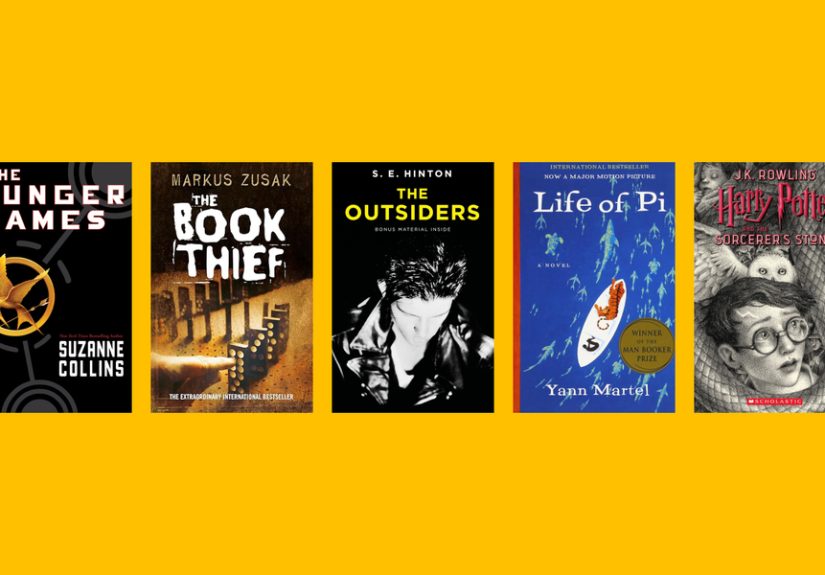
- 3. The Outsiders by S. E. Hinton
- 4. The Hunger Games by Suzanne Collins
- 5. Harry Potter and the Sorcerer’s Stone by J. K. Rowling
- 6. A Wrinkle in Time by Madeleine L’Engle
- 7. The Book Thief by Markus Zusak
- 8. The Hate U Give by Angie Thomas
- 9. Little Women by Louisa May Alcott
- 10. Anne of Green Gables by L. M. Montgomery
- 11. The Absolutely True Diary of a Part-Time Indian by Sherman Alexie
- 12. Speak by Laurie Halse Anderson
- 13. American Born Chinese by Gene Luen Yang
- 14. Long Way Down by Jason Reynolds
- 15. The Poet X by Elizabeth Acevedo
- 16. The Fault in Our Stars by John Green
- 17. Aristotle and Dante Discover the Secrets of the Universe by Benjamin Alire Sáenz
- 18. I Am Not Your Perfect Mexican Daughter by Erika L. Sánchez
- 19. The House on Mango Street by Sandra Cisneros
- 20. Brown Girl Dreaming by Jacqueline Woodson
- 21. Monster by Walter Dean Myers
- 22. The Lightning Thief by Rick Riordan
- 23. The Hobbit by J. R. R. Tolkien
- 24. A Wizard of Earthsea by Ursula K. Le Guin
- 25. The Golden Compass by Philip Pullman
- 26. The Maze Runner by James Dashner
- 27. Divergent by Veronica Roth
- 28. Shadow and Bone by Leigh Bardugo
- 29. Six of Crows by Leigh Bardugo
- 30. Children of Blood and Bone by Tomi Adeyemi
- 31. The Inheritance Games by Jennifer Lynn Barnes
- 32. One of Us Is Lying by Karen M. McManus
- 33. The Westing Game by Ellen Raskin
- 34. Holes by Louis Sachar
- 35. Wonder by R. J. Palacio
- 36. The Hate U Give by Angie Thomas
- 37. Scythe by Neal Shusterman
- 38. Feed by M. T. Anderson
- 39. Nimona by ND Stevenson
- 40. Heartstopper by Alice Oseman
- How to Choose the Right Teen Book
- Experiences and Reflections: What These Books Teach Teen Readers
- Conclusion
Choosing the best books for teenagers ever written is a little like choosing the best snacks for a road trip: everyone has opinions, someone will defend chocolate with alarming passion, and the “right” answer depends on mood, age, taste, and how much emotional damage a reader is willing to endure before dinner. Still, some books rise above the noise. They keep showing up on library lists, classroom shelves, award conversations, bestseller tables, and late-night “just one more chapter” reading sessions.
This guide brings together classic novels, modern young adult fiction, fantasy, dystopian adventures, graphic novels, memoir-style works, and coming-of-age stories that have shaped generations of teen readers. Some are funny. Some are intense. Some are so beautifully written they make you stare at the wall for a minute like a dramatic movie character in the rain.
The goal is not to create homework in disguise. The goal is to help teens, parents, teachers, and book lovers find stories that entertain, challenge, comfort, and occasionally sneak in a life lesson while pretending to be “just a really good book.”
Why These Are Among the Best Books for Teenagers
The strongest teen books usually do three things well. First, they respect young readers instead of talking down to them. Second, they build characters who feel real, flawed, brave, awkward, curious, or all of the above. Third, they explore big themesidentity, friendship, family, courage, justice, love, grief, ambition, survival, and belongingwithout sounding like a motivational poster in a school hallway.
Teenagers deserve books that understand how complicated growing up can be. A great YA novel knows that a locker jam can feel catastrophic, a first friendship breakup can hurt more than a villain’s curse, and the future can look both exciting and suspiciously like a group project nobody explained properly.
The 40 Best Books for Teenagers Ever Written
1. To Kill a Mockingbird by Harper Lee
A powerful novel about justice, childhood, prejudice, and moral courage, To Kill a Mockingbird remains one of the most discussed books for teens. Scout Finch’s voice makes difficult social issues accessible without softening their importance. It is a thoughtful choice for readers ready to examine fairness, empathy, and the gap between law and justice.
2. The Giver by Lois Lowry
This slim dystopian novel packs a serious punch. Jonas lives in a controlled society where comfort comes at the cost of freedom, memory, and choice. For teen readers, The Giver raises unforgettable questions: Is safety worth losing individuality? Who decides what people should know? Also, why do fictional utopias always seem to need a better human resources department?
3. The Outsiders by S. E. Hinton
Written by Hinton when she was still a teenager, The Outsiders captures class conflict, loyalty, friendship, and the ache of being misunderstood. Ponyboy Curtis remains one of YA literature’s most memorable narrators. The book is direct, emotional, and proof that teen voices can change literature.
4. The Hunger Games by Suzanne Collins
Katniss Everdeen became an icon for a reason. The Hunger Games blends survival, politics, media spectacle, and personal sacrifice into a story that moves fast but leaves readers thinking. It is one of the best books for teenagers who like action with a sharp social edge.
5. Harry Potter and the Sorcerer’s Stone by J. K. Rowling
The first Harry Potter book introduced millions of readers to Hogwarts, friendship, chosen family, and the pleasure of disappearing into a fully built fantasy world. Beyond the magic, the story works because Harry, Ron, and Hermione are not perfect heroes; they are kids figuring things out one mistake at a time.
6. A Wrinkle in Time by Madeleine L’Engle
Science fiction, fantasy, family drama, and cosmic weirdness meet in this beloved novel. Meg Murry is smart, impatient, insecure, and bravebasically a realistic teen with interdimensional travel added. The book celebrates intelligence, love, and the idea that being different can be a strength.
7. The Book Thief by Markus Zusak
Set in Nazi Germany and narrated in an unusual, haunting style, The Book Thief explores language, humanity, fear, and courage. It is a moving historical novel for mature teen readers who appreciate lyrical writing and emotionally rich storytelling.
8. The Hate U Give by Angie Thomas
Starr Carter’s story is urgent, heartfelt, and deeply human. The Hate U Give examines identity, community, racism, activism, and the pressure of finding one’s voice. It is modern YA at its strongest: relevant, character-driven, and impossible to ignore.
9. Little Women by Louisa May Alcott
The March sisters have been charming readers for generations. Jo, Meg, Beth, and Amy each represent different dreams and struggles, making the novel surprisingly fresh for modern teens. It is warm, funny, emotional, and full of sibling energymeaning affection, chaos, and occasional dramatic overreaction.
10. Anne of Green Gables by L. M. Montgomery
Anne Shirley is imagination with red hair and unstoppable opinions. This classic coming-of-age novel is ideal for readers who enjoy wit, friendship, mistakes, ambition, and sentences that occasionally wear a fancy hat. Anne’s optimism remains infectious without feeling shallow.
11. The Absolutely True Diary of a Part-Time Indian by Sherman Alexie
This semi-autobiographical novel follows Junior, a Native teen navigating school, family, identity, and hope. Its voice is funny, honest, and sharp. The book balances humor with serious themes, showing how comedy can sometimes be a survival tool.
12. Speak by Laurie Halse Anderson
Speak is a powerful novel about silence, trauma, recovery, and self-expression. It is often recommended for older teens because of its serious subject matter, but its message is compassionate and important: finding a voice can be difficult, but it matters.
13. American Born Chinese by Gene Luen Yang
This graphic novel combines mythology, humor, identity, and cultural pressure in a bold, inventive structure. It helped prove that graphic novels can be literary, funny, complex, and emotionally resonant all at once. A great pick for reluctant readers and visual-story fans.
14. Long Way Down by Jason Reynolds
Written in verse, Long Way Down unfolds during a single elevator ride. The spare style makes every page feel immediate. Reynolds uses rhythm, silence, and memory to explore choices, grief, and cycles of violence in a way that is accessible but never simplistic.
15. The Poet X by Elizabeth Acevedo
Xiomara Batista finds power through poetry, questioning expectations about faith, family, body image, and identity. The Poet X is passionate, musical, and perfect for teens who think poetry is boring because someone once forced them to analyze a daffodil for 45 minutes.
16. The Fault in Our Stars by John Green
This contemporary YA novel is witty, emotional, and philosophical without losing its teen voice. It explores love, illness, humor, and meaning through characters who refuse to become clichés. Keep tissues nearby, but do not blame the book if your face starts leaking.
17. Aristotle and Dante Discover the Secrets of the Universe by Benjamin Alire Sáenz
A quiet, beautiful novel about friendship, family, identity, and self-understanding. Aristotle and Dante’s relationship grows with tenderness and patience, making this one of the most beloved coming-of-age books for teenagers.
18. I Am Not Your Perfect Mexican Daughter by Erika L. Sánchez
Julia is angry, funny, ambitious, and tired of being compared to impossible expectations. This novel explores grief, culture, family pressure, and the messy work of becoming yourself. It is sharp, relatable, and full of personality.
19. The House on Mango Street by Sandra Cisneros
Told through short vignettes, this modern classic follows Esperanza Cordero as she observes her neighborhood, dreams, limitations, and possibilities. Its compact style makes it approachable, while its imagery and emotional depth make it unforgettable.
20. Brown Girl Dreaming by Jacqueline Woodson
This memoir in verse traces Woodson’s childhood and growth as a writer. It is lyrical, accessible, and rich with family, history, race, memory, and imagination. For teens who enjoy true stories with poetic power, this is essential reading.
21. Monster by Walter Dean Myers
Presented partly as a screenplay, Monster follows Steve Harmon as he processes his experience in the justice system. The structure is gripping, and the questions about identity, perception, and truth are powerful. It is a strong choice for classroom discussion and independent reading.
22. The Lightning Thief by Rick Riordan
Percy Jackson discovers that Greek mythology is not only real, but apparently very interested in ruining his schedule. Funny, fast-paced, and full of adventure, The Lightning Thief is one of the best books for teenagers who want mythology with jokes, quests, and excellent chapter titles.
23. The Hobbit by J. R. R. Tolkien
Before epic fantasy became a whole neighborhood of publishing, Bilbo Baggins reluctantly left home and helped define the genre. The Hobbit is adventurous, cozy, witty, and grand. It is perfect for teens who like dragons, riddles, maps, and snacks.
24. A Wizard of Earthsea by Ursula K. Le Guin
This fantasy classic follows Ged, a gifted young wizard whose pride leads to serious consequences. Le Guin’s writing is elegant and thoughtful, and the novel’s themes of responsibility, balance, and self-knowledge still feel fresh.
25. The Golden Compass by Philip Pullman
Lyra Belacqua’s world is full of daemons, secrets, danger, and big questions about authority and truth. The Golden Compass is ideal for teens who want fantasy that challenges the brain while still delivering adventure.
26. The Maze Runner by James Dashner
Fast, mysterious, and tense, The Maze Runner throws readers into a strange world with little explanationjust like a pop quiz, but with walls. It is a strong pick for teens who enjoy survival stories, puzzles, and dystopian suspense.
27. Divergent by Veronica Roth
In a society divided by personality-based factions, Tris Prior must decide who she is beyond the label assigned to her. The novel’s appeal comes from action, identity questions, and the classic teen problem: adults creating systems that make absolutely no sense.
28. Shadow and Bone by Leigh Bardugo
This fantasy novel introduces the Grishaverse, where magic, politics, power, and secrets collide. Alina Starkov’s journey from overlooked soldier to powerful figure makes the book a compelling start to a larger fantasy world.
29. Six of Crows by Leigh Bardugo
A heist story with unforgettable characters, Six of Crows is darker, smarter, and more intricate than many teen fantasy novels. The crew dynamic is the real treasure, though the actual treasure also matters because crime plots do need budgeting.
30. Children of Blood and Bone by Tomi Adeyemi
This West African-inspired fantasy delivers magic, action, and emotional stakes. Zélie’s fight to restore magic makes the novel exciting, while its themes of oppression, courage, and resistance give it depth.
31. The Inheritance Games by Jennifer Lynn Barnes
Avery Grambs inherits a fortune from a stranger and lands in a mansion full of puzzles, secrets, and very suspicious rich people. This mystery thriller is addictive, clever, and perfect for teens who love twists.
32. One of Us Is Lying by Karen M. McManus
A high school detention turns into a mystery, and every character has something to hide. The book mixes suspense with social pressure, secrets, and shifting points of view. It is a page-turner for readers who like their school drama with detective energy.
33. The Westing Game by Ellen Raskin
This clever mystery has puzzles, heirs, clues, and a cast of memorable characters. Although often read by younger teens, it remains enjoyable for older readers because the plotting is so sharp. It is basically a board game in novel form, minus the missing dice.
34. Holes by Louis Sachar
Funny, strange, and brilliantly structured, Holes connects family history, injustice, friendship, and fate. Stanley Yelnats is unlucky in a way that feels almost athletic. The novel is readable, smart, and satisfying from beginning to end.
35. Wonder by R. J. Palacio
Wonder encourages empathy without becoming preachy. Through multiple perspectives, it shows how kindness, cruelty, insecurity, and courage can shape everyday school life. It is especially strong for younger teens and family reading.
36. The Hate U Give by Angie Thomas
Yes, this book deserves repeating in spirit, but not in list spaceso let us use this slot for another Thomas standout: On the Come Up. Bri wants to become a rapper while dealing with family stress, public judgment, and her own ambitions. It is energetic, funny, and full of voice.
37. Scythe by Neal Shusterman
In a future where death has been conquered, special figures called scythes control population by selecting who dies. The premise is chilling but philosophical, asking big questions about power, morality, and human nature. Best for older teens who like speculative fiction with bite.
38. Feed by M. T. Anderson
Feed imagines a future where technology and advertising live directly inside people’s minds. Satirical, unsettling, and darkly funny, it feels increasingly relevant in a world where everyone’s phone seems to know they wanted shoes before they did.
39. Nimona by ND Stevenson
This graphic novel is chaotic in the best way. Nimona plays with heroes, villains, friendship, identity, and institutions, all while being funny and visually expressive. It is excellent for teens who like fantasy with personality and a rebellious grin.
40. Heartstopper by Alice Oseman
Warm, gentle, and emotionally honest, Heartstopper follows friendship, first love, school life, and self-discovery. Its graphic format makes it approachable, and its kindness is part of its power. Not every teen book needs to explode a government; sometimes surviving feelings is plenty dramatic.
How to Choose the Right Teen Book
The best book for a teenager is not always the most famous one. A teen who loves puzzles may race through The Inheritance Games but nap politely through a slow classic. A fantasy fan may adore Six of Crows, while a realistic-fiction reader may prefer The Poet X or I Am Not Your Perfect Mexican Daughter. Reading taste is personal, and forcing the “perfect” book on the wrong reader can turn literature into broccoli with page numbers.
Start with mood. Does the reader want adventure, comfort, mystery, romance, humor, or something meaningful? Then consider format. Verse novels and graphic novels are not “lesser” reading; they are different doors into story. Audiobooks count too, especially for teens who understand stories better by listening.
It also helps to mix classics with contemporary YA books. Classics show how literature has shaped culture, while modern teen novels often reflect today’s language, technology, diversity, and social questions. A healthy reading list has both: a little literary history, a little fresh chaos, and preferably a main character who makes at least one questionable decision for educational purposes.
Experiences and Reflections: What These Books Teach Teen Readers
Reading the best books for teenagers is not just about finishing chapters; it is about collecting experiences without having to personally survive every dragon, dystopian government, awkward cafeteria moment, or mysterious inheritance. That is one of the quiet superpowers of books. They let readers test-drive emotions, choices, and worlds from the safety of a couch, bed, bus seat, library corner, or suspiciously wobbly school desk.
One common experience teen readers describe is recognition. A character says something, feels something, or messes up in a way that makes the reader think, “Wait, that is not just me?” Books like The Poet X, Aristotle and Dante Discover the Secrets of the Universe, and I Am Not Your Perfect Mexican Daughter are powerful because they name feelings that can be hard to explain. They show that confusion is not failure. Anger is not always wrong. Silence is not always peace. Growing up is not a neat staircase; sometimes it is a hallway where every door is labeled “figure it out.”
Another important experience is empathy. A reader may not share Starr Carter’s life, Bilbo’s adventure, Anne Shirley’s imagination, or Jonas’s society, but a good story builds a bridge. It asks readers to step into someone else’s fear, joy, pressure, hope, or courage. This matters because empathy is not a soft skill in the “nice extra” category. It is a real-world survival skill. People who read widely often become better at noticing complexity in others. They understand that nobody is just one label, one mistake, one rumor, or one first impression.
Great teen books also teach decision-making, though thankfully without making the reader attend a lecture called “Decision-Making 101: Now With Worksheets.” Katniss must choose what she stands for. Ged in A Wizard of Earthsea must face the results of pride. Tris in Divergent questions the system around her. Avery in The Inheritance Games learns that intelligence is not just knowing answers; it is asking better questions. These stories remind teens that choices have weight, but they also show that people can learn, adapt, apologize, rebuild, and keep going.
For many readers, books become emotional landmarks. Someone might remember reading Holes during a summer when they needed something funny. Someone else might discover Long Way Down and realize verse can feel like music and thunder at the same time. A teen who thinks classics are dusty furniture may meet Jo March or Anne Shirley and discover that old books can still be wildly alive. The right book at the right time can feel less like an assignment and more like a friend tapping your shoulder and saying, “You are not done becoming who you are.”
There is also a practical benefit: reading builds vocabulary, focus, writing skill, and cultural knowledge. But honestly, that sounds too much like something printed on a school brochure next to a stock photo of a smiling pencil. The deeper truth is better: reading gives teenagers more language for their own lives. It helps them argue more clearly, dream more boldly, laugh at absurdity, and recognize when the world is trying to sell them nonsense wrapped in shiny packaging.
The best reading experience does not require loving every famous book. It requires curiosity. Skip around. Try a graphic novel. Try fantasy. Try a classic. Try a novel in verse. Quit a book that truly is not working, but do not quit reading altogether. Somewhere out there is a book with the exact right combination of character, conflict, humor, heartbreak, mystery, and momentum. Finding it can turn a reluctant reader into someone who says, “I don’t really read,” while secretly carrying three books in their backpack like literary contraband.
Conclusion
The best books for teenagers ever written are not all the same kind of book, and that is exactly the point. Teen readers need fantasy and realism, laughter and seriousness, classics and new voices, short books and giant series that could double as home gym equipment. Whether a reader chooses The Giver, The Hate U Give, The Hobbit, Heartstopper, or The Poet X, the real victory is finding stories that make reading feel alive.
A great teen book does more than fill time. It opens a door, starts a conversation, challenges an assumption, or gives a reader the strange and wonderful feeling of being understood. That is why these 40 books continue to matterand why the next favorite book may be waiting quietly on a shelf, pretending not to change someone’s life.