Table of Contents >> Show >> Hide
- What “Playing the Probabilities” Really Means
- Why Humans Struggle With Probabilities
- Playing the Probabilities in Everyday Life
- How to Get Better at Playing the Probabilities
- The Real Power of Probabilistic Thinking
- What the Experience of Playing the Probabilities Looks Like in Real Life
- Conclusion
- SEO Tags
Life would be a lot easier if every decision came with a giant neon sign reading “This one will work out beautifully” or “Absolutely not, back away slowly.” Sadly, real life is less like a tidy instruction manual and more like a weather app that says there’s a 30% chance of rain right when you forgot your umbrella. That is exactly why learning to play the probabilities matters.
At its core, playing the probabilities means making decisions based on odds, patterns, trade-offs, and likely outcomes instead of wishful thinking, gut drama, or one spectacular anecdote from your cousin’s roommate’s barber. It does not mean becoming cold, robotic, or weirdly obsessed with spreadsheets. It means understanding that uncertainty is normal, risk is unavoidable, and better decisions usually come from thinking in ranges rather than pretending the future owes us guarantees.
Whether you are deciding how to invest, how to interpret a medical test, when to launch a product, or whether to bring a jacket, probabilistic thinking gives you a smarter framework. It will not make you psychic. It will make you less likely to confuse confidence with accuracy, luck with skill, and one good outcome with a good process.
What “Playing the Probabilities” Really Means
Most important choices happen under uncertainty. You rarely know exactly what will happen next, but you can often estimate what is more likely, what is less likely, and what the upside or downside looks like if you are wrong. That is the heart of probabilistic thinking.
In plain English, it means asking better questions:
- What are the most likely outcomes?
- How big is the upside if this works?
- How painful is the downside if it does not?
- How often has something like this happened before?
- Am I reacting to evidence, or just to a dramatic story?
That last question matters more than most people realize. Human beings love certainty. We adore it. We cradle it like a warm cup of coffee. But reality usually offers probabilities instead. A smart decision, then, is not the one that guarantees perfection. It is the one that gives you the best expected outcome based on the information you have now.
This is why the best decision-makers often sound less theatrical than everyone else. They do not say, “This will definitely work.” They say, “Given the evidence, this has a solid chance of success, the downside is manageable, and the alternatives look worse.” That may not fit on a motivational poster, but it is how adults keep fires from spreading in boardrooms, portfolios, and group chats.
Why Humans Struggle With Probabilities
If playing the probabilities is so useful, why are people so bad at it? Because the brain is brilliant, fast, emotional, and occasionally about as subtle as a raccoon in a snack cabinet.
We overreact to vivid stories
A rare event that is memorable can feel more likely than a common event that is boring. One terrifying headline or one dramatic anecdote can overpower a mountain of quieter data. This is how people end up fearing shark attacks more than everyday risks with far greater odds.
We ignore base rates
Base rates are simply the background odds. If something is very rare to begin with, even a positive test, a flashy trend, or a persuasive pitch does not automatically make it likely. Skipping the base rate is one of the most common ways people misread probabilities.
We confuse outcomes with decision quality
A lucky decision can still be a bad decision. An unlucky decision can still be a smart one. If you make a reckless investment and it happens to go up, that does not prove you are a genius. It may just prove the universe enjoys practical jokes.
We prefer certainty language
“Always,” “never,” and “guaranteed” sound comforting. Unfortunately, they also tend to be suspicious. Probabilistic thinkers are willing to live with words like “likely,” “possible,” “range,” “risk,” and “depends.” Those words are not weak. They are honest.
Playing the Probabilities in Everyday Life
Weather: The easiest classroom for uncertainty
Weather forecasts are one of the best everyday examples of probability in action. When the forecast says there is a 30% chance of rain, it does not mean it will rain over 30% of the city, or for 30% of the day, or only on people wearing white sneakers. It means there is a 30% chance that a measurable amount of precipitation will fall at your forecast point during the stated period.
That matters because it changes the question from “Will it rain, yes or no?” to “How costly is it to prepare for rain when the chance is meaningful?” If carrying a small umbrella is easy and getting soaked would ruin your day, the smart move may be to prepare even if rain is not the most likely outcome. That is playing the probabilities: not predicting certainty, but managing consequences.
Health: Why a positive result is not always the whole story
Medical decisions get even more interesting. A screening test may be accurate overall, but the meaning of a positive result depends heavily on context, including how likely the condition was before testing. In low-prevalence settings, false positives can become a serious issue, which is why confirmatory testing is often essential.
This is one reason doctors and public health experts care so much about sensitivity, specificity, predictive value, and pretest probability. Those terms may sound like they belong in a statistics dungeon, but they are really about one practical question: What does this result actually mean for this person in this situation?
Good probability thinking in health care does not dismiss risk. It clarifies it. It helps patients avoid panic, helps clinicians communicate clearly, and helps everyone understand that a test result is not a fortune cookie. It is one piece of evidence that must be interpreted in context.
Money: Risk, reward, and the long game
Investing is basically probabilities wearing a blazer. Every investor wants return, but return does not show up alone. It brings risk, volatility, uncertainty, and the occasional urge to make bad decisions after reading one dramatic market headline before breakfast.
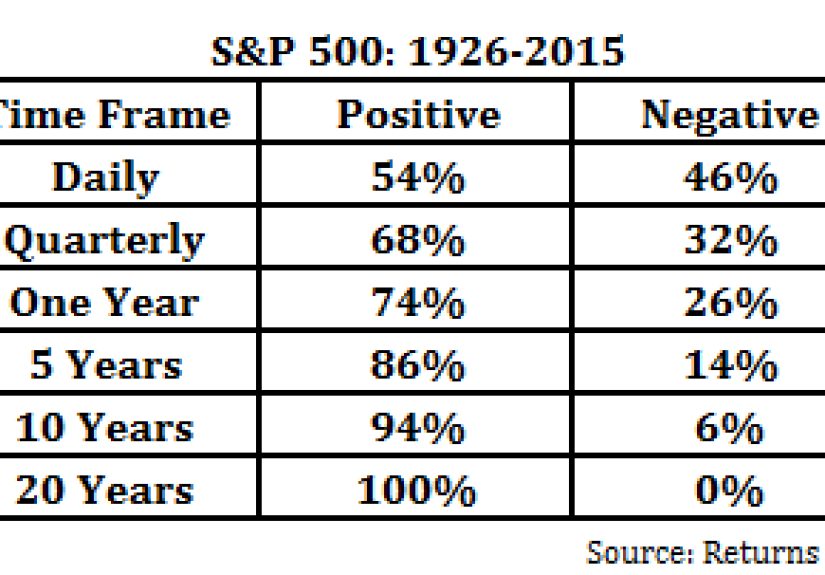
Playing the probabilities in investing starts with knowing your time horizon and risk tolerance. If you need the money in five years or less, taking large risks can backfire badly because markets do not care about your deadline. If you have decades to invest, short-term volatility may be easier to tolerate because time gives compounding more room to work.
Diversification is one of the clearest probability-based tools investors have. It does not eliminate risk, and it absolutely does not guarantee gains. What it does is reduce the chance that one bad bet, one sector slump, or one concentrated position wrecks the whole plan. In other words, you are not trying to be right about one thing. You are trying to improve the odds across many things.
That mindset is less glamorous than yelling “all in” on one hot trend. It is also much more likely to leave you financially clothed by the end of the decade.
Business: Better bets, fewer heroic disasters
In business, playing the probabilities means thinking like a portfolio manager instead of a gambler. Smart organizations test assumptions early, kill weak ideas before they consume the budget, and avoid falling in love with projects just because someone important already praised them in a meeting.
The strongest companies often separate early-stage learning from late-stage scaling. In the beginning, the goal is to discover whether an idea deserves more investment. Later, the goal is to maximize value from the ideas that survived the evidence. This is a much healthier system than pretending every new project is destined for greatness because the slide deck had tasteful fonts.
Probabilistic thinking in business also improves hiring, forecasting, pricing, and risk management. It encourages leaders to ask, “What would have to be true for this to work?” and “What are the signs we should stop?” Those questions are not pessimistic. They are how grown-up optimism protects itself.
How to Get Better at Playing the Probabilities
Start with base rates
Before you get dazzled by new evidence, ask what usually happens in similar situations. How often do startups fail? How often is a test result wrong in low-risk populations? How often does a hot sector cool off? Base rates are not destiny, but they are a better starting point than vibes.
Think in expected outcomes, not perfect predictions
A probabilistic thinker knows that the best choice may still fail. The goal is not to guarantee a win every time. The goal is to make choices that are favorable over repeated decisions. Casinos understand this. Insurance companies understand this. Savvy adults should probably join the club.
Use ranges and scenarios
Instead of asking for one exact answer, sketch out a best-case, middle-case, and worst-case scenario. This keeps you from anchoring too hard on the outcome you happen to like the most.
Translate percentages into real counts
If a number feels abstract, convert it. “A 1% chance” can become “1 out of 100.” “A 20% failure rate” becomes “20 out of 100 attempts.” Concrete counts are often easier for people to understand than floating percentages that drift through the brain and never fully land.
Separate decision review from emotional review
When something goes badly, do not ask only, “Did I lose?” Ask, “Was the reasoning sound?” Likewise, when things go well, do not ask only, “Did I win?” Ask, “Would I make the same decision again under the same odds?” That single habit can save you from a lot of expensive self-deception.
Rebalance when reality changes
Good decision-making is not one-and-done. New evidence matters. If the odds shift, your strategy should shift too. That is true in investing, project planning, hiring, health care, and basically every other place where reality refuses to sit still.
The Real Power of Probabilistic Thinking
Playing the probabilities is not about becoming emotionally detached from life. It is about becoming less fragile inside uncertainty. It teaches you to stop demanding guarantees from a world that does not offer them, and to start making calmer, wiser choices with the information available.
It also makes success easier to repeat. When you understand why something probably worked, you can build a system around it. When you understand why something failed, you can adjust instead of spiraling. Over time, that compounds. Not always dramatically. Not with cinematic background music. But reliably.
And that is the quiet magic here: probability-based thinking does not promise perfection. It improves judgment. It reduces avoidable mistakes. It helps you prepare without panicking, act without pretending, and adapt without feeling personally betrayed by statistics.
In a world crowded with confident nonsense, that is a superpower.
What the Experience of Playing the Probabilities Looks Like in Real Life
In real life, playing the probabilities rarely feels dramatic. It feels practical. It is the parent who sees a mild rain chance and still tosses extra clothes in the car because cleanup is easier than regret. It is the investor who knows a market dip is uncomfortable but not surprising, so they do not blow up a long-term plan because one bad quarter ruined the mood at dinner. It is the manager who runs a small test before rolling out a big idea company-wide, because learning cheaply beats failing expensively.
It also shows up in moments that feel deeply personal. Imagine someone receiving a screening result that sounds alarming. The first emotional reaction is often immediate: fear, panic, catastrophic mental cinema. But probabilistic thinking creates a pause. It says, “What is the base rate? Was this a screening or a diagnostic test? Do I need confirmation? What does this result mean in context?” That pause does not erase emotion, but it prevents emotion from impersonating evidence.
Entrepreneurs experience this all the time too. A founder may love a product idea, pour in energy, gather early praise, and feel certain the market will adore it. Then the data comes back lukewarm. Playing the probabilities in that moment means not treating mediocre evidence like betrayal. It means recognizing that one idea in a portfolio of experiments does not need to become a religion. Sometimes the smartest move is to revise, narrow the bet, or walk away before sunk costs become a personality trait.
On a more everyday level, probabilistic thinking changes how people tell themselves stories. Instead of saying, “I failed, so I must be bad at this,” they learn to say, “This outcome did not go my way, but was the decision reasonable given what I knew?” That shift is huge. It makes people more resilient, less superstitious, and far less likely to mistake randomness for destiny.
Even relationships and careers benefit from this mindset. Taking a new job, moving to a new city, or starting a side business will never come with certainty. But you can still weigh upside, downside, timing, flexibility, and the cost of being wrong. The goal is not to eliminate risk. The goal is to choose risks worth taking and avoid risks that offer lousy odds for lousy rewards.
Over time, the experience becomes less about calculating every possible number and more about adopting a steadier way of thinking. You become slower to overreact, quicker to ask for context, and better at making decisions that can survive real life instead of just sounding good in theory. That is what playing the probabilities looks like when it leaves the textbook and enters the kitchen, the office, the doctor’s office, the brokerage account, and the part of your brain that is trying very hard not to panic over a single uncertain outcome.
Conclusion
Playing the probabilities is not a trick for statisticians or professional risk managers. It is a practical life skill. The more comfortable you become with uncertainty, the better your decisions tend to get. You stop chasing certainty, start respecting evidence, and learn to build plans that can absorb the occasional surprise.
That does not make life predictable. It makes you better prepared for its unpredictability. And honestly, that is a far better deal.