Table of Contents >> Show >> Hide
Some decor whispers. Some decor politely clears its throat. And then there are Lalannes-style sheep, which stroll into a room and somehow make everything look more intelligent, more playful, and a little more expensive without saying a word. They are part sculpture, part conversation starter, part design wink. In a world full of safe beige objects trying very hard not to offend anyone, a sheep-shaped piece of decor has the nerve to be charming.
That is exactly why the look keeps coming back. Inspired by the famous sheep sculptures associated with François-Xavier Lalanne and the wider poetic world of Les Lalanne, these woolly forms have become shorthand for a certain kind of interior confidence. They suggest that the homeowner knows design history, enjoys a bit of surrealism, and is not emotionally attached to the idea that furniture must be boring. It is hard to look at one and not smile, which is rare in rooms where every chair seems to be auditioning for a finance office.
This is not just about novelty. Lalannes-style sheep as decor work because they combine softness and sculpture, humor and restraint, fantasy and function. They can read as ottoman, art object, collectible, mascot, or all four at once. They feel at home in layered traditional rooms, sleek contemporary spaces, playful children’s areas, and gardens where a little absurdity is welcome. Their secret is balance: they are whimsical, but not silly; luxurious, but not stiff; memorable, but not impossible to live with.
Why These Sheep Still Matter
The staying power of Lalannes-style sheep comes from the fact that they never belonged to just one trend cycle. Their original appeal was rooted in surprise: animal forms treated not as kitsch, but as serious design. That idea still feels fresh. Today’s interiors are moving away from cold perfection and toward rooms with personality, texture, and emotion. Sheep decor fits that shift beautifully. It softens polished spaces, loosens up formal rooms, and brings a touch of storybook wit to interiors that might otherwise feel a little too correct.
There is also a tactile reason for their popularity. Good sheep decor invites reaction. People want to touch it, laugh at it, name it, and move around it. Designers love pieces that create emotion before anyone starts talking about paint finishes and trim details. A Lalannes-style sheep does exactly that. It breaks the ice in an entry, keeps a library from feeling too stern, and makes a bedroom or dressing room feel more personal. It is decor with social skills.
A Brief History Behind the Look
The original sheep that inspired today’s Lalannes-style decor were introduced in Paris in the mid-1960s by François-Xavier Lalanne. They were not conceived as cute novelty props. They were a deliberate artistic statement: sheep presented as functional sculpture, made with luxurious and tactile materials, and placed in a way that blurred the line between art and furniture. That fusion is the whole point. The sheep were not merely looked at; they were lived with.
Over time, the forms became closely associated with high-design interiors and serious collectors. They appeared in glamorous homes, memorable libraries, gardens, and curated private collections. That history matters because it explains why the look still carries weight. A Lalannes-style sheep is not random animal decor. It belongs to a design lineage that mixes Surrealist wit, French decorative art, sculptural craft, and domestic comfort. In plain English: it is a sheep with credentials.
The market history only increased the mystique. Original works linked to the Lalannes have long attracted major attention from collectors and auction houses, reinforcing the sheep’s status as an object that can live equally well in a home, a gallery, or an auction catalog. But the broader decor lesson is even more useful: the appeal was never just rarity. It was the ability of these pieces to make interiors feel unexpected and alive.
What Defines Lalannes-Style Sheep as Decor
Softness Paired with Structure
The most distinctive feature is the contrast between fluffy exterior and sculptural form. A successful Lalannes-style sheep has a body that feels plush, tactile, and inviting, yet also clearly composed as an object. It should not look like a stuffed toy that took a wrong turn into the living room. It should feel intentional and architectural, even when it is being delightfully ridiculous.
Animal Shape Without Cartoon Energy
The best examples keep the silhouette simple. The face tends to be calm rather than expressive, the body rounded but not sloppy, and the stance solid enough to read as decor rather than costume. This restraint is what makes the look sophisticated. It gives the piece a deadpan quality, which is far funnier than a sheep that looks like it is trying too hard to be adorable.
Function Hidden Inside the Fantasy
Part of the genius of the Lalanne spirit is that the sheep are often useful. They may serve as ottomans, informal seating, side pieces in a dressing room, or sculptural accents that help anchor a corner. Even when an inspired version is purely decorative, it still borrows from that idea of practical whimsy. The piece has presence, but it also feels at home in daily life.
Why Designers Keep Using Them
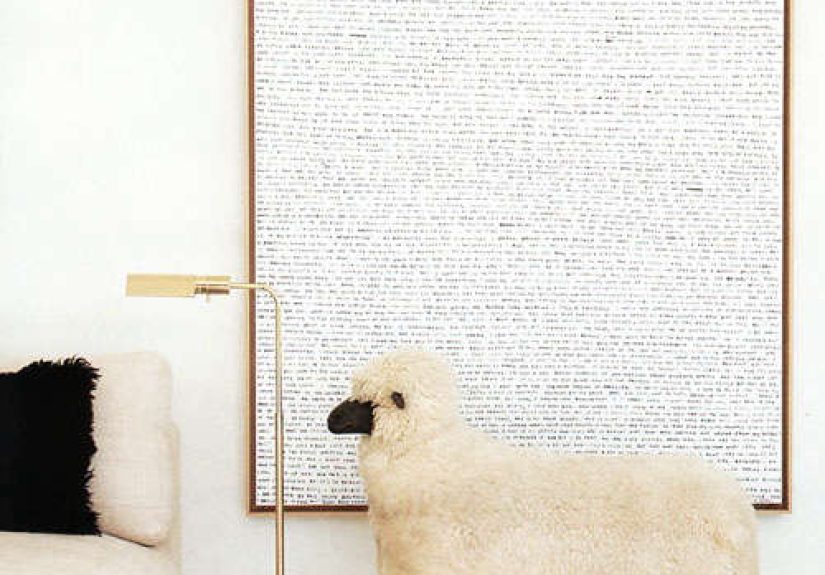
Designers return to Lalannes-style sheep because they create visual tension in the best way. Put one in a very polished room with antique wood, tailored upholstery, and serious art, and suddenly the room loosens its tie. Place one in a minimal interior, and the softness adds warmth. Set one in a child-friendly space, and it keeps the room imaginative without becoming theme decor. These sheep do not erase a room’s identity; they sharpen it.
That flexibility explains why sheep-inspired pieces show up in such different contexts. In some homes, they greet guests in the foyer like surreal little doormen. In others, they sit near a piano, hover by a library chair, or lounge in a courtyard where stone and greenery need a soft counterpoint. They work because they are sculptural enough to hold space and soft enough to humanize it.
There is also a collecting mindset behind the trend. People who love memorable interiors are often drawn to objects that feel discovered rather than mass-produced. A sheep in the Lalanne tradition signals taste that is personal rather than generic. It says the room was assembled with curiosity, not just a credit card and an algorithm.
How to Use Lalannes-Style Sheep at Home
1. Let One Piece Do the Talking
You do not need a full flock unless you have a large room, a generous budget, and the confidence of a person who has never once feared a bold decision. In most homes, one sheep is enough. Use it where it can be seen and appreciated: beside a reading chair, at the foot of a bed, near a console in an entry, or in a dressing room that needs a dash of personality.
2. Pair It with Real Texture
Lalannes-style sheep look best when the rest of the room supports the tactile story. Think wool rugs, mohair, linen, boucle, leather, aged wood, plaster, and stone. If the room is full of flat synthetic surfaces, the sheep can feel lonely, like the only person at a dinner party who brought actual charisma.
3. Use Contrast, Not Theme
Do not turn the room into a farm fantasy unless that is truly your life’s calling. The sheep becomes more elegant when surrounded by contrast: a sleek bronze lamp, a tailored sofa, a sharp-edged cocktail table, moody art, or a crisp lacquered wall. The goal is tension. Sheep decor is most compelling when it looks a little bit improbable.
4. Choose Materials Carefully
If you are buying an inspired piece rather than a collectible original, material choice matters. Seek versions with real tactile depth: wool, sheepskin, mohair, carved wood, bronze-toned details, or well-made leather accents. Cheap faux fur and weak proportions can push the look into novelty-shop territory fast. This style lives or dies on quality.
5. Mind the Scale
Large sheep make excellent statement pieces in foyers, libraries, and expansive living areas. Smaller sheep or tabletop versions can work in bedrooms, nurseries, or shelves where you want the reference without the full theatrical entrance. If the room is tiny, a compact sheep-inspired stool or object may be more effective than a life-size version trying to graze between the coffee table and the TV stand.
What This Look Says About a Room
Lalannes-style sheep suggest that a room takes design seriously, but not solemnly. That distinction matters. Great interiors are not museums of self-importance. They are places where proportion, material, memory, and mood all get to coexist. A sheep-shaped decor object can bring humor into that mix without flattening the room into a joke.
That is why the look resonates so strongly right now. People want homes that feel layered, lived in, and a little enchanted. They want rooms with objects that trigger curiosity. They want interiors that reflect culture, not just consumption. A Lalannes-style sheep checks all those boxes. It feels nostalgic and fresh at the same time, which is a trick many trends try and fail to pull off.
Design Sleuth’s Verdict
If you are drawn to Lalannes-style sheep as decor, trust the instinct. The look has real design history behind it, but it also has warmth, wit, and practical versatility. It can soften a rigid room, elevate a playful one, and make nearly any corner more memorable. The key is to treat the sheep as sculpture first and novelty last.
In other words, do not buy one because it is quirky. Buy one because it creates a room that feels more alive. The best interiors have at least one object that makes guests pause, grin, and ask, “Wait, where did you find that?” A Lalannes-style sheep has been doing exactly that for decades. Not bad for decor inspired by livestock.
Experiences with Lalannes-Style Sheep as Decor
The first time many people encounter Lalannes-style sheep in person, the reaction is almost always the same: a double take followed by a grin. From across the room, the object reads as animal. Up close, it becomes something more complicated and much more interesting. You notice the texture first, then the silhouette, then the fact that the piece is somehow both elegant and faintly absurd. That emotional sequence is part of the charm. It turns seeing into experiencing.
In an entryway, the experience is theatrical. A sheep positioned near the front door makes arrival feel curated but relaxed. Guests immediately understand that the home values beauty, but is not trapped in formality. The object acts almost like an icebreaker. Before anyone compliments the millwork or asks about the art, someone inevitably comments on the sheep. That makes it useful beyond aesthetics. It changes the social temperature of a room.
In a living room or library, the experience is quieter. A sheep beside a reading chair creates a strange but wonderful emotional effect: the space feels softer, more companionable, less staged. It is especially effective in rooms with dark wood, tailored upholstery, or serious collections, because the sheep interrupts all that discipline with a note of humor. Instead of undermining sophistication, it makes the sophistication feel more relaxed and self-assured.
Bedrooms benefit in a different way. Lalannes-style sheep can make a private room feel more intimate and storied, especially when placed near a bench, vanity, or window seat. The tactile surface contributes to the atmosphere of comfort, while the sculptural outline keeps the room from becoming too predictable. In children’s spaces, the effect can be magical, but even in adult rooms the sheep never feels childish when the materials and proportions are right. It feels affectionate, not juvenile.
There is also a collector’s experience attached to these pieces, even when the sheep is only inspired by the Lalanne tradition. Owners often talk about them less like accessories and more like personalities. They get names. They become landmarks in the house. “Meet me by the sheep” is a very different sentence from “Meet me by the ottoman,” and frankly, much more fun. That shift tells you everything: a successful sheep-shaped object becomes part of how people live in a space, not just how they style it.
Perhaps the most revealing experience is what happens over time. Many trend-driven pieces become invisible once the novelty fades. Lalannes-style sheep tend to do the opposite. The longer they stay in a room, the more naturally they belong there. Their oddness settles into familiarity, and then into affection. That may be the strongest argument for the look. Good decor should not just photograph well on day one. It should reward daily life. These sheep, surprisingly enough, do exactly that.
Conclusion
Lalannes-style sheep as decor endure because they do something rare: they make a room smarter and softer at the same time. They reference important design history, add texture and sculptural interest, and bring just enough wit to keep an interior from feeling overly polished. Whether you invest in a collectible piece or choose a beautifully made inspired version, the lesson is the same. Decor can be artful without being stiff, playful without being cheap, and memorable without shouting. Sometimes the object that makes a room feel complete is not another chair, lamp, or vase. Sometimes, incredibly, it is a sheep.