Table of Contents >> Show >> Hide
- What Is Ringworm in Horses?
- Common Signs of Ringworm in Horses
- How to Treat Ringworm in Horses: 8 Steps
- Step 1: Confirm the Problem Before You Treat
- Step 2: Isolate the Affected Horse
- Step 3: Wear Gloves and Protect Yourself
- Step 4: Clip Hair Around the Lesions Carefully
- Step 5: Use a Veterinarian-Approved Antifungal Treatment
- Step 6: Treat Long Enough to Stop the Spread
- Step 7: Clean and Disinfect Tack, Tools, Blankets, and the Stall
- Step 8: Prevent Reinfection and Future Outbreaks
- When to Call the Veterinarian
- What Not to Do When Treating Ringworm in Horses
- How Long Does Ringworm Take to Heal?
- Can You Ride a Horse With Ringworm?
- Experience-Based Tips for Managing Ringworm in Horses
- Conclusion
- SEO Tags
Ringworm in horses sounds like something that should wriggle, squirm, and star in a low-budget horror movie. Thankfully, it is not a worm at all. Ringworm, also called dermatophytosis, is a contagious fungal skin infection that affects the hair and outer skin layers of horses. It often shows up as circular patches of hair loss, flaky skin, crusty spots, or broken hairs, especially around the girth, saddle area, neck, chest, face, and shoulders.
The tricky part? Ringworm spreads easily. A horse can pick it up from another horse, shared brushes, saddle pads, blankets, tack, stall surfaces, clothing, or other contaminated items. In a busy barn, one untreated patch can turn into a full-blown “who shared the curry comb?” mystery faster than anyone wants. The good news is that most cases are manageable with quick action, smart hygiene, veterinary guidance, and a little barn-detective discipline.
This guide explains how to treat ringworm in horses in 8 practical steps, from recognizing the signs to cleaning the environment and preventing reinfection. It is written for horse owners, barn managers, riders, and caretakers who want a clear, calm, and realistic plan. Ringworm is usually not an emergency, but because it is contagious and can spread to people and other animals, it deserves respect, not panic.
What Is Ringworm in Horses?
Ringworm is a fungal infection caused by dermatophytes. In horses, common fungal species may include types of Trichophyton and Microsporum. These fungi feed on keratin, the protein found in hair and the outer layer of skin. That is why ringworm usually causes hair loss, scaling, crusting, and rough patches rather than deep wounds.
Although some mild cases may eventually clear on their own, treatment is still important. Without treatment, recovery can take weeks or months, and the infected horse may continue spreading fungal spores to other horses, people, grooming tools, rugs, blankets, and stall surfaces. In short, ignoring ringworm is a bit like ignoring glitter after a craft project: it gets everywhere.
Common Signs of Ringworm in Horses
Ringworm does not always look exactly the same in every horse. Some horses develop neat circular patches, while others show irregular areas of hair loss or crusty, scaly skin. Early lesions may look subtle, especially under a thick coat.
Watch for these signs:
- Round or irregular bald patches
- Scaly, flaky, or crusted skin
- Broken hairs around the affected area
- Dry, grayish, or powdery-looking skin
- Patches near the girth, saddle area, neck, face, chest, or flanks
- Mild itching or rubbing in some horses
- Spread of lesions after sharing tack or grooming tools
Other skin problems can mimic ringworm, including rain rot, bacterial folliculitis, insect reactions, allergies, rubbing from tack, and immune-related skin disorders. That is why diagnosis matters. A horse with “probably ringworm” may actually have something else that needs a different treatment plan.
How to Treat Ringworm in Horses: 8 Steps
Step 1: Confirm the Problem Before You Treat
The first step in treating ringworm in horses is confirming that ringworm is actually the problem. A veterinarian may diagnose it by examining hairs and skin scales under a microscope, taking a fungal culture, or using a PCR test where available. Fungal culture is especially useful because it helps identify the organism and confirms whether the treatment is working.
Do not scrub the lesion with alcohol before a veterinary sample is collected, because that can interfere with testing. If the patch is fresh, dry, scaly, and spreading, call your veterinarian and ask whether testing is recommended. This is especially important in boarding barns, training facilities, show barns, breeding farms, and any place where horses share equipment or close contact.
A confirmed diagnosis prevents two common mistakes: under-treating a contagious fungal infection or over-treating a non-fungal skin problem with the wrong products. Your wallet, your horse, and the rest of the barn will all appreciate the accuracy.
Step 2: Isolate the Affected Horse
Once ringworm is suspected or confirmed, separate the affected horse from others as much as possible. Full isolation is ideal, but in real barns, “ideal” sometimes lives in the same fantasy land as spotless white breeches. If a separate stall or paddock is not available, reduce direct contact and create a clear handling routine.
Use dedicated grooming tools, halters, lead ropes, saddle pads, blankets, buckets, and towels for the infected horse. Label them clearly. Do not let them migrate around the barn like social butterflies. Handle healthy horses first and the infected horse last, then wash your hands and change outer clothing if needed.
Ringworm can spread before lesions are obvious, so inspect horses that had close contact with the infected horse. Pay special attention to horses that shared tack, grooming kits, trailers, wash racks, or turnout spaces.
Step 3: Wear Gloves and Protect Yourself
Ringworm can spread from horses to humans. It is not the most terrifying zoonotic disease in the universe, but it is itchy, annoying, and very capable of ruining your week. Wear disposable gloves when touching lesions, applying treatment, washing equipment, or handling dirty blankets and saddle pads.
Long sleeves or washable barn clothes are smart when treating multiple lesions. After handling the horse, wash your hands thoroughly with soap and water. Keep children, immunocompromised people, and anyone with open cuts or sensitive skin away from direct contact with infected areas until the horse is improving and your veterinarian says the risk is controlled.
If you develop a circular, itchy, red, or scaly rash after handling an infected horse, contact a healthcare professional. Do not use your horse’s medication on yourself. Human skin deserves its own medical advice, not leftovers from the tack room shelf.
Step 4: Clip Hair Around the Lesions Carefully
In some cases, clipping the hair around affected patches can help topical products reach the skin. However, clipping should be done carefully because it can spread fungal spores if handled poorly. Ask your veterinarian whether clipping is appropriate for your horse’s case.
If clipping is recommended, use dedicated clippers or disinfect them thoroughly afterward. Avoid aggressive clipping that irritates the skin. The goal is not to shave your horse into a modern art installation. The goal is to expose the affected area enough for treatment to work.
Collect loose hair and debris instead of letting it blow through the barn aisle. Bag and discard contaminated hair, disposable gloves, and used cleaning materials. Clean and disinfect clipper blades according to product instructions. If lesions are near the eyes, muzzle, or other sensitive areas, do not experiment. Let your veterinarian guide treatment for delicate spots.
Step 5: Use a Veterinarian-Approved Antifungal Treatment
Topical antifungal treatment is the foundation of ringworm treatment in horses. Your veterinarian may recommend medicated shampoos, antifungal rinses, dips, sprays, or creams depending on the severity, location, number of lesions, and barn situation.
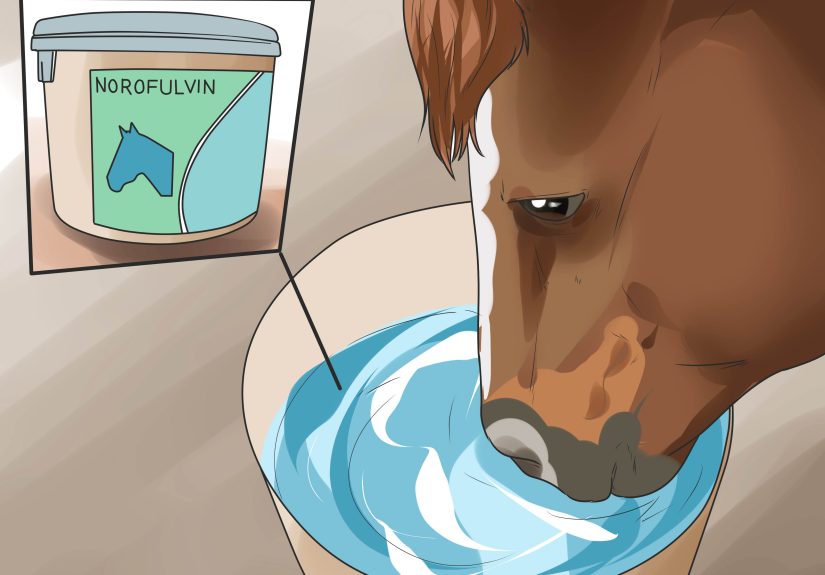
Common veterinary approaches may include whole-body leave-on antifungal rinses, lime sulfur rinses, enilconazole rinses where available, or medicated shampoos containing antifungal and antiseptic ingredients such as miconazole and chlorhexidine. Some products are used twice weekly, while others may be applied on non-rinse days. Follow your veterinarian’s instructions and the product label exactly.
Do not apply household disinfectants, bleach, harsh chemicals, essential oils, or mystery internet potions directly to your horse’s skin. Bleach is for surfaces when appropriate, not for turning your horse into a science experiment. Harsh products can burn or irritate the skin, making the problem worse and your horse understandably offended.
Oral antifungal medications are sometimes used in severe, widespread, stubborn, or outbreak-related cases, but they are not always necessary and may carry side effects or cost concerns. Your veterinarian will decide whether systemic medication is appropriate. Never give oral antifungals without veterinary supervision.
Step 6: Treat Long Enough to Stop the Spread
One of the biggest mistakes horse owners make is stopping treatment as soon as the skin looks better. Hair regrowth and smoother skin are encouraging signs, but fungal spores may still be present. Stopping too soon can lead to recurrence or continued spread through the barn.
Your veterinarian may recommend continuing treatment until lesions resolve and, in some situations, until follow-up testing shows the infection has cleared. In mild cases, visible improvement may appear within one to four weeks. Untreated cases can take much longer and may continue spreading in the meantime.
Keep a simple treatment log. Write down the date, product used, areas treated, and any changes you notice. Photos can help track improvement, especially if several horses are involved. Take pictures in the same lighting and from the same distance. No glamour filter required; this is dermatology, not a modeling portfolio.
Step 7: Clean and Disinfect Tack, Tools, Blankets, and the Stall
Treating the horse without cleaning the environment is like mopping the floor while the sink is still overflowing. Ringworm spores can survive on brushes, tack, blankets, saddle pads, stall surfaces, fence rails, grooming totes, trailers, and clothing. Environmental control is essential.
Start by removing dirt, hair, sweat, bedding, and organic debris. Disinfectants work better on clean surfaces. Wash grooming tools with detergent first, then use an appropriate antifungal disinfectant according to the label. Tack should be cleaned carefully before disinfecting, because leather requires special handling and may be damaged by harsh products.
Wash fabric items such as saddle pads, blankets, towels, and fabric lead ropes. Use hot water if the material allows, standard detergent, and thorough drying. Some items may need to be washed more than once. Severely contaminated or hard-to-clean items may need to be discarded.
For stalls and wash areas, remove bedding, sweep or wet-clean loose debris, and disinfect surfaces with a product appropriate for animal areas and effective against dermatophytes. Always follow the manufacturer’s dilution, safety, and contact-time instructions. Wear gloves when cleaning contaminated equipment and surfaces, and wash your hands afterward.
Step 8: Prevent Reinfection and Future Outbreaks
Prevention is the barn manager’s secret weapon. Once ringworm has visited, tighten the routine so it does not become a repeat guest. Give each horse its own grooming tools, saddle pads, blankets, and tack whenever possible. Do not share brushes between horses, especially during an outbreak.
Quarantine or separate new arrivals for a few weeks when practical, and check them regularly for skin lesions. Ringworm can have an incubation period before signs appear, so a horse may look normal at first and develop patches later. Clean shared spaces such as wash racks, trailers, grooming bays, and cross-tie areas more carefully after use.
Keep horses healthy with good nutrition, parasite control, stress reduction, and dry, clean living conditions. Horses with weakened immune systems, heavy workloads, poor coat condition, or crowded living environments may be more vulnerable. Good barn hygiene will not make your facility fungus-proof, but it makes life much harder for spores looking for a free ride.
When to Call the Veterinarian
Call your veterinarian if the lesions are spreading quickly, involve the face or eyes, affect multiple horses, fail to improve with treatment, look painful or infected, or occur in a horse with other health problems. Also call if you are preparing for a show, sale, transport, lesson program, or boarding change. Ringworm can have biosecurity implications, and you do not want to discover that at the trailer ramp.
A veterinarian can help confirm the diagnosis, recommend safe products, advise on isolation, and decide when the horse is no longer contagious. In barns with multiple cases, professional guidance is especially valuable because the treatment plan must include both horses and the environment.
What Not to Do When Treating Ringworm in Horses
Do not ignore it and hope the barn fairy handles the fungus overnight. Do not share brushes, saddle pads, blankets, or tack between horses. Do not use bleach or harsh disinfectants directly on the horse’s skin. Do not pick crusts aggressively until the skin bleeds. Do not stop treatment too early just because the patch looks less dramatic. Do not assume every bald spot is ringworm without considering other skin conditions.
Also, do not treat the horse in the middle of the aisle and then let hair, scabs, and product splatter travel everywhere. Choose a controlled area, clean up afterward, and keep contaminated materials separate. Good treatment is not just about what you put on the horse. It is about stopping the fungus from turning the entire barn into its vacation home.
How Long Does Ringworm Take to Heal?
With proper treatment, many horses begin showing improvement within a few weeks. Hair regrowth may be visible in one to four weeks, although full cosmetic recovery can take longer depending on the size and depth of the lesions. Without treatment, some cases may resolve naturally, but that can take two to three months and increases the chance of spreading the infection.
The timeline depends on how early treatment begins, how many lesions are present, whether the horse is otherwise healthy, how well the environment is cleaned, and whether contaminated equipment continues to be used. In short: the fungus is beatable, but it does not appreciate half-hearted housekeeping.
Can You Ride a Horse With Ringworm?
Whether you should ride depends on the location and severity of the lesions. If ringworm is near the girth, saddle area, bridle path, or anywhere tack will rub, riding can irritate the skin and spread fungal spores to equipment. Even if the horse feels fine, using shared tack or saddle pads can spread the infection.
Ask your veterinarian before continuing work. In many cases, rest from ridden exercise may be recommended until lesions are improving, tack-contact areas are comfortable, and biosecurity is under control. If the horse must be exercised, use dedicated equipment and clean it carefully afterward.
Experience-Based Tips for Managing Ringworm in Horses
Anyone who has managed ringworm in a barn knows the treatment itself is only half the battle. The other half is organization. The fungus loves confusion: shared brushes, mystery saddle pads, unlabeled blankets, and that one “community towel” nobody wants to admit exists. The best real-world approach is to turn the barn routine into a simple, repeatable system.
First, create a ringworm kit. Put gloves, treatment products, paper towels, trash bags, a dedicated halter, a dedicated lead rope, and a written treatment schedule in one labeled container. Keep it near the infected horse but away from shared grooming supplies. This prevents the classic barn problem where someone borrows a brush “just for a second” and accidentally gives the fungus a tour of the property.
Second, assign one or two people to handle the infected horse when possible. Fewer handlers mean fewer mistakes. If multiple people must help, post simple instructions on the stall door: “Use only labeled tools,” “Wear gloves,” “Treat after other horses,” and “Wash hands after handling.” Keep the message clear and polite. Barn drama spreads almost as fast as ringworm, and neither one helps the horse.
Third, take photos every few days. Ringworm can look worse before it looks better, especially after crusts loosen and hair sheds. Photos help you see whether lesions are shrinking, spreading, or changing. They also make conversations with your veterinarian easier. Instead of saying, “It looks kind of weird, but less weird than Tuesday,” you can show actual progress.
Fourth, clean in layers. Start with visible dirt and hair, then wash, then disinfect. Many people jump straight to spraying disinfectant on dirty surfaces, but organic matter can reduce effectiveness. Think of it like trying to paint over mud. The label on the disinfectant matters too. Contact time is not decorative fine print; it is the time the product needs to stay wet to work properly.
Fifth, manage morale. Ringworm is frustrating, but it is common and usually manageable. Avoid blaming people unless someone is truly being careless. Horses can pick up fungal spores from the environment, other horses, contaminated equipment, or soil. A calm, consistent response beats finger-pointing every time.
Finally, use the outbreak as motivation to improve long-term barn hygiene. Label grooming kits. Wash saddle pads more often. Stop sharing brushes. Clean trailers after hauling unfamiliar horses. Inspect new arrivals. Encourage riders to report skin changes early instead of waiting until a tiny patch becomes a fungal billboard. The best ringworm experience is the one that teaches the barn how to prevent the next one.
Conclusion
Ringworm in horses is common, contagious, and annoying, but it is also highly manageable when you act early. The key steps are simple: confirm the diagnosis, isolate the affected horse, protect yourself, use veterinarian-approved antifungal treatment, clean the environment, and prevent contaminated equipment from spreading spores. A little discipline goes a long way.
The biggest lesson is that ringworm treatment is not just skin care. It is barn care. A horse may heal beautifully, but if the brushes, blankets, tack, and stall surfaces remain contaminated, the fungus can make an unwanted comeback. Treat the horse, clean the gear, organize the routine, and keep communication clear. Your horse gets healthier, your barn gets smarter, and the fungus gets evicted without a forwarding address.