Table of Contents >> Show >> Hide
- Why People Mistake Kena for a Kids Game
- The Story Is Built Around Death, Grief, and Letting Go
- The Rot Are Cute, But They Are Not Just Mascots
- Combat Is Much Tougher Than the Art Style Suggests
- Exploration Rewards Curiosity Without Overwhelming the Player
- The Visual Style Has Purpose, Not Just Polish
- Why Kena Appeals to Adults
- Parents Should Know It Is Rated for More Than Cuteness
- The Anniversary Update Made the Game Even Stronger
- A Small Game With a Big Identity
- Why the “Kids Game” Label Misses the Point
- Final Thoughts: Kena Deserves to Be Taken Seriously
- Personal Experience: What Playing Kena Feels Like Beyond the First Impression
At first glance, Kena: Bridge of Spirits looks like the sort of game a parent might buy because the tiny Rot creatures are adorable, the forests sparkle like a premium animated movie, and the heroine carries a staff instead of a rocket launcher the size of a refrigerator. It has big eyes, soft colors, magical music, and enough cute companions to make a plush-toy department nervous.
Then the first serious boss fight arrives, and suddenly that “cute little kids game” has you gripping the controller like you are negotiating peace with a forest demon and your dignity is on the line.
Developed and published by Ember Lab, Kena: Bridge of Spirits is a story-driven action-adventure game about a young Spirit Guide named Kena, who travels to an abandoned village in search of a sacred mountain shrine. Along the way, she meets the Rot, small spirit companions who help her solve puzzles, cleanse corruption, manipulate the environment, and assist in combat. The setup sounds gentle, almost bedtime-story sweet. But beneath the glowing moss and button-nosed sidekicks is a game about grief, responsibility, memory, death, forgiveness, and the painful work of helping wounded spirits move on.
So, no, Kena: Bridge of Spirits is not merely a kids game. It is a deceptively beautiful adventure that uses its family-friendly look to tell a heavier story, challenge players with surprisingly sharp combat, and explore emotional ideas many “serious” games only wave at from a safe distance.
Why People Mistake Kena for a Kids Game
The misunderstanding is easy to explain. Kena: Bridge of Spirits has the visual polish of a modern animated feature. Characters move with expressive faces, forests glow with saturated color, and the Rot look like tiny soot sprites who wandered out of a toy commercial and accidentally joined an exorcism. Ember Lab’s background in animation is obvious from the first scene, and the game knows exactly how charming it is.
That charm can trick players into expecting a cozy, low-stress romp. The world is lush, the creatures are round, and the soundtrack often feels meditative. Kena herself is calm, capable, and visually designed with warmth rather than gritty antihero gloom. There are no blood-soaked hallways, no edgy one-liners, and no exhausted man in a trench coat growling about revenge for the 900th time. Naturally, some players assume the experience must be lightweight.
But animation-style visuals do not automatically mean shallow storytelling. Great family-oriented films have understood this for decades. A soft art style can be a Trojan horse for big emotions. Kena uses that same trick: it invites you with wonder, then quietly asks you to sit with loss.
The Story Is Built Around Death, Grief, and Letting Go
Kena is not simply exploring a pretty fantasy village. She is helping trapped spirits confront the pain that keeps them bound to the world. The corruption spreading through the forest is not just a convenient video game infection; it reflects emotional damage, unresolved trauma, and the consequences of refusing to accept change.
The game’s central idea is not “defeat the monster because monsters are bad.” It is closer to “understand why this suffering exists, then help restore balance.” That is a much more mature emotional framework than the box art may suggest. The enemies Kena fights are often expressions of pain, fear, anger, and regret. Victory is not just about reducing a health bar to zero. It is about release.
This is where Kena: Bridge of Spirits becomes quietly powerful. Its story is not complicated in a tangled, lore-heavy way. You will not need a notebook, a timeline chart, and three fan theories to understand what is happening. Instead, the narrative works through mood, memory, and small revelations. It shows how people cling to unfinished business and how communities can be shaped by tragedy long after the event itself has passed.
The Rot Are Cute, But They Are Not Just Mascots
The Rot are the game’s most marketable feature, and honestly, who can blame Ember Lab? They are adorable. They wear little hats. They follow Kena around like a loyal crowd of woodland jellybeans. If one stared at you through a store window, you would probably buy three.
But the Rot are more than decoration. Mechanically, they are central to exploration, puzzle-solving, and combat. They move objects, purify corrupted areas, interact with the environment, and unlock new tactical options during fights. The more Rot Kena finds, the more capable she becomes, which gives exploration a meaningful reward beyond simply checking items off a map.
Thematically, they also reinforce the game’s concern with natural cycles. Rot, decay, renewal, and balance are not random fantasy words tossed into the soup. They are part of the game’s worldview. The Rot help transform dead or corrupted spaces into places where life can return. That makes them cute, yes, but also symbolically important. They are tiny, squeaky reminders that healing often begins in the messiest places.
Combat Is Much Tougher Than the Art Style Suggests
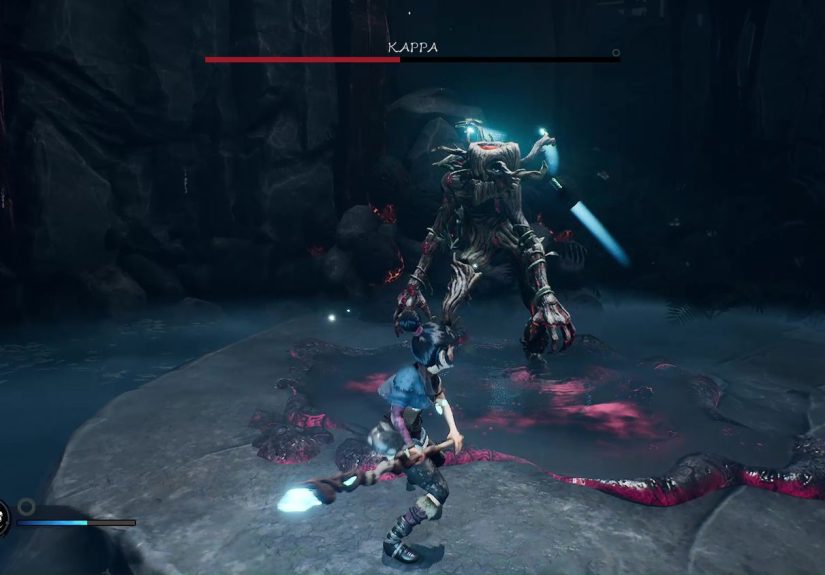
Anyone expecting a simple button-mashing adventure may be surprised. Kena: Bridge of Spirits can be genuinely challenging, especially during boss encounters. The combat asks for timing, patience, crowd control, smart use of abilities, and quick reactions. Kena can use her staff for melee attacks, her bow for ranged strikes, bombs for environmental and combat interactions, and a pulse ability that functions defensively and interactively.
On paper, that sounds approachable. In practice, the game is very happy to remind you that looking like an animated film does not mean fighting like a pillow fight. Enemies can hit hard. Boss patterns must be learned. Dodging too early or parrying too late can turn a beautiful forest clearing into a personal embarrassment simulator.
This difficulty is one of the biggest reasons Kena feels more mature than its appearance. It respects players enough to push back. The combat is not brutally punishing for the sake of bragging rights, but it is also not passive. It wants you to improve. It wants you to pay attention. And occasionally, it wants you to stop underestimating the angry tree monster just because the lighting is gorgeous.
Exploration Rewards Curiosity Without Overwhelming the Player
Kena: Bridge of Spirits is not an enormous open-world game that hands you a map full of icons and says, “Good luck, see you in 80 hours.” Its structure is more focused. The world encourages exploration, but it does not drown the player in chores. Hidden Rot, collectibles, hats, meditation spots, cursed chests, and environmental puzzles give each area texture without turning the adventure into a second job.
This balance matters. Many modern action-adventure games confuse size with depth. Kena takes a different approach. It feels handcrafted, compact, and deliberate. Paths loop back. Abilities open new opportunities. Restoring corrupted areas creates a visible sense of progress. The result is a game that feels rich without becoming bloated.
That design also makes the emotional story easier to absorb. Because the world is not overloaded with distractions, the player has space to notice details: a ruined home, a memory marker, a shrine waiting to be cleansed, a peaceful view after a dangerous climb. The game’s environments do not just look pretty. They help tell the story.
The Visual Style Has Purpose, Not Just Polish
It would be easy to praise Kena: Bridge of Spirits only for looking beautiful. It does look beautiful. The lighting is warm, the character animation is expressive, and the contrast between corruption and restored nature gives the game a strong visual rhythm. But the visuals are not merely cosmetic.
The game uses beauty as emotional contrast. Peaceful spaces make corrupted areas feel more tragic. Gentle character designs make moments of danger feel sharper. The softness of the world makes the themes of grief and decay hit harder because the player can see what has been lost. When a corrupted zone blooms back into life, it feels satisfying not only because the screen becomes prettier, but because the world seems to exhale.
That is smart visual storytelling. The game’s art direction is not saying, “Look how cute this is.” It is saying, “Look what pain has done here, and look what healing might restore.”
Why Kena Appeals to Adults
Adults may connect with Kena: Bridge of Spirits for reasons that younger players might only partially feel. The game’s emotional core is about carrying burdens, facing regrets, and learning when to release what cannot be changed. Those are not childish concerns. They are painfully adult ones.
Kena herself is not a loud protagonist. She does not dominate every scene with jokes or dramatic speeches. Her strength is quiet. She listens, observes, and helps others confront their pain. In a medium often obsessed with power fantasies, that kind of heroism feels refreshing. Kena’s role is not to conquer the world. It is to guide others through it.
The game also respects silence. Some of its best moments are not explosive cutscenes but gentle transitions: a spirit finding peace, a corrupted area restored, a small companion reacting to the world with curiosity. These details give the adventure a reflective quality. It is the kind of game that can make you pause after a scene, not because you are confused, but because something landed quietly and stayed there.
Parents Should Know It Is Rated for More Than Cuteness
For families, Kena: Bridge of Spirits can still be a wonderful game to experience together, but it is not designed only for very young children. The ESRB rating includes fantasy violence, and the story deals with death, trapped spirits, grief, and frightening corrupted creatures. Nothing about it is gratuitous, but the emotional tone can be heavier than the visuals suggest.
That does not mean kids should avoid it automatically. Many children can handle thoughtful stories about sadness and courage, especially when guided by an adult. But parents should not assume the game is pure light entertainment because the Rot look like they belong on a lunchbox. Some scenes may invite questions about loss, fear, anger, and what it means to say goodbye.
In that sense, Kena might be more valuable than a simple distraction. It can become a shared experience, a doorway into conversations that games rarely approach with this much grace.
The Anniversary Update Made the Game Even Stronger
The Anniversary Update added meaningful reasons to return, including New Game+, Spirit Guide Trials, Charmstones, outfits, and accessibility features. These additions matter because they expand both challenge and customization. New Game+ gives experienced players another run with unlocked upgrades, while Spirit Guide Trials create focused combat and skill challenges for those who want to test mastery.
Charmstones are especially useful because they can alter how players approach encounters, adding a layer of build-style decision-making to a game that originally leaned more on direct action. Outfits offer cosmetic rewards, but they also connect back to characters and memories from the story, which fits the game’s emotional design. Even the extras feel like they belong in the world rather than being random decorations taped on after launch.
A Small Game With a Big Identity
One of the most impressive things about Kena: Bridge of Spirits is that it does not feel like a game trying to be everything. It is not a 100-hour RPG. It is not a live-service treadmill. It is not a giant sandbox where half the fun is forgetting what the story was supposed to be. It is a focused action-adventure with a clear emotional and artistic identity.
That focus is part of its charm. The game understands what it wants to be: a cinematic, heartfelt, challenging journey through a wounded world. It borrows familiar ingredients from classic adventure games, creature-command mechanics, platforming, puzzle design, and action combat, but it blends them with enough confidence to feel distinct.
For a debut game from Ember Lab, that is no small achievement. Many first games either overreach or play things too safe. Kena lands somewhere more interesting. It is accessible but not empty, beautiful but not shallow, familiar but not soulless.
Why the “Kids Game” Label Misses the Point
Calling Kena: Bridge of Spirits a kids game because it looks charming is like calling a beautifully illustrated novel “just a picture book.” The surface matters, but it is not the whole experience. The game’s emotional weight, combat difficulty, environmental storytelling, and themes of death and healing all point to something broader.
It is better described as an all-ages action-adventure with mature emotional layers. Younger players may enjoy the Rot, the magic, and the sense of discovery. Older players may notice the grief, symbolism, pacing, and challenge. That dual appeal is not a weakness. It is one of the game’s greatest strengths.
The best stories often work on more than one level. Kena understands that. It lets the Rot be cute without making the world silly. It lets the combat be challenging without turning the game into a grim endurance test. It lets the story be sad without becoming hopeless.
Final Thoughts: Kena Deserves to Be Taken Seriously
Kena: Bridge of Spirits is much more than a kids game because it trusts beauty to carry weight. It proves that a game can be colorful, approachable, and emotionally sincere while still offering meaningful challenge and mature themes. Its forests are lovely, its companions are adorable, and its heroine is quietly memorable, but none of that makes the experience shallow.
Under the animated surface is a thoughtful adventure about helping the lost, restoring broken places, and accepting that moving on does not mean forgetting. That is not childish. That is human.
So yes, come for the Rot hats. Stay for the boss fights, the restored shrines, the bittersweet spirit stories, and the sneaky realization that this charming little game just made you think about mortality between puzzle rooms. Not bad for something people once judged by its cuteness.
Personal Experience: What Playing Kena Feels Like Beyond the First Impression
The first hour of Kena: Bridge of Spirits feels like walking into a forest that has been waiting for you. Not in a scary way, exactly. More like the trees know a secret and are politely giving you time to catch up. You follow glowing paths, collect a few Rot, test Kena’s staff, and think, “This is lovely. I am relaxed. I am emotionally hydrated.” Then combat escalates, the music tightens, and the game politely removes the training wheels while smiling like it never promised they were permanent.
What stands out most is how quickly the game teaches you not to judge it by its softness. The Rot may tumble around like living plush toys, but the world surrounding them carries sorrow. You are not collecting companions in a random mascot parade. You are gathering little agents of renewal in a place where something terrible happened. Every time the forest brightens after corruption is cleared, it feels like a small act of repair. That is a different emotional flavor from simply unlocking the next area.
The combat experience also changes your relationship with Kena. At first, she seems gentle and almost ceremonial, a guide more than a fighter. But as enemies become more aggressive, you start to appreciate how capable she is. Her staff strikes have weight. Her bow adds rhythm. Her pulse feels like both a shield and a statement: she is not here to destroy the world’s pain, but she will stand directly in front of it. That makes battles feel connected to the story instead of separated from it.
The boss fights are where the game really earns adult respect. They are not impossible, but they demand focus. You learn patterns, manage distance, wait for openings, and use the Rot at the right moment. It is the kind of challenge that can make you mutter at the screen, lose twice, win on the third attempt, and then immediately pretend you were calm the whole time. The game’s cute exterior makes that challenge even funnier. Nothing humbles a player faster than getting flattened in a gorgeous magical meadow.
Exploration has a similar charm. Finding hidden Rot or a tucked-away hat may sound small, but it reinforces the feeling that the world rewards attention. The best discoveries are not always grand. Sometimes it is a little creature hiding nearby, a shrine waiting to be restored, or a view that makes you stop moving for a second. The game is not trying to bury players under endless tasks. It is inviting them to notice.
That is why Kena: Bridge of Spirits stays memorable. It is not just pretty. It is sincere. It does not confuse darkness with maturity or cuteness with childishness. Instead, it blends both into an adventure that feels warm, sad, challenging, and hopeful. Playing it is like being handed a beautifully wrapped gift and discovering there is a thoughtful letter inside. Also, occasionally, a boss monster jumps out of the box. Balance is important.