Table of Contents >> Show >> Hide
- Why Beautiful Staircase Designs Matter
- 1. Floating Staircase Designs: Light, Modern, and Seriously Photogenic
- 2. Curved Staircases: The Elegant Showstopper
- 3. Spiral Staircases: Compact, Sculptural, and Full of Personality
- 4. Traditional Wood Staircases: Warm, Timeless, and Always Welcome
- 5. Glass Railing Staircases: Clean Views and Contemporary Shine
- 6. Black Metal Railings: Simple, Graphic, and Surprisingly Flexible
- 7. Painted Staircases: Big Personality Without a Full Remodel
- 8. Stair Runners: Comfort, Pattern, and Quiet Footsteps
- 9. Under-Stair Storage: Beauty With a Brain
- 10. Statement Lighting for Staircases
- 11. Stair Wall Design: Do Not Ignore the Vertical Stage
- 12. Modern Farmhouse Staircases: Cozy Meets Clean
- 13. Minimalist Staircases: Quiet Luxury in Step Form
- 14. Tile Risers: Pattern in the Perfect Place
- 15. How to Choose the Most Beautiful Staircase Design for Your Home
- Experience Notes: What Homeowners Learn From Designing Beautiful Staircases
- Conclusion
A staircase is technically a way to move from one floor to another. But let’s be honest: the best staircases are drama queens in the most lovable way. They sweep, curve, float, twist, sparkle, whisper “custom millwork,” and sometimes make guests pause in the foyer like they just walked into a boutique hotel. The most beautiful staircase designs are not merely useful; they are architecture, furniture, sculpture, storage, lighting feature, and first impression all rolled into one hardworking structure.
Whether you are remodeling a tired stairway, planning a new home, or collecting staircase design ideas for the day your Pinterest board becomes a construction project, this guide explores the styles, materials, layouts, railing choices, and finishing details that make staircases unforgettable. From modern floating stairs with glass railings to warm traditional wood staircases, these ideas can help turn a plain passageway into the visual heartbeat of the home.
Why Beautiful Staircase Designs Matter
A staircase often sits in a high-visibility location: the entry, living room, hallway, or central open-plan space. That means it has more design responsibility than a normal hallway. A well-designed staircase can make a small home feel taller, a traditional home feel grander, and a modern home feel lighter. It also sets the tone for nearby rooms, especially when the railing, treads, wall treatment, lighting, and flooring are coordinated.
But beauty should never bully function. A stunning staircase still needs comfortable treads, secure handrails, good lighting, and smart proportions. Residential stair guidelines often focus on essentials such as minimum stair width, maximum riser height, tread depth, handrail height, and open-riser safety. In other words, the dream staircase should look like art but behave like a responsible adult.
1. Floating Staircase Designs: Light, Modern, and Seriously Photogenic
Floating stairs are among the most popular modern staircase designs because they create openness and visual flow. Instead of heavy closed risers, floating staircases often use thick wood treads mounted to a concealed or visible steel structure. The result is a stairway that appears to hover in the room, which is perfect for open-plan houses, double-height foyers, and minimalist interiors.
For a refined look, pair white oak treads with a matte black steel stringer. Add glass railings if you want the stairs to feel nearly transparent, or choose slim cable railing for an architectural, slightly industrial edge. Floating stairs look especially beautiful near large windows because daylight passes through the open spaces, reducing shadows and making the entire area feel brighter.
Best for:
Modern homes, luxury remodels, lofts, open living areas, and spaces where the staircase should feel like a sculptural centerpiece.
2. Curved Staircases: The Elegant Showstopper
A curved staircase has a graceful movement that instantly softens a room. Unlike a spiral staircase, which turns tightly around a central point, a curved stairway sweeps gently through the space. This makes it feel grand, welcoming, and cinematic. Yes, it is the staircase equivalent of entering the room with a silk scarf and perfect lighting.
Curved staircase designs work beautifully with wood railings, wrought iron balusters, paneled walls, and statement chandeliers. In a traditional foyer, a curved stairway can create a classic estate-like impression. In a contemporary home, a curved staircase with smooth plaster, oak treads, and a minimalist railing can feel gallery-like and serene.
The main thing to remember is that curved staircases usually require more planning, space, and skilled craftsmanship than straight stairs. The payoff, however, is major: few designs create a stronger sense of architectural movement.
3. Spiral Staircases: Compact, Sculptural, and Full of Personality
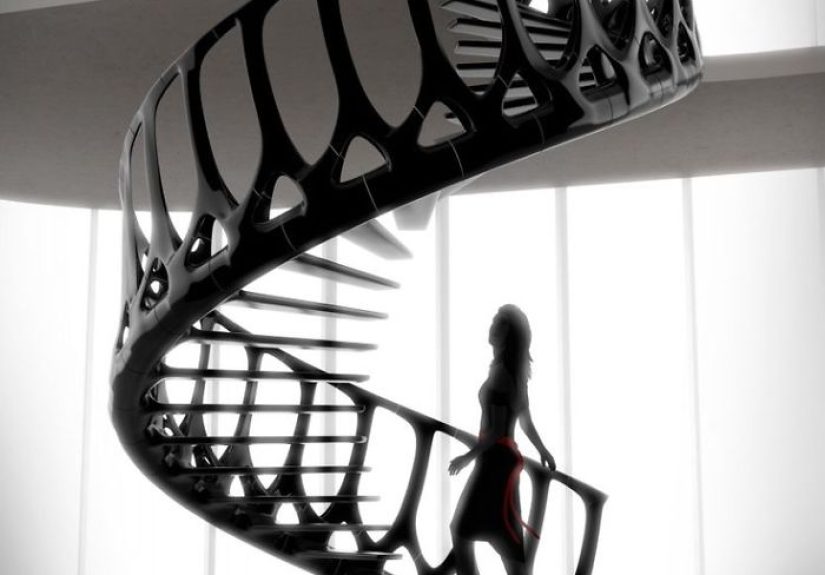
Spiral staircases are space-saving and visually memorable. They are especially useful in lofts, libraries, roof decks, guest suites, and compact homes where a full straight staircase may not fit. A spiral staircase can be rustic with wood treads and black metal, industrial with steel, or artistic with a smooth sculptural form.
Because spiral stairs can be narrower and steeper than other layouts, they are not always ideal as the main staircase for a busy family home. But as a secondary staircase, they can be gorgeous. Think of them as the espresso shot of staircase design: small, strong, and capable of changing the mood quickly.
4. Traditional Wood Staircases: Warm, Timeless, and Always Welcome
Wood staircases remain popular because they age beautifully and work with nearly every design style. Oak, walnut, maple, and ash can create very different moods. White oak feels relaxed and modern. Walnut feels rich and dramatic. Painted risers with stained treads create a crisp traditional look that never seems to go out of style.
For a classic American home, consider medium-tone wood treads, white risers, and a painted or stained handrail. Add square newel posts for a Craftsman-inspired look, turned balusters for traditional charm, or simple iron spindles for a transitional update. A wood staircase can be quiet and elegant or bold and architectural depending on the railing profile, wall color, and lighting.
5. Glass Railing Staircases: Clean Views and Contemporary Shine
Glass railings are ideal when you want safety without visual heaviness. They allow light to travel through the stairwell and preserve views across the room. This makes them a favorite for modern staircase designs, especially floating stairs and homes with open floor plans.
Frameless glass panels create the most seamless look, while glass with metal posts feels slightly more structured. For warmth, combine glass railings with wood treads. For a sleek urban style, pair glass with steel, stone, or concrete. The trick is balance: too many cold materials can make a home feel like an airport lounge. Add wood, textured walls, soft lighting, or a runner nearby to keep the design inviting.
6. Black Metal Railings: Simple, Graphic, and Surprisingly Flexible
Black metal railings are a design favorite because they outline the staircase without overwhelming it. They work in farmhouse, industrial, transitional, Scandinavian, and modern homes. Vertical black balusters can make a traditional staircase feel updated, while horizontal rails or cable systems create a more contemporary effect.
Black railings also coordinate easily with black window frames, cabinet hardware, pendant lights, and door handles. This creates visual rhythm throughout the home. If your staircase currently looks dated but the structure is solid, replacing bulky railings with a slimmer black metal system can make the entire entry feel fresher.
7. Painted Staircases: Big Personality Without a Full Remodel
Painted stairs are one of the most budget-friendly ways to create a beautiful staircase design. You can paint only the risers, add a faux runner, use a two-tone scheme, or create a bold color moment. White risers and dark treads feel crisp and classic. Soft blue or green risers add cottage charm. Black painted treads can look dramatic, especially when paired with white walls and warm wood accents.
A painted stair runner is a clever option when you want the look of a runner without the cost or maintenance of carpet. The key is using durable paint suitable for floors and applying a finish that can handle foot traffic. Stairs work hard. They deserve paint that does not faint at the sight of shoes.
8. Stair Runners: Comfort, Pattern, and Quiet Footsteps
A stair runner can completely change the look and feel of a staircase. It adds color, texture, comfort, and slip resistance while protecting wood treads from wear. Runners are especially useful in homes with children, pets, or anyone who has ever attempted to descend stairs in socks with too much confidence.
Popular options include wool runners, jute blends, herringbone patterns, stripes, vintage-inspired prints, and neutral textured weaves. For a traditional home, a patterned runner can bring elegance. For a modern home, a simple stripe or solid natural fiber runner can add warmth without clutter. Always consider scale: a tiny pattern may disappear from a distance, while an oversized pattern can become the star of the hallway.
9. Under-Stair Storage: Beauty With a Brain
The space beneath the stairs is often wasted, which is tragic because it has so much potential. Built-in drawers, cabinets, bookcases, wine storage, benches, pet nooks, powder rooms, and mudroom-style cubbies can all turn under-stair space into something useful and attractive.
For a sleek look, use flush cabinet doors painted the same color as the wall. For a cozy look, add open shelving with books, baskets, and lighting. In a family home, under-stair storage can become the command center for shoes, backpacks, sports gear, and all the mysterious objects children collect and refuse to identify.
10. Statement Lighting for Staircases
Lighting is one of the easiest ways to make a staircase look more expensive. A chandelier in a double-height foyer creates instant drama. Wall sconces along a stairwell add rhythm and warmth. LED strip lighting under treads or along the wall can make modern stairs glow softly at night.
Good staircase lighting is not just decorative; it is practical. Stairs need visibility. If the staircase has dark finishes, open risers, or a curved layout, lighting becomes even more important. The most beautiful staircase designs usually combine ambient light, accent light, and natural light so the stairs look good during the day and remain safe after sunset.
11. Stair Wall Design: Do Not Ignore the Vertical Stage
The wall beside a staircase is prime design real estate. A gallery wall can make the climb feel personal and collected. Textured wallpaper can add depth. Wood slats, board-and-batten, picture-frame molding, or plaster finishes can transform a plain stairwell into a polished architectural feature.
If the stairs are simple, let the wall carry more personality. If the staircase itself is dramatic, keep the wall quieter so the design does not turn into a visual wrestling match. Beautiful homes know when to accessorize and when to stop before the staircase starts wearing five necklaces.
12. Modern Farmhouse Staircases: Cozy Meets Clean
Modern farmhouse staircase designs often combine white walls, natural wood treads, black metal balusters, and simple trim. The look is warm, approachable, and easy to adapt. Add shiplap for a casual farmhouse feel, or use smoother wall paneling for a more refined version.
This style works because it balances contrast and comfort. The black railing gives structure, the wood adds warmth, and the white background keeps everything bright. A striped runner, woven baskets, or vintage artwork can complete the look without making the space feel overly themed.
13. Minimalist Staircases: Quiet Luxury in Step Form
Minimalist staircases rely on proportion, material quality, and clean detailing. There may be no ornate balusters, no flashy runner, and no dramatic color. Instead, the beauty comes from a crisp silhouette, precise joinery, and calm materials such as oak, steel, plaster, concrete, or glass.
To keep a minimalist staircase from feeling cold, focus on texture. A smooth plaster wall, warm wood treads, and soft recessed lighting can create a peaceful atmosphere. Minimalism does not mean empty; it means every detail has been invited on purpose.
14. Tile Risers: Pattern in the Perfect Place
Tile risers bring color and pattern to the staircase without covering the treads. This is especially effective in Spanish-style, Mediterranean, coastal, bohemian, and eclectic homes. Patterned ceramic or cement-look tiles can turn each riser into a small design moment.
For a cohesive look, choose tile colors that repeat elsewhere in the home. Blue-and-white tile works beautifully in coastal interiors. Earthy terracotta and cream patterns suit warm, rustic spaces. Black-and-white geometric tile can feel bold and modern.
15. How to Choose the Most Beautiful Staircase Design for Your Home
The right staircase design depends on architecture, lifestyle, budget, and available space. A floating staircase may look incredible in a modern home but feel out of place in a 1920s cottage. A curved staircase may be stunning, but it needs room to breathe. A runner may be perfect for a busy household, while glass railings may suit a homeowner who wants openness and light.
Consider these questions before choosing:
- Is the staircase a main focal point or a secondary feature?
- Does the home lean modern, traditional, farmhouse, coastal, industrial, or transitional?
- How much natural light reaches the stairwell?
- Will children, pets, or older adults use the stairs daily?
- Do you need storage under or around the stairs?
- Are local building codes affecting width, riser height, railing height, or open-riser spacing?
- What materials already appear nearby, such as wood flooring, black hardware, stone, or painted trim?
When in doubt, match the staircase to the architecture first and the trend second. Trends are fun, but your house has to live with the decision long after the internet has moved on to arguing about beige again.
Experience Notes: What Homeowners Learn From Designing Beautiful Staircases
After looking at many staircase projects, one lesson appears again and again: the staircase should be planned early, not treated as a decorative afterthought. Homeowners often begin with a favorite photo, usually a breathtaking floating staircase or a grand curved design, and then discover that structure, budget, code, and space have opinions. Very strong opinions.
The most successful projects start by measuring the actual home carefully. Ceiling height, floor opening, wall placement, traffic flow, and natural light all matter. A staircase that looks perfect in a wide luxury foyer may feel cramped in a narrow hallway. Similarly, a dramatic dark railing may look stunning online but make a small stairwell feel heavy if there is little daylight.
Another practical experience is that railings change everything. Many homeowners think first about treads, but the railing is often what the eye notices most. Replacing old spindles with black metal balusters, cable railing, or glass panels can modernize a staircase even when the steps remain the same. For budget-conscious remodels, refinishing treads, painting risers, and updating the handrail can deliver a surprisingly dramatic transformation.
Lighting is another detail people appreciate more after living with the staircase. A stairwell that looks fine during the day can become gloomy at night. Wall sconces, step lights, or a pendant fixture can make the space safer and more attractive. In open-riser or floating designs, subtle lighting can also highlight the architecture and create a soft evening glow.
Homeowners with pets and children often learn that beauty must be practical. Glossy treads may look luxurious but can feel slippery. White risers look crisp but may show scuffs. Glass railings keep sightlines open but require cleaning. Runners add softness and traction but need proper installation. The best staircase design is not the one that wins a photo contest for five minutes; it is the one that still feels smart after five years of daily use.
Finally, the most beautiful staircase designs usually connect emotionally to the rest of the home. A gallery wall filled with family photos, a reading nook tucked under the stairs, a runner chosen from a favorite color palette, or a handmade wood handrail can make the staircase feel personal. The goal is not just to build steps. The goal is to create a transition that feels graceful every time someone moves through the house.
Conclusion
The most beautiful staircase designs combine proportion, safety, material, lighting, and personality. A floating staircase can make a modern home feel open and architectural. A curved staircase can create timeless elegance. A traditional wood staircase can bring warmth for generations. Painted risers, runners, tile, glass, metal railings, and under-stair storage can all turn an ordinary stairway into a memorable design feature.
Before choosing a style, study the home’s architecture, daily traffic, lighting, and local code requirements. Then decide where the staircase should sit on the design volume knob: quiet and classic, bold and sculptural, or somewhere in between. Done well, a staircase does more than connect floors. It connects the entire home with style, comfort, and a little everyday magic.