Table of Contents >> Show >> Hide
Old film has a funny way of making history feel both farther away and much too close. The scratches, the flicker, the stubborn grain all of it usually signals distance. Then somebody remasters the footage, steadies the frame, wipes away decades of dust, and suddenly the past stops acting like a museum exhibit and starts staring back. That is exactly what happens with the remastered archival video of Trinity, the first nuclear weapons test. What once looked like ghostly government footage now feels shockingly immediate, as if the desert itself has decided to rerun the moment when the modern world changed course.
The Trinity test was not just another wartime experiment with a dramatic name and a lot of cables. It was the proof that the Manhattan Project’s plutonium implosion design actually worked. It was the first human-made nuclear explosion. It was the moment the atomic age stopped being theory, memo, rumor, and whispered military urgency and became a blinding reality in the New Mexico desert. And when that event is seen again through restored footage, it does something powerful: it makes viewers look harder, think longer, and ask a more uncomfortable question than “How big was the blast?” The better question is, “What exactly are we seeing when we watch civilization cross a line?”
The Clip That Reopens History
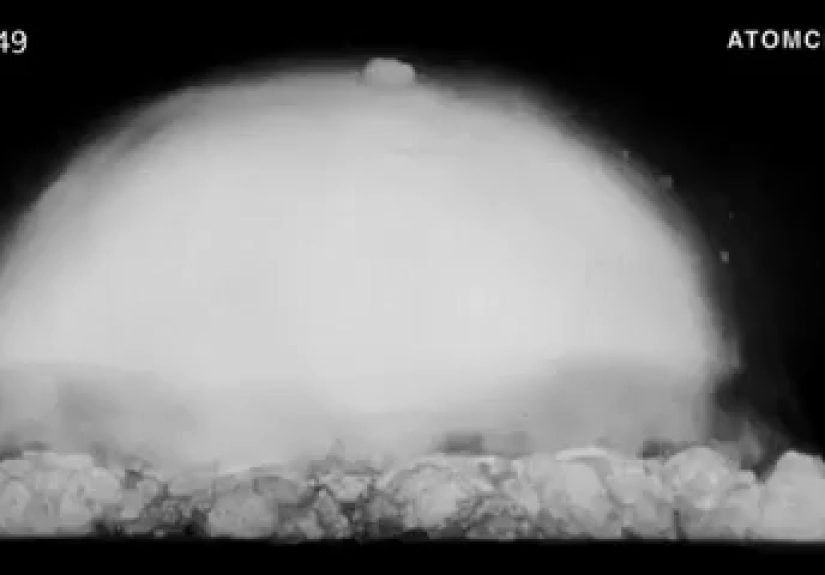
The remastered Trinity footage has drawn attention because it sharpens a scene that had already become iconic in historical memory. The restoration reportedly cleaned the original material by removing dirt, scratches, and processing defects. That may sound like routine archival housekeeping, but in this case the effect is enormous. The fireball looks less like a blurry legend and more like a physical event. The contrast in the sky is clearer. The rising cloud seems less symbolic and more mechanical, like physics wearing a terrible grin.
That clarity matters. Archival restoration is not just cosmetic polish for history nerds with excellent Wi-Fi. It changes how viewers process evidence. Grainy footage lets the mind drift into abstraction. Restored footage drags it back into detail. You notice timing. You notice scale. You notice how the tower vanishes almost before your brain finishes identifying it as a tower. The event stops feeling mythic and starts feeling engineered, which is in some ways even more unsettling. A myth is inevitable. A machine is built.
In other words, the remastered video does not make Trinity more dramatic. Trinity was already plenty dramatic. What it does is make the event more legible. And once something is easier to see, it also becomes harder to dodge.
What Trinity Actually Was
A Desert Test With World-Sized Consequences
Trinity took place before dawn on July 16, 1945, in the Jornada del Muerto desert of New Mexico. The device tested there was nicknamed the “Gadget,” a deceptively casual name for a machine built to force plutonium into a supercritical state through implosion. It sat atop a 100-foot steel tower, surrounded by instruments, cables, observation points, and enough tension to power a small nation on anxiety alone.
When it detonated, the flash lit the desert sky with a brightness witnesses struggled to describe. The tower was vaporized. The blast created a fireball, a shock wave, and the first mushroom cloud produced by a nuclear weapon. Heat fused sand and other materials into the green glassy residue that later became known as trinitite. The test confirmed that the implosion design worked, and that success immediately changed the timetable of war, diplomacy, and human imagination.
That last part matters as much as the military result. Trinity was not merely a successful test. It was a successful demonstration that humans had figured out how to release catastrophic energy on command. It transformed scientific achievement into geopolitical power almost instantly. The world did not get a quiet adjustment period. It got a countdown.
Why the Test Had to Happen
Scientists working on the Manhattan Project had strong reason to believe the uranium gun-type bomb would function without a full-scale trial. The plutonium implosion design was another story. It was far more complex, far more difficult to calculate, and far less forgiving. Trinity existed because the bomb’s designers needed proof, not hope. A test was the only honest referee.
That scientific uncertainty gives the remastered footage an extra layer of meaning. Viewers today know the outcome. The people in 1945 did not. Some expected a dud. Some feared partial failure. Some worried the yield might far exceed predictions. The footage captures the moment just before uncertainty dies and consequence takes over. It is science at the point where experiment becomes history and history becomes policy.
Why the Remastered Video Feels So Different
History Loses Its Protective Blur
There is something almost rude about how vivid restored footage can be. It takes the comfortable haze off old events. The remastered Trinity clip reminds us that the first nuclear explosion did not happen in a black-and-white cloud of symbolism. It happened in a real landscape, on a real morning, with real people waiting to see whether years of research would culminate in triumph, disaster, or something too new for either word.
Restoration also helps modern audiences appreciate how much effort went into recording the event. Trinity was not casually filmed by one person holding a camera and hoping for the best. The Manhattan Project assembled an extensive photography operation, using dozens of cameras and specialized high-speed techniques to capture the explosion from multiple distances and time scales. The people behind the cameras were not simply documenting a test. They were inventing a visual language for an event no one had ever seen before.
That is part of the strange power of the footage. It is both evidence and design. The test was engineered, and so was the act of seeing it. Even the visual record of Trinity reflects modernity’s belief that if something happens, it should be measured, filmed, timed, studied, archived, and maybe one day remastered for the internet. Human beings are consistent if nothing else.
The Video Shows More Than an Explosion
At first glance, the clip is about spectacle. A flash. A swelling fireball. A towering cloud. But the longer you watch, the more the footage becomes about systems: science, war, logistics, secrecy, photography, politics, and memory. Trinity is not just a blast on film. It is an entire civilization condensed into a few terrifying seconds of light.
That is why restored footage has editorial value far beyond visual novelty. It helps audiences see Trinity not as a random prologue to the atomic bombings, but as the hinge on which the postwar world turned. The remaster makes the event look cleaner, but the history it reveals is anything but neat.
The Blast Beyond the Frame
The Scientific Breakthrough and the Moral Rupture
Any serious article about Trinity has to resist two easy traps. The first is treating the test like a pure triumph of science. The second is flattening it into a simple moral parable. It was both more impressive and more troubling than either shortcut allows.
On one hand, Trinity represented an extraordinary technical feat. In a short span of time, scientists and engineers solved problems in physics, metallurgy, explosives, electronics, and instrumentation that had never been solved before. The implosion design worked. The cameras worked. The measurements worked. In the narrowest technical sense, it was a staggering success.
On the other hand, the test opened a chapter of history defined by existential risk. It validated the weapon design that would soon be used in war. It signaled the beginning of a nuclear arms race that shaped the Cold War and still shadows global security today. Restored footage can sharpen the image, but it cannot simplify the meaning. Trinity remains one of those historical moments where brilliance and dread arrive in the same frame.
The People Outside the Camera’s Center
For years, public memory of Trinity focused heavily on scientists, generals, and famous quotations. More recent scholarship and public history work have pushed the story wider, and rightly so. The test also produced radioactive fallout that affected nearby communities, including people who later came to be known as downwinders. The blast may have taken place in a remote area, but “remote” is one of history’s favorite misleading adjectives. People lived in the region. Families worked there, traveled there, raised livestock there, and absorbed consequences that were never part of the heroic postcard version of the atomic age.
That wider perspective changes how the remastered video should be watched. It is easy to admire the image and forget the aftermath. It is harder, but more honest, to see the fireball and remember the people who were not in the official celebratory frame. A clearer picture of Trinity should lead to a clearer picture of its human cost. Otherwise we are just upgrading the resolution of our amnesia.
What the Video Can and Cannot Tell Us
The restored footage is valuable, but it has limits. It can show the instant of detonation with greater clarity. It can reveal texture, pacing, and scale. It can make an abstract event look physical again. What it cannot do is contain the full meaning of Trinity. A camera records light. It does not automatically record ethics. It does not record the private doubts of scientists, the fear of local residents, the diplomatic calculations in Washington, or the generational anxiety that followed once nuclear weapons became part of international life.
That does not diminish the footage. It makes it more important. Visual records are strongest when they spark deeper reading, not when they pretend to be the whole story. The best response to remastered Trinity footage is not to stare at it like a special effect from history. The best response is to let it pull you into the broader record: the Manhattan Project, the science of implosion, the rise of nuclear culture, the testimony of witnesses, the research on fallout, and the ongoing debates over memory, accountability, and deterrence.
In that sense, the remastered video performs a rare service. It takes one of the most over-discussed events in modern history and somehow makes it feel newly discussable. That is not easy. Most famous images become dulled by repetition. Trinity grows stranger the longer you look at it.
Watching Trinity Today: The Experience of Seeing the Past in High Definition
Watching the remastered Trinity footage today is a strangely layered experience. First comes the instinctive reaction to the image itself: the flash, the scale, the speed, the almost unreal transformation of darkness into violent light. Even if you know what you are about to see, the footage still lands with a jolt. It does not feel like watching an ordinary historical clip. It feels like watching a boundary get crossed in real time.
Then a second feeling creeps in, and it is less cinematic. The clearer the footage becomes, the less it behaves like ancient history. The old mental trick of saying, “That was a different world,” starts to wobble. Yes, it was 1945. Yes, the film stock is old. Yes, the cars, uniforms, and equipment belong to another era. But the event itself feels disturbingly modern. The organization, the engineering, the measurement, the speed with which science turns into state power all of that feels familiar. The technology in the clip is old. The logic behind it is not.
There is also an eerie contrast between the beauty of the image and the meaning of the event. The fireball has shape, rhythm, and even a terrible visual elegance. That is one reason nuclear footage has always unsettled people. It is visually astonishing and morally heavy at the same time. Your eyes may register something magnificent while your mind keeps reminding you that magnificence is not innocence. Trinity is a case study in how something can be visually spectacular and historically alarming in the exact same second.
For many viewers, the experience also becomes personal in a quieter way. You start thinking about where you learned this history, what parts were emphasized, and what parts were left blurry. Maybe you were taught the Trinity test mainly as a scientific milestone. Maybe you encountered it through the story of Oppenheimer. Maybe you first saw it in a documentary, a classroom, a museum, or a clip passed around online. The remastered footage has a way of reopening those earlier impressions and asking whether they were complete. Usually, they were not.
The emotional experience changes again when you remember the people beyond the famous names. Suddenly the clip is no longer only about laboratories and leadership. It is also about local communities, downwind families, military secrecy, and the long tail of radioactive fallout. That shift matters. It changes the act of viewing from passive astonishment to active reflection. You are not just seeing what happened at ground zero. You are thinking about what spread outward from it.
And that may be the deepest experience tied to this restored video: the realization that better images do not give us closure. They give us sharper responsibility. A remaster does not tame Trinity. It removes one more layer between the viewer and the fact that the nuclear age began with people building something they hoped would work, filming it with remarkable care, and then watching the desert answer back. The footage is clearer now, but the questions it raises remain as difficult as ever.
Conclusion
The remastered archival video of Trinity is more than a polished look at a famous explosion. It is a sharper window into the first nuclear weapons test and the moment the atomic age announced itself with impossible light over New Mexico. The footage matters because it restores detail, but its real power lies in what that detail forces us to confront: scientific ingenuity, wartime urgency, visual documentation, environmental fallout, human consequence, and the uneasy truth that modern history can still feel unfinished.
Seen in restored form, Trinity does not shrink into the past. It expands into the present. The fireball still rises. The questions still do too.