Table of Contents >> Show >> Hide
- Why This Launch Story Still Matters
- From Experiment to Orbiting Infrastructure
- What SpaceX Is Really Launching
- The Regulatory Green Light Is a Big Deal
- Why Starlink Keeps Winning Attention
- The Complications SpaceX Cannot Ignore
- What This Means for the Future of Satellite Internet
- The Human Experience Behind the Launches
- Conclusion
SpaceX did not exactly wake up yesterday and discover satellites. Starlink has been flying for years. But every fresh launch still feels like a headline because this is no longer just a flashy space project with nice livestreams and dramatic booster landings. It is a working internet system in low Earth orbit, a fast-growing telecom business, a regulatory tug-of-war, a headache for astronomers, and a very real answer for people who live far from fiber lines and cell towers.
That is why the title SpaceX Finally Launches Its Starlink Satellites still works, even if “finally” is doing a bit of dramatic acting. What matters is not the first launch anymore. What matters is the scale, the cadence, and the fact that each new batch pushes Starlink closer to being less of a moonshot and more of an invisible utility. The kind you only notice when your video call does not freeze in the middle of nowhere.
Why This Launch Story Still Matters
Starlink started as an ambitious idea: put thousands of satellites in low Earth orbit, then use them to beam broadband internet down to places traditional providers have ignored, underserved, or politely forgotten. Rural homes, ships, aircraft, emergency zones, remote worksites, and mobile users all sit inside that target. In plain English, SpaceX saw a giant global market filled with bad internet and said, “We can probably throw rockets at that.”
That strategy now looks much less crazy than it did in the early days. SpaceX has turned Falcon 9 reuse into a launch machine, and Starlink has become the payload that keeps feeding that machine. The result is a flywheel: reusable rockets lower launch costs, lower launch costs help grow Starlink, and Starlink revenue helps fund more launches, bigger satellites, and more ambitious systems. It is business by orbital recursion, and it is annoyingly effective.
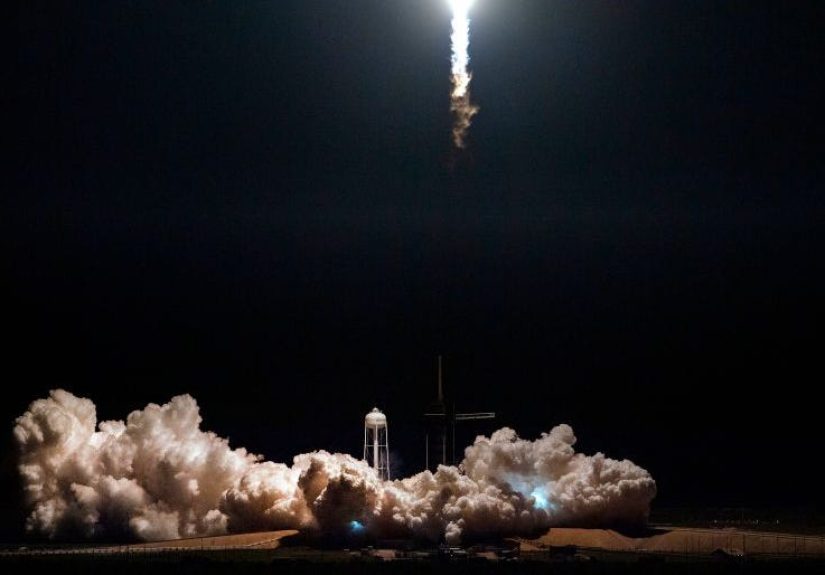
Recent missions show how relentless that pace has become. SpaceX has continued sending fresh groups of Starlink satellites into orbit in quick succession, with April 2026 launch activity and additional Starlink flights listed on the company’s manifest only days apart. Falcon 9, in other words, is not exactly resting on the launch pad with a cup of coffee and a “do not disturb” sign.
From Experiment to Orbiting Infrastructure
The first big Starlink launch in 2019 looked like a technical flex. Sixty satellites released in one go made for striking visuals, even before skywatchers noticed the now-famous “string of pearls” effect in the night sky. Back then, the project still felt experimental to many observers. Today, the tone is different. Starlink is not merely proving that satellite internet can work. It is proving that satellite internet can scale.
That scale matters because traditional satellite internet used to come with a familiar package: high latency, weather complaints, and speeds that made users question whether the internet was being delivered by satellite or by carrier pigeon. Starlink changed that formula by putting satellites much closer to Earth. A lower orbit means lower latency, and lower latency means activities like video calls, online gaming, cloud apps, and streaming become much more realistic.
SpaceX says the network is built for high-speed, low-latency service, and Starlink’s own published performance ranges show many users seeing download speeds well above what older satellite systems typically offered. That is one reason Starlink has attracted not only households, but also airlines, maritime operators, businesses, emergency teams, and governments.
What SpaceX Is Really Launching
When people hear “Starlink satellites,” they often picture a sky packed with tiny Wi-Fi routers wearing jetpacks. The reality is smarter and more interesting. SpaceX is launching a layered communications network made of satellites, ground infrastructure, user terminals, and increasingly advanced capabilities such as direct-to-cell connectivity.
Low Earth Orbit Is the Secret Sauce
Starlink satellites operate in low Earth orbit rather than the much higher geostationary orbit used by many traditional satellite providers. That lower altitude reduces signal travel time. The user experience difference is not subtle. Browsing feels snappier, calls feel less awkward, and the internet stops behaving like it has to think about every single click before responding.
Laser Links and Smarter Routing
As the network matured, Starlink’s satellites gained more sophisticated features, including inter-satellite laser links on many spacecraft. That allows data to move through space between satellites before dropping back to the ground, which can improve routing and extend service to places with less terrestrial infrastructure. It also makes the constellation feel less like a stack of isolated objects and more like a true orbital mesh network.
Direct-to-Cell Is the Next Big Step
One of the most important shifts in the Starlink story is that SpaceX is no longer focused only on dish-based internet. It is also pushing toward direct-to-cell service. That means satellites can help fill in mobile dead zones by connecting with standard phones through carrier partnerships. The FCC approved the first SpaceX-T-Mobile direct-to-cell arrangement in late 2024, and SpaceX has since kept launching satellites with that capability. If regular Starlink was about bringing broadband to the cabin in the woods, direct-to-cell is about making sure your phone does not turn into a very expensive flashlight when you leave the highway.
The Regulatory Green Light Is a Big Deal
Starlink’s expansion is not just a story about engineering. It is also a story about permissions, spectrum, and regulators who get to decide how crowded and powerful the orbital broadband future can become. In January 2026, the FCC approved another 7,500 second-generation Starlink satellites. That approval was a major milestone because it strengthened SpaceX’s path toward wider coverage, stronger performance, and expanded mobile capability.
Then came another important signal from Washington: the FCC moved toward easing old power-flux-density limits for satellite broadband systems. In less bureaucratic language, that could allow systems like Starlink to use spectrum more intensively, improve capacity, and deliver higher speeds with better reliability, especially in remote areas. Unsurprisingly, competitors objected. Telecom history would be much shorter if everyone simply nodded and agreed.
Still, the direction is clear. U.S. regulators increasingly see next-generation satellite broadband as strategic infrastructure rather than a niche gadget for off-grid enthusiasts and people who enjoy camping with suspiciously expensive electronics.
Why Starlink Keeps Winning Attention
Plenty of tech projects sound revolutionary in press releases and then quietly become PowerPoint fossils. Starlink has avoided that fate because it solves a very old problem in a very visible way: internet access is still uneven, and entire communities remain poorly served by wired broadband or dependable cellular service.
For a family outside cable territory, Starlink can mean the difference between buffering through schoolwork and getting a usable connection. For a small business in a rural area, it can mean access to cloud systems, digital payments, and remote collaboration. For emergency responders after storms or wildfires, it can provide communications when local infrastructure is damaged. For airlines, ships, and mobile operators, it is a connectivity upgrade that customers can actually feel.
That practical usefulness is also why Starlink matters financially. Reuters reported that Starlink has grown into a major revenue engine for SpaceX, with millions of users globally and a business that now accounts for a large share of the company’s income. In other words, Starlink is not just helping fund Mars dreams. It is paying real bills on Earth.
The Complications SpaceX Cannot Ignore
Now for the less shiny part. Every Starlink launch expands capability, but it also expands the debate around what a crowded low Earth orbit should look like. Astronomers have been raising concerns since the early launches, when bright satellite trains streaked across the sky and through telescope images. NOIRLab and other astronomy groups have worked on mitigation efforts, measurements, and coordination, but the tension has not magically disappeared.
There are also broader worries about orbital congestion, collision risk, radio interference, and the long-term environmental effects of large constellations and repeated satellite reentries. Critics argue that rapid deployment is outrunning the pace of policy. Supporters counter that the public benefit is enormous and that mitigation measures can improve over time. Both sides have a point, which is usually a sign that the issue is real and not just internet yelling in a different outfit.
SpaceX has taken steps to reduce reflectivity and improve coordination, but the central challenge remains: the same system that can connect remote villages and moving aircraft also changes the visual and operational environment of near-Earth space. Starlink is therefore both a technological triumph and an accountability test.
What This Means for the Future of Satellite Internet
SpaceX is no longer trying to prove that a broadband constellation can exist. It is trying to prove that one can dominate. That means bigger capacity, denser coverage, better performance, more enterprise deals, stronger government adoption, and deeper mobile integration. It also means fending off competitors such as Amazon’s Kuiper while preserving its biggest advantage: launch tempo.
And launch tempo is where SpaceX still looks unusually strong. Because it owns the rockets, controls the mission cadence, and keeps reusing boosters at a pace few rivals can match, it can iterate faster than most companies in telecom or space. That alone changes the market. Starlink is not waiting for someone else’s launch manifest or somebody else’s hardware schedule. It is building the road and driving on it at the same time.
The next phase will likely be less about novelty and more about refinement. Can Starlink improve urban congestion performance? Can direct-to-cell become seamless enough that average users stop treating it like a science experiment? Can regulators balance innovation with orbital safety? Can astronomy protections become more effective? Those are the questions that will define whether Starlink becomes a permanent piece of communications infrastructure or the most ambitious beta test in modern tech.
The Human Experience Behind the Launches
All of this talk about satellites, spectrum, and launch cadence can make the Starlink story sound abstract, as if it exists only in mission patches and regulatory filings. But the real meaning of “SpaceX finally launches its Starlink satellites” shows up on the ground, where the service changes how people work, travel, learn, and stay connected.
Imagine a household outside the usual broadband footprint. Maybe there is no fiber on the road, no strong cable option, and cellular service becomes moody the second the weather changes. Before Starlink, internet access in places like that often meant compromise. Large downloads were a chore. Remote work required patience and backup plans. Streaming anything in high definition could feel like negotiating with the universe. When Starlink arrives, the change is not just technical. It is emotional. The internet stops feeling scarce. Kids can finish assignments without timing uploads like a military operation. Parents can take video calls without apologizing every other sentence. A rural address suddenly feels less digitally isolated.
The experience is just as dramatic for people who move. RV travelers, boat crews, field teams, and mobile professionals increasingly treat reliable connectivity as essential gear, not a luxury. A portable Starlink setup can turn a remote site into a temporary office. That matters for crews inspecting infrastructure, documentary teams working on location, research groups in isolated terrain, and businesses that cannot wait for terrestrial networks to catch up. The modern version of “roughing it” has apparently evolved into having a beautiful view and excellent upload speeds.
Then there is the emergency angle. After severe storms, wildfires, or flooding, communications often become one of the first and most urgent needs. Power can be restored slowly. Cell towers can fail. Wired networks can be damaged. Satellite connectivity becomes valuable because it is not tied to the same local physical pathways. In those moments, Starlink is not a shiny consumer tech product. It is a lifeline. The user experience becomes less about speed tests and more about whether people can coordinate aid, contact family, or access critical information.
There is also a quieter but increasingly important experience happening above us and around us: the normalization of connectivity almost anywhere. On airplanes, at sea, at temporary worksites, and across remote highways, people are starting to expect that being away from cities should not automatically mean being offline. That expectation is one of Starlink’s biggest cultural effects. It is reshaping what “available internet” means. The old map of good service versus dead zones is being redrawn by orbital infrastructure.
So when SpaceX launches another batch of Starlink satellites, the event is not just about a rocket climbing through the sky. It is about extending a network that more people now depend on in daily life. The launch lasts minutes. The experience it enables can last all day, every day, in places that used to feel disconnected from the digital world.
Conclusion
SpaceX’s Starlink launches are no longer one-off spectacles. They are the visible heartbeat of a much larger system that blends aerospace, telecom, software, regulation, and everyday utility. Each new mission adds capacity, expands reach, and sharpens the debate over what the future of orbital internet should look like.
The biggest reason these launches matter is simple: Starlink is changing the definition of access. It is making broadband less dependent on geography, pushing direct-to-cell technology closer to mainstream use, and proving that reusable rockets can support a communications network at extraordinary scale. The project still faces real criticism over astronomy, congestion, and long-term sustainability, and those concerns deserve serious attention. But the central fact remains hard to miss. SpaceX did not just launch satellites. It launched a new model for how internet infrastructure gets built.