Table of Contents >> Show >> Hide
- Why Retro Kitchens Are Making Such a Big Comeback
- What a Modern Retro Kitchen Actually Looks Like
- Easy Update #1: Start With a Nostalgic Color Palette
- Easy Update #2: Bring In Checkerboard Floors or Retro Pattern
- Easy Update #3: Use Tile That Has Some Personality
- Easy Update #4: Swap the Lighting and Hardware
- Easy Update #5: Add a Retro-Style Appliance or Two
- Easy Update #6: Use Furniture-Like Pieces Instead of More Built-Ins
- Easy Update #7: Style It Like It Was Collected Over Time
- How to Keep the Look Fresh Instead of Theme-y
- The Experience: What It Actually Feels Like to Live With a Retro Kitchen
- Final Thoughts
For a while, the modern kitchen seemed stuck in a beige witness protection program. White cabinets, pale counters, greige walls, and just enough personality to say, “I own olive oil in a ceramic bottle.” But the mood is shifting. Retro kitchens are back, and not in a dusty, time-capsule way. Today’s version feels cheerful, collected, and surprisingly practicallike your favorite old diner got a design degree and learned how to hide the air fryer.
Designers are leaning into nostalgic kitchens because people want warmth, individuality, and rooms that feel lived in. That means color is returning. Pattern is returning. Curves, chrome, glossy tile, café curtains, checkerboard floors, painted cabinetry, and playful appliances are all walking back into the kitchen like they own the place. The smartest part of the trend is that you do not need a full renovation to join in. A few strategic changes can create the look without forcing you to refinance your house just to buy a mint-green refrigerator.
If you love the idea of a kitchen with personality, this is your moment. Here is how to get the retro kitchen look the easy waywithout turning your home into a theme park or making it feel like a movie set for an overly dramatic meatloaf commercial.
Why Retro Kitchens Are Making Such a Big Comeback
The return of retro kitchens is really part of a bigger design correction. After years of ultra-minimal spaces, many homeowners want rooms that feel personal instead of algorithm-approved. Designers are talking more about warmth, memory, color, and collected style. In other words, people are tired of kitchens that look polished but forgettable. They want spaces that tell a story.
Retro design works because kitchens are emotional rooms. This is where coffee happens, kids hover, friends gather, leftovers are judged, and somebody always ends up leaning on the island with a life update. A retro-inspired kitchen supports that mood. It is inviting, a little playful, and often less precious than a sleek, high-gloss showroom kitchen. You do not feel like you need to apologize for leaving a cookbook out or hanging a striped tea towel on the oven handle. In fact, that kind of lived-in detail helps.
And unlike some trends that demand total commitment, retro style is flexible. You can pull inspiration from the 1950s with pastel colors and chrome, the 1960s with clean midcentury lines, or the 1970s with earthy tones, tile, and bold pattern. The goal is not historical re-enactment. The goal is charm.
What a Modern Retro Kitchen Actually Looks Like
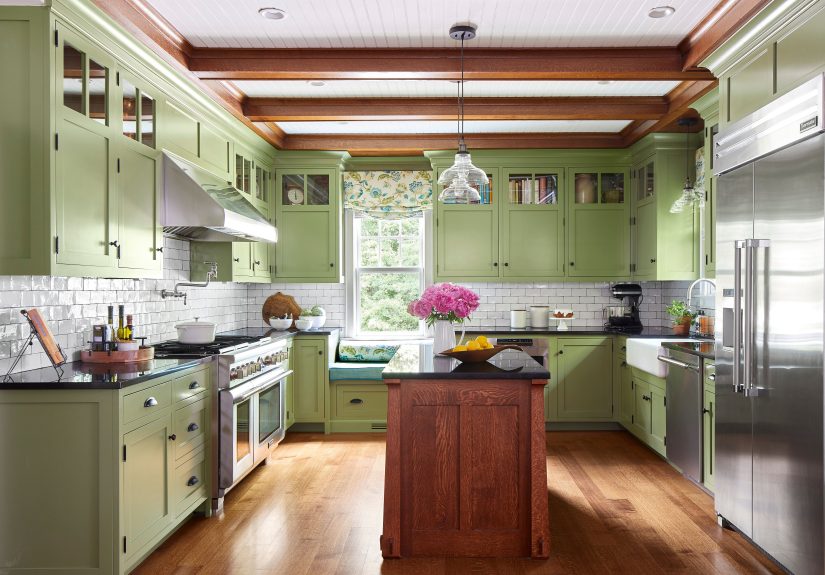
The best retro kitchens balance old-school character with modern function. Think flat-front cabinets in a buttery yellow, moss green, robin’s egg blue, or soft coral. Think checkerboard flooring that adds instant rhythm underfoot. Think glossy backsplash tile, milk-glass pendants, diner-style stools, chrome edging, vintage-look hardware, and a few countertop appliances that bring color to the room instead of pretending they are invisible.
But modern retro is not just about color. It is also about texture and shape. Rounded corners, curved furniture lines, beadboard, zellige, handmade tile, warm wood tones, unlacquered brass, and collected vintage pieces all help soften a kitchen. A retro space should feel relaxed, not rigid. The room should say, “Come sit down,” not, “Do not touch anything unless you are wearing felt slippers.”
Easy Update #1: Start With a Nostalgic Color Palette
If you want the biggest visual payoff with the least demolition, start with color. Retro kitchens thrive on shades that feel optimistic and familiar. Soft mint, butter yellow, peachy pink, tomato red, turquoise, jadeite green, and warm orange all have retro energy. Earthier versions also work beautifully if you want something calmer: olive, pistachio, cinnamon, clay, and muted blue-green can nod to the past without screaming for attention.
The trick is choosing one lead color and supporting it with two or three quieter partners. A mint-and-cream palette feels 1950s fresh. Butter yellow with walnut and white looks sunny without becoming cartoonish. Pink paired with warm neutrals or wood feels playful but grown-up. Orange, surprisingly, works well when grounded by turquoise, brown, or natural oak.
You do not have to paint every cabinet to make this work. Try color on the island, pantry door, breakfast nook, stools, or even just the small appliances. A stand mixer, toaster, tea kettle, or coffee maker in a nostalgic shade can shift the mood fast. It is a low-risk move with high “oh, this is cute” return on investment.
Easy Update #2: Bring In Checkerboard Floors or Retro Pattern
If retro kitchens had an official mascot, it might be the checkerboard floor. Few design moves say “vintage charm” faster. Black and white is classic, but softer color combinations often feel fresher today: brown and cream, dusty blue and white, sage and ivory, or blush and clay. The pattern has history, but it also feels graphic and current.
Flooring is a bigger commitment than paint, so if a full replacement is not happening right now, fake the effect. A large checkerboard rug under a breakfast table can create the same visual rhythm. Peel-and-stick floor tiles may work in a rental or low-traffic zone. You can even echo checkerboard elsewhere with seat cushions, café curtains, or tiled accents.
Pattern matters because retro kitchens were never afraid of visual interest. Geometric prints, atomic-inspired shapes, striped linens, floral wallpaper, and playful motifs can all support the look. Just do not pile every pattern into the same square foot. One great floor plus one supporting pattern is charming. Five competing prints is a hostage situation.
Easy Update #3: Use Tile That Has Some Personality
Retro kitchens love tile, and lately designers have been embracing it again with real enthusiasm. Colorful backsplashes, glossy square tile, mosaic details, hand-painted surfaces, and even tile countertops are making a comeback. This makes sense: tile brings texture, durability, and a slightly handcrafted quality that feels far more interesting than a perfectly anonymous slab.
For an easy upgrade, focus on the backsplash. Square tile in a pastel or earthy shade instantly reads retro, especially when paired with matching grout or a subtle contrast. Pink, pistachio, pale blue, and creamy white all work. If you want more punch, try a geometric layout, tiny mosaic, or a playful border detail.
Tile countertops are another option if you are ready for a bolder statement. They can look charming and collected, especially on an island or coffee station. A tiled surface in sage, oxblood, cream, or warm terracotta adds depth and character that plain quartz cannot fake. It is not for everyone, but if you want a kitchen that looks like it has stories, tile definitely tells them.
Easy Update #4: Swap the Lighting and Hardware
Sometimes the fastest route to retro style is not the cabinets. It is the jewelry. Lighting and hardware can completely redirect the mood of a kitchen without touching the layout.
Lighting That Softens the Room
Look for milk-glass pendants, schoolhouse shades, ribbed glass, cone lights, brass details, or midcentury silhouettes. A single pendant over the sink, a pair above the island, or a small vintage-inspired flush mount can pull the whole room backward in timein the best way. Warm bulbs help too. Cold lighting can make a charming kitchen feel like a break room.
Hardware That Feels Familiar
Chrome, polished nickel, unlacquered brass, latches, bin pulls, rounded knobs, and backplates all add instant age and charm. If your cabinets are plain, retro hardware can do a lot of heavy lifting. Try mixing old and new: add vintage-inspired drawer pulls to modern flat-front cabinets, or pair streamlined cabinetry with more traditional latches for contrast. It should feel intentional, not costume-y.
Easy Update #5: Add a Retro-Style Appliance or Two
This is one of the easiest ways to land the trend. Retro-style appliances have been modernized for years now, which means you can get the curves, color, and chrome without sacrificing performance. A rounded refrigerator in a fun color, a nostalgic range, or even just a mixer and toaster in mint, butter, or cherry red can give the room a throwback personality.
The nice thing about this update is flexibility. A full retro fridge makes a bold statement, but smaller appliances can get you 70 percent of the look for a fraction of the money. A mint-green stand mixer on the counter, a vintage-style kettle, or a chrome-trimmed toaster immediately adds that “this kitchen has a point of view” energy.
When in doubt, let one appliance be the star and keep the rest quieter. A retro kitchen should feel fun, not like your countertop lost a bet at an antique mall.
Easy Update #6: Use Furniture-Like Pieces Instead of More Built-Ins
Retro kitchens often feel more relaxed because they are not wall-to-wall cabinetry. They include pieces that look like furniture: a freestanding pantry, a vintage table instead of an island, a hutch, a painted bar cart, a peg rail, or open shelving with a little breathing room. These elements make the space feel layered and collected.
If your kitchen looks too fitted or too new, bring in one piece with age. A wooden table with bentwood chairs can replace a modern dining set. An antique cabinet can add storage and character. A narrow console can become a coffee station. Even a salvaged stool or old step ladder used as display can make the room feel less generic.
This is also where retro kitchens feel especially human. Not every inch needs to be optimized by a storage consultant. Sometimes one beautiful, slightly imperfect piece does more for the room than another bank of identical drawers.
Easy Update #7: Style It Like It Was Collected Over Time
Accessories matter in retro design because the style lives in the details. A bowl of citrus on the counter. A row of old tins. Jadeite or milk-glass pieces in open shelving. A vintage clock. Framed thrifted art. Copper pots. Café curtains. A floral or striped tablecloth. A diner napkin holder. A small radio. A cookbook stand that has actually seen action.
The key word is collected. Do not buy 47 fake-vintage items in one weekend and expect the room to feel authentic. Pick a lane and add layers slowly. Maybe you collect restaurant ware. Maybe you love old canisters. Maybe you add one flea-market pendant and some striped tea towels and call it a day. That is enough. Retro style is better when it feels personal.
How to Keep the Look Fresh Instead of Theme-y
The biggest risk with retro kitchens is overdoing the nostalgia. The easiest way to avoid that is to balance expressive details with clean structure. Keep the layout functional. Let the cabinets and counters do their job. Then layer in the charm through color, lighting, seating, hardware, and styling.
Also, mix eras carefully. You can blend 1950s curves with 1970s tile and a little midcentury modern wood, but give those pieces a common threadusually color, material, or shape. Too many references at once can make the room feel confused. The best retro kitchens have edit, not chaos.
And remember: vintage-inspired does not mean inconvenient. Soft-close drawers, durable finishes, high-performance appliances, and smart storage are absolutely welcome here. The whole point is to enjoy the nostalgia without having to live like it is 1962 and someone still thinks gelatin salads are exciting.
The Experience: What It Actually Feels Like to Live With a Retro Kitchen
One reason retro kitchens resonate so strongly is that they do something modern kitchens sometimes forget to do: they make everyday routines feel warmer. A retro-inspired kitchen often changes the atmosphere of a home before it changes anything else. Morning coffee feels less like a transaction and more like a ritual. A colorful mixer left on the counter does not look like clutter; it looks like the room expects life to happen in it. The space feels less staged and more welcoming, which is a subtle shift until you realize everyone in the house keeps drifting into it.
There is also a real comfort in the visuals. Checkerboard floors, rounded appliances, painted cabinets, and vintage-style lighting have a familiarity that many people connect with emotionally, even if they cannot immediately explain why. The look can remind someone of a grandparent’s kitchen, an old diner, a first apartment, a favorite movie set, or a childhood house where dinner always seemed to appear at the same time every night. That emotional memory is powerful. It is part of why retro kitchens can feel joyful rather than merely decorative.
From a hosting perspective, the style does a lot of heavy lifting. Guests tend to relax faster in a kitchen that feels colorful and collected. They will sit at the counter longer. They will notice the old canisters, the café curtains, the thrifted art, the mint toaster, the funny little sugar jar, and they will ask about them. Retro kitchens invite conversation because they offer visual cues that feel human. The room stops being a pristine backdrop and becomes part of the social experience.
There is a practical side to this, too. Many retro updates are forgiving. A patterned floor hides crumbs better than a pale, seamless one. A tiled backsplash handles splatter with grace. Warm wood, brass, and painted cabinetry often age more kindly than stark, ultra-modern finishes that seem to show every fingerprint and every regret. Even styling choices such as open shelves, peg rails, and freestanding furniture can make a kitchen easier to adapt over time. You are not locked into one sterile vision of perfection.
Another underrated experience is the sense of creativity the style encourages. Retro kitchens are more likely to support display, collection, color, and whimsy. That makes people more comfortable adding personal items rather than stripping everything away. A bowl of lemons can stay out. So can a cookbook, a vase, a framed recipe card, or a line of favorite mugs. Instead of asking the room to look untouched, you are allowing it to look used and loved. That is a meaningful difference in daily life.
Most of all, living with a retro kitchen tends to remind people that good design does not have to feel severe. It can be stylish and practical, yes, but it can also be funny, nostalgic, and soft around the edges. It can make breakfast feel brighter. It can make cleanup feel slightly less offensive. It can make the room where everyone gathers feel like it actually belongs to the people who live there. And honestly, that may be the most timeless design idea of all.
Final Thoughts
Retro kitchens are back because they offer what many homes have been missing: personality, warmth, and permission to enjoy yourself. The good news is you do not need a full demo to make the look work. Start with color. Add tile or pattern. Swap out lighting and hardware. Bring in a retro-style appliance. Layer in vintage touches that feel collected, not copied. The result should feel cheerful, practical, and a little nostalgiclike your kitchen finally remembered it was supposed to be the most fun room in the house.