Table of Contents >> Show >> Hide
- What Is a Sgabello Side Chair?
- The History Behind Sgabello Side Chairs
- What Makes Sgabello Side Chairs So Distinctive?
- Why Designers and Collectors Still Love Them
- How to Style Sgabello Side Chairs in a Modern Home
- What to Look for Before You Buy
- Caring for Antique or Vintage Sgabello Chairs
- Are Sgabello Side Chairs Worth It?
- Experience: Living with Sgabello Side Chairs in Real Life
- Conclusion
If you have ever stumbled across the phrase Sgabello side chairs and thought, “That sounds fancy, slightly mysterious, and probably expensive,” you are not wrong. A sgabello is one of those historic furniture forms that manages to look both regal and a little dramatic, like it has opinions about your entryway styling. Originally rooted in Italian Renaissance design, the sgabello evolved from a stool-and-chair hybrid into a carved statement piece that still catches the eye today.
In modern interiors, sgabello side chairs are beloved for their sculptural silhouette, carved wood details, and old-world personality. They are not the chairs you buy because you need extra seating for taco night. They are the chairs you buy because your room needs a little swagger. Whether you are shopping for an authentic antique, a Renaissance Revival version, or simply trying to understand why designers keep talking about them, this guide breaks it all down in plain English.
We will cover what a sgabello side chair is, how it differs from a standard side chair, what design details matter most, how to style one without making your home look like a movie set, and what to know before buying. Spoiler: yes, they are beautiful, yes, they are collectible, and no, they are usually not the cushiest seat in the house.
What Is a Sgabello Side Chair?
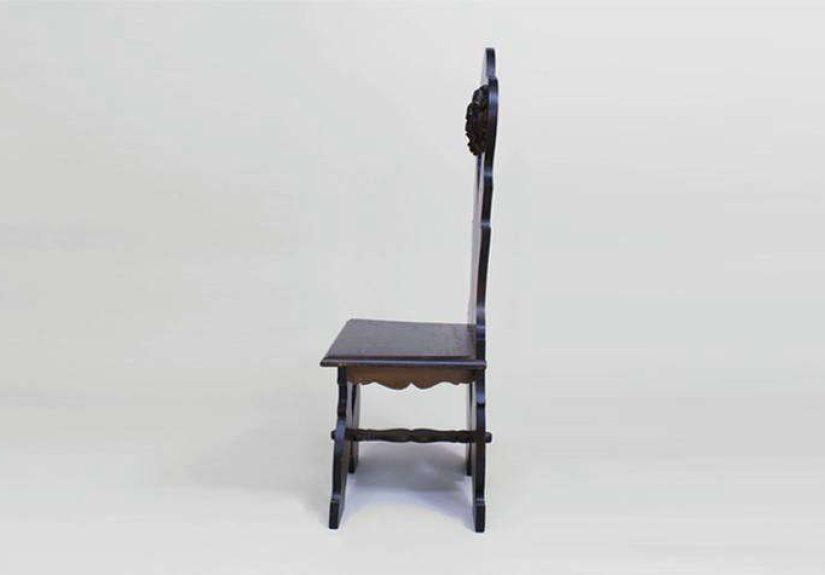
A sgabello side chair is a carved wooden chair form associated with the Italian Renaissance. Traditionally, it features a narrow profile, a firm seat, a tall decorative back, and sculptural supports rather than soft upholstery. Many examples have an almost architectural quality, with carved panels, heraldic motifs, masks, lions, scrolls, or pierced cutouts that make them feel more like art than everyday furniture.
The term sgabello originally referred to a stool-like form, but over time it came to describe a distinctive style of side chair or hall chair with a carved backrest. In antique and design circles, you will often see sgabello chair, sgabello side chair, Italian Renaissance chair, or hall chair used in overlapping ways. That is normal. Antique furniture terminology loves a little chaos.
In practical terms, a sgabello side chair is usually:
- Made of wood, often walnut or another richly grained hardwood
- Narrow and upright, with a compact footprint
- Decorative rather than deeply cushioned
- Carved with ornamental or heraldic details
- Best used as an accent chair, hall chair, entry chair, or collectible statement piece
The History Behind Sgabello Side Chairs
Furniture historians and museums trace the sgabello to Renaissance Italy, where the form became known for its carved wood construction and dramatic silhouette. These chairs were often placed in halls or prominent areas of a home, which helps explain why so many examples look ready for a grand entrance. They were meant to signal taste, status, and craftsmanship. In other words, the sgabello was doing visual branding long before social media showed up.
Classic examples often featured an octagonal or slab-like seat, solid supports, a stretcher, and a tall back with intricate carving. Many were decorated with family crests, symbolic animals, or other motifs tied to identity and prestige. That decorative tradition is a big reason antique sgabello side chairs remain so striking today: they were never shy pieces.
The form did not stay confined to Renaissance Italy forever. Variations and reinterpretations spread through Europe, and by the 18th century, sgabello-inspired hall chairs appeared in Britain. Later, 19th-century Renaissance Revival furniture helped revive the look for a new audience, which is why many antique pieces on the market today date not only to the 16th or 17th century, but also to the 1800s.
That long design afterlife gives sgabello side chairs a unique appeal. They are historical, yes, but they are also part of a broader story of revival, reinterpretation, and collecting. That means a chair can be “sgabello style” without being a literal Renaissance original. For most homeowners, that is actually good news, because genuine period pieces are rare, expensive, and a little nerve-racking to sit on.
What Makes Sgabello Side Chairs So Distinctive?
1. Sculptural woodwork
The first thing you notice is the carving. A standard wooden side chair may fade into the background. A sgabello does the opposite. It has presence. Carved faces, scrollwork, shields, pierced openings, lions, acanthus leaves, and crest-like forms are all common visual themes. Even simple examples usually have enough detail to read like small sculptures.
2. Upright silhouette
Sgabello side chairs are usually tall-backed and fairly narrow. They are more vertical than sprawling, which makes them ideal for rooms that need height and interest without taking up too much floor space. If your living room already has a giant sofa that behaves like a territorial landlord, a sgabello can add character without crowding the place.
3. Rich wood tones
Walnut is especially associated with antique sgabello chairs, and for good reason. It takes carving beautifully and develops a warm, handsome patina over time. Many examples lean into dark wood tones, which suit traditional interiors, eclectic rooms, and spaces that need contrast against lighter walls or textiles.
4. Hall-chair energy
This is not a sink-in-and-watch-a-three-hour-movie chair. A sgabello is usually firmer, more upright, and more decorative. Its original appeal was tied as much to display as to comfort. Today, that makes it an ideal accent side chair, not necessarily the chair you fight your family over on a Sunday afternoon.
Why Designers and Collectors Still Love Them
The enduring appeal of sgabello side chairs comes down to one simple fact: they add instant character. In a world full of generic seating, these chairs look intentional. They tell a story. They make people ask questions. They create contrast in rooms that might otherwise feel too smooth, too modern, or too safe.
Designers often use antique wooden side chairs like sgabelli to add texture and age to interiors. A room with new upholstery, clean-lined tables, and polished finishes can feel a little too behaved. Drop in one carved Renaissance-style side chair, and suddenly the room has a pulse. The wood grain, the hand-carved details, and the slightly imperfect symmetry bring warmth that mass-market furniture often lacks.
Collectors, meanwhile, appreciate the craftsmanship and history. Even later revival examples can feature impressive joinery, detailed carving, and proportions that are difficult to fake well. And because many pieces are relatively compact, they offer a practical entry point into antique furniture collecting. You do not need a palazzo. You just need one empty corner and decent taste.
How to Style Sgabello Side Chairs in a Modern Home
Entryway
This may be the most natural setting of all. Because sgabelli historically functioned as hall chairs, they feel right at home in an entry. Place one beside a console table, under a mirror, or near a coat stand. It creates a moment that feels curated instead of accidental.
Living room accent
Use a sgabello side chair as a sculptural accent next to a fireplace, bookcase, or side table. It works especially well in eclectic spaces that mix old and new. Think linen sofa, modern lamp, vintage rug, and one carved chair that looks like it could tell scandalous family secrets.
Bedroom corner
If you want a bedroom to feel layered and collected, an antique side chair is a smart move. A sgabello can hold a folded throw, a stack of books, or simply exist as a handsome visual anchor. It is stylish and useful, which is a strong combo.
Dining room wildcard
Some homeowners use sgabello chairs as end chairs at a dining table, particularly in formal or eclectic settings. This works best when the proportions are compatible and the seat height feels practical. The result can be stunning, though it is wise to remember that beauty and marathon dinner-party comfort are not always the same thing.
What to Look for Before You Buy
Construction and joinery
Check whether the chair feels sturdy, level, and well joined. Antique chairs can survive centuries, but only if they have been treated kindly. Look for solid stretchers, stable supports, and repairs that were done well rather than heroically disguised.
Material
Walnut is common and desirable, but other woods appear too. What matters most is quality of carving, condition, and overall integrity. A beautiful grain and aged patina can make a chair feel rich and authentic, while harsh refinishing can flatten its charm.
Period versus revival
A Renaissance original is not the same as a 19th-century Renaissance Revival piece, and both differ from modern reproductions. None of those categories is automatically “bad.” It just depends on your goal. If you want historical importance, provenance matters. If you want style and function, a later antique can be a terrific value.
Dimensions
Sgabello side chairs are often narrower than modern accent chairs. That can be great for small spaces, but always measure. Pay attention to seat height, seat depth, and overall width. A chair that looks compact online can still surprise you in person, like a cat that somehow occupies an entire couch.
Comfort expectations
Be honest about how you plan to use it. If you want a chair for reading every night, this may not be your champion. If you want an accent chair with history, texture, and undeniable personality, now we are talking.
Caring for Antique or Vintage Sgabello Chairs
Because many sgabello side chairs are antique or vintage, care matters. Keep them away from direct sunlight, excessive humidity, and heating vents that can dry out the wood. Dust gently with a soft cloth and avoid harsh cleaners that strip finish or damage patina.
If a chair has loose joints, old repairs, or fragile carving, skip the DIY heroics and consult a furniture conservator or restoration professional. A careful repair preserves value and structure. An impulsive weekend fix involving industrial glue and confidence may do the opposite.
For day-to-day use, treat the chair respectfully. Lift instead of dragging it. Do not overload delicate backs with heavy bags or stacks of books. And if you have children who consider every chair an invitation to perform gymnastics, consider placing your sgabello somewhere slightly less exciting.
Are Sgabello Side Chairs Worth It?
For the right buyer, absolutely. Sgabello side chairs bring history, artistry, and architectural interest into a room in a way that few furniture forms can match. They are ideal for people who want their home to feel collected rather than copied, layered rather than showroom-perfect.
They may not be the softest seats in the room, but that is beside the point. A sgabello earns its place through craftsmanship, silhouette, and character. It is a conversation piece, an accent chair, a little slice of design history, and occasionally a gentle reminder that furniture used to be gloriously dramatic. Frankly, we could use more of that.
Experience: Living with Sgabello Side Chairs in Real Life
Here is the part that design catalogs do not always tell you: living with a sgabello side chair is a slightly different experience from living with an ordinary wooden chair. A regular side chair quietly minds its business. A sgabello, by contrast, walks into the room like it owns a family crest and a summer villa. Even when it is tucked into a corner, it somehow feels like a featured guest.
The first experience most people notice is visual. These chairs can transform a plain space fast. Put one in an entryway, and the area instantly feels more deliberate. Place one beside a modern sofa, and suddenly the room has a little tension in the best possible way. The chair adds shape, shadow, and texture. In rooms with lots of soft upholstery or smooth surfaces, that carved wood detail is magic.
Then comes the practical reality. You do not usually sprawl on a sgabello. You perch. You sit a little straighter. You feel, for a brief moment, like you should be discussing art patronage instead of scrolling your phone. That is not a complaint. It is part of the charm. A sgabello side chair changes the mood of a room because it changes the posture of the room. It asks for a little more attention and gives a lot back.
There is also the pleasure of age and craftsmanship. Even a later Renaissance Revival example often has quirks you do not get from factory furniture: tool marks, softened edges, subtle wear, and carvings that are not machine-perfect. Those imperfections are exactly what make the chair feel alive. You start noticing the way the wood catches late afternoon light or how the carved back creates shadows on the wall. It becomes less like owning “a chair” and more like owning an object with a biography.
Another real-life perk is flexibility. A sgabello can move around the house more easily than a bulky armchair. It can live in an entry hall for months, then migrate to a bedroom corner, then show up near a bookcase in the living room as if it had the plan all along. It is useful when you need it, decorative when you do not, and dramatic at all times.
Of course, there are trade-offs. If your household values plush comfort above all else, a sgabello may not become the favorite daily seat. If you have a chaotic home full of rough-and-tumble traffic, you may find yourself becoming oddly protective of carved edges and antique joints. But that is the thing about special furniture: it invites a little mindfulness. You care for it, and in return it gives your home depth, memory, and style that does not feel mass produced.
In the end, the experience of owning a sgabello side chair is not just about function. It is about atmosphere. It is about choosing a piece that makes a room feel richer, more personal, and more storied. And honestly, that is a pretty great job for one chair.
Conclusion
Sgabello side chairs are a rare mix of history, craftsmanship, and decorating power. Born from Italian Renaissance design and reinterpreted over centuries, they remain one of the most compelling choices for anyone who wants an antique side chair, carved wooden accent chair, or hall chair with genuine personality. They may not be lounge chairs, but they were never meant to disappear into the background. Their job is to add structure, texture, and presence. They still do that beautifully.