Table of Contents >> Show >> Hide
- What “Slow Design” Really Means in a Kitchen
- Why the Industrial-Strength Kitchen Still Works
- Materials That Earn Their Keep
- Layout: The Quiet Hero of a Great Kitchen
- Storage That Hides the Chaos but Keeps the Convenience
- How to Keep the Look from Going Full Restaurant Supply Store
- Common Mistakes That Make an Industrial Kitchen Feel Cold
- The Real Luxury Is Durability
- What Living With a Slow Design, Industrial-Strength Kitchen Actually Feels Like
- Conclusion
A great kitchen should not feel like a stage set waiting for a realtor, a ring light, and a bowl of lemons that nobody is allowed to touch. It should feel used, useful, and strangely calming. That is the sweet spot where slow design meets the industrial-strength kitchen: a space built to work hard, age well, and stay attractive long after trendier kitchens have retired to the scrapbook of questionable design decisions.
Slow design is not about moving slowly while making soup, although that does sound charming. It is about choosing materials, layouts, and details that reward daily life instead of fighting it. In the kitchen, that means durable surfaces, intelligent storage, practical lighting, flexible prep areas, and finishes that improve with time. An industrial-strength kitchen follows the same logic. It borrows the best habits of a professional workspace: resilience, clarity, order, and performance.
Put the two ideas together, and you get a room that feels timeless instead of trendy. It can handle heat, mess, noise, breakfast chaos, midnight leftovers, holiday overconfidence, and the occasional ambitious dinner party where somebody says, “I’ll just wing it,” which is always the first sign of trouble.
What “Slow Design” Really Means in a Kitchen
In home design, “slow” does not mean old-fashioned, boring, or anti-technology. It means intentional. A slow design kitchen is built around longevity rather than instant visual drama. It favors good bones over gimmicks, tactile materials over disposable finishes, and function over performative minimalism.
That philosophy matters especially in kitchens because kitchens live hard lives. They are humid, hot, busy, and mercilessly honest. Cheap paint chips. Flimsy drawers wobble. Trendy finishes date themselves with impressive speed. A slow kitchen avoids those traps by asking better questions before anything is installed:
Can this material take abuse?
Heat, moisture, spills, dropped pans, scrub brushes, and human impatience are part of the job description. The best materials are not merely pretty on install day. They stay useful after years of actual cooking.
Will this layout still make sense in five or ten years?
A kitchen should support real movement. You should not need a tactical map to get from the sink to the stove. Smart zoning for prep, cooking, serving, and cleanup matters more than decorative flourishes ever will.
Does this age gracefully?
Some materials look better with patina. Others just look tired. Slow design favors finishes that gain character rather than beg for replacement the second life gets messy.
Why the Industrial-Strength Kitchen Still Works
The phrase industrial kitchen design can scare people. They picture a room that feels like a restaurant back line crossed with a submarine. Too much steel, too much glare, too many surfaces whispering, “Please wear black and plate everything with tweezers.” But done well, the industrial-strength kitchen is not cold. It is capable.
The secret is to borrow the discipline of commercial kitchens without copying them too literally. Professional spaces are designed around speed, cleanliness, access, and durability. Those are excellent goals for a household kitchen too. Home cooks benefit from wide work surfaces, easy-to-clean materials, powerful ventilation, generous storage, and layouts that reduce pointless backtracking.
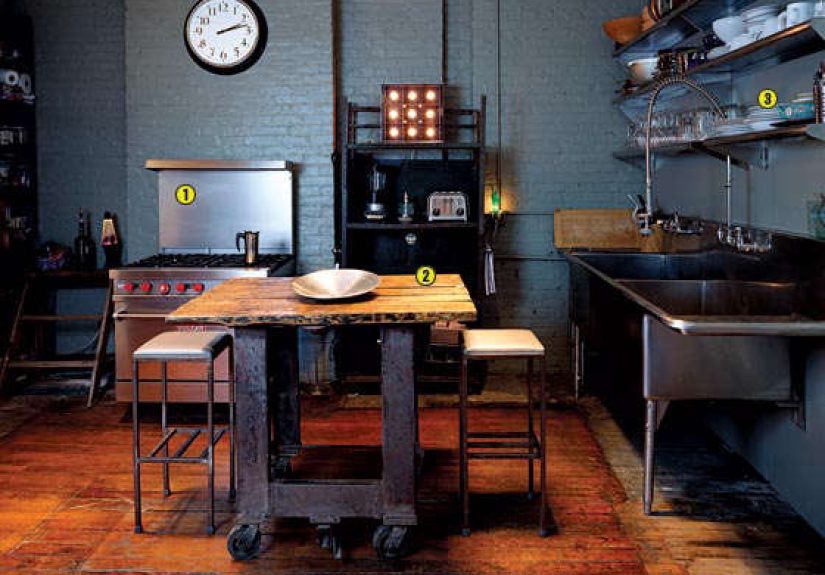
What makes the look livable is balance. Instead of building a restaurant at home, you build a workhorse kitchen with soul. That might mean stainless steel where performance matters most, warm wood where hands and eyes want softness, and a few salvaged or handmade pieces that make the room feel collected rather than factory-issued.
Materials That Earn Their Keep
Stainless Steel: The Reliable Overachiever
If the industrial-strength kitchen had a mascot, it would be stainless steel: hardworking, clean-looking, heat tolerant, and not especially interested in drama. Stainless steel countertops, sinks, shelving, and appliance fronts bring a commercial edge that makes sense in busy kitchens.
Its biggest appeal is not just appearance. It is practicality. Stainless steel stands up to water, heat, and heavy use, which is why it has been beloved in restaurant kitchens for ages. In a home, it works especially well around sinks, ranges, or dedicated prep areas. The catch is that it shows fingerprints, reflects light, and can feel clinical if overused. That is why smart designers usually treat it as one part of a richer materials palette, not the whole song.
A smart example is a stainless prep counter paired with oak drawers, a plaster hood, and aged brass lighting. Suddenly steel stops feeling cold and starts feeling sharp.
Wood: The Necessary Warmth
If stainless steel is the brain of the room, wood is the pulse. White oak, walnut, ash, maple, or a thick butcher-block surface can soften an industrial kitchen instantly. Wood adds warmth, visual rest, and the kind of tactile comfort that makes a high-performance kitchen feel human.
Butcher block is particularly effective on an island or baking station, where a little wear reads as charm rather than damage. The point is not perfection. The point is honest use. Knife marks, slight darkening, and a mellow finish can make the kitchen feel lived in rather than frozen in showroom mode.
Stone and Other Hardworking Surfaces
For perimeter counters, many homeowners gravitate toward durable, low-fuss materials. Quartz remains popular because it is consistent and easy to maintain. Soapstone wins fans because it resists heat, develops character, and feels grounded instead of flashy. Quartzite appeals to people who want natural stone beauty with serious durability. Even a well-chosen honed surface can make an industrial kitchen feel less shiny and more settled.
The best choice depends on how you cook. If you are a daily sauté-and-spill person, prioritize resilience. If you bake constantly, think about work surface feel. If you crave a patinated look, choose something that improves with age instead of punishing you for living.
Tile, Brick, and Plaster for Texture
Slow design loves texture because texture makes a room feel real. Brick flooring, matte tile, handmade ceramic backsplashes, and soft plaster walls can all temper the sharper edges of an industrial scheme. These materials make the kitchen feel layered, not sterile.
That is also where the slow-design mindset shines: instead of one giant statement screaming for attention, the room builds depth through quiet contrasts. Smooth steel beside nubby linen. Dark soapstone beside warm wood. Subway tile beside a salvaged stool that looks like it has stories and absolutely refuses to elaborate.
Layout: The Quiet Hero of a Great Kitchen
You can blow the budget on beautiful finishes and still end up with a kitchen that annoys you every morning. That is because layout does the heavy lifting. A true functional kitchen design starts with movement. Prep, cook, clean, store, repeat. The room should support that loop with as little friction as possible.
Industrial-strength thinking improves home kitchens when it organizes the space into zones. Store knives, bowls, oils, and cutting boards near the prep area. Keep pots, utensils, and seasonings near the range. Put dishes and flatware where unloading the dishwasher feels easy instead of emotionally complicated. Reserve the island, if you have one, for a specific job: prep, serving, seating, or storage. “Everything island” sounds dreamy until it becomes “everything piled here forever.”
Clearances matter too. A kitchen should allow two people to work without performing an awkward side-step ballet. Appliances need room to open comfortably. Traffic should pass through without bulldozing the cook. This is one reason slow design tends to outlast trend-driven kitchens: it respects how bodies move, not just how rooms photograph.
Storage That Hides the Chaos but Keeps the Convenience
One of the biggest mistakes in industrial-inspired kitchens is confusing openness with efficiency. Yes, open shelving looks airy. It also turns every plate, mug, and mystery blender attachment into visible décor. That can work in moderation. It becomes exhausting when every shelf requires constant styling and dusting.
The better approach is a mix of concealed and open storage. Use closed cabinetry for bulk storage, pantry goods, small appliances, and everyday visual sanity. Add open shelves only where they genuinely improve access or display something worth seeing. One shelf of favorite ceramics? Lovely. Seven feet of visual clutter? Less lovely.
Deep drawers often outperform lower cabinets because they make heavy cookware easier to reach. Appliance garages can rescue countertops from toaster sprawl. Built-in dividers, tray storage, spice drawers, and pull-outs are not glamorous, but neither is crawling around with a flashlight looking for the colander.
How to Keep the Look from Going Full Restaurant Supply Store
The most successful timeless kitchen design ideas understand restraint. Industrial strength should show up in performance first and style second. If every surface is metallic, every light fixture is black steel, and every stool looks like it belongs in a mechanic’s garage, the room starts to feel like it is auditioning too hard.
To soften the aesthetic, layer in materials that bring age, softness, and tactility. Consider these combinations:
Steel + Wood
Probably the most reliable pairing in this whole category. Steel gives the kitchen crispness; wood gives it warmth and patience.
Concrete Tones + Handmade Elements
Gray, charcoal, and black can work beautifully when balanced with pottery, woven shades, vintage boards, or a worn runner that says, “Someone actually lives here.”
Open Work Surfaces + Softer Lighting
Task lighting should be strong where you prep and cook, but the room also needs ambient lighting that flatters people, not just onions. The kitchen is a workplace, yes, but it is also where people gather, snack, chat, and linger.
New Function + Old Character
A reclaimed table used as an island, salvaged stools, antique hooks, or aged hardware can give a high-performance kitchen an emotional center. Slow design loves pieces that look like they have survived a few decades and are not remotely impressed by trends.
Common Mistakes That Make an Industrial Kitchen Feel Cold
There is a fine line between “beautifully practical” and “mildly intimidating.” Here is where things go wrong:
Too much exposed storage. Open shelves are great until you realize your real inventory includes vitamins, chipped mugs, and twelve reusable containers without matching lids.
Commercial appliances without a plan. Professional-style ranges look impressive, but they need proper ventilation, enough surrounding workspace, and a cook who will actually use them. Buying a beast of a range for occasional boxed mac and cheese is a little like buying hiking boots for a walk to the mailbox.
No acoustic softness. Steel, stone, glass, and tile all bounce sound. Without wood, textiles, or other softening elements, the kitchen can sound like a cutlery thunderstorm.
Overcommitting to trend pieces. Faux-industrial pendants, overly distressed finishes, or gimmicky “factory” details can date the room faster than honest materials ever will. Better to choose one or two authentic notes than a full costume.
The Real Luxury Is Durability
For years, kitchen luxury was often defined by gloss, excess, and novelty. Bigger island. Flashier stone. More gadgets. But slow design quietly offers a better definition: luxury is a kitchen that works beautifully every day and still looks good after years of use.
That is why the industrial-strength kitchen continues to resonate. It respects labor. It understands mess. It values longevity. It welcomes patina, sensible storage, strong materials, and design decisions that make the room easier to live in. In other words, it acts like a kitchen instead of pretending to be a museum exhibit with a refrigerator.
If you are designing or remodeling, think beyond the reveal photo. Imagine the room on an ordinary Tuesday. Coffee brewing, groceries half-unpacked, soup simmering, somebody asking where the scissors are. If the kitchen still feels good in that moment, you are on the right track. That is slow design at its best: practical, beautiful, and built to last.
What Living With a Slow Design, Industrial-Strength Kitchen Actually Feels Like
Here is the part glossy inspiration galleries often skip: the lived experience. A slow-design kitchen does not win you over only because it looks handsome at golden hour. It wins you over on messy weekdays. It earns trust in small, repetitive moments. The counter is still sturdy when you drag a Dutch oven across it. The drawer still closes properly when your hands are wet and you nudge it with a hip. The open shelf has only the items you use all the time, so it feels helpful instead of chaotic. That is not glamorous on paper, but in real life it feels luxurious.
Imagine walking into a kitchen early in the morning. The lighting is soft, but the work areas are bright enough to actually function. There is room to set down groceries without instantly starting a game of countertop Tetris. The sink is deep, the faucet is practical, and the surfaces around the stove are designed for splatter rather than fear. Nothing in the room feels precious in a bad way. You are not worried about ruining the finish by making breakfast. That changes your relationship to the space.
One of the best things about this kind of kitchen is that it becomes easier to stay organized because the layout makes sense. Prep tools live near prep space. Heavy pans are in deep drawers where they belong. Trash and compost are close to the work zone instead of hidden in some mysterious cabinet that requires a scavenger hunt. Over time, the room teaches good habits simply because it removes friction. Suddenly cooking feels less like a production and more like a rhythm.
There is also something deeply satisfying about materials that do not panic when life happens. A wood island might pick up a mark or two, but those marks become part of the story. A brushed steel counter may show use, yet it still looks purposeful. A soapstone surface may deepen in tone over time, and somehow that makes the room feel wiser. In a slow-design kitchen, aging is not failure. Aging is proof of service.
Guests notice this too. They may not walk in and say, “Ah yes, excellent zoning and durable finish strategy,” because most people do not talk like renovation consultants at a cocktail party. But they do notice that the kitchen feels grounded. They lean on the island. They gather near the stove. They sense that the room is meant to be used, not merely admired. That atmosphere matters. It makes the kitchen feel welcoming instead of performative.
And perhaps the biggest experience-based advantage is emotional: you stop craving constant updates. Because the design is rooted in utility, texture, and lasting materials, it does not feel outdated every time the internet discovers a new shade of beige and declares it life-changing. You can swap a stool, add a lamp, bring in a vintage bowl, or repaint a wall, but the core of the room remains solid. That is the quiet power of slow design. It lowers the pressure to chase trends and raises the pleasure of simply living well.
So yes, an industrial-strength kitchen can look beautiful. But the real payoff is deeper than looks. It feels dependable. It feels calm. It feels like a room that is on your side, ready for weeknight pasta, holiday baking, giant salad prep, and the occasional culinary experiment that absolutely should have stayed a thought. In the end, that is what makes this style worth considering: it does not just photograph well. It lives well.
Conclusion
A slow design kitchen is not anti-style. It is anti-waste, anti-gimmick, and anti-regret. When paired with industrial-strength thinking, it creates a kitchen that is tough where it should be, warm where it needs to be, and timeless in the ways that matter most. Choose durable materials. Build around workflow. Use open storage sparingly. Mix metal with wood, stone, plaster, and age-friendly finishes. Above all, design for the life you actually live. The most beautiful kitchen is rarely the one trying hardest. It is the one still working brilliantly years later.