Table of Contents >> Show >> Hide
- Why Vertical Storage Is the MVP of Small Kitchen Organization
- Start Here: The 10-Minute “Vertical Opportunity” Scan
- Wall-Mounted Storage That Actually Works
- 1) Open Shelving (When You Want Storage + Visual Breathing Room)
- 2) Wall Cabinets That Go All the Way Up (For Serious Storage Gains)
- 3) Rail Systems: The “Hang It, Don’t Stack It” Solution
- 4) Pegboards and Grid Panels (Flexible, Customizable, and Surprisingly Chic)
- 5) Magnetic Storage: Knives, Spice Tins, and Small Metal Tools
- Don’t Forget the “Hidden Vertical” Spaces
- Ceiling and High-Zone Storage (Yes, You Can Use the Air)
- Countertop Vertical Storage (So You Can Keep the Counter, You Know, Countery)
- Make Vertical Storage Look Good (So It Doesn’t Feel Like a Hardware Store)
- Renter-Friendly Vertical Storage Ideas (No Drama, Minimal Holes)
- Common Mistakes to Avoid When Going Vertical
- A Simple “Vertical Storage Plan” You Can Copy
- Real-World Experiences and Scenarios (500+ Words)
- Scenario 1: The Countertop Is Always Full (Even When You “Just Cleaned It”)
- Scenario 2: Cabinets Feel Packed, but Somehow Nothing Is Easy to Reach
- Scenario 3: The Drawer That Won’t Close (Because It’s Basically a Tool Closet)
- Scenario 4: You Tried Open Shelving and It Looked Messy Instantly
- Scenario 5: You Need Storage, But You’re Renting (and Afraid of Losing a Deposit)
- Conclusion
A small kitchen has a special talent: it can look cluttered five minutes after you clean it. One cutting board
on the counter becomes three. A “temporary” pile of mail becomes a permanent countertop roommate. And suddenly you’re
cooking dinner in a space that feels like a game of Tetrisexcept the pieces are potholders and your patience.
The fastest way to make a small kitchen feel bigger isn’t always buying new cabinets or moving walls. It’s
going vertical: using the space you already have, just higher up. Walls, cabinet sides, the area above
the fridge, the inside of doors, even the ceilingthese are all storage opportunities hiding in plain sight, quietly
judging us for ignoring them.
In this guide, you’ll find practical small kitchen ideas that prioritize
vertical storage, plus specific examples and layout-friendly tips so your kitchen can hold more without
feeling like it’s holding a grudge.
Why Vertical Storage Is the MVP of Small Kitchen Organization
Horizontal space is limited in a small kitchen. Counters fill up quickly, and when counters fill up, everything else
followsyour sink becomes a dish museum, your stovetop becomes a storage shelf, and your brain starts calculating
“How many meals can I make without using a pan?”
Vertical storage works because it:
- Frees the counter for actual cooking (wild concept, right?).
- Improves access by keeping frequently used items visible and within reach.
- Creates zones (coffee station, prep zone, baking zone) without needing extra square footage.
- Makes a kitchen look taller and more intentional, which helps it feel less cramped.
Start Here: The 10-Minute “Vertical Opportunity” Scan
Before you buy anything, do a quick scan of your kitchen. Stand in the middle and look up (carefullydon’t bonk your
head on that light fixture you forgot existed). Ask yourself:
- Which walls are empty or underused?
- What’s above the fridge or cabinets?
- Do cabinet doors have unused interior space?
- Are the sides of cabinets exposed (end panels)?
- Is there a backsplash area that could hold rails or shelves?
- Is there ceiling space for hanging storage?
This scan helps you prioritize. The goal is not to hang everything on the wall like a kitchen-themed art
exhibit. The goal is to store smarter so your kitchen functions better.
Wall-Mounted Storage That Actually Works
1) Open Shelving (When You Want Storage + Visual Breathing Room)
Open shelves are a classic small kitchen storage upgrade because they use vertical wall space without
adding visual bulk. They’re especially helpful for:
- Everyday dishes and glassware
- Canisters for pantry staples (flour, rice, oats)
- Mugs near a coffee station
- Cookbooks (if you actually use them and not just admire them)
Example: Install two 36-inch floating shelves on the wall near your prep area. Keep the bottom shelf
at a comfortable reach height for plates and bowls. Place matching canisters and a small tray for oils on the top
shelf. Your counter suddenly has room to exist again.
Pro tip: Open shelving stays attractive when you limit the “category chaos.” If the shelf is for
glasses, keep it for glasses. Don’t let it become a retirement home for random containers with missing lids.
2) Wall Cabinets That Go All the Way Up (For Serious Storage Gains)
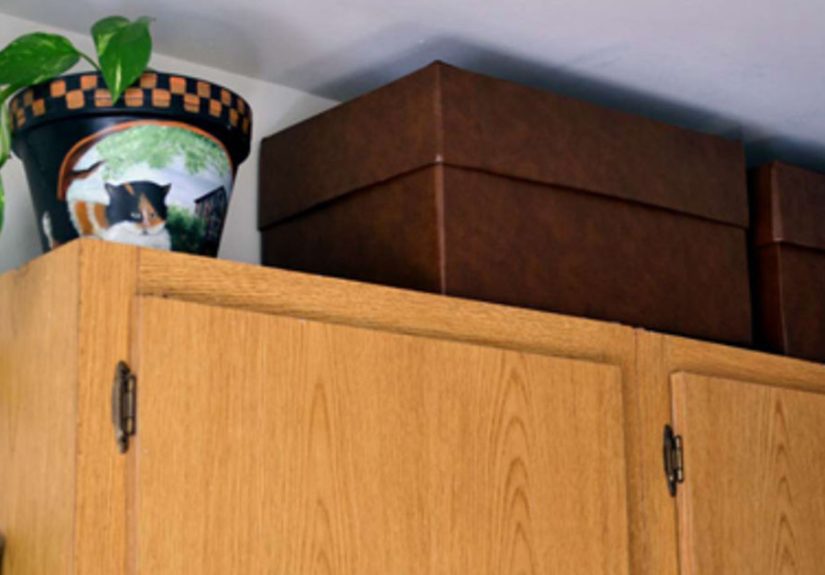
If your upper cabinets stop short of the ceiling, that gap often turns into a dusty “top-of-cabinet junk zone.” One of
the best long-term space-saving kitchen storage moves is extending cabinets or adding a second tier
above.
Use the highest shelves for seasonal items and occasional-use gear:
serving platters, slow cookers, holiday cookie cutters, that one bundt pan you swear you’ll use again.
If replacing cabinets isn’t in the budget, consider a simpler workaround: add sturdy baskets on top of the existing
cabinets and label them clearly. You’ll still gain vertical storage without a full remodel.
3) Rail Systems: The “Hang It, Don’t Stack It” Solution
A rail system mounted on the backsplash or an open wall can hold utensils, small pots, cutting boards, and even spice
containers. This is one of the most practical kitchen wall storage ideas because it keeps essentials
accessible and reduces drawer crowding.
- Use S-hooks for measuring cups and small tools.
- Add a small shelf attachment for oils, salt, or a utensil crock.
- Hang a paper towel holder to clear counter space.
Safety note: Keep rails and hanging items away from direct heat or steam sources, and avoid mounting
directly behind a high-heat range area unless the system is designed for that environment.
4) Pegboards and Grid Panels (Flexible, Customizable, and Surprisingly Chic)
Pegboards aren’t just for garages anymore. A well-organized pegboard can be a small kitchen’s secret weaponespecially
if you don’t have enough drawers.
What to store on a kitchen pegboard:
- Frequently used utensils
- Small pans or lids (with proper hooks)
- Spices in uniform jars
- Kitchen shears and measuring tools
- Mini baskets for garlic, onions, or tea packets
Example: A 24×36 pegboard near the stove holds your everyday spatula, ladle, tongs, and a small bin
for potholdersfreeing a crowded drawer and making weeknight cooking faster.
5) Magnetic Storage: Knives, Spice Tins, and Small Metal Tools
A magnetic knife strip is a classic vertical storage move that saves drawer space and keeps knives accessible. It can
also hold metal measuring spoons or small metal tools if the magnet is strong enough and the items are safely placed.
Important: Mount securely, keep away from children, and avoid placing magnets where people can easily
bump into exposed blades. If safety is a concern, use in-drawer knife organizers instead.
Don’t Forget the “Hidden Vertical” Spaces
6) Inside Cabinet Doors: The Most Ignored Storage Real Estate
The inside of cabinet doors can hold more than you’d thinkespecially in a small kitchen where every inch matters.
Consider:
- Vertical racks for cutting boards and baking sheets (inside tall cabinets)
- Adhesive or screwed-in spice racks (inside pantry doors)
- Hooks for measuring spoons and lightweight tools
- Paper towel or plastic wrap dispensers (mounted inside a cabinet)
Example: Mount a slim spice rack inside the pantry door and move all your spice jars there. Now your
countertop spice carousel can retire gracefully.
7) Shelf Risers and Stackers: Turn One Shelf Into Two (or Three)
Vertical storage isn’t only about walls. It’s also about turning dead air inside cabinets into usable space. Shelf
risers add levels so you can stack plates above bowls, or glasses above mugs, without turning your cabinet into a
precarious tower of doom.
Combine risers with stackable bins to keep categories neat (snacks, baking supplies, spices, coffee gear). This is
small kitchen organization that feels instantly calmer.
8) Vertical Pan Storage: Stop the Pan Avalanche
If you’ve ever pulled out one pan and accidentally summoned six more, you already know why vertical pan storage is a
lifesaver. Use:
- Vertical organizers inside a lower cabinet for sheet pans, cutting boards, and serving trays
- Adjustable dividers for lids
- Wall-mounted lid racks if cabinet space is tight
Ceiling and High-Zone Storage (Yes, You Can Use the Air)
9) Hanging Pot Racks (When You Need Big Gains Fast)
In a small kitchen, bulky cookware eats cabinet space. A ceiling-mounted pot rack can move that bulk upwardfreeing
lower cabinets for pantry goods and dishes.
Best for: sturdy ceilings, secure mounting points, and cookware you use regularly.
Not ideal for: very low ceilings or anyone who doesn’t want overhead visual clutter. If you love a
clean, minimal look, consider a wall-mounted rack instead.
10) Above-the-Fridge Storage (Make It Useful, Not Random)
The top of the fridge often becomes a chaotic storage shelf. Instead, make it intentional:
- Add a sturdy tray or two matching bins for snacks or backstock items.
- Store rarely used appliances (but avoid anything too heavy).
- Use labeled containers so you can grab what you need without rearranging the universe.
Pro tip: Keep heat in mind. The area above a fridge can be warm, so avoid storing items that degrade
with heat (certain oils, chocolate, or anything that can warp).
Countertop Vertical Storage (So You Can Keep the Counter, You Know, Countery)
11) Tiered Stands and Vertical Racks
If you must store items on the counter, store them vertically. Tiered stands can create levels for:
- Fruit (bananas up top, apples below)
- Spices you use daily
- Coffee syrups and tea tins
- Cooking oils and vinegars on a tray with a raised riser
A slim vertical rack can also store cutting boards, baking sheets, or even plates in a small footprint.
12) Wall-Mounted Dish Drying Racks (For Tiny Sink Areas)
If your counter space is limited, a wall-mounted dish rack above the sink can be a game-changer. It lets dishes dry
without occupying the precious counter real estate next to your prep area.
Look for racks designed for kitchens (rust-resistant) and mount securely. Keep it tidy: a dish rack can look
streamlinedor like your kitchen is still “in progress” from last Tuesday.
Make Vertical Storage Look Good (So It Doesn’t Feel Like a Hardware Store)
Vertical storage helps function, but it should also help your kitchen feel pleasant. A few style-minded rules keep
everything from looking cluttered:
- Repeat containers: Matching jars or bins create visual calm.
- Leave negative space: Not every inch needs a hook.
- Group like with like: One shelf for mugs, one for bowls, one for pantry canisters.
- Use a “one-touch rule” for daily items: If you use it every day, make it accessible without moving other stuff.
- Put the “ugly but useful” items behind doors: Open shelves are not the place for your mismatched plastic container collection.
Renter-Friendly Vertical Storage Ideas (No Drama, Minimal Holes)
If you rent (or simply don’t want a wall full of anchors), you still have options:
- Tension rods: Great under sinks or inside cabinets for hanging spray bottles.
- Over-the-cabinet-door racks: Add storage without tools.
- Freestanding shelves: Slim baker’s racks or étagères can add vertical storage in unused corners.
- Adhesive hooks: Best for lightweight tools; always follow weight limits and surface guidelines.
- Rolling carts: A vertical cart can act like a mobile pantry or coffee station.
Renter-friendly doesn’t mean flimsy. It means choosing solutions that respect weight limits, avoid damage, and still
give you real storage gains.
Common Mistakes to Avoid When Going Vertical
- Overloading walls: Heavy shelves must be anchored properly. If in doubt, go lighter or hire help.
- Mounting too high: If you can’t reach it safely, you won’t use it. Storage should support your habits, not fight them.
- Creating “visual clutter” zones: A wall of random tools can feel stressful. Curate what stays out.
- Storing heat-sensitive items above heat sources: Steam and heat can ruin foods and adhesives.
- Ignoring workflow: Keep prep tools near prep, coffee gear near the machine, and cooking tools near the stove.
A Simple “Vertical Storage Plan” You Can Copy
If you want a straightforward roadmap, try this:
- Choose one wall or zone (coffee corner, prep area, or pantry wall).
- Move one category upward (mugs, spices, utensils, or cookware).
- Reduce one drawer by relocating the most-used items to rails, pegboards, or wall shelves.
- Contain the rest with labeled bins so vertical space doesn’t become vertical chaos.
- Adjust after a week based on what you actually reach for.
Small kitchen ideas work best when they match real lifenot the fantasy version of life where nobody ever leaves a
spoon in the sink.
Real-World Experiences and Scenarios (500+ Words)
Vertical storage sounds great in theory, but people often run into the same “real kitchen” issues when they try it.
Here are a few common scenariosbased on the kinds of challenges homeowners and renters frequently describealong with
what tends to work best.
Scenario 1: The Countertop Is Always Full (Even When You “Just Cleaned It”)
A common small-kitchen complaint is that counters fill up because the kitchen is doing too many jobs: cooking zone,
mail drop-off zone, snack staging area, and sometimes laptop desk. In these cases, the biggest win often comes from
moving one everyday category off the counter and onto the wall. For example, shifting oils, salt,
pepper, and utensils onto a rail system (or a compact wall shelf) can clear enough space to prep meals comfortably.
People also report that a tray helps keep wall-adjacent counter items from “spreading.” Even if a few essentials stay
on the counter, the tray creates boundarieslike a tiny fence for your condiments.
Scenario 2: Cabinets Feel Packed, but Somehow Nothing Is Easy to Reach
This is often a vertical problem inside the cabinet itself. Many kitchens have one shelf holding stacks of bowls,
plates, and cupswhile a big chunk of air above them does nothing. Adding shelf risers and stackable organizers turns
that unused air into storage levels. A typical experience is that once items are “layered” properly, the cabinet
feels bigger without actually changing size. People also tend to like using clear bins for snacks and baking supplies
because it reduces the “where is it?” scavenger hunt. The real payoff isn’t just capacityit’s speed. When you can
see what you have, you buy less duplicate stuff and you waste less time rearranging piles.
Scenario 3: The Drawer That Won’t Close (Because It’s Basically a Tool Closet)
In small kitchens, one drawer often becomes the universal dumping ground: spatulas, ladles, tongs, peelers, scissors,
measuring spoons, and that one mysterious gadget you can’t identify but feel guilty throwing away. Moving the “daily
drivers” onto a pegboard or rail system is a common fix. The surprising part is that most people don’t miss having
everything in a drawer once they’ve tried wall storage for a week. The tools are easier to grab, and the drawer stops
becoming a stress point. A good rule that shows up in many small-kitchen success stories: keep only the top 8–12 most
used tools visible, and store the rest elsewhere. That way you get function without turning your wall into a culinary
garage.
Scenario 4: You Tried Open Shelving and It Looked Messy Instantly
Open shelves can either look magazine-ready or like you lost a bet. The difference is usually consistency. When
people switch to matching containers (or at least a consistent palette), shelves look calmer. Another common lesson:
open shelves work best for items that already look tidyplates, bowls, glasses, and canisterswhile bulky packaging
and mismatched plastics do better behind doors. In practice, many small-kitchen setups end up with a hybrid approach:
one or two open shelves for “pretty” everyday items, plus closed storage for everything else. That balance keeps the
kitchen feeling open without putting every object on display.
Scenario 5: You Need Storage, But You’re Renting (and Afraid of Losing a Deposit)
Renters often describe feeling stuck because they can’t drill into walls or install permanent systems. The most
reliable renter-friendly approaches tend to be over-the-door organizers, freestanding vertical shelving, and rolling
carts that create “zones.” A rolling cart often becomes a mobile coffee bar, baking station, or pantry extension.
People also like tension rods under the sink for hanging bottles, because it adds vertical order without damage.
Adhesive hooks are a popular option too, but the experiences are mixed: they work well for light items when the
surface is clean and smooth, but they can fail under heavy loads or in humid areas. In general, renters get the best
results when they focus on vertical storage that’s either freestanding or uses existing structures (doors, shelves,
cabinet interiors) rather than relying solely on adhesives.
Conclusion
When you’re short on square footage, you can’t always add more kitchenyou add smarter storage. Going vertical is one
of the most effective small kitchen ideas because it frees counters, improves organization, and uses
space that would otherwise sit empty. Start with one zone, choose one vertical upgrade (shelves, rails, pegboard, or
cabinet-door organizers), and build from there. The goal isn’t to own more stuffit’s to make your kitchen easier to
live in. And yes, it’s absolutely okay if the first thing you hang is a paper towel holder. Growth is growth.