Table of Contents >> Show >> Hide
- The tune everybody knows, the lyric almost nobody does
- So where does Peggy Lee come in?
- Why Peggy Lee was actually a perfect fit
- Peggy Lee was not alone, and that is part of the fun
- Why this still feels like such a delightful surprise
- What Peggy Lee’s version reveals about the 1960s
- The listening experience today: why this discovery hits so differently now
- Conclusion
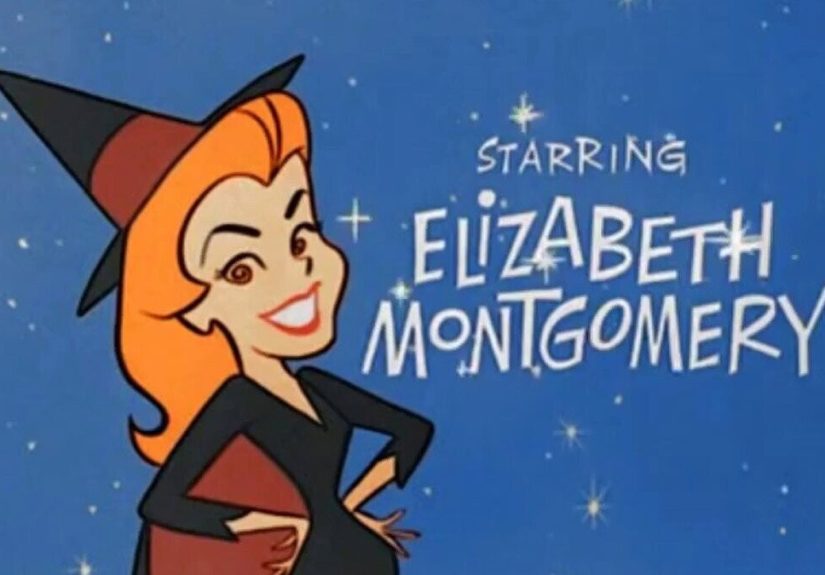
Some songs are so famous that they stop feeling like songs at all. They become atmosphere. Furniture. Cultural wallpaper with a killer hook. The Bewitched theme is one of those tunes. You hear the first few notes and suddenly you are in a black-and-white-and-then-color suburban universe where nose twitches solve problems, husbands panic on cue, and magic behaves like both household appliance and domestic menace. For most people, that melody belongs to the opening credits and nowhere else.
Which is exactly why the Peggy Lee connection lands like a perfect little pop-culture plot twist.
Yes, that Peggy Lee. The smoky, elegant, whip-smart singer behind “Fever,” a songwriter with real bite, a performer who could sound flirtatious, devastating, amused, and deeply unimpressed all within one measured phrase. It turns out the Bewitched theme was not just an instrumental television earworm. It also had lyrics. And Lee recorded it in 1965 on her album Pass Me By, turning one of TV’s most recognizable melodies into the kind of oddball album cut that makes music obsessives grin like they just found the good record store in a town full of bad ones.
That is the delicious weirdness at the center of this story: one of television’s most iconic themes became, for a brief shining moment, a real grown-up pop song. Not a parody. Not a novelty gag. A proper vocal number. And Peggy Lee, of all people, gave it her cool, polished stamp.
The tune everybody knows, the lyric almost nobody does
Bewitched, the ABC sitcom that ran from 1964 to 1972, built a major part of its identity around that bouncy, jazzy theme. The series itself was already a clever cocktail of fantasy and suburbia, but the opening music did a lot of heavy lifting. It sounded playful, sleek, and just mischievous enough. In about a minute, it told you this was not gothic witchcraft. This was polished, cocktail-hour magic with good posture.
But the familiar version used on television was instrumental, which is why generations of viewers never realized the piece also existed as a lyric song. Howard Greenfield wrote words for Jack Keller’s melody, and on paper the number became something far more specific: a flirtatious pop tune in which the singer is thoroughly under a witch’s spell. That idea, honestly, is not exactly subtle. Then again, neither is falling in love on a show about a literal witch. Sometimes the direct route is the scenic route.
The result was a strange split identity. On TV, the theme lived as a bright orchestral calling card. Off TV, it could be sung, swung, and treated like a legitimate slice of mid-century pop craftsmanship. That second life is the part that never made it into the average rerun watcher’s memory bank. It stayed tucked away in records, sheet music, and the kind of trivia that makes classic television fans sit upright and say, “Wait, I beg your pardon?”
So where does Peggy Lee come in?
Right where things get interesting.
By the mid-1960s, Peggy Lee was not some random singer looking for material. She was already a major American artist with a voice so controlled it could make understatement sound luxurious. She had the glamour, the musical intelligence, and the rare ability to make almost any song sound as if it had been quietly waiting for her all along. She could handle standards, contemporary pop, movie songs, jazz material, bluesy phrasing, and sly novelty with equal poise.
That matters, because recording the Bewitched theme was only a strange choice if you imagine television themes and serious pop performance as living on different planets. In the 1960s, they did not. A catchy TV theme could migrate into the broader music market if it had enough melodic life. And the Bewitched melody absolutely did.
Lee included “Bewitched” on Pass Me By, a 1965 Capitol album that also mixed standards, contemporary material, and a Beatles tune for good measure. In other words, it was exactly the kind of record on which a TV theme could slip in without causing a formal complaint from the elegance police. Lee did not treat the number like camp. She treated it like a song. That decision is why the recording still works.
And yet it was also a deep cut in the truest sense. This was not the Peggy Lee song that casual listeners used to show off at parties. Nobody was dramatically sliding “Play the Bewitched one!” across the hi-fi cabinet. It was nestled inside an album, charming but secondary, the kind of track fans discover later and feel weirdly proud of for no good reason.
Why Peggy Lee was actually a perfect fit
She understood sophistication without stiffness
The danger of a song like “Bewitched” is obvious. Sing it too broadly and it becomes cute in a way that curdles. Sing it too earnestly and it starts sounding like a jingle that wandered into a supper club. Peggy Lee avoided both traps because she had a gift for sophistication that never felt overpolished. She could be precise without becoming cold, and playful without tipping into cheese.
That is exactly the balance a song like this needs. The lyric is whimsical, but the melody is smart. The concept is feather-light, but the phrasing has room for charm, tension, and a little wink. Lee knew how to inhabit that space.
She was never afraid of material with a sly twist
One reason the pairing feels better the more you think about it is that Peggy Lee’s artistry often thrived on songs with an angle. She was too intelligent a stylist to flatten everything into generic prettiness. Even when the arrangement was polished, there was often a glimmer of irony, appetite, or emotional side-eye in the delivery. She understood the drama of restraint.
A lyric about being undone by a glamorous witch? That is practically built for a singer who could turn one raised eyebrow into a vocal event.
She lived comfortably between pop, jazz, and screen culture
Lee also made sense as an interpreter because her career already brushed against film, television, and sophisticated popular songwriting. She was a star of records, yes, but also of performance culture more broadly. She belonged to a world where nightclub elegance, Hollywood sheen, and radio-friendly hooks all shared the same oxygen. A TV theme becoming album material was not beneath her. It was just another piece of modern American songcraft.
Peggy Lee was not alone, and that is part of the fun
What makes the whole story even better is that Peggy Lee was not the only artist to record the song. Steve Lawrence cut a vocal version, and jazz players also took it for a spin. Jimmy Smith, for example, recorded “Theme From Bewitched” on Monster, proving that the melody could slide from television into organ-jazz territory without breaking a sweat.
This matters because it shows the song was not merely an obscure contractual afterthought. Musicians heard something in it. They heard a melody sturdy enough to leave the screen and survive as repertoire. The Bewitched theme, brief as it was, had what so many TV themes wanted and never achieved: an afterlife.
Still, Peggy Lee’s version stands out because of the mismatch factor. Steve Lawrence recording it feels broadly logical. He had the polished pop-vocal profile for it. Jimmy Smith taking the melody into jazz-land also tracks. But Peggy Lee gives the song a different kind of cultural voltage. Her presence makes the tune feel less like memorabilia and more like an artifact from a parallel universe in which sophisticated adult-pop singers routinely adopted sitcom themes as secret album jewels.
Why this still feels like such a delightful surprise
The answer is partly about memory and partly about hierarchy.
Most people remember TV themes in their instrumental form, attached to images and routines. They do not tend to imagine those tunes as standalone songs with lyrical identities, much less songs that traveled into the catalogs of major recording artists. Once a melody gets absorbed into television nostalgia, it stops being heard as repertoire and starts being heard as branding.
That is why Peggy Lee’s “Bewitched” lands as such a charming cultural ambush. It forces you to hear the tune again, not as the prelude to Samantha Stephens zipping across an animated sky, but as a compact pop composition with a real lyric, a point of view, and room for interpretation.
It also reminds us that mid-century pop culture had more traffic between forms than we sometimes assume. Television, records, film, sheet music, lounge performance, and jazz interpretation all mingled. A melody could bounce from screen to vinyl to nightclub and back again. The walls were lower. The categories were looser. The world was weird in a far more elegant way.
What Peggy Lee’s version reveals about the 1960s
If you zoom out, this tiny oddity tells a bigger story about the 1960s entertainment machine. It was an era in which hitmakers, television producers, arrangers, labels, and singers all worked inside an ecosystem that rewarded recognizable melodies and quick adaptation. A good tune was a good tune, whether it came from Broadway, Hollywood, a network sitcom, or a Brill Building-adjacent songwriting desk.
Peggy Lee’s recording of “Bewitched” captures that cross-pollination beautifully. It is a reminder that the decade’s cultural sophistication was not only found in the obviously serious places. Sometimes it also lived in the side streets: the soundtrack-like album cut, the theme song with secret lyrics, the track you would miss if you lifted the needle too soon.
And maybe that is why this piece still resonates. It is not just a trivia item. It is a small lesson in how culture actually works. Not in neat categories, but in overlap. Not in straight lines, but in detours. Sometimes the path from suburban sitcom to Peggy Lee album is shorter than anyone expects.
The listening experience today: why this discovery hits so differently now
There is a particular kind of joy in discovering Peggy Lee’s “Bewitched” today, and it has everything to do with how modern listening habits have flattened time. You can move from a television clip to a digitized album track to a discography page to a jazz version in about six minutes, all while pretending this is casual behavior and not the cultural equivalent of making a conspiracy wall out of velvet vocals and witchcraft.
First comes recognition. You hear the melody and your brain says, “Of course, that’s Bewitched.” Then comes disorientation, because a human voice arrives where your memory expects only instrumental bounce. Then comes the best part: recalibration. Suddenly the theme is no longer just a TV theme. It becomes a song you can evaluate on its own merits. Is it catchy? Yes. Is it slightly ridiculous? Also yes. Is it improved by being sung with immaculate cool rather than cartoon brightness? Absolutely.
That shift creates a strangely intimate experience for listeners who grew up with reruns, retro TV marathons, Nick-at-Nite habits, or just a household where old sitcoms floated through the living room like domestic weather. The Bewitched theme belongs to many people as background memory. Peggy Lee’s version drags it into the foreground. It asks you to stop humming and start listening.
And once you do, the tune changes shape. It sounds less like a piece of television branding and more like a tiny mid-century mood object: clever, flirtatious, compact, stylish. You begin to understand how a singer like Lee could have looked at this melody and thought, yes, there is something here. Not because it was prestigious, but because it had charm. Because it moved. Because it wore its polish lightly.
There is also a collector’s thrill to the whole thing. Finding out that Peggy Lee recorded “Bewitched” feels like opening a drawer in a familiar house and discovering a secret compartment full of excellent cocktail napkins and unexpectedly expensive pens. The house is still the house, but now it has layers. That is what great pop archaeology does. It does not replace the old memory; it deepens it.
For younger listeners, the experience is slightly different but just as pleasurable. The song can feel like proof that previous generations were not separating “serious” music and pop culture as rigidly as we sometimes imagine. A TV theme could become lounge material. A sitcom melody could land on a Capitol album. A legendary singer could borrow from broadcast ephemera and make it sound totally at home among standards and contemporary songs. That kind of permeability feels refreshingly unpretentious now.
Maybe that is the real magic trick here. Peggy Lee’s “Bewitched” does not just make an old theme song sound sophisticated. It makes the old culture that produced it feel more connected, more adventurous, and more alive. It reminds us that sometimes the deepest cuts are not hidden because nobody cared. They are hidden because everybody was busy enjoying the melody in another form. Then, years later, you stumble across the vocal version and realize the tune had another life all along.
Which is very on-brand for Bewitched, when you think about it. The whole show was about a normal-looking surface concealing a secret source of power. Apparently, the theme song was playing the same game.
Conclusion
So yes, the Bewitched theme really was a deep cut for Peggy Lee, and that strange little fact says a lot about both her artistry and the era that produced the song. What seems, at first glance, like a novelty turns out to be a window into mid-century entertainment culture: fluid, melodic, unembarrassed, and full of crossover energy.
The tune everyone remembers as a piece of television nostalgia was sturdy enough to become a real vocal number. Peggy Lee was savvy enough to hear the potential in it. And decades later, listeners are lucky enough to enjoy the surprise all over again.
In an age obsessed with rediscovery, that may be the most charming part of all. The song was hidden in plain sight the whole time, twinkling just off to the side, waiting for someone to notice that Samantha Stephens was not the only one keeping a secret.