Table of Contents >> Show >> Hide
- A Great Premise Gets Reduced to a Familiar Trick
- It Wants the Glow of The Office Without the Risk
- The Local Journalism Angle Should Have Been the Show’s Secret Weapon
- The Cast Deserves Better Material
- It Is Less Offensive Than Forgettableand That Might Be Worse
- Why the Title Still Fits
- The Experience of Watching The Paper: A 500-Word Reflection
- Conclusion
- SEO Tags
There are bad TV ideas, there are tired TV ideas, and then there are TV ideas that arrive wearing a fake mustache and insisting they are “totally new, actually.” The Paper falls into that last category. On paperpun shamelessly intendedit sounds promising: a mockumentary workplace comedy about a struggling local newspaper, built by some of the creative forces behind The Office, with a talented cast and a premise rooted in the collapse of local journalism. That should be rich material. It should be funny, sad, sharp, and weird in all the right ways.
Instead, The Paper often feels like yesterday’s news wrapped around someone else’s leftovers. It borrows the grammar of a beloved sitcom without earning the feeling. It confuses familiarity for insight, awkwardness for wit, and chaos for character development. Most frustrating of all, it takes a subject that deserves bitethe slow-motion erosion of local newsand turns it into a series that too often feels timid, recycled, and oddly safe.
This is not to say the show is unwatchable. That would be too generous in one direction and too lazy in another. The problem is more specific: The Paper is watchable in the same way an airport sandwich is edible. You can get through it. You may even find a decent bite here and there. But by the end, you are mostly wondering why you accepted this as a meal in the first place.
A Great Premise Gets Reduced to a Familiar Trick
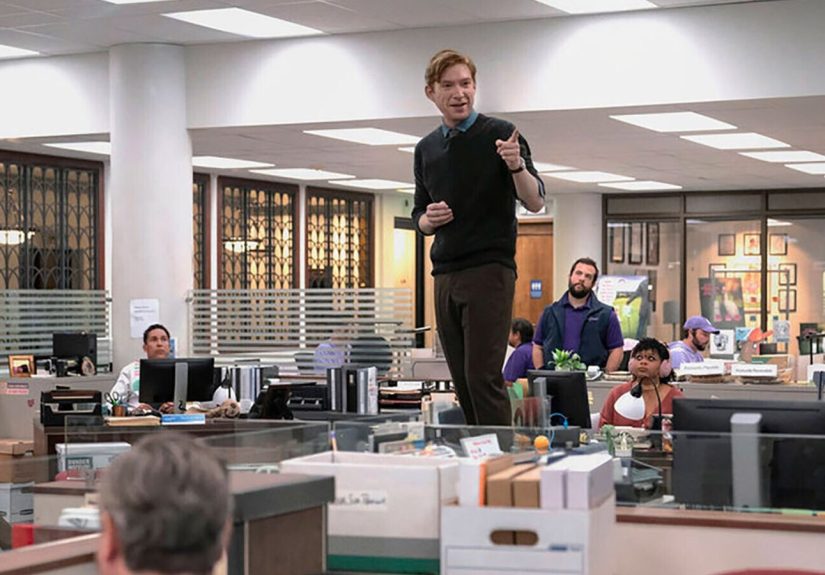
The idea behind The Paper is strong enough to make its shortcomings sting even more. A documentary crew follows the staff of a struggling Midwestern newspaper trying to stay alive in a digital world. That setup comes loaded with built-in tension: layoffs, civic decay, vanity projects, idealistic young staffers, exhausted veterans, click-chasing management, and the weird little theater of local power. A newsroom can be funny because it is urgent. It can be moving because people still believe words matter. It can be messy because everybody thinks they are the smartest person in the room.
But The Paper rarely squeezes enough juice out of that setup. Rather than plunging deeply into the absurdities of modern media, it keeps circling the safer territory of office awkwardness. It knows how to frame a deadpan reaction shot. It knows when to cut to a pause. It knows how to let a character embarrass themselves for half a beat too long. What it does not always know is why any of that should matter in this world, with these people, at this newspaper.
That is the key difference between homage and dependency. A good successor takes a format and bends it toward a new emotional truth. A weak one simply copies the furniture and hopes the audience mistakes the room for home. The Paper keeps inviting comparison to The Office, then looks startled when viewers actually make it.
It Wants the Glow of The Office Without the Risk
The shadow of The Office hangs over every scene, and not in a flattering way. The mockumentary style is not the problem by itself. That format can still work beautifully. The problem is that The Paper often uses the style as a shortcut rather than a storytelling engine. The camera is there. The glances are there. The silences are there. The cringe is definitely there. But the electricity is inconsistent.
What made The Office more than just a parade of oddballs was not the documentary gimmick. It was the combination of specificity and emotional precision. The best characters felt ridiculous and real at the same time. Their flaws were not just comic devices; they were windows into loneliness, ambition, vanity, insecurity, and yearning. Michael Scott was absurd, yes, but he was also painfully human. Jim and Pam were charming, but their story worked because the show understood boredom, longing, and the little rebellions people create inside dead-end routines.
The Paper often gives us character types before it gives us people. You can see the mechanics whirring. Here is the earnest one. Here is the chaotic one. Here is the ambitious one. Here is the one designed to become GIF material. Here is the “remember this from The Office?” energy hovering in the corner like a reunion guest who arrived too early and stayed too long.
That is why the series can feel less like a true evolution of the workplace comedy and more like an imitation pressed through a streaming-era filter. It is slicker, more self-aware, and occasionally sharper in its visual polish. But comedy is not improved by being shrink-wrapped. Sometimes The Paper feels like it was developed in a boardroom where someone said, “What if we made viewers nostalgic, but also reassured investors?” That is not a creative spark. That is a scented candle called Quarterly Synergy.
The Local Journalism Angle Should Have Been the Show’s Secret Weapon
The most maddening thing about The Paper is that it occasionally reveals the better series trapped inside it. A comedy about local journalism in decline should be a gold mine. It could satirize corporate ownership, algorithm panic, fake community engagement, social media outrage cycles, dwindling resources, and the bizarre pressure placed on reporters to be detectives, therapists, influencers, videographers, and grief counselors before lunch.
At its best, the show hints at that richer story. You can feel a more ambitious version trying to claw its way outa version that understands why local newspapers mattered, why their collapse hollowed out communities, and why trying to revive one would attract both dreamers and delusional people. That conflict has drama. It has comedy. It has tragedy. It has stakes beyond whether one awkward boss says the wrong thing during a meeting.
But too often, The Paper pulls back just when it should dig deeper. Instead of really interrogating the contradictions of modern journalism, it settles for broad gestures. It wants credit for caring about civic decline without always doing the harder writing needed to make that decline feel lived-in. The result is a series that gestures toward relevance without fully cashing the check.
And that matters because TV has gotten better at workplace storytelling. Audiences are not starved for mockery with heart anymore. They have seen sharper ensemble writing, stronger social observation, and more confident tonal control elsewhere. A show set in a dying newspaper should not feel this reluctant to get ink on its hands.
The Cast Deserves Better Material
One reason the series remains intermittently watchable is the cast. There is real talent here, and several performers do their best to keep the show afloat when the writing starts paddling in circles. Domhnall Gleeson brings sincerity and nervous energy. Sabrina Impacciatore brings flair, unpredictability, and the kind of presence that can jolt a sleepy scene awake. When the ensemble clicks, you can glimpse a better version of the showone where the newsroom becomes a pressure cooker of egos, ideals, and spectacularly poor decisions.
But strong performers can only do so much when the script keeps handing them half-shaped rhythms. A cast should not have to drag a comedy into focus by pure force of charisma. The show’s funniest and most emotionally promising moments often come not because the material is so sharp, but because the actors manage to create texture where the writing has only sketched an outline.
That is part of why the disappointment feels specific rather than generic. This is not a hopeless production. It is a frustrating one. There is a difference. A hopeless show never suggests possibility. The Paper suggests possibility all the time. Then it misplaces it under a stack of self-conscious callbacks and secondhand tonal habits.
It Is Less Offensive Than Forgettableand That Might Be Worse
Some bad shows are disasters. They swing wildly, fail loudly, and become fascinating in the wreckage. The Paper commits a quieter sin: it often drifts into forgettability. That may sound less severe, but for a comedy tied to such a powerful TV legacy, forgettable is practically a crime scene.
There are jokes. There are competent episodes. There are moments where a line lands or a character dynamic starts to hum. But too much of the series passes by with the eerie smoothness of content designed to be consumed, not remembered. You finish an episode and struggle to recall not just the plot, but the feeling. It is not that the show has no personality. It is that its personality often feels borrowed, muted, or interrupted.
And in a world where viewers have endless options, “pleasant enough” is a dangerous place to live. Streaming platforms are full of shows that are technically fine and spiritually unnecessary. The Paper may be more polished than many of them, but it still suffers from that same modern disease: it exists because the idea is recognizable, not because the execution is irresistible.
Why the Title Still Fits
So why say “The Paper” deserves to get flushed? Because the show keeps treating a potentially rich concept like disposable product. Because it mistakes brand adjacency for originality. Because it leans on the visual and tonal residue of The Office while rarely matching that show’s emotional precision or comic nerve. Because a series about local journalism should feel alive with urgency, frustration, and personality, and this one too often feels like it was printed on damp copy paper and left in the break room.
That title is harsh, yes, but not mindless. It is the frustration of seeing a smart premise flattened into something safer than it should be. It is the irritation of watching talented people labor inside a concept that keeps stopping just short of reinvention. It is the cultural equivalent of opening a newspaper box and finding not an edition worth reading, but a stack of recycled jokes with better headlines than reporting.
To be fair, not every viewer will feel this strongly. Some will enjoy the ensemble, appreciate the warmer tone, and accept the early roughness as part of a first-season learning curve. Fair enough. Television history is full of comedies that started shaky and improved dramatically. But criticism is not fortune-telling. It is about what is on the screen now. And right now, The Paper looks less like a bold new chapter than a franchise-adjacent compromise.
The Experience of Watching The Paper: A 500-Word Reflection
Watching The Paper is a strangely familiar experience, and not always in the flattering sense that the creators probably intended. It feels like walking into a newly opened diner that has decorated itself with old photos from the legendary restaurant that used to be there. The stools shine. The menu nods to the classics. The staff smiles as if they know what you came for. But once the food lands on the table, you realize memory is doing most of the seasoning.
The first stretch of the show creates exactly that sensation. You recognize the pacing. You recognize the shape of the discomfort. You recognize the camera’s little pauses, the reactions that are supposed to be funnier because no one says anything. You can almost feel the series waiting for your affection to arrive in advance, like a guest who assumes they are welcome because they know the former owner. That is a risky way to build a new comedy. It asks the audience to do emotional labor the writing has not fully earned yet.
Then comes the most complicated part of the viewing experience: every so often, The Paper actually works. A performer catches a scene at the perfect angle. A line lands with dry precision. A moment involving the newspaper’s struggle suddenly feels pointed, sad, and human. For a few minutes, you stop comparing it to anything else. You just watch. You think, “There it is. That’s the show.” And then, maddeningly, the series slips backward again into a rhythm that feels overly arranged, as if it is still trying to prove it belongs in the same family as a much-loved predecessor.
That push and pull becomes the defining experience of the show. You are not simply bored. You are interrupted. You are watching a series argue with its own potential. One version wants to be a lively, contemporary comedy about what happens when idealism collides with civic collapse. Another version wants to be a gently updated comfort object for viewers still nostalgic for fluorescent lighting, awkward silences, and workplace weirdos with secret hearts of gold. The result is a show with one foot in genuine relevance and the other stuck in the carpet of inherited expectations.
There is also a faintly melancholy quality to the whole thing, and not just because of the local-news setting. The melancholy comes from recognizing how carefully modern franchise television often manages risk. Even the rough edges can feel focus-grouped. Even the disorder seems supervised. You keep wanting the show to get scrappier, stranger, a little less mannered. A newspaper comedy should have more ink stains, more bruised ego, more desperation, more glorious overreaction. It should feel like people fighting for something that still matters to them, even if the world has mostly stopped paying attention.
By the end of the viewing experience, the feeling is less outrage than deflation. You are not furious that The Paper exists. You are disappointed by how often it settles. You can see the ingredients of a memorable series sitting right there in front of you: a talented cast, a strong premise, a world full of comic tension, and a theme that could have connected deeply with contemporary life. That is what makes the experience linger. Not because the show is devastatingly bad, but because it repeatedly brushes against being worth caring about, then backs away. In television, that kind of near-miss can be more frustrating than a total flop. A total flop knows what it is. The Paper still seems to be reading its own draft.
Conclusion
The Paper is not a total disaster, but it is a frustratingly disposable one. Its premise is timely, its cast is capable, and its setting should have produced a sharper, bolder, more memorable workplace satire. Instead, the series too often settles for inherited style over fresh identity. It wants the affection audiences still feel for The Office, but too often gives them a diluted echo rather than a distinct voice. That is why the harsh headline fits: this is a show with good ingredients, weak execution, and too much faith that familiarity alone can pass for substance.
If it evolves, great. Television has made late bloomers before. But judged on what it currently offers, The Paper is not the must-watch reinvention its premise promised. It is a decent idea trapped in a secondhand delivery system. And when a comedy about journalism cannot consistently make its own case, the review practically writes itself.