Table of Contents >> Show >> Hide
- What Is the Black Hornet Drone?
- Why the U.S. Army Wants Drones at the Small-Unit Level
- From Black Hornet 3 to Black Hornet 4
- What the Black Hornet Actually Does
- Why Size Matters More Than It Sounds
- The Soldier Borne Sensor Program Explained
- Real-World Lessons Behind the Push
- Advantages of Putting Black Hornet Drones in Troops’ Hands
- Challenges and Limitations
- How Tiny Drones Change the Culture of Reconnaissance
- What This Means for the Future of the U.S. Army
- Experience-Based Reflections: What Tiny Recon Drones Feel Like in the Real World
- Conclusion
The U.S. Army has spent years trying to answer a deceptively simple question: how can a small unit see what is around the corner, over the ridge, inside the next compound, or beyond a tree line without sending a soldier first? The answer, increasingly, is a drone so small it looks less like a military aircraft and more like something that escaped from a very expensive toy box.
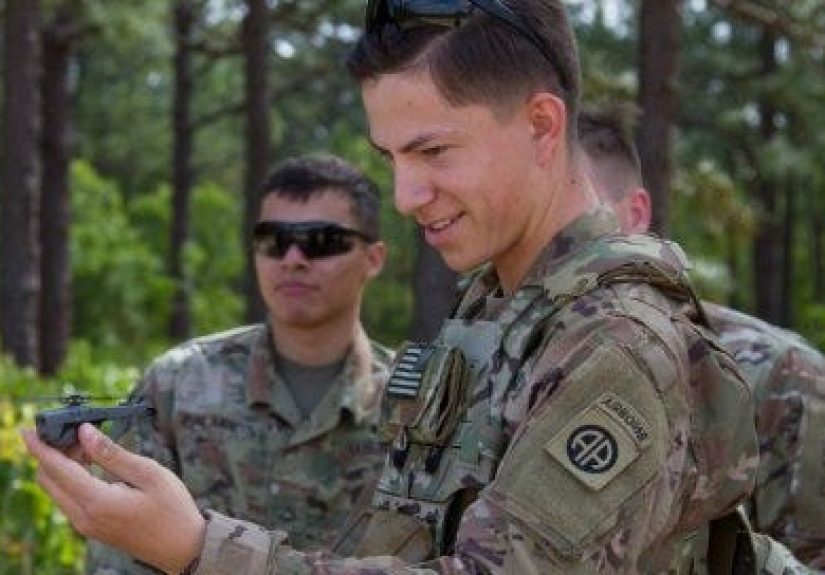
Meet the Black Hornet, a nano unmanned aerial system now being placed into the hands of soldiers through the Army’s Soldier Borne Sensor program. It is tiny, quiet, portable, and designed to give troops fast visual awareness in dangerous or confusing environments. In plain English: it is a flying scout that fits into a soldier’s kit and can help answer the question no one wants to guess wrong“What is over there?”
This is not the kind of drone most people picture when they hear “military UAV.” It is not a runway-launched aircraft, not a large loitering system, and not a Hollywood-style robot hawk. The Black Hornet is closer to a pocket-sized helicopter with cameras, sensors, and a very serious job. While larger drones watch battlefields from above, the Black Hornet is meant for the squad and platoon level, where decisions are made quickly, distances are short, and visibility can be painfully limited.
What Is the Black Hornet Drone?
The Black Hornet is a personal reconnaissance drone made by Teledyne FLIR Defense. Earlier versions, including the Black Hornet 3, became part of the U.S. Army’s Soldier Borne Sensor effort, which aims to give dismounted soldiers better situational awareness without adding too much weight or complexity. The newer Black Hornet 4 continues that idea with improved endurance, range, sensor performance, and weather tolerance.
The word “nano” is doing real work here. Black Hornet drones are small enough to be carried by individual troops, launched quickly, and used for short-range reconnaissance. The Black Hornet 4 weighs about 70 grams, can fly for more than 30 minutes, and is designed to operate at distances beyond three kilometers under suitable conditions. That is a lot of capability packed into something that weighs less than many smartphones. Somewhere, a backpack is feeling judged.
The system is not meant to replace larger drones. Instead, it fills a gap. A squad may not always have immediate access to a larger unmanned aircraft, and even if it does, a bigger drone may be too visible, too noisy, or too slow to deploy for a quick look. A nano drone can be used closer to the action, where a few minutes of visual information can make a big difference.
Why the U.S. Army Wants Drones at the Small-Unit Level
Modern soldiers operate in environments that are crowded, fast-moving, and full of blind spots. Urban areas, forests, hills, buildings, and trenches can all hide threats or obstacles. Historically, troops often had to rely on line-of-sight observation, reports from other units, maps, or direct movement into uncertain areas. That approach can be risky. Nobody wants “let’s go check” to be the official reconnaissance plan.
The Army’s Soldier Borne Sensor program is built around a practical goal: give small units a way to collect visual information quickly while reducing unnecessary exposure. In 2018, the Army began moving forward with Black Hornet systems after positive soldier feedback during evaluations. Since then, the program has continued through additional contracts and fielding efforts.
At the squad level, information is often measured in seconds and yards. A soldier may need to know whether a road is blocked, whether a rooftop is clear, whether a courtyard has movement, or whether the next stretch of terrain is safe enough to approach. A pocket-sized drone cannot solve every problem, but it can provide a fast glimpse without immediately putting a person in the most exposed position.
From Black Hornet 3 to Black Hornet 4
The Army’s relationship with the Black Hornet has grown in stages. The Black Hornet 3 was widely associated with the Soldier Borne Sensor program and became a tool for small-unit reconnaissance and surveillance. Teledyne FLIR Defense announced a five-year contract worth up to $93.9 million in 2023 to provide Black Hornet 3 systems, spares, and training support.
Then came the Black Hornet 4. In 2024, Teledyne FLIR Defense announced a five-year contract worth up to $91 million to provide Black Hornet 4 Personal Reconnaissance Systems to the Army under Soldier Borne Sensor Phase II. The company also reported an initial order of about $25 million for the first batch of systems, including drones, controllers, spare parts, and training.
The upgrade matters because drone warfare and battlefield surveillance have changed rapidly. Small drones are no longer a novelty. They are now a basic part of how militaries observe, communicate, and make decisions. A newer nano drone needs better sensors, more endurance, more resilience, and easier handling. In short, the Army wants something tiny enough to carry, useful enough to trust, and rugged enough not to panic when the weather gets rude.
What the Black Hornet Actually Does
The Black Hornet is designed for reconnaissance, surveillance, and local situational awareness. Its job is to help soldiers see areas they cannot safely or easily observe with the naked eye. Depending on mission needs, that may include checking routes, scanning terrain, viewing the far side of obstacles, observing buildings from outside, or improving awareness before movement.
The drone sends imagery back to the operator, giving a small unit a real-time view of nearby spaces. The newer Black Hornet 4 includes electro-optical and thermal imaging capabilities, which means it can support day, low-light, and thermal observation tasks. That does not turn soldiers into superheroes, but it does give them an extra set of eyeseyes that can fly.
The most important feature may be speed of use. A large intelligence system can be powerful, but small units often need quick answers. A nano drone can be deployed rapidly for short-duration awareness. For troops on foot, that is the difference between waiting for outside support and having an organic tool already in the kit.
Why Size Matters More Than It Sounds
In defense technology, bigger often gets the spotlight. Bigger aircraft, bigger radar, bigger vehicles, bigger budgets. The Black Hornet makes the opposite argument: sometimes smaller is smarter. A small drone can be less noticeable, easier to carry, faster to launch, and less disruptive to a unit’s movement.
Weight is especially important for infantry soldiers. Every ounce added to a soldier’s load competes with ammunition, water, medical gear, batteries, radios, protection, and other essentials. A reconnaissance system that is too heavy may look great in a brochure and then spend its life sitting in a storage case. The Black Hornet’s appeal is that it offers useful sensing capability without becoming another brick in the rucksack.
Small size also helps in complex terrain. A nano drone can maneuver where larger drones may struggle, especially in confined or cluttered environments. It is not designed for long-endurance theater-level surveillance; it is designed for nearby questions. And nearby questions are often the ones soldiers need answered first.
The Soldier Borne Sensor Program Explained
The Soldier Borne Sensor program is part of a larger Army push to give individual soldiers and small units better awareness on the battlefield. The concept is straightforward: sensing should not only live at headquarters, on vehicles, or in large aircraft. It should also reach the people walking through the environment and making immediate decisions.
In the past, a small unit might have relied heavily on binoculars, radio reports, maps, and direct observation. Those tools still matter, but they have limits. A soldier cannot see through a wall, around a building, or over a ridge without moving. A small drone changes that equation by creating a temporary aerial viewpoint.
The Army has tested and fielded these systems through training events, brigade-level evaluations, and program purchases. The result is a gradual shift in how reconnaissance is distributed. Instead of waiting for a specialized drone team, more small units can carry their own basic aerial sensor. That does not eliminate the need for professional drone operators or larger intelligence assets. It simply moves some visual awareness closer to the edge of the fight.
Real-World Lessons Behind the Push
Recent conflicts have made one lesson very clear: small drones matter. Around the world, commercial and military drones have changed how troops move, hide, observe, and coordinate. Even inexpensive quadcopters have shown how powerful aerial visibility can be when combined with fast decision-making.
The Black Hornet sits in the military-grade side of that trend. It is not just a store-bought hobby drone with a camouflage sticker and a serious expression. It is designed for soldier use, with a focus on portability, survivability, sensor performance, and integration into military workflows.
The Army’s continued investment suggests that nano drones are becoming less of a special gadget and more of a normal piece of the small-unit toolkit. Just as radios, night vision, and GPS once moved from specialized equipment to everyday battlefield tools, personal reconnaissance drones may become increasingly common for soldiers who need immediate local awareness.
Advantages of Putting Black Hornet Drones in Troops’ Hands
1. Better situational awareness
The main benefit is simple: soldiers can see more. A Black Hornet can provide a quick look at nearby terrain, structures, routes, and obstacles. That helps leaders make decisions with fewer guesses and fewer assumptions.
2. Reduced exposure
Reconnaissance can be dangerous when it requires a person to move into an unknown area. A small drone can help check a location before troops physically approach it. The drone does not remove risk, but it can reduce unnecessary exposure.
3. Faster decision-making
Small units often operate on tight timelines. Waiting for external intelligence support may not be practical. A soldier-carried sensor provides immediate access to visual information when the unit needs it.
4. Lightweight portability
Because the Black Hornet is extremely small, it fits the Army’s need for tools that do not overload dismounted troops. The best sensor is not always the biggest one; sometimes it is the one a soldier actually has when the moment arrives.
5. Useful in urban and complex terrain
Buildings, alleys, walls, trees, and hills all limit visibility. A nano drone can help peek into those blind spots from a safer distance. It gives small units a temporary aerial perspective without requiring large support assets.
Challenges and Limitations
No drone is magic, not even one that looks like it was designed by a spy agency and a dragonfly committee. Small drones face real limitations. Battery life matters. Weather matters. Signal conditions matter. Operator training matters. And like every electronic system, maintenance and spare parts are part of the story.
The Black Hornet’s tiny size is an advantage, but it also means the system must balance payload, endurance, durability, and sensor performance. A nano drone cannot carry the same equipment as a larger aircraft. Its strength is close-range awareness, not broad-area surveillance over long periods.
There is also the issue of battlefield electronic warfare. Modern conflicts increasingly involve jamming, interference, and attempts to disrupt communications. Manufacturers and militaries are working to make small drones more resilient, but contested environments remain challenging for any unmanned system.
Finally, training is essential. A drone is only useful when soldiers understand what it can and cannot tell them. Poorly interpreted imagery can create false confidence. The Black Hornet helps troops see, but humans still have to think.
How Tiny Drones Change the Culture of Reconnaissance
The most interesting part of the Black Hornet story may not be the drone itself. It may be what the drone represents. Reconnaissance is becoming more personal, more distributed, and more immediate. Instead of treating aerial sensing as something that happens far above the battlefield, the Army is putting it directly into the hands of troops on the ground.
That changes expectations. A squad leader may increasingly expect to check a route visually before moving. A platoon may use small drones as part of routine awareness. Soldiers may learn to think in three dimensions more naturally, blending what they see at ground level with what a small aerial sensor can show them from above.
This does not make old-fashioned fieldcraft obsolete. Quite the opposite. Good soldiers still need judgment, discipline, communication, and awareness. The Black Hornet simply adds another layer. It is a tool, not a replacement for training. A hammer does not make someone a carpenter, and a nano drone does not make someone instantly brilliant at reconnaissance. But in capable hands, it can be extremely useful.
What This Means for the Future of the U.S. Army
The Army’s investment in Black Hornet drones points toward a future where small unmanned systems are normal at lower levels of command. Troops may carry sensors the way they carry radios or night-vision devices: not as futuristic extras, but as expected equipment for modern operations.
As artificial intelligence, autonomy, battery technology, and sensor miniaturization continue to improve, future soldier-borne drones may become even easier to use. They may help identify changes in terrain, map confined areas, or share imagery more smoothly across units. The key will be keeping them reliable, simple, and useful under pressure.
The Black Hornet also reflects a broader lesson in military innovation: the most important technology is not always the loudest or most dramatic. Sometimes it is the quiet tool that gives a small team a better look before making a dangerous decision. That may not make for the flashiest parade, but it matters where it counts.
Experience-Based Reflections: What Tiny Recon Drones Feel Like in the Real World
Anyone who has spent time around field training, emergency planning, or outdoor navigation understands the uncomfortable feeling of not knowing what is just beyond sight. A map may show the route. A briefing may describe the area. A teammate may say, “It should be clear.” That word “should” is where stress likes to build a vacation home.
The idea behind a drone like the Black Hornet feels practical because it addresses that gap between theory and reality. On paper, a route may look simple. In real terrain, a fallen tree, damaged road, blocked alley, open field, or unexpected movement can change everything. A small aerial view can turn a vague concern into a clearer picture.
In training environments, the value of overhead perspective becomes obvious very quickly. From the ground, people naturally focus on what is directly in front of them. Trees, corners, walls, shadows, and elevation all compress the world. From above, even a modest viewpoint can reveal patterns: where a path bends, where visibility opens up, where obstacles are clustered, and where movement may be easier or harder.
That experience explains why soldier-carried drones are not just “cool gadgets.” They support confidence. They help reduce confusion. They give leaders a shared visual reference instead of five people imagining five different versions of the same unseen space. In tense moments, shared understanding is valuable because it makes communication faster and cleaner.
There is also a human factor. Carrying another piece of technology can be annoying if it is heavy, fragile, or complicated. Soldiers already carry a lot, and nobody celebrates extra gear just because it has a charging cable. A nano drone succeeds only if it earns its place. It has to be fast enough to deploy, simple enough to use under pressure, and helpful enough that troops actually want it nearby.
The Black Hornet’s small size makes that more realistic. It is not asking a squad to reorganize itself around a flying machine. It is offering a quick sensor that can be used when needed and stowed when not. That difference matters. Technology that fits naturally into existing routines has a much better chance of becoming useful instead of becoming another item people politely ignore until inspection day.
Another experience-related point is trust. Operators must learn what drone footage can show and what it cannot. A camera angle can reveal a lot, but it can also miss context. Shadows, weather, distance, clutter, and movement can all affect interpretation. The best use of a small drone is not blind belief in the screen; it is combining the aerial view with training, communication, and judgment.
In that sense, the Black Hornet is most valuable as a decision-support tool. It does not make decisions for soldiers. It gives them more information before they decide. That may sound modest, but in real-world operations, modest advantages add up. A clearer view can prevent wasted movement, reduce uncertainty, and help a unit choose a safer or smarter approach.
The funny thing about tiny drones is that their impact can feel much larger than their size. A 70-gram aircraft will not impress anyone by roaring overhead. It will not shake windows or dominate the skyline. Its power is quieter: a few minutes of visibility, a better question answered, a dangerous assumption avoided. In the world of small-unit operations, that is not small at all.
Conclusion
The U.S. Army’s move to put Black Hornet drones into the hands of troops shows how modern reconnaissance is changing. Small units need fast, local, reliable information, and nano drones offer a practical way to get it. The Black Hornet does not replace larger drones, human judgment, or traditional fieldcraft. Instead, it gives soldiers another tool for seeing before moving, checking before committing, and understanding before guessing.
For a device that can fit into a soldier’s kit, the Black Hornet carries a big idea: battlefield awareness should be available at the lowest practical level. In an era where every second and every blind spot can matter, tiny drones may become one of the Army’s most useful small tools. Small, quiet, and easy to underestimatethe Black Hornet is proof that sometimes the future of military technology arrives with wings the size of a snack.
Note: This article is written for informational and editorial purposes only. It discusses publicly reported defense technology trends without providing operational instructions.