Table of Contents >> Show >> Hide
- The Moment That Went Viral
- Why “Banned From the Stadium” Isn’t Just a Clicky Headline
- Why Her Workaround Is Actually Genius
- The Bigger Issue: Access Is Power in Sports Journalism
- A U.S. Parallel: The Locker Room Fight That Changed the Rules
- When “Access Denied” Still Happens in America
- What Newsrooms Can Learn From the Rooftop
- What Sports Organizations Can Do Better
- So… Is It Really “Bending the Rules”?
- Conclusion: The Story Behind the Story
- Experiences Related to “Banned From the Stadium” Reporting
- SEO Tags
Some people respond to a “no” by pouting. Others respond by emailing a supervisor, reading the policy, and finding a legal loophole so clean it could pass a background check. This story is about the second kind of person.
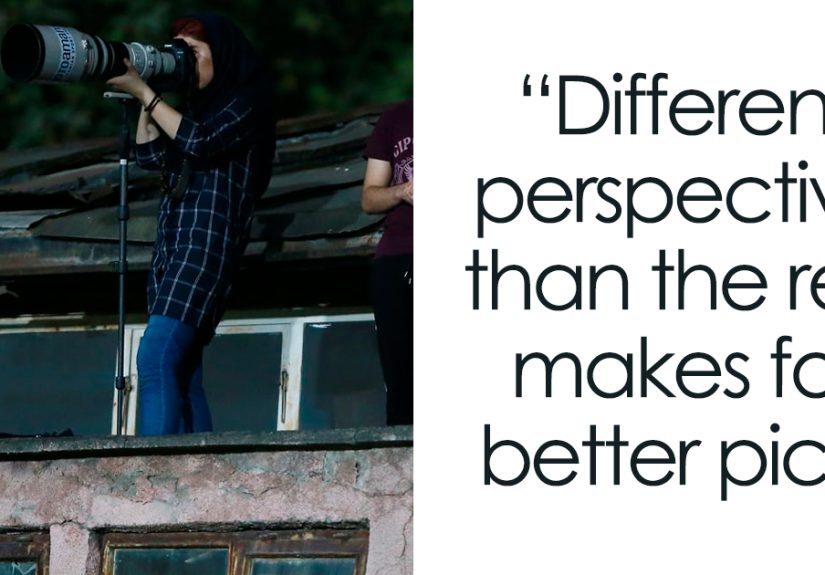
When an Iranian sports photojournalist couldn’t enter a stadium to cover a men’s soccer match (because, as a woman, she wasn’t allowed in), she didn’t storm the gates or try to “sneak” past security. Instead, she did something that feels equal parts frustrating, hilarious, and brilliant: she found a nearby roof, climbed up with a long lens, and photographed the game from outside the stadium. Same match. Same deadline. Same proof. Different zip code.
It’s easy to treat this as a viral “life hack” momentlike discovering your phone has a flashlight feature you’ve ignored for three years. But her rooftop workaround is also a masterclass in what journalists do best: adapt to obstacles, report what’s real, and keep going when the rules were never built with you in mind.
The Moment That Went Viral
The journalist at the center of this story is widely reported as Parisa Pourtaherian, an Iranian sports photographer. During a top-flight match at Vatani Stadium in the city of Ghaemshahr, she arrived early and tried to find a lawful way to do her job. She couldn’t enter the stadium, so she looked for a nearby building with a view, knocked on doors, and eventually got permission from a homeowner to shoot the second half from the roof.
The image of her standing above the stadium linecamera in hand, telephoto lens aimed like a determined little periscopespread quickly. People loved it because it was clever, peaceful, and symbolic: a professional blocked by policy, still delivering the work anyway.
Why “Banned From the Stadium” Isn’t Just a Clicky Headline
In some places, “banned” can sound like someone got in trouble. In this context, it’s closer to: “You are excluded because of who you are.” That difference matters.
For years, Iranian women faced restrictions on attending men’s soccer matches, with international pressure rising over time. Even when limited access has been granted in certain cases, it has often come with conditions, limited seating sections, or inconsistent enforcement. Meanwhile, women working in sports media have also faced restrictions about where they can stand, who they can interview, and what spaces they can enter.
So the “ban” here isn’t about misbehavior. It’s about a professional barrier. And those are the kind that create two outcomes: people give up… or people get inventive.
Why Her Workaround Is Actually Genius
1) She didn’t “break in”she reframed the assignment
A lot of rule-bending stories are really just rule-breaking with better branding. This one stands out because she didn’t need to bypass security or fake credentials. She found a legal vantage point outside the controlled areapermission grantedand did her work from there. That’s not “chaos.” That’s logistics.
2) She kept the focus on the game, not the spectacle
In the social media era, it’s tempting for a controversy to swallow the original story. But her method still produced what editors actually need: coverage. Photos that show the match, the athletes, and the moment. She didn’t turn the assignment into a stunt; the situation made it a symbol.
3) She turned a barrier into evidence
A rooftop photo doesn’t just show a soccer match. It shows that the person taking the photo had to stand on a roof to do a job that other credentialed colleagues could do from the sidelines. The workaround becomes a quiet, undeniable “receipt” that something is structurally wrong.
4) She modeled professionalism under pressure
The hidden superpower in journalism isn’t writing fast or talking smoothly on camera. It’s staying steady when circumstances are unfair, unpredictable, or humiliating. She responded with persistence, not panican approach that travels well across every beat, from sports to city hall.
The Bigger Issue: Access Is Power in Sports Journalism
Stadium access isn’t just about being “near the action.” It’s about equal opportunity to do the job: to see what others see, ask what others ask, and report with the same depth and speed. When access is restricted for some groups, coverage becomes unevenand not because of talent.
If this feels like a “far away” problem, it’s worth remembering that American sports media has its own history of access battles. Not long ago, women reporters in the U.S. were blocked from spaces central to sports reportingespecially locker rooms. The justification often sounded polite on paper and punishing in practice: “privacy,” “tradition,” “that’s just how it is.”
A U.S. Parallel: The Locker Room Fight That Changed the Rules
In the late 1970s, Melissa Ludtke, a Sports Illustrated reporter, was assigned to cover the World Series and faced a barrier that male reporters didn’t: she was not allowed equal access to the Yankees clubhouse for interviews and reporting. The locker room was a key reporting space, and excluding her created a professional disadvantage. Her legal challenge became a landmark moment in the fight for equal access in American sports journalism.
Over time, policies shiftedbecause journalism is not a costume party where access depends on fitting an outdated dress code. The Ludtke case is a reminder that progress often happens because someone refuses to accept that unfair rules are “normal.” Her fight wasn’t about special treatment; it was about equal opportunity to do the same work.
Different country, different era, different rulessame core question: Who gets to do the job up close, and who gets pushed outside the gate?
When “Access Denied” Still Happens in America
Even after major breakthroughs, access conflicts haven’t disappeared. Sometimes it’s a misunderstanding. Sometimes it’s a security guard enforcing an outdated assumption. And sometimes it’s a policy that looks neutral until you see how it plays out in real life.
For example, U.S. sports coverage has seen incidents where women reporters were mistakenly barred from male locker rooms despite official policy supporting equal access. These situations tend to get resolved with apologies and clarifications, but they show how easily old habits can reappear when rules aren’t trained, communicated, and enforced consistently.
The lesson is uncomfortable but useful: rights on paper don’t automatically become reality on the ground. That’s true in stadium tunnels, press areas, and pretty much anywhere a lanyard is treated like a VIP passport.
What Newsrooms Can Learn From the Rooftop
Plan for access problems like you plan for weather
Good editors don’t just assign stories; they assign contingencies. If your coverage depends on credentials, build backup options: alternate locations, remote interviews, broadcast feeds, data-driven coverage, pool photography, and partnerships. Not because you expect discriminationbut because access can fail for a hundred reasons.
Document barriers without making the story about you
It’s possible to report the obstacle professionally: what happened, who decided, what policy says, what changed. The goal isn’t to create drama; it’s to create clarity. Pourtaherian’s roof became powerful precisely because the primary output was still the match coverage.
Protect staff from unsafe improvisation
Let’s say this plainly: rooftops are not a recommended workplace. The genius here is not “climb things.” It’s “solve problems legally and persistently.” Newsrooms should never encourage dangerous access workarounds. Safety, consent, and legality come firstalways.
What Sports Organizations Can Do Better
Sports leagues and venues love to talk about growing the game, expanding audiences, and inspiring the next generation. That message collapses when women professionals are excluded from basic reporting spaces.
- Make access policies explicit and publish them where credentialed media can see them.
- Train security staff so enforcement matches official rules (and doesn’t default to stereotypes).
- Create clear escalation paths so a journalist isn’t stuck negotiating with a gatekeeper in the moment.
- Measure outcomes: if equal access is the policy, verify it is consistently happening.
Inclusion isn’t just a slogan on a banner. It’s whether someone can do their job without having to stand on a roof to prove they belong.
So… Is It Really “Bending the Rules”?
Technically, her move is less “bending” and more “working around.” The stadium boundary is a line of control, not a line of reality. If a policy blocks you from standing inside a venue, but you can legally report from outside it, then you’re not defying journalism ethicsyou’re practicing journalism under constraint.
The deeper genius is that her choice exposed how arbitrary the barrier was. She didn’t need special equipment from a secret spy store. She needed a roof, a lens, and the stubborn belief that her work mattered.
Conclusion: The Story Behind the Story
The internet loves a clever workaround. But this isn’t just a “gotcha” moment or a quirky headline. It’s a snapshot of how unequal rules shape who gets seen, who gets heard, and who gets credited.
Parisa Pourtaherian’s rooftop coverage became viral because it was visually strikingone person literally above the barrier. Yet the real takeaway is grounded and practical: when gatekeeping limits journalism, journalism finds another angle. And sometimes, that angle makes the gatekeeping look as unreasonable as it always was.
Experiences Related to “Banned From the Stadium” Reporting
Most people imagine sports journalism as the fun part: the roar of the crowd, the perfect action shot, the post-game quote that becomes a headline. What they don’t picture is the quiet grind of accesswhere the biggest challenge isn’t the athlete running 22 miles per hour, but a policy written by someone who has never tried to file a deadline story with a view blocked by concrete.
Reporters who cover events long enough tend to collect “access moments” the way frequent flyers collect tiny shampoo bottles: you don’t want them, but somehow you end up with a drawer full of them. A credential scanner fails at the worst time. A staffer says, “This section is restricted,” without knowing what that means. A rule changes mid-season. A press box gets moved. You learn quickly that access is not a fixed thingit’s a negotiation between policy, people, and circumstances.
When access disappears, the work doesn’t magically pause. Deadlines don’t care that you’re standing in the wrong place. The editor still needs a story, and the audience still expects an explanation of what happened. That’s where improvisation comes in, and the best kind is boring in the healthiest way: you stay legal, you stay safe, and you stay focused on the facts. Instead of panicking, you re-map the assignment. If you can’t get the ideal interview, you gather quotes from a press conference. If the tunnel is off-limits, you build your report from verified stats, game film, and official statements. If the sideline is blocked, you find a permitted vantage point and make it work.
There’s also an emotional layer that people don’t talk about much. Being blocked from a space you’ve earned access to feels personal, even when it isn’t meant to be. It can trigger the exhausting inner math of: “Do I push back and risk being labeled difficult? Do I accept it and risk losing the story?” Journalistsespecially those who are used to being underestimatedoften become experts at choosing battles. The smartest choice is the one that protects your ability to keep reporting tomorrow.
That’s why the “rooftop” image resonates. It captures a familiar experience in one frame: the realization that the rules aren’t neutral, followed by the decision to keep working anyway. Not everyone will face a literal stadium ban, but many journalists have had to do some version of reporting from the marginsoutside the rope line, outside the room, outside the “usual” path. The win isn’t the dramatic workaround. The win is the professionalism: get permission, stay safe, respect boundaries, and still tell the truth.
If there’s a hopeful part, it’s that these moments also build skill. Reporters learn to think like problem-solvers, not just observers. They learn that access can be denied, but curiosity doesn’t have to be. And they learn that sometimes the best reporting isn’t the loudest it’s the steady kind that quietly proves, again and again, that the story matters enough to find another angle.