Table of Contents >> Show >> Hide
- Why This Kinect NES Experiment Is So Fascinating
- Super Mario Bros. 3 Was Designed For Precision, Not Calisthenics
- How The NES Controller Makes The Hack Possible
- Why Kinect Makes Mario Die So Quickly
- Why The Experiment Is Still A Win
- Kinect’s Strange Legacy In Maker Culture
- What This Teaches About Game Controls
- Specific Example: The Run And Jump Problem
- Why Retro Gamers Love This Kind Of Chaos
- Experience Section: What It Feels Like To Play Mario This Way
- Conclusion
Some gaming experiments sound brilliant right up until the first Goomba arrives. Using Kinect to play Super Mario Bros. 3 on an original NES is one of those glorious ideas: technically clever, wonderfully nerdy, and about as practical as steering a shopping cart with interpretive dance.
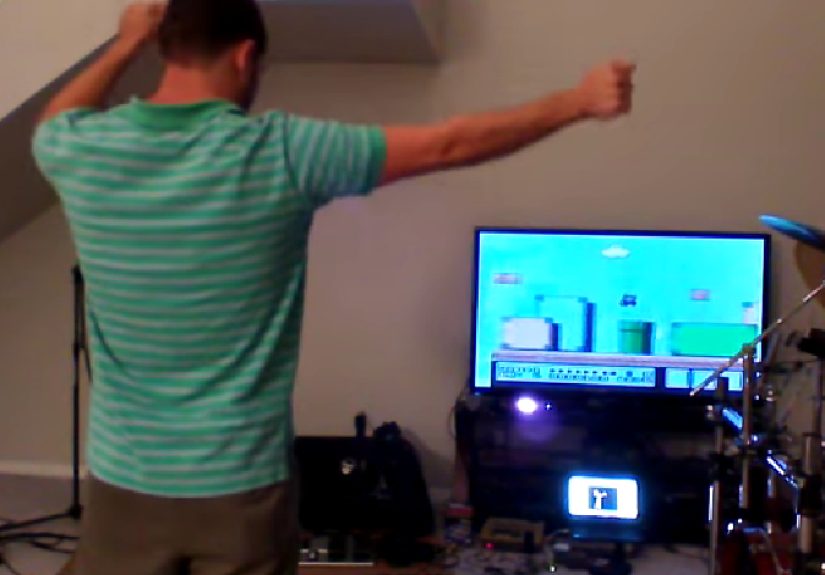
The concept is simple enough to make any retro gamer lean forward: replace the classic NES controller with body gestures tracked by Microsoft Kinect. Move your body, trigger Mario’s movements, and attempt to survive one of the most beloved platformers ever made. In theory, it is the future. In practice, Mario meets gravity, enemies, panic, and a very fast trip back to the beginning of the level.
This is why the phrase “Using Kinect to play Super Mario Bros. 3 on NES ensures quick death” is funny because it is basically true. The project is not a failure; it is a perfect demonstration of why good game design and good input design are inseparable. Mario was built for buttons. Kinect was built to make your living room believe you were the controller. Put them together, and suddenly every jump feels like a full-body tax audit.
Why This Kinect NES Experiment Is So Fascinating
At first glance, Kinect and the NES seem like two technologies from different planets. The Nintendo Entertainment System represents the clean, rectangular simplicity of 1980s home gaming. It uses a small controller with a directional pad, two main action buttons, Start, and Select. No motion tracking. No voice recognition. No need to rearrange the furniture.
Kinect, released for Xbox 360 in 2010, was marketed around the idea that your body could become the controller. It used sensors to detect movement and voice, promising controller-free interaction. That idea felt futuristic, and in many ways it was. But “futuristic” does not always mean “great for dodging a Koopa Troopa at the last second.”
The original Hackaday-featured project showed a maker using Kinect to control a real NES running Super Mario Bros. 3. Instead of simply mapping gestures to an emulator, the setup aimed to interface with actual console hardware. That makes the experiment far more interesting than a novelty video. It sits at the intersection of retro gaming, hardware hacking, motion control, and the eternal human desire to make old machines do weird new tricks.
Super Mario Bros. 3 Was Designed For Precision, Not Calisthenics
Super Mario Bros. 3 is not a slow game. It is cheerful, colorful, and full of charming little details, but underneath the smile is a platformer that expects fast decisions. You need to tap, hold, run, stop, jump, fly, crouch, slide, swim, and panic with remarkable timing.
The game was released for the NES in North America in 1990 and became one of Nintendo’s defining classics. It expanded the Mario formula with a world map, themed kingdoms, power-ups like the Super Leaf and Tanooki Suit, airships, mini-games, and levels that constantly ask, “Are your thumbs awake?”
That last part matters. The NES controller works because it is immediate and compact. Your thumb moves a few millimeters and Mario responds. Press A, Mario jumps. Hold B, he runs. Combine both, and he makes a heroic leap. Mistime either one, and he politely exits the screen like a plumber who remembered he left the oven on.
Why Buttons Beat Body Gestures In Fast Platformers
A button is brutally efficient. It has two basic states: pressed or not pressed. That simplicity is exactly what makes the NES controller so good for platformers. A tiny movement produces a clear signal. There is very little ambiguity. Mario does not need to interpret your emotional relationship with jumping; he just jumps.
Body gestures are different. A motion system has to detect your body, interpret your pose, decide which gesture you meant, translate that gesture into input, and send the result to the game. Even when the technology works well, large physical movements naturally take longer than pressing a button. If you need to jump over a pit, a thumb press is faster than lifting your arm, stepping, leaning, or flapping like a raccoon-powered traffic cone.
That is the heart of the comedy. Kinect can recognize motion, but Super Mario Bros. 3 demands timing. The game does not wait while your skeleton-tracking data has a little meeting with itself.
How The NES Controller Makes The Hack Possible
The technical beauty of the NES controller is that it is surprisingly simple. Inside the standard controller, the buttons connect through an 8-bit shift register, commonly identified as a 4021 chip. The console latches the button states, then reads them serially. In plain English: the NES asks, “Which buttons are being pressed?” and the controller answers in a neat little sequence.
That simplicity makes the NES controller friendly to hardware experiments. A modern microcontroller or custom interface can pretend to be the controller by sending the expected button signals at the right time. In a Kinect-powered setup, the computer or microcontroller interprets body gestures and converts them into signals the NES understands as button presses.
So when a player leans, waves, steps, or jumps, the system can map those motions to left, right, A, B, Start, or other controller inputs. The NES does not know a human is performing living-room aerobics. It only knows whether the expected controller lines are behaving like button presses.
The Genius And The Problem Are The Same Thing
The genius of the project is that it bridges a 1980s console and a 2010s motion sensor. The problem is that Super Mario Bros. 3 was never designed for that bridge. It was designed for a player’s thumbs.
When you replace crisp inputs with full-body gestures, every action gets bigger. Running becomes a commitment. Jumping becomes a performance. Changing direction becomes a negotiation. Suddenly, a basic level can feel like trying to speedrun while wearing oven mitts and standing on a yoga mat.
Why Kinect Makes Mario Die So Quickly
Mario’s death in this setup is not caused by Kinect being “bad.” It is caused by the mismatch between input style and game design. Kinect was most successful when games were designed around broad gestures, rhythm, fitness, dancing, sports, and casual movement. Those games could allow space for interpretation. A platformer like Super Mario Bros. 3 is much less forgiving.
In Mario, one mistimed jump is not a suggestion. It is a sentence. The platform does not care that your arm gesture was nearly correct. The Koopa does not pause to appreciate your effort. The bottomless pit is not impressed by innovation.
Latency, Perceived Lag, And Human Movement
Even if a motion system has acceptable technical latency, perceived lag can still feel larger because body movements take time. Pressing a button is almost instant. Performing a gesture involves muscle movement, camera tracking, recognition, software translation, and then the final signal. That chain may be quick, but in a game built on split-second decisions, “quick enough” can still be too slow.
This is especially obvious in Super Mario Bros. 3. Many jumps require the player to start running early, build speed, press jump at the right edge, and sometimes keep holding the run button while steering midair. That is a lot of input choreography even with a controller. With Kinect, it becomes less “classic Nintendo skill” and more “emergency dance recital.”
Why The Experiment Is Still A Win
Here is the twist: the quick death is exactly what makes the project delightful. Nobody needs Kinect to become the official best way to play Super Mario Bros. 3. The point is not to replace the NES controller. The point is to explore what happens when two eras of gaming collide.
Retro hardware projects are valuable because they reveal how systems work. When someone builds a Kinect-to-NES controller interface, they are not just making Mario suffer for science. They are showing how input protocols, sensors, software, and old console design can communicate.
It is the same reason people build giant NES controllers, banana pianos, motion-controlled robots, and arcade cabinets out of things that were never meant to be arcade cabinets. The usefulness is only half the story. The other half is curiosity wearing safety goggles.
Kinect’s Strange Legacy In Maker Culture
Kinect did not become the permanent future of mainstream gaming, but it became something arguably more interesting: a beloved tool for hackers, artists, researchers, and experimenters. After its release, open-source communities worked on drivers that allowed Kinect hardware to be used beyond Xbox. Developers explored depth sensing, motion capture, 3D scanning, robotics, art installations, education, and other creative uses.
That is why a project like Kinect-controlled Mario feels so natural in the maker world. Kinect was a consumer device with unusually powerful sensing capabilities for its time. The NES was an old console with a wonderfully understandable controller system. One was made to see bodies; the other was made to read buttons. Combining them is unnecessary in the best possible way.
What This Teaches About Game Controls
The biggest lesson is that input methods are not interchangeable. A controller is not just a piece of plastic. It is part of the game’s design language. Super Mario Bros. 3 feels good because the controller, physics, level design, and player expectations all work together.
Change the input method, and you change the game. Sometimes that change makes a game more accessible, more physical, or more social. Other times it turns World 1-1 into a slapstick tragedy. Either result can be useful, as long as you understand what changed and why.
Motion Control Works Best When The Game Respects It
Good motion-control games usually avoid demanding tiny, instant, repeated inputs. They build around gestures that feel natural. Dancing, bowling, fitness, and party games can make motion controls shine because the player’s body movement is part of the fantasy.
Super Mario Bros. 3 has a different fantasy. It is about mastering momentum with small, precise inputs. It wants your thumb, not your entire skeleton. That does not make Kinect wrong. It makes the pairing hilariously mismatched.
Specific Example: The Run And Jump Problem
Consider one of the most basic Mario actions: running and jumping. On the NES controller, you hold B to run and press A to jump. With practice, this becomes automatic. Your thumb rolls between buttons, and Mario sails over danger like he pays rent in the sky.
Now imagine assigning run to one body motion and jump to another. Maybe leaning forward means run. Maybe raising an arm means jump. Maybe moving left or right controls direction. Suddenly, the player has to coordinate posture, timing, and movement while also watching enemies and platforms. The body becomes a controller, yes, but it also becomes the boss fight.
That is why death comes quickly. Not because the player lacks skill, but because the control loop is overloaded. The game asks for precision. The setup answers with jazz hands.
Why Retro Gamers Love This Kind Of Chaos
Retro gaming culture has always had a playful relationship with hardware. People repair old consoles, modify cartridges, build adapters, preserve manuals, dump ROMs legally from owned games, create FPGA systems, and design controllers that range from elegant to completely unhinged.
A Kinect-controlled NES fits perfectly into that tradition. It respects the original hardware enough to interface with it, but it also refuses to treat it like a museum piece. It says, “What if this 8-bit platformer could be played with a depth camera?” Then it answers, “Poorly, but magnificently.”
Experience Section: What It Feels Like To Play Mario This Way
Imagine standing in front of the screen with the confidence of a person who has badly underestimated World 1. The title screen appears. The music starts. For a moment, everything feels possible. You are not holding a controller. You are the controller. This is either the future of gaming or the beginning of a very short comedy routine.
You move right. Mario moves right. Excellent. Technology has obeyed. You try a little jump. Mario hops. Wonderful. You feel powerful. Then the first enemy approaches, and the entire system suddenly turns into a trust exercise.
With a normal NES controller, your thumb reacts instantly. With Kinect, your body has to communicate intention. You gesture to jump, but maybe you start too late. Maybe the system reads your motion a fraction after your brain expected it. Maybe your feet shift, your arm rises, and Mario performs the jump with the energy of someone who received the memo after the meeting ended.
The Goomba keeps walking. It has no respect for experimental interfaces. Mario collides with it. Death number one arrives before the experiment has even finished introducing itself.
On the next attempt, you overcorrect. You make your gesture earlier and bigger. This time Mario jumps too soon, lands awkwardly, or fails to maintain speed. You start to realize the classic controller was not just convenient; it was a miracle of compact intention. Every button press on the NES pad is tiny but meaningful. Every Kinect gesture is expressive but expensive.
Trying to build running speed is even funnier. Holding a run button with your thumb is easy. Holding a full-body “run” posture while preparing to jump is less easy. You begin to look like a person sneaking through a haunted house while auditioning for a fitness commercial. Friends watching from the couch will offer helpful advice like “jump sooner,” “move left,” and “why are you like this?”
Airship levels would be especially cruel. They require careful timing, moving platforms, cannon fire, and calm decision-making. Kinect adds a second layer of performance pressure. You are not merely playing Mario; you are translating Mario through your limbs. Every mistake feels dramatic. Every successful jump feels like landing a spacecraft.
That experience is the charm. Playing Super Mario Bros. 3 with Kinect is not the best way to beat the game. It is the best way to appreciate why the original controller works so well. It turns familiar mechanics into fresh challenges and makes a decades-old game feel strange again. The deaths are fast, but the laughter is faster.
After a few attempts, you start to respect both machines more. The NES is elegant because it expects so little from the controller and gets so much from the player. Kinect is impressive because it tries to understand a messy human body in real time. Together, they create a beautiful disaster: a retro platformer controlled by modern motion sensing, where every small victory feels earned and every failure deserves instant replay.
Conclusion
Using Kinect to play Super Mario Bros. 3 on an NES ensures quick death because the game was built for fast, precise button input, while Kinect turns control into full-body interpretation. Yet that mismatch is exactly why the project is worth discussing. It reveals the brilliance of the NES controller, the ambition of Kinect, and the creativity of hardware hackers who see no reason old and new technology should not be introduced at the world’s strangest party.
The result may not help you rescue Princess Peach, but it does something better for curious gamers: it proves that playful experimentation can make even a familiar classic feel new, ridiculous, and surprisingly educational.
Note: This article is written as original SEO content based on real public information about Kinect, NES controller hardware, Super Mario Bros. 3, and the documented Kinect-to-NES experiment.