Table of Contents >> Show >> Hide
- Why Super Bowl Rings Fascinate Fans
- 12 Things You Didn’t Know About the Super Bowl Rings
- 1. The very first Super Bowl ring was shockingly simple
- 2. The NFL helps pay for rings, but the team controls the ring guest list
- 3. Not only players get Super Bowl rings
- 4. Ring night happens months after the confetti falls
- 5. Every diamond usually means something
- 6. Modern Super Bowl rings can open, twist, or literally pop apart
- 7. Some rings contain actual pieces of the season
- 8. These rings have turned into gloriously oversized status symbols
- 9. The biggest player ring ever made belonged to William “Refrigerator” Perry
- 10. There is not always just one version of a Super Bowl ring
- 11. Super Bowl rings can be worth a fortune
- 12. Their afterlife can be just as wild as their design
- What Super Bowl Rings Really Represent
- The Experience of Super Bowl Rings: Why They Feel Bigger Than Jewelry
- Final Take
- SEO Tags
Note: Body-only HTML, English content, ready for web publishing.
Super Bowl rings are the most gloriously extra jewelry in American sports. They are part trophy, part time capsule, part wearable flex, and part “please do not put this in your carry-on unless you enjoy awkward TSA conversations.” Most fans know the basics: win the Super Bowl, get a ring, post a photo, try not to blind anyone with the diamonds. But the real story is a lot more fun than that.
Behind every Super Bowl ring is a strange little universe of symbolism, design politics, hidden features, team tradition, and enough gemstones to make a pirate feel underdressed. Some rings open. Some include secret messages. Some are so large they look less like jewelry and more like small monuments to excellent pass protection. And the people who receive them? Not always just the players.
If you have ever looked at a Super Bowl ring and thought, “That’s shiny,” congratulations, you are correct. But these rings are also packed with history, emotion, and a surprising number of details that most fans never notice. Here are 12 things you probably didn’t know about Super Bowl rings.
Why Super Bowl Rings Fascinate Fans
The Lombardi Trophy may be the official symbol of a championship, but the ring is the personal souvenir. A trophy sits in a team facility. A ring sits on a hand, in a safe, on a mantle, or occasionally at an auction house causing NFL fans to gasp into their coffee. Rings matter because they make a team’s title feel individual. Every stone, engraving, and hidden compartment turns a season into something you can literally hold.
That is why Super Bowl ring culture has become such a big deal. Fans want to know what they cost, who gets one, why they are so huge, and whether anyone actually wears them to the grocery store. The answers, as it turns out, are wonderfully weird.
12 Things You Didn’t Know About the Super Bowl Rings
1. The very first Super Bowl ring was shockingly simple
Modern Super Bowl rings look like they were designed by a jeweler who had three espressos and zero fear. The original version was much more restrained. The Green Bay Packers’ Super Bowl I ring was cast in gold and featured just one diamond on top. That single stone represented the team’s first Super Bowl win, and the ring also included the game score and a Packers helmet.
In other words, the first Super Bowl ring was less “small luxury spaceship” and more “classy championship handshake.” It was meaningful, elegant, and almost modest by modern NFL standards, which is not a word you usually associate with anything related to the Super Bowl.
2. The NFL helps pay for rings, but the team controls the ring guest list
Here is the part that surprises a lot of people: the league does not just shower an unlimited number of rings on a winning franchise like confetti from the football heavens. Traditionally, the NFL covers up to around 150 rings. After that, if a team wants more, ownership pays the difference.
That means ring distribution becomes a team decision. Players obviously get them, but teams also decide how many coaches, executives, staff members, and others receive one. Some organizations even buy far more than the league-funded amount. Translation: winning the Super Bowl is glorious, but ring math is still very much a front-office activity.
3. Not only players get Super Bowl rings
Many fans assume a ring goes only to the 53-man roster and maybe a coach or two. Not even close. Super Bowl rings routinely go to coaches, football operations staff, front office executives, and other essential personnel. In some organizations, support staff and cheerleaders have also received rings. In a famous example, Robert Kraft even gave Tom Brady’s mother a Super Bowl LI ring.
This is what makes ring culture so interesting. A championship is never just about the quarterback lifting a trophy. Teams often use rings to honor the larger machine behind the scenes: scouts, trainers, coordinators, equipment staff, and the people who helped build the season long before the cameras showed up.
4. Ring night happens months after the confetti falls
The Super Bowl ends in February, but the ring ceremony usually comes later, often in June or early summer. By then, the season has cooled down just enough for everyone to stop replaying third-down conversions in their heads and enjoy the celebration.
These ceremonies are often private, emotional, and reunion-like. Players, coaches, and staff gather again, this time without shoulder pads and with significantly better tailoring. It is one of the rare moments when the championship season gets packaged into a formal memory. Think of it as the victory lap after the victory lap.
5. Every diamond usually means something
Super Bowl rings are not just expensive. They are storytelling devices with a jewelry budget that laughs in the face of moderation. Teams build season history directly into the design. A certain number of diamonds might represent playoff points, total wins, division titles, or even one iconic play.
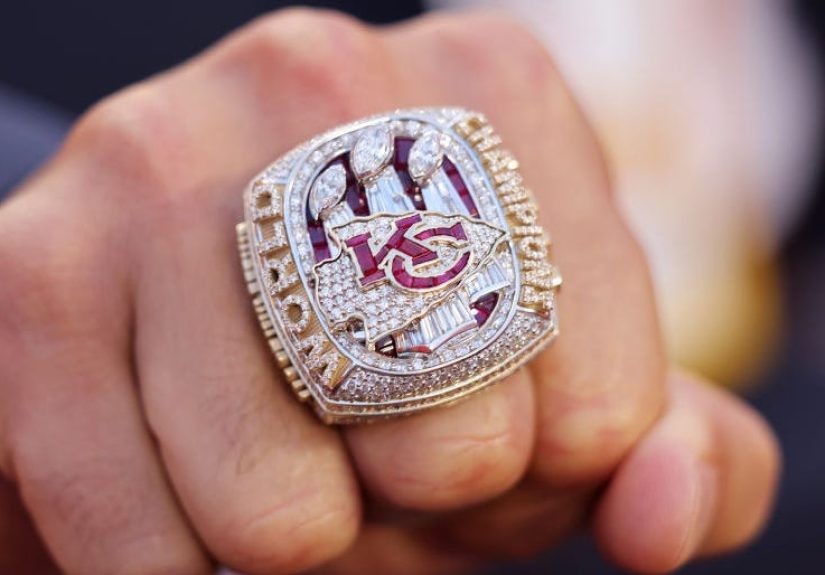
The Philadelphia Eagles’ Super Bowl LIX ring used 145 diamonds on the bezel to mark the team’s total playoff points. The Patriots’ Super Bowl LI ring famously used 283 diamonds as a wink to the legendary 28-3 comeback. The Chiefs and Rams have done the same thing, baking stats, dates, slogans, and milestones into the stone count. So yes, the sparkle is pretty. But it is also math with attitude.
6. Modern Super Bowl rings can open, twist, or literally pop apart
Once upon a time, a championship ring was basically a very fancy ring. Now some of them behave like luxury gadgets. The Rams’ Super Bowl LVI ring had a removable top that opened to reveal a miniature version of SoFi Stadium. The Chiefs’ Super Bowl LVIII ring used a hidden hinge system. The Eagles’ recent ring featured a push-button mechanism that released wings from the bezel.
If this all sounds slightly over the top, that is because it absolutely is. And that is part of the charm. Super Bowl ring design has moved far beyond simple engraving. Today, these rings are tiny engineering projects disguised as football jewelry.
7. Some rings contain actual pieces of the season
This may be the most “of course they did” fact on the list. Some modern rings do not just symbolize a title run. They physically include parts of it. The Rams’ Super Bowl LVI ring revealed a stadium interior under the top, and that hidden section included a piece of a Super Bowl game ball plus material made from remnants of the actual field turf used during the season.
That takes the phrase “keepsake” to a whole new level. It is not just a ring inspired by the season. It is a ring that is, at least in a tiny way, built from the season. Sports memorabilia collectors probably felt a disturbance in the force when that design was unveiled.
8. These rings have turned into gloriously oversized status symbols
Super Bowl rings have not exactly been on a diet. Over time, they have become bigger, heavier, and far more dramatic. The Patriots’ Super Bowl LIII ring was billed as the largest Super Bowl ring ever at the time. More recently, the Eagles’ Super Bowl LIX ring weighed a whopping 140 grams and packed in 12 total carats of diamonds.
At this point, wearing one probably feels less like putting on jewelry and more like giving your hand a job to do. But size matters in ring design because these pieces are supposed to feel monumental. Teams want them to look important, memorable, and impossible to confuse with a casual accessory from the mall.
9. The biggest player ring ever made belonged to William “Refrigerator” Perry
If you were wondering whether Super Bowl rings ever become absurdly large in a literal sizing sense, please meet William “Refrigerator” Perry. The Pro Football Hall of Fame notes that Perry’s Super Bowl XX ring was a size 23, making it the biggest Super Bowl ring ever manufactured.
For comparison, the average male ring size is around 10, and the average Super Bowl player ring size is around 13. So Perry’s ring was not just big. It was basically its own zip code. If any ring in history deserved its own entrance music, this one is a strong candidate.
10. There is not always just one version of a Super Bowl ring
Another overlooked detail: a championship team can have multiple ring versions. Player rings may be the most elaborate, but families, staff, and other recipients sometimes receive slightly different designs or smaller editions. A well-known example was the family version of Tom Brady’s Super Bowl LI ring, which had fewer diamonds and was about 10 percent smaller than the player version.
Teams have also expanded ring culture for fans. Some franchises, like the Chiefs, have offered limited-edition ring-inspired versions for the public. No, buying one does not mean you played nickel corner in the AFC Championship Game. But it does prove the ring has become more than an internal team award. It is now part of the broader business and mythology of being a champion.
11. Super Bowl rings can be worth a fortune
These are not only sentimental heirlooms. They can carry eye-watering price tags. Recent reporting around championship ring design has put some individual rings in the neighborhood of tens of thousands of dollars each, and entire ring sets for a team can climb into the millions. That helps explain why the rings are treated like a blend of artwork, jewelry, and high-end collectibles.
Then there is the resale market. Lawrence Taylor’s Super Bowl XXV ring sold at auction for $230,401, which shows just how much value a ring can carry when it is tied to an all-time great. In other cases, alternate or family versions have sold for even more. A Super Bowl ring is already expensive before nostalgia enters the chat. Add history, fame, and scarcity, and the numbers get very serious very fast.
12. Their afterlife can be just as wild as their design
You might think a Super Bowl ring spends eternity in a velvet box, occasionally emerging for family bragging rights and a well-timed Instagram photo. Sometimes, yes. Other times? Chaos. Rings have been lost, found, gifted, sold, and even reunited with their owners decades later. One famous Jets ring was reportedly lost while surfing and eventually recovered many years after the fact. That is not a sports trivia answer. That is a movie pitch.
And yes, even these ultra-carefully designed masterpieces are still made by humans. The Chiefs’ 2024 ring rollout sparked buzz over a typo controversy, proving that even championship jewelry is not immune to the occasional oops. Which, honestly, only makes the rings more fascinating. They are not frozen museum pieces. They have stories before, during, and after the celebration.
What Super Bowl Rings Really Represent
At first glance, a Super Bowl ring looks like a very expensive reward. That is true, but it is only part of the story. The best way to think about a Super Bowl ring is as a wearable archive. It records a season in symbols: scores, slogans, playoff routes, franchise history, and personal achievement. It also captures hierarchy, because who gets which ring says something about how an organization sees contribution and legacy.
That is why fans obsess over them. Rings are where football stops being temporary and turns permanent. The game ends. The parade ends. The highlights get replayed a thousand times. But the ring is the piece that survives as a physical reminder that a team really did climb the mountain and plant a ridiculously sparkly flag at the top.
The Experience of Super Bowl Rings: Why They Feel Bigger Than Jewelry
There is also a reason people who win Super Bowl rings talk about them with a very specific kind of awe. The experience is not just about the object itself. It is about when the ring shows up and what it unlocks emotionally. Months after the last whistle, after the parade is over and the interviews dry up, the ring ceremony brings the season rushing back. The nerves, the injuries, the endless meetings, the playoff grind, the confetti, the relief, the joy, the weird blur of it all. A ring does not just commemorate a title. It reactivates the whole memory.
For players, the experience seems to land on two levels at once. On one level, there is the obvious wow factor. These things are heavy, flashy, custom-built, and designed to make the wearer feel like a superhero with excellent hand accessories. On another level, the ring becomes a private shorthand for sacrifice. A veteran can look at a stone count and remember a brutal December road game. A coach can glance at an engraving and think of a game plan that finally worked. A staff member can see their name inside the band and know they were part of something that lives forever in franchise history.
For families, the experience is different but just as powerful. A ring is proof that all those missed holidays, late nights, relocations, and anxious Sundays led to something unforgettable. Even when a family member gets a different version from the players, the symbolism still hits hard. It says, “You were part of this too.” And in a sport where everyone loves talking about grit, that shared recognition matters more than people realize.
Fans experience Super Bowl rings in their own way as well. Most will never wear one, obviously, unless they accidentally become a backup long snapper. But fans still attach huge meaning to them because rings feel intimate. A trophy belongs to the team. A ring feels like it belongs to a person. It can be held up in a photo, worn to a banquet, shown off at an event, or passed down through generations. That makes the championship feel less abstract and more human.
There is also something deeply American about the whole ring phenomenon. It mixes sports mythology, luxury craftsmanship, storytelling, branding, and just a tiny bit of “go big or go home” energy. The result is a piece of jewelry that acts like a scrapbook with diamonds. It is sentimental and theatrical at the same time. It is sincere, but never shy.
That is why Super Bowl rings continue to fascinate people long after the game is over. They are not just about winning. They are about remembering how the win felt, who helped make it happen, and why one season mattered enough to turn into gold, gemstones, and legend. In the end, a Super Bowl ring is not just worn on a finger. It lives in stories. And for a sport built on stories, that might be the most valuable detail of all.