Table of Contents >> Show >> Hide
A corner pantry is one of those kitchen features that can make you feel wildly organized, even if your snack shelf says otherwise. It takes that awkward angle where cabinets usually go to die and turns it into useful storage, better flow, and a design moment that can actually look beautiful. Whether you are planning a full remodel, upgrading a builder-grade kitchen, or just trying to stop your cereal boxes from staging a hostile takeover, the right corner pantry ideas can make a big difference.
The best corner pantry designs do two jobs at once: they squeeze more function out of every inch and help the kitchen feel intentional rather than crowded. That means thinking beyond “add shelves and hope for the best.” A smart pantry layout considers visibility, accessibility, shelf depth, lighting, categories, containers, and yes, whether the door will smack into a cabinet every morning before coffee. Glamorous? Not exactly. Important? Absolutely.
Below, you will find 37 corner pantry ideas that blend storage, style, and real-life practicality. Some are perfect for small kitchens. Others work beautifully in large family homes. All of them are designed to help you organize food, hide clutter, and make your kitchen look a whole lot sharper without losing its personality.
Why Corner Pantries Work So Well
Corner pantries are popular for a simple reason: they turn an often-underused part of the kitchen into hard-working storage. In an L-shaped or U-shaped kitchen, a corner pantry can help free up base cabinets, reduce countertop clutter, and create a central home for dry goods, snacks, baking supplies, and small appliances. In larger kitchens, a walk-in corner pantry can function almost like a backstage area, keeping the main kitchen cleaner and calmer.
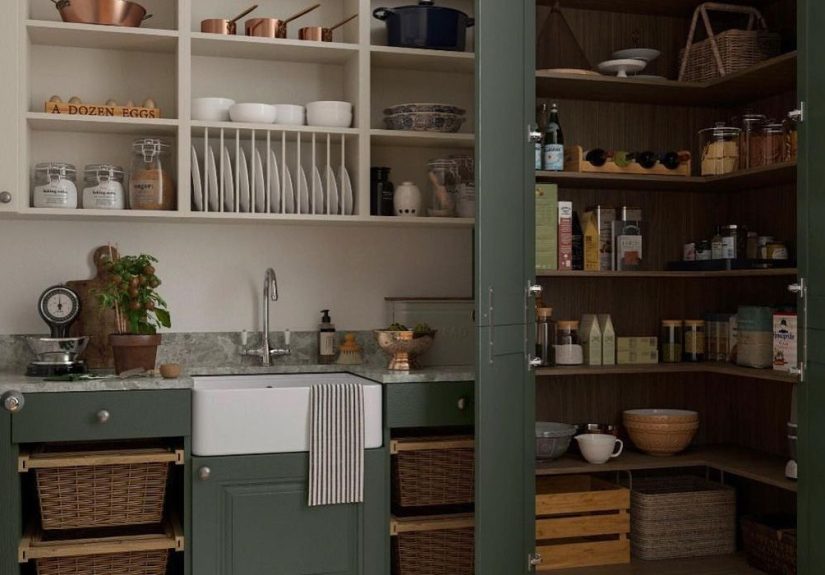
And style-wise, corner pantries are more flexible than people think. They can disappear behind matching cabinet doors, show off open shelving, feature a charming barn or pocket door, or become a statement nook with tile, paint, wallpaper, or warm wood shelving. In other words, they do not have to look like a broom closet that wandered into the kitchen by mistake.
37 Corner Pantry Ideas for a Smarter, Better-Looking Kitchen
Layout and Door Ideas
- Choose an angled corner pantry instead of a sharp 90-degree cabinet. An angled entry softens the kitchen layout and usually gives you easier access than deep corner cabinets that swallow pasta boxes whole.
- Hide the pantry behind matching cabinetry. If you want a sleek, built-in look, continue your kitchen cabinet finish across the pantry door so the storage blends right in.
- Install a glass-paneled door. Frosted or reeded glass keeps the pantry feeling light while still hiding the fact that your chip collection is thriving.
- Try a pocket door for tight kitchens. When every inch matters, a sliding door that disappears into the wall keeps traffic flowing and saves swing space.
- Use a barn door for rustic or modern farmhouse style. It adds personality fast and can turn a basic corner pantry into a focal point.
- Let the pantry door swing outward. This keeps the inside usable for shelving and avoids wasting storage space behind the door.
- Create a hidden walk-through pantry. In larger remodels, a full-height cabinet-style entry can disguise a pantry passage and make the kitchen feel polished and custom.
- Carve out a mini corner pantry from an alcove. Even a former laundry niche, awkward recess, or unused end wall can become a hardworking pantry zone with the right shelving.
Shelving and Storage Ideas
- Install floor-to-ceiling shelving. Vertical storage is the superstar of pantry design. The top shelves can hold backstock, party platters, or appliances you use less often.
- Vary shelf heights. One-size-fits-all shelving wastes space. Tall cereal boxes, short spice jars, and stand mixers do not need the same real estate.
- Use shallow shelves whenever possible. A deep shelf seems generous until everything disappears behind the vinegar. Shallow shelves keep items visible and easy to grab.
- Add pull-out drawers near the bottom. Lower storage becomes far more useful when drawers slide toward you instead of forcing you to crouch like a pantry archaeologist.
- Include rollout trays for bulky staples. Great for canned goods, oil bottles, lunch supplies, or backup jars of peanut butter that mysteriously vanish every school week.
- Use wire baskets for produce. Potatoes, onions, and garlic store well when they have airflow, and baskets add texture to the pantry at the same time.
- Set up a lazy Susan for hard-to-reach corners. The spinning shelf remains undefeated for oils, sauces, condiments, and other bottles that love hiding in the back.
- Add tiered risers for cans and jars. Stadium seating is not just for concerts. It also works beautifully for soup, beans, and tomato sauce.
- Use clear bins for categories. Snacks, baking ingredients, breakfast foods, pasta, and lunchbox items each get their own zone and stay easy to spot.
- Decant dry goods into matching containers. Flour, sugar, rice, cereal, and oats look tidier in uniform canisters and are easier to track before you accidentally buy your fourth bag of quinoa.
- Label everything. Containers, shelves, and bins all benefit from labels, especially in busy households where “put it anywhere” somehow becomes a lifestyle.
- Use vertical dividers for trays and cutting boards. This keeps flat items upright and prevents the dreaded avalanche every time you reach for a baking sheet.
- Store small appliances in the pantry corner. A blender, waffle maker, air fryer, or slow cooker can live there happily, freeing up precious cabinet and counter space.
- Add a built-in spice rack. Keep your most-used spices near eye level so you are not squinting at twelve identical jars while the onions burn.
Style-Forward Corner Pantry Ideas
- Paint the pantry a contrasting color. A bold shade inside the pantry adds surprise and charm without overwhelming the whole kitchen.
- Use wallpaper on the back wall. This works especially well in open or glass-front pantries, where a little pattern makes the storage feel decorated rather than purely utilitarian.
- Add a tile backsplash inside the pantry. If your corner pantry is visible from the kitchen, tile can elevate it from storage area to design feature.
- Bring in warm wood shelves. Natural wood softens white kitchens, adds texture, and keeps the pantry from feeling too clinical.
- Mix baskets and canisters. The combination feels layered and lived-in, with baskets hiding visual clutter and glass containers showing off the pretty stuff.
- Use matching bins for a calmer look. Visual consistency matters, especially in open pantry designs where everything is on display.
- Install under-shelf lighting. Good lighting makes the pantry easier to use and a lot more stylish. No one looks elegant searching for cinnamon in the dark.
- Add a small countertop inside the pantry. If space allows, a butcher block or stone counter creates a landing zone for groceries, coffee gear, or meal-prep overflow.
- Create a coffee or breakfast corner. Store mugs, cereal, toaster supplies, and coffee basics together so your morning routine feels less like a scavenger hunt.
- Use decorative containers for everyday snacks. Think glass jars, woven bins, or matte canisters that make granola bars look almost sophisticated.
Small Kitchen and Family-Friendly Ideas
- Make one shelf kid-friendly. Put grab-and-go snacks, lunch supplies, or breakfast items lower down so little helpers can actually help.
- Use the pantry door for extra storage. Over-the-door racks are perfect for spices, foil, wraps, packets, and small jars.
- Group food by routine, not just type. A breakfast zone, baking zone, taco night zone, and lunch-packing zone often work better than one giant shelf of randomness.
- Follow first in, first out. Put older items in front and newer purchases behind them to cut waste and avoid discovering expired crackers from another era.
- Leave a little breathing room. The prettiest pantry is not the one stuffed to the ceiling. A bit of open space makes it easier to maintain and easier on the eyes.
How to Choose the Right Corner Pantry Style
If your kitchen is compact, lean toward a shallow, well-organized pantry cabinet with rollout shelves, door storage, and adjustable shelving. If you have more square footage, a walk-in corner pantry can handle bulk groceries, platters, appliances, and overflow storage without crowding the main kitchen. If your style leans modern, consider flat-front doors, concealed storage, and color-matched cabinetry. If you love a more collected look, mix open shelves, baskets, wood, labels, and a little decorative flair.
The best design starts with your habits. Do you cook from scratch often? You may need a generous baking zone and room for bulk ingredients. Have a big family? Snack bins and easy-access lower shelves matter. Love countertop appliances but hate seeing them? A corner pantry with outlets can hide the toaster, coffee grinder, or mixer while keeping them accessible. The right pantry is not just beautiful. It fits the way your household actually lives.
Common Corner Pantry Mistakes to Avoid
The biggest mistake is treating a corner pantry like a storage black hole. Deep shelves with no zones, labels, or pull-outs become clutter magnets fast. Another common problem is ignoring door clearance. A gorgeous pantry is less impressive when the door blocks traffic or bangs into the fridge every day.
It is also easy to overbuild shelves for visual perfection and underbuild them for real life. Not everything belongs in matching jars. Some items do better in bins, some need baskets, and some deserve a plain old shelf where you can spot them instantly. Design the pantry to be used, not just admired for fourteen minutes after organizing day.
Real-Life Experiences With Corner Pantry Design and Organization
One of the most interesting things about corner pantry ideas is that people rarely appreciate them fully until they live with one. On paper, a pantry sounds like extra storage. In real life, it changes how the kitchen feels every single day. Homeowners often say the same thing after adding or improving a corner pantry: the kitchen suddenly gets quieter. Not literally, of course. The blender still roars, and someone will still ask where the crackers are. But visually and functionally, the room feels calmer.
That is because a well-planned corner pantry removes dozens of little irritations. The countertop is not buried under cereal boxes. The baking supplies are not packed three cabinets away from the mixing bowls. The snacks are not balanced on top of canned tomatoes in a weird edible game of Jenga. Instead, everything has a home. And once people experience that kind of order, they become a little evangelical about it. They start saying things like, “We should have done this years ago,” which is the universal language of a successful renovation.
Families especially tend to notice how a corner pantry helps routines. Mornings move faster when breakfast items live in one zone. School lunches become less chaotic when sandwich bags, snacks, and water bottles are all within easy reach. Dinner prep improves when oils, spices, and grains are organized in a way that makes sense. The pantry becomes less of a closet and more of a support system. A surprisingly attractive support system, if you add nice containers and decent lighting.
Another common experience is realizing that style matters more than expected. People often begin with a purely practical mindset: “I just want more storage.” But once the pantry is installed, they start caring about paint color, labels, baskets, and whether the canisters match. Why? Because the pantry becomes part of the kitchen experience. If it is visible, it affects how polished the whole room feels. If it is hidden, opening the door to a neat, attractive setup still gives that deeply satisfying “I have my life together” illusion, and honestly, that has value.
There is also a learning curve. Most homeowners tweak their pantry after living with it for a few weeks. Maybe the snack shelf needs to move lower. Maybe the lazy Susan works better for sauces than spices. Maybe the air fryer is too heavy for the top shelf unless you enjoy shoulder workouts. The lesson is simple: a corner pantry gets better when you adjust it based on daily habits rather than copying a showroom exactly. The prettiest pantry in the world is not nearly as helpful as one that works for taco night, birthday parties, and rushed Tuesday mornings.
In the end, the best corner pantry designs feel effortless, but they usually get that way through thoughtful choices and small real-life edits. That is what makes them so valuable. They are not just pretty storage zones. They make kitchens easier to use, easier to maintain, and more enjoyable to live in. Which is a pretty impressive job description for a corner of the room.
Conclusion
The best corner pantry ideas do not just stash groceries. They improve the way your kitchen works, looks, and feels. Whether you prefer a hidden pantry, an open styled nook, or a full walk-in corner setup, the winning formula is the same: smart layout, good visibility, flexible storage, and a little style. Add adjustable shelves, bins, pull-outs, lighting, and a layout that fits your routine, and that awkward corner can become one of the most useful spots in the house.
If you are planning a kitchen refresh, start with the corner you may have ignored before. It might be the exact place where space and style finally decide to get along.