




Table of Contents >> Show >> Hide
- Quick Jump
- Minimalism, in plain English
- 9 Things You'll Never Find in a Minimalist’s Home
- 1) Duplicate everything (a.k.a. the “backup of the backup” lifestyle)
- 2) An overflowing junk drawer that doubles as a time capsule
- 3) Piles of paper: unopened mail, mystery manuals, and receipts from 2017
- 4) Expired, half-used, and “I swear I’ll use this” products
- 5) A closet full of “someday” clothes
- 6) Single-purpose gadgets that looked genius at 2 a.m. online
- 7) Excess décor that collects dust and guilt
- 8) Freebies, promotional clutter, and “it was free, so it’s basically money” logic
- 9) Unbounded sentimental clutter (memories without a container)
- How to borrow the minimalist mindset (without living in an empty museum)
- of Real-Life Experiences: What Changes When the Stuff Leaves
- Final Thought
- SEO Tags (JSON)
If you’ve ever walked into a minimalist’s home and felt your shoulders drop two inches, you’re not imagining it.
A thoughtfully minimal space can feel calm, roomy, and oddly… polite. Like the house is saying, “Welcome. I will not
attack you with a pile of coupons.”
But let’s clear up a myth before we start tossing things into donation boxes like we’re on a game show:
minimalism isn’t about living in an empty white cube with one chair and a single, dramatic lemon on the counter.
It’s about intentionkeeping what supports your life and letting go of what quietly taxes your time, money, and attention.
Minimalism, in plain English
A minimalist home isn’t “less for the sake of less.” It’s “less of the things that don’t matter, so there’s more room
for the things that do.” That could mean clearer surfaces, fewer purchases you regret, and less time spent managing piles
of stuff that somehow reproduce when you’re asleep.
Minimalists tend to be picky in a very practical way: they want items to earn their spot. If something is rarely used,
hard to maintain, or only exists because of guilt (“Aunt Linda gave it to me in 2009…”), it’s on thin ice.
9 Things You’ll Never Find in a Minimalist’s Home
1) Duplicate everything (a.k.a. the “backup of the backup” lifestyle)
Minimalists aren’t anti-backup. They’re anti-panic-hoarding. There’s a difference between keeping a sensible spare
(like one extra phone charger) and running a private warehouse of “just in case” items.
In many homes, duplicates show up as:
- Four vegetable peelers (each slightly worse than the last)
- Seven nearly identical black t-shirts
- Three tape dispensers but no tape (a classic)
What minimalists do instead: They keep one solid version of the thing, maintain it, and replace it when needed.
If they love a tool, they buy quality. If they don’t, they don’t buy three more out of hope.
2) An overflowing junk drawer that doubles as a time capsule
Junk drawers are the Bermuda Triangle of households: batteries enter, batteries never return. Minimalists don’t usually
have a drawer where random objects go to avoid making decisions.
The minimalist issue with junk drawers isn’t moralit’s functional. If a drawer is packed, it stops being useful storage
and becomes a daily scavenger hunt.
What minimalists do instead: They create a small, intentional “catchall” area with limits. Think:
a tray for keys, a cup for pens, a labeled pouch for spare cords. The rule is simple: if it overflows, something leaves.
3) Piles of paper: unopened mail, mystery manuals, and receipts from 2017
Paper clutter is sneaky because it looks “important.” But most paper piles are a mix of junk mail, outdated coupons,
instruction manuals you can find online, and receipts you keep “just in case” (case of what, we never know).
Minimalists avoid paper piles because they create visual noise and mental load. If every time you walk by the counter
you think, “I should deal with that,” that’s not décor. That’s a tiny unpaid internship.
What minimalists do instead: They adopt a one-touch mindset: sort immediately (recycle, file, act),
opt into paperless billing when possible, and keep one designated spot for truly important documents.
4) Expired, half-used, and “I swear I’ll use this” products
Minimalists don’t stockpile things that quietly go bad: expired pantry items, ancient spices, crusty lotions,
makeup that’s seen too much, and cleaners bought for one specific moment of ambition.
This isn’t about being perfect. It’s about reducing the stuff you have to manage. If your bathroom cabinet is packed,
you’ll keep buying duplicates because you can’t see what you already have.
What minimalists do instead: They keep fewer, multipurpose favorites and restock intentionally.
Example: one everyday cleaner you actually like using beats five “specialty” sprays you avoid.
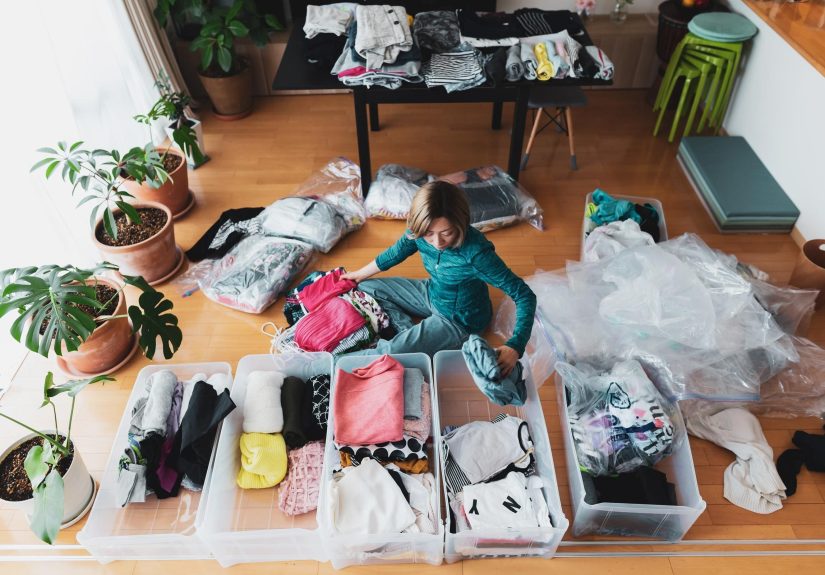
5) A closet full of “someday” clothes
Minimalists rarely keep piles of clothing that don’t fit, don’t match their current life, or don’t make them feel good.
The minimalist closet isn’t necessarily tinybut it is curated.
“Someday” clothes tend to fall into three categories:
- Someday size: “When I’m five pounds lighter, this will be perfect.”
- Someday lifestyle: “When I attend more galas… in my totally real gala life.”
- Someday repair: “When I finally hem this, it’ll be amazing.”
What minimalists do instead: They keep what fits and works now, and they’re okay repeating outfits.
Many also build mix-and-match “mini uniforms” (sometimes called a capsule wardrobe approach), so getting dressed takes
less time and less decision-making.
6) Single-purpose gadgets that looked genius at 2 a.m. online
Minimalists are suspicious of “unitaskers”items that do one narrow job and then live in a drawer forever.
(Yes, that includes the avocado slicer that promised to “change your life” and then changed nothing.)
Kitchens are a common hotspot: extra mugs, unused appliances, mismatched food containers, and tools you can’t even name
without Googling your own drawer.
What minimalists do instead: They prioritize versatile tools:
a chef’s knife, a sturdy cutting board, a few reliable pots/pans, and storage containers that stack neatly.
If an appliance isn’t used regularly, it usually doesn’t get prime real estate.
7) Excess décor that collects dust and guilt
Minimalists aren’t anti-beauty. They’re anti-clutter-disguised-as-decor. Too many knickknacks can make a room feel busy,
and busy can feel exhaustingespecially when you’re the one dusting 42 tiny objects that all have feelings.
Common “dust magnets” include:
- Decorative signs with motivational quotes you stopped noticing in 2019
- Bowls of potpourri that smell like a candle had a midlife crisis
- Too many throw pillows (when the couch looks like it’s wearing a pillow costume)
What minimalists do instead: They go for fewer, higher-impact pieces:
one large art print instead of a gallery of tiny frames; a plant with presence; a textured throw you actually use.
The space still feels personaljust not crowded.
8) Freebies, promotional clutter, and “it was free, so it’s basically money” logic
Minimalists are allergic to the phrase “I got it for free!” because “free” often comes with hidden fees:
storage space, cleaning time, and the slow creep of clutter.
This category includes:
- Conference tote bags multiplying like rabbits
- Random branded water bottles that leak
- Giveaway keychains, lanyards, and stress balls (ironic)
What minimalists do instead: They accept free items only if they’d pay for them.
If it’s not genuinely useful or meaningful, they politely pass.
9) Unbounded sentimental clutter (memories without a container)
Minimalists do keep sentimental itemsbut usually with boundaries. The issue isn’t the memory; it’s the volume.
When everything is sentimental, nothing can be displayed, enjoyed, or even found.
Sentimental clutter often shows up as:
- Boxes of childhood papers you haven’t opened in a decade
- Every greeting card ever received
- Gifts you keep out of obligation, not love
What minimalists do instead: They choose a “memory container” approach:
one bin per person, one shelf, one album, one shadow boxwhatever fits your life. The limit is the magic.
It forces curation, and curation brings the joy back.
How to borrow the minimalist mindset (without living in an empty museum)
You don’t have to become a minimalist to benefit from minimalist habits. Try these three questions the next time
you’re deciding what stays:
- Do I use it? If not, is there a realistic plan to start?
- Do I love it? Not “I feel bad getting rid of it”actual love.
- Does it support my life today? Not the fantasy version of my life with constant brunches and yacht invitations.
And if you want a simple rule to keep clutter from bouncing back: for many households, a “one in, one out” habit can help.
It’s not punishmentit’s just keeping your home’s inventory from quietly inflating like a balloon.
The big secret is that minimalism is less about the clean countertop and more about the decisions behind it.
Once you stop bringing in “maybe” items, you spend less time declutteringand more time living in the space you already have.
of Real-Life Experiences: What Changes When the Stuff Leaves
People often expect decluttering to feel like a dramatic makeover: one weekend, three trash bags, a triumphant “after” photo,
and suddenly your life is a montage with upbeat music. In reality, the most noticeable changes are smallerand they sneak up on you.
Someone clears a kitchen counter and then realizes, a week later, they’ve cooked more at home without even trying. Not because they became
a “new person,” but because the friction disappeared. When the space isn’t fighting you, you’re less likely to avoid it.
One common experience is the weird relief of having fewer choices. In closets, especially, people report that getting dressed becomes faster
when the “meh” clothes are gone. It’s not about wearing the same thing forever; it’s about removing the options that don’t really work:
the itchy sweater, the jeans that almost fit, the shirt you keep “for layering” but never actually layer. When what’s left is wearable,
matching becomes easier, mornings feel calmer, and outfit decisions stop being a tiny daily debate.
Another shift happens in the kitchen. Once duplicates and rarely used gadgets leave, cabinets start to feel like they’re cooperating.
People stop buying more food containers because they can finally see the ones they already own. Cooking can feel less like an obstacle course
when you’re not dragging out three appliances to find the one you actually use. Even cleanup changes: fewer items means fewer things to wash,
dry, and cram into drawers like you’re playing a high-stakes game of Tetris.
Minimalist-friendly homes also tend to reduce “visual reminders” of unfinished tasks. A pile of mail on the counter can feel like a blinking
notification you can’t clear. When paper gets handled quicklyor at least confined to one designated spotpeople often describe feeling less
mentally “behind.” It’s not that life becomes perfectly organized; it’s that the house stops shouting a to-do list at you every time you walk
through the room.
And then there’s the emotional part: letting go of guilt-based items. Many people keep gifts they don’t like, hobbies they abandoned,
or “aspirational” purchases that never matched their real routines. The experience of releasing those items can feel strangely freeing,
like admitting the truth out loud: “This isn’t me.” What replaces it isn’t emptinessit’s space that reflects who you actually are,
right now. A minimalist home, at its best, isn’t bare. It’s honest.
Finally, a small but powerful change: cleaning becomes easier. Not “fun,” exactlybut faster. When surfaces aren’t crowded, wiping them down
takes minutes, not a full production. People often say they feel more willing to tidy because tidying isn’t a multi-step excavation.
The house becomes easier to reset, which makes it easier to maintain, which makes it feel better to live in. That’s the quiet win:
less stuff, less effort, more peace.