Table of Contents >> Show >> Hide
- 1. When Consciousness Seems to Linger After Death
- 2. Telepathy Machines: Real Brain-to-Brain Interfaces
- 3. The Real-Life “Replicator”: 3D-Printed Human Tissues
- 4. The Walking Brewery: When Your Gut Makes Its Own Alcohol
- 5. Tiny “Water Bears” That Survive the Vacuum of Space
- 6. Humans Literally Glow in the Dark (You Just Can’t See It)
- 7. It Rains Diamonds on Distant Planets
- 8. CRISPR: The Real “Edit” Button for Human DNA
- 9. Zombie Ants: Fungi That Turn Insects into Puppets
- 10. Science Facts That Sound Like Bad Jokes (But Are True)
- Why Strange Science Stories Matter
- Experiences and Reflections: Living in a World Stranger Than Fiction
Every now and then, science publishes a result so bizarre that it feels less like a journal article and more like the plot twist in a late-night sci-fi movie.
That’s the spirit behind “10 Science Stories Even Weirder Than Fiction” – a Listverse-style countdown of discoveries that sound completely made up, yet are backed by serious labs, peer-reviewed papers, and very real people whose lives got a lot stranger thanks to science.
From bodies that brew their own beer to brains talking directly to other brains, these strange science stories show just how far reality stretches past our imagination.
Let’s dive into ten true scientific discoveries that prove “stranger than fiction” isn’t just a cliché – it’s practically a research category.
1. When Consciousness Seems to Linger After Death
For decades, near-death experiences (NDEs) were mostly dismissed as vivid hallucinations or comforting stories people tell after a medical emergency. Then large medical studies quietly started asking a scarier question:
what if some part of consciousness really does hang on after the heart stops?
The AWARE (AWareness during REsuscitation) project followed thousands of cardiac arrest patients in hospitals in the United States, the United Kingdom, and Austria. In one major study, 46% of survivors reported memories during cardiac arrest; about 9% described classic NDE-style experiences, and a smaller but chilling 2% reported detailed awareness of events in the room while they were clinically “dead.”
Follow-up work from teams such as NYU Langone has recorded brain activity patterns during CPR that look suspiciously like the neural signatures of wakeful consciousness. Patients later described structured, lucid experiences that matched those surges.
None of this “proves” an afterlife, and most researchers still lean toward brain-based explanations. But the idea that your brain might fire up into one last strange, hyper-aware state after your heart stops? That’s the kind of plot twist even a horror writer might have toned down for being too much.
2. Telepathy Machines: Real Brain-to-Brain Interfaces
Telepathy shows up everywhere in fiction: wizards, mutants, and aliens all casually beam thoughts into each other’s heads. In real life, nobody is reading your private inner monologue (thankfully), but scientists have already built devices that send information directly from one human brain to another.
At the University of Washington, researchers created a non-invasive brain-to-brain interface that let pairs of people play a “20 Questions”-style game using only neural activity. One person wore an EEG cap to record brain signals; the other wore a device that stimulated their brain using magnetic pulses. By combining these with a computer in the middle, the sender’s brain activity could trigger movements or responses in the receiver’s brain and body.
Earlier experiments at the same lab showed one person could control another’s hand with just their thoughts – essentially a very small, very polite mind-control demo.
This is nowhere near sci-fi telepathy. You need bulky gear, computers, and a lot of calibration. But the basic idea – sending information directly from one brain to another over the internet – is no longer fiction. It’s in the methods section of actual scientific papers, which somehow feels even creepier.
3. The Real-Life “Replicator”: 3D-Printed Human Tissues
In Star Trek, the replicator casually creates meals, tools, and spare parts out of thin air. We’re not printing full starships (yet), but 3D bioprinting labs are developing something almost as wild: machines that print living tissue and, eventually, replacement organs.
Researchers have hacked ordinary 3D printers – including consumer models like MakerBot Replicators – and converted them into bioprinters capable of extruding living cells in complex patterns. Using specialized “bioinks,” scientists can print tiny scaffolds of cartilage, miniature livers, vascular tissue, and experimental organ models for drug testing.
Reviews of the field describe how these printed structures are inching toward more complex hollow organs such as tracheas, blood vessels, and even early prototypes of organ analogs that could one day function inside the body.
For now, bioprinting is mostly used for research models, but the direction is clear. We’re literally teaching machines to “print” pieces of ourselves. If a sci-fi writer had pitched this 40 years ago, it might have sounded corny. Today, it’s a serious medical strategy for future transplant shortages.
4. The Walking Brewery: When Your Gut Makes Its Own Alcohol
One of the original Listverse entries described a “walking brewery” – someone whose body spontaneously brewed alcohol. It sounds like a drunk-driver’s excuse, but auto-brewery syndrome (ABS) is a real, documented medical condition.
In ABS, certain yeast or bacteria in the gut ferment carbohydrates into ethanol. That means bread, pasta, or pizza can push blood alcohol levels into legal DUI territory, even if the person hasn’t touched a drink. Case reports describe patients stumbling, slurring, and failing breath tests simply because their microbiome decided it was happy hour.
In 2024, a Belgian man was acquitted of drunk-driving charges after three independent doctors confirmed he had auto-brewery syndrome. His body was literally making alcohol on its own – a defense so unbelievable that courts needed expert testimony to accept it.
ABS is rare, but it raises a weirdly philosophical question: if your microbes are the ones “drinking,” who’s actually responsible for the hangover?
5. Tiny “Water Bears” That Survive the Vacuum of Space
Tardigrades – also known as water bears or moss piglets – look like the mascots of a very strange children’s show. In reality, they’re microscopic, eight-legged extremophiles that treat lethal environments the way most of us treat mild inconveniences.
In 2007, the European Space Agency launched thousands of tardigrades into low Earth orbit on the FOTON-M3 mission. Some of them were exposed directly to the vacuum of space and intense cosmic radiation for days. When they were brought back to Earth and rehydrated, a significant portion simply woke up and carried on with their microscopic lives, some even producing healthy offspring.
Later outreach summaries have cheerfully pointed out that tardigrades have survived all five of Earth’s mass extinctions and seem ready to shrug off almost anything – radiation, freezing, pressure, dehydration, and, yes, outer space.
If humanity ever wipes itself out, there’s a decent chance the last survivors will be tardigrades quietly minding their business on a bit of moss. Somewhere, an alien archivist will file them under “invincible potato-sausages.”
6. Humans Literally Glow in the Dark (You Just Can’t See It)
Fiction loves glowing auras and radiant heroes. Real life is less dramatic… but not completely dark. It turns out human bodies emit an ultra-faint visible light, a natural bioluminescence that peaks in the late afternoon and dips at night.
Japanese researchers used ultra-sensitive cameras to photograph volunteers sitting in complete darkness. The images revealed a dim, fluctuating glow produced by normal metabolic processes – specifically, biochemical reactions involving free radicals and reactive oxygen species. The emitted light is roughly 1,000 times too faint for the human eye to detect, which is why we don’t see glowing people walking around.
Recent studies have extended the idea to other animals and plants, measuring ultra-weak photon emissions as subtle indicators of cellular stress and health. Some experiments even show the light fading after death, suggesting that this barely visible glow might be a tiny, literal “spark of life.”
So no, you don’t shine like a comic-book superhero. But scientifically speaking, your body is always shimmering – just at a level that requires a PhD, a dark room, and a seriously expensive camera to appreciate.
7. It Rains Diamonds on Distant Planets
Weather forecasts on Earth: rain, snow, maybe hail. On some giant planets in our solar system, the long-range outlook might include “diamond showers.”
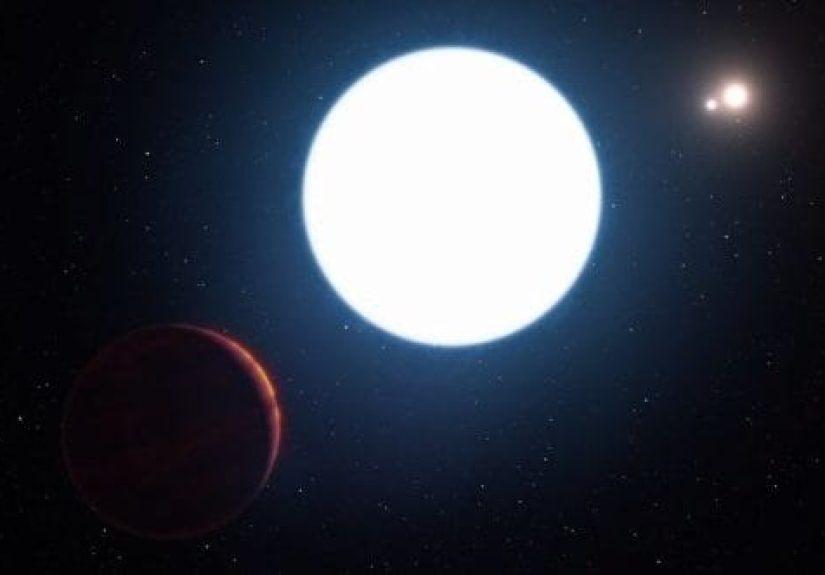
Models of Saturn, Jupiter, Uranus, and Neptune suggest that deep in their atmospheres, intense pressure and lightning storms can transform carbon-rich molecules into solid carbon and then into diamonds. Methane gets zapped into soot, soot is crushed into graphite, and graphite is squeezed into diamond crystals that may fall like hail through alien skies.
NASA outreach has leaned into this delightfully absurd image, describing how temperature and pressure at certain depths are just right for carbon atoms to be compressed into diamonds – potentially forming entire layers or “rains” of the stuff.
Somewhere out there, it may literally be raining diamonds, and we’re still losing earrings down the bathroom sink.
8. CRISPR: The Real “Edit” Button for Human DNA
If you pitched a story where doctors cure genetic disease by opening your cells’ DNA in a text editor and fixing a typo, someone would tell you to tone down the metaphor. Then CRISPR-based medicine showed up and essentially did exactly that.
CRISPR/Cas9 works like molecular scissors guided by a programmable GPS code. In late 2023, the U.S. Food and Drug Administration approved Casgevy, the first CRISPR-based therapy, for people with sickle cell disease and transfusion-dependent beta thalassemia. Doctors edit a patient’s own blood stem cells, then return them to the body so they can start producing healthy red blood cells.
The CRISPR revolution didn’t stop there. In 2025, a nine-month-old baby with a rare metabolic disorder became the first person successfully treated with a fully personalized CRISPR therapy targeting his unique mutation. He went from life-threatening illness to thriving infant, thanks to customized genome editing.
Risks and ethical questions remain – off-target edits, cost, and access are major concerns – but at a technical level, medicine has crossed a line: we’re no longer just treating symptoms, we are literally rewriting the underlying biological story.
9. Zombie Ants: Fungi That Turn Insects into Puppets
Zombie stories are everywhere, but very few of them feature fungi with excellent timing and disturbingly good biomechanics.
Certain species of the parasitic fungus Ophiocordyceps infect tropical carpenter ants, then slowly hijack their bodies. The fungus manipulates the ant’s behavior, steering it away from the colony and up to a specific height on vegetation where temperature and humidity are ideal. The ant clamps down in a “death grip,” dies, and then the fungus erupts from its body to shower spores onto the forest floor – right where other ants are likely to walk.
Microscopic imaging shows fungal filaments essentially forming a network throughout the ant’s body, controlling muscles while leaving parts of the brain intact – a kind of partial hijack that’s more precise and disturbing than the typical zombie movie infection.
So the next time someone says “zombies could never happen,” you can gently reply, “They already did. We just happen not to be ants.”
10. Science Facts That Sound Like Bad Jokes (But Are True)
Some science stories don’t need exotic technology or alien planets – the plain facts are weird enough on their own.
For example, estimates suggest there are more trees on Earth – around 3 trillion – than there are stars in the Milky Way, which is thought to contain 100–400 billion stars.
Bananas are mildly radioactive because they contain potassium-40, a naturally occurring isotope. You’d need to eat absurd amounts of them for it to matter, but technically, your fruit bowl is giving off measurable radiation. Your stomach constantly replaces its own lining because the acid is strong enough to digest you if it didn’t.
These oddities don’t carry the drama of brain interfaces or diamond rain, but they quietly remind us that everyday reality is already running on rules that feel like the punchline to a nerdy joke.
Why Strange Science Stories Matter
It’s tempting to treat stories like these as clickbait curiosities, but they serve a deeper purpose. Each one pushes against the edges of what we assume is possible.
Near-death studies force medicine to rethink where the boundary between life and death actually lies. Brain-to-brain interfaces, bioprinted tissues, and CRISPR therapies are early steps toward technologies that could redefine communication, disability, and disease. Tardigrades, zombie ants, and ultra-faint human bioluminescence show how much we still don’t understand about even “simple” organisms and basic biology.
More importantly, these stories train our curiosity. They remind us that science is not just a collection of dry facts – it’s a living, evolving process that routinely produces results no novelist would dare to invent without being accused of going too far.
Experiences and Reflections: Living in a World Stranger Than Fiction
Think about what it’s like to be the people inside these stories.
Imagine you’re the patient with auto-brewery syndrome who keeps failing breath tests despite not drinking. At first, friends, family, and even police officers might assume you’re lying. Your symptoms – dizziness, slurred speech, fatigue – look exactly like classic intoxication. Only after months or years of confusing appointments does a specialist finally run the right tests and discover your gut microbes are turning carbs into alcohol. Suddenly your life becomes a mix of low-carb diet plans, microbiome treatments, and the strange knowledge that your intestines are better brewers than most hobbyists.
Or picture the researchers working on brain-to-brain interfaces. Day to day, it’s cables, gel, debugging code, and troubleshooting faulty electrodes. But every so often, they run a successful trial where one person’s thoughts trigger another person’s movement or help them guess an answer in a game. In that moment, they’re watching the first crude version of something humanity has told stories about for thousands of years: direct mind-to-mind communication. That realization is equal parts exhilarating and unnerving.
Doctors researching near-death experiences face a different kind of emotional weight. They spend their days in ICUs and operating rooms, watching patients hover at the edge of life. When survivors report clear memories or structured experiences during cardiac arrest, the medical team has to hold two ideas at once: the clinical reality of oxygen levels, brainwaves, and CPR protocols, and the deeply human stories of tunnels, lights, loved ones, or vivid scenes from the resuscitation itself. Whether those experiences are brain-generated or something more, they clearly matter to the people who have them – shaping how they think about mortality, purpose, and fear.
Then there are the space scientists and astrobiologists who get to casually talk about diamond rain and space-proof water bears as part of their job. For them, modeling exotic planetary atmospheres or studying tardigrades isn’t just about cool trivia; it’s about testing the limits of where life can exist and what kinds of worlds might be habitable. Yet the side effect is that they regularly have to tell the public things like, “Yes, it might literally rain diamonds on Neptune,” and “No, we did not accidentally create an unkillable monster in orbit – that’s just how tardigrades roll.”
Even in clinical genetics labs, CRISPR has turned routine work into something that feels like responsible science fiction. Teams now meet with families who have watched generation after generation struggle with the same inherited disease. Instead of saying, “We can help manage symptoms,” they can sometimes say, “We might be able to fix the underlying mutation.” The pressure is enormous: every decision carries ethical, medical, and emotional weight. Successes feel almost miraculous. Setbacks hurt on a deeply personal level.
For the rest of us, encountering these stories online can be a surprisingly meaningful experience. One person reads about ABS and finally has language for a mysterious health issue. Another stumbles across an article on NDE research and feels comforted rather than terrified by the idea of death. A student sees diamond rain and tardigrades and decides that maybe physics or biology isn’t as boring as their textbook made it seem.
That’s the hidden power of science stories that are “weirder than fiction”: they don’t just entertain us. They change how we see our bodies, our planet, and our future. They remind us that the universe is under no obligation to behave in ways that fit our expectations – and that’s exactly what makes exploring it so compelling.
So the next time you scroll past a headline that sounds too wild to be true, pause before you dismiss it. Somewhere behind that clickbait might be a lab, a patient, and a stack of data quietly proving that reality is still outpacing our imagination.