Table of Contents >> Show >> Hide
- Why the San José Is Called the Holy Grail of Shipwrecks
- What Has Been Recovered So Far?
- How Do You Extract a Shipwreck Nearly 2,000 Feet Underwater?
- The Legal Battle: Who Owns the San José?
- Why the San José Matters Beyond the Billions
- Treasure Hunting vs. Archaeology: The Big Difference
- The Technology Behind the Mission
- The Human Side of the San José
- What Happens Next?
- Experiences and Lessons From the Holy Grail of Shipwrecks
- Conclusion: The Treasure Is Only the Beginning
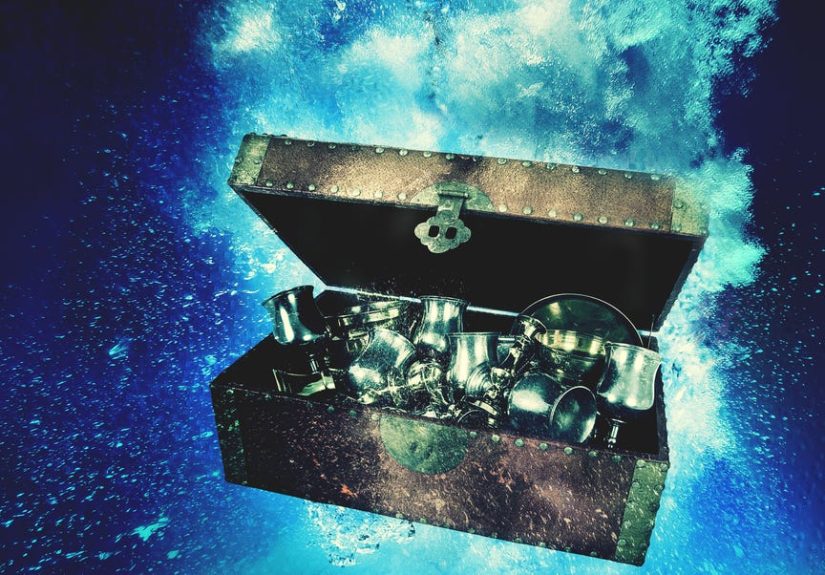
For more than 300 years, the Spanish galleon San José rested in the dark Caribbean like history’s most expensive secret. Somewhere off the coast of Cartagena, Colombia, nearly 2,000 feet below the waves, the ship lay scattered across the seafloor with cannon, porcelain, coins, timber, rope, and the kind of rumored treasure that makes treasure hunters suddenly develop very strong opinions about maritime law.
Now, after centuries of legend and a decade of modern investigation, Colombian scientists have begun recovering the first objects from the wreck. The early haul is small but spectacular: a bronze cannon, three coins, a porcelain cup, porcelain fragments, wood, rope, and sediment samples. That might sound modest compared with the ship’s legendary cargo of gold, silver, emeralds, and millions of coins, but in archaeology, a cup can sometimes shout louder than a chest of jewels.
The San José has been called the “Holy Grail of shipwrecks” because it combines nearly every ingredient of a blockbuster: war, empire, treasure, technology, international lawsuits, national pride, Indigenous claims, and a location so sensitive that Colombia keeps it classified. But the real story is not simply “Who gets the gold?” It is about how the modern world decides what to do with the remains of a colonial past sitting quietly at the bottom of the sea.
Why the San José Is Called the Holy Grail of Shipwrecks
The San José was a Spanish treasure galleon that sank in 1708 during the War of the Spanish Succession. At the time, Spain was fighting to protect its empire and fund its military ambitions. The ship was traveling as part of the Tierra Firme Fleet, carrying wealth extracted from Spanish-controlled territories in the Americas.
The cargo is believed to have included gold, silver, emeralds, and millions of coins. Estimates vary widely, but many reports place the possible modern value in the billions of dollars, with some figures reaching roughly $17 billion or more. That number should be handled carefully, because treasure estimates are part math, part market speculation, and part “wouldn’t this make a fantastic headline?” Still, no one disputes the central fact: this is one of the most valuable and historically important shipwrecks ever found.
A Warship, Not a Pirate Chest
It is tempting to imagine the San José as a floating bank vault with sails. In reality, it was also a warship. The galleon carried dozens of cannon and hundreds of people. When it encountered an English squadron near Barú, close to Cartagena, the confrontation turned deadly. The prevailing historical theory is that the ship exploded during battle, possibly after its powder magazine ignited. Colombian researchers have also raised the possibility that hull damage or other structural factors may have contributed to the sinking.
The disaster was catastrophic. Hundreds died. That fact matters. The San José is not only a treasure site; it is also a grave, a battlefield, and a preserved fragment of the colonial world. Any serious article about the ship has to hold those truths together: yes, the treasure is dazzling, but the human story is heavier than gold.
What Has Been Recovered So Far?
The first recovery phase has focused on selected artifacts that can help researchers understand the wreck, its cargo, and the circumstances of its sinking. Colombian authorities have displayed several objects recovered by underwater robots, including a cannon, three coins, and a porcelain cup. These are not random souvenirs lifted for a museum gift shop. They are evidence.
The cannon may help researchers study the ship’s armament, manufacturing methods, and battlefield damage. The porcelain cup and fragments may reveal trade patterns and the social life of people aboard. The coins are especially important because coins are excellent historical timestamps. A coin does not merely say, “I am shiny.” It says where it was minted, when it was produced, whose authority backed it, and how global trade moved through imperial networks.
Why Three Coins Can Matter More Than a Mountain of Treasure
Researchers studying coins associated with the wreck have identified hand-struck pieces known as cobs, or macuquinas in Spanish. These irregular coins were widely used in the Americas for centuries. Some coins tied to the site appear to have been minted in Lima in 1707, a detail that strongly supports the identification of the wreck as the San José. Since the ship sank in 1708, coins from 1707 fit the timeline almost too perfectly, like a historical fingerprint with a little saltwater on it.
For archaeologists, this is where the magic happens. The public may ask, “How much is it worth?” Researchers ask, “What does it prove?” In the case of the San José, the coins help confirm the ship’s identity, connect the wreck to documented colonial trade routes, and reveal how precious metals moved from mines in South America to ports, fleets, royal treasuries, and European wars.
How Do You Extract a Shipwreck Nearly 2,000 Feet Underwater?
Recovering objects from the San José is nothing like scooping coins out of a swimming pool. The wreck lies about 600 meters, or nearly 2,000 feet, below the surface. At that depth, human divers cannot simply swim down with a flashlight and a tote bag. The work depends on advanced marine technology, including remotely operated vehicles, high-resolution cameras, robotic arms, sonar mapping, and photogrammetry.
Photogrammetry is especially useful because it allows researchers to build detailed 3D models from overlapping images. Instead of disturbing the wreck first and asking questions later, archaeologists can map the site, study the position of objects, and decide what should be recovered, what should remain in place, and what needs more documentation.
Why Careful Mapping Comes Before Recovery
In underwater archaeology, location is information. A coin sitting beside a cannon, a ceramic cup near a hull fragment, or a cluster of objects around a collapsed section of the ship can reveal how the vessel broke apart, what was stored where, and what happened in its final moments. Remove objects without context, and the site becomes a very expensive junk drawer.
That is why Colombian officials have emphasized research rather than treasure seizure. The goal is to study, conserve, and interpret the wreck. The recovered items are expected to undergo conservation in specialized labs, because artifacts that have spent centuries underwater cannot simply be dried off and placed under a spotlight. Salt, pressure, corrosion, and biological activity all leave their mark. Conservation is slow, technical, and absolutely necessary.
The Legal Battle: Who Owns the San José?
The San José is not only an archaeological site. It is also a legal maze wearing a captain’s hat. Colombia claims the wreck as part of its submerged cultural heritage. Spain has argued that the ship was a Spanish state vessel and should be treated as a sovereign warship and underwater grave. Sea Search Armada, a U.S.-linked group, has claimed rights connected to earlier discovery efforts. Indigenous groups from Bolivia have also raised claims, arguing that their ancestors extracted much of the wealth under brutal colonial conditions.
This makes the San José a global case study in underwater cultural heritage. The question is not just who found the wreck, or who can physically reach it, or who has the best lawyers. The deeper question is whether treasure from colonial extraction should be treated as private property, national patrimony, shared heritage, or evidence of historical injustice.
Why the Ownership Debate Is So Complicated
Shipwreck law can involve national waters, sovereign immunity, salvage rights, archaeological ethics, and international conventions. Add colonial history, billion-dollar estimates, and emotional claims from several countries and communities, and suddenly the seafloor looks less peaceful.
Colombia’s position centers on cultural heritage and scientific research. Spain’s position emphasizes the status of the vessel as a state ship and the lives lost onboard. Indigenous claimants point to the origin of the metals and the labor systems that extracted them. Treasure hunters focus on discovery, risk, investment, and recovery rights. Each argument reveals a different way of understanding history: as property, as memory, as evidence, as inheritance, or as a wound that never fully closed.
Why the San José Matters Beyond the Billions
The treasure is the headline, but the history is the story. The San José can help scholars better understand transatlantic trade, colonial finance, naval warfare, shipbuilding, global ceramics, coin circulation, and the lived experience of people aboard an early 18th-century galleon.
Objects from the wreck may reveal where materials came from, how they were manufactured, and how they moved across oceans. Porcelain could point toward Asian trade networks. Coins can connect Peru, Panama, Cartagena, and Europe. Cannon can reveal military technology and casting practices. Wood and rope can preserve clues about ship construction, repair, and life at sea.
The Ship as a Time Capsule
A shipwreck is a violent kind of time capsule. Unlike an ordinary archaeological site that may be used, abandoned, reused, and disturbed over generations, a wreck can preserve a single catastrophic moment. The San José sank suddenly. That means its debris field may capture a frozen snapshot of imperial logistics, naval design, warfare, wealth, and human loss.
Of course, the ocean does not preserve everything politely. Currents move objects. Sediment covers and reveals them. Metal corrodes. Wood decays or survives depending on conditions. Marine life moves in, because even history becomes real estate underwater. Still, the site offers an extraordinary opportunity to study a world that shaped the modern Americas.
Treasure Hunting vs. Archaeology: The Big Difference
The phrase “lost treasure” makes people imagine gold bars, dramatic music, and someone yelling, “We found it!” while wearing a suspiciously clean adventure vest. Archaeology is different. It is slower, less cinematic, and far more useful. Treasure hunting usually asks what can be recovered and sold. Archaeology asks what can be learned and preserved.
NOAA and other heritage-focused institutions emphasize that underwater archaeology depends on documentation, context, conservation, and long-term stewardship. A coin ripped from the seabed without its location, surrounding sediment, associated objects, and conservation plan loses much of its scientific value. It may still be shiny, but it becomes a quieter witness.
Why “Leave It in Place” Can Be the Smartest Move
Sometimes the best way to protect a wreck is to leave much of it where it is. In situ preservation keeps artifacts in their archaeological context and avoids the enormous conservation burden that comes with recovery. Every object brought up from the deep sea must be stabilized, studied, stored, and protected. Raising history is not a one-day victory; it is a permanent responsibility.
That is why the San José operation is being watched so closely. If Colombia can balance careful recovery with scientific transparency and ethical stewardship, the project may become a model for deep-water archaeology. If it turns into a fight over glittering cargo, it risks becoming another cautionary tale about how quickly heritage can be reduced to a price tag.
The Technology Behind the Mission
Modern deep-sea archaeology is powered by tools that would have seemed like sea magic to 18th-century sailors. Autonomous underwater vehicles can survey huge areas. Remotely operated vehicles can hover over fragile sites and collect high-definition imagery. Robotic arms can lift objects with a level of precision that human hands cannot provide at such depths.
The San José was identified in 2015 with help from advanced underwater search technology, including the REMUS 6000 autonomous underwater vehicle. This kind of machine can map the seabed, capture images, and operate at depths far beyond conventional diving. In other words, the ship was not found by a guy squinting over the side of a boat. It was found through ocean science, engineering, and a lot of patient survey work.
Robots Are Changing Maritime History
Robotic exploration does not replace archaeologists; it extends their reach. It allows experts to study dangerous, deep, or fragile sites without putting people at risk or immediately disturbing the wreck. The result is a more cautious and data-rich approach to the past.
That matters because the deep ocean is one of the least accessible archives on Earth. Thousands of wrecks remain undiscovered, and many hold stories about migration, trade, war, slavery, exploration, and everyday life. The San José is famous because of its treasure, but the same technology used there can also help document wrecks that have no billion-dollar cargo at all, only stories waiting in the dark.
The Human Side of the San José
Lost treasure stories often turn people into background scenery. But the San José carried sailors, officers, soldiers, workers, and passengers. Most did not survive. Their lives should not be treated as a footnote to the value of the cargo.
There is also a broader human story behind the treasure itself. Much of the wealth carried by Spanish fleets came from colonial systems that depended on exploitation, forced labor, and extraction from Indigenous lands. When Indigenous groups today argue that they deserve recognition in the San José debate, they are not simply asking for a slice of treasure. They are challenging the world to remember how that treasure was created.
History Is Not Neutral Just Because It Is Underwater
The sea can hide evidence, but it does not erase responsibility. The San José forces governments, researchers, and the public to confront uncomfortable questions. Who benefits from recovered heritage? Who gets to tell the story? How should museums present objects tied to empire and forced labor? Can treasure be celebrated without glorifying the system that produced it?
These questions do not make the story less fascinating. They make it richer. The San José is not merely a shipwreck with a big price tag. It is a conversation between the past and the present, and the present has some explaining to do.
What Happens Next?
The next stages will likely involve more mapping, conservation, analysis, and debate. Researchers will study the recovered objects in labs, compare findings with historical records, and decide whether additional recovery is justified. Colombian authorities have also discussed long-term plans for conservation and public display, potentially giving future visitors a chance to understand the wreck as a cultural and historical site rather than a glittering rumor.
The legal disputes are unlikely to disappear quickly. When billions of dollars, national identity, colonial memory, and international law collide, nobody wraps things up neatly before lunch. Still, the careful recovery of the first artifacts marks a major turning point. The San José is no longer only a legend, a lawsuit, or a sonar image. Pieces of it are now back in human hands.
Experiences and Lessons From the Holy Grail of Shipwrecks
The story of the San José offers more than a dramatic headline. It offers a set of experiences and lessons for travelers, history lovers, students, museum visitors, researchers, and anyone who has ever looked at the ocean and wondered what is hiding beneath it.
1. Visit Maritime Museums With Better Questions
After learning about the San José, a museum visit feels different. A cannon is no longer just a cannon. A coin is no longer just a coin. A ceramic cup is not just “old tableware with better posture.” Each object becomes a clue. Where was it made? Who used it? How did it travel? What system moved it from one continent to another? What happened to the people connected to it?
The best experience a reader can take from this story is curiosity. Instead of walking through a museum and asking only, “Is this valuable?” ask, “What does this object know?” That shift turns history from a display case into a detective story.
2. Respect Shipwrecks as Cultural Heritage
The San José also teaches an important lesson about respect. Shipwrecks are not underwater shopping aisles. They can be graves, scientific sites, cultural landmarks, and fragile ecosystems. Even when a wreck seems abandoned, it may be protected by law and meaningful to communities, nations, and descendants.
For recreational divers, beach explorers, and ocean enthusiasts, the takeaway is simple: look, learn, document responsibly, and do not disturb artifacts. The most exciting discovery is not always the thing you bring home. Sometimes it is the story you help preserve by leaving evidence where it belongs.
3. Understand That Treasure Has a Backstory
The word “treasure” sounds glamorous, but the San José reminds us that wealth often carries a complicated past. The gold and silver linked to Spanish colonial fleets did not appear magically in a royal warehouse. It came from mines, labor systems, taxation, empire, and violence. Understanding that context does not ruin the wonder of the discovery. It makes the wonder more honest.
This is especially useful for writers, bloggers, teachers, and content creators covering the topic. The most responsible storytelling does not flatten the San José into a “billions in gold” headline. It gives readers the sparkle and the shadow.
4. Appreciate the Patience of Real Science
Modern audiences love instant reveals, but underwater archaeology moves slowly for good reason. The San José was found in 2015, yet the first recovered objects surfaced only after years of mapping, planning, legal wrangling, and technical preparation. That timeline may seem painfully slow, but careful science is not procrastination. It is protection.
Every artifact raised from the deep sea needs conservation. Every movement on the wreck site can change the evidence. Every decision has legal and ethical consequences. The patience behind the San José project is part of what makes it important.
5. Let the Story Inspire Responsible Adventure
You do not need a submarine, a robot, or a disputed billion-dollar wreck to experience the thrill of maritime history. You can read ship logs, visit coastal forts, explore public maritime museums, watch ocean exploration footage, study old maps, or learn how archaeologists use sonar and photogrammetry. The safe and legal side of discovery is still full of wonder.
The San José proves that the ocean is not empty space. It is a library, a cemetery, a battlefield, a trade route, and a memory bank. The best experience related to this shipwreck is not dreaming about getting rich. It is realizing that history is still out there, waiting to be understood with patience, humility, and a very healthy respect for saltwater.
Conclusion: The Treasure Is Only the Beginning
The recovery of artifacts from the San José marks one of the most fascinating moments in modern underwater archaeology. A ship that sank in 1708 with a legendary cargo is finally beginning to speak through coins, porcelain, cannon, wood, rope, and sediment. The billions in rumored treasure may be what grabs attention, but the deeper value lies in what the wreck can teach about empire, trade, technology, war, exploitation, and memory.
The “Holy Grail of shipwrecks” is not just a prize waiting to be claimed. It is a test. Can modern society treat an extraordinary wreck as heritage rather than loot? Can science guide the recovery? Can nations and communities share a painful and valuable past without turning it into a race for gold? The answers are still unfolding, one carefully recovered artifact at a time.