Table of Contents >> Show >> Hide
- Who Was Ignaz Semmelweis?
- The Hospital Mystery That Changed Medicine
- The Chlorinated Lime Breakthrough
- Why Did Doctors Reject Semmelweis?
- What Semmelweis Got Right Before the World Was Ready
- How to Wash Your Hands the Right Way
- Why Handwashing Still Matters Today
- The Semmelweis Lesson: Evidence Can Be Uncomfortable
- Everyday Examples: Where Semmelweis Still Shows Up
- Experiences Related to Ignaz Semmelweis and Why We Wash Our Hands
- Conclusion
Handwashing feels so ordinary today that it is easy to underestimate it. We do it before dinner, after using the bathroom, after touching a sticky shopping cart, and after shaking hands with someone who clearly believes tissues are optional. Yet this simple habit has one of the most dramatic origin stories in medical history. Long before “wash your hands” became a classroom poster, a hospital rule, and a public health slogan, one doctor noticed that clean hands could mean the difference between life and death.
That doctor was Ignaz Semmelweis, a Hungarian physician whose work in the 1840s helped change medicine forever. He did not have microscopes powerful enough to explain every germ. He did not have modern antibiotics, hospital disinfectants, or infection-control committees with laminated badges. What he had was curiosity, data, stubbornness, and a painful question: why were so many new mothers dying in one hospital ward while others survived in another?
The answer led him to one of the most important discoveries in public health: hands can carry disease. Semmelweis showed that hand hygiene could prevent deadly infections, especially childbed fever, also called puerperal fever. His story is inspiring, frustrating, and just a little embarrassing for the medical profession, because the lifesaving idea of washing hands was once treated like a wild theory instead of basic common sense.
Who Was Ignaz Semmelweis?
Ignaz Philipp Semmelweis was born in 1818 in Buda, now part of Budapest, Hungary. He trained as a physician and eventually worked at Vienna General Hospital, one of Europe’s most important teaching hospitals in the nineteenth century. At the time, hospitals were places of learning and innovation, but they were also crowded, messy, and dangerous. The word “sterile” was not exactly the hospital’s love language.
Doctors often moved from autopsy rooms to patient bedsides with little more than a change of attitude. Medical students learned anatomy by dissecting bodies and then examined living patients afterward. To modern readers, this sounds like the setup for a horror movie titled Contaminated Hands 2: The Delivery Ward. But in the 1840s, germ theory was not widely accepted. Many physicians believed disease came from bad air, mysterious internal imbalances, or vague environmental forces.
Semmelweis worked in the maternity clinic at Vienna General Hospital, where women came to give birth. He soon noticed something terrifying: mothers in one division were dying from childbed fever at far higher rates than mothers in another division. Childbed fever was a severe infection that could occur after childbirth. It caused fever, pain, sepsis, and often death. For families, it turned the joy of a new baby into a tragedy.
The Hospital Mystery That Changed Medicine
The Vienna maternity clinic had two divisions. The First Division was staffed by doctors and medical students. The Second Division was staffed mainly by midwives and midwifery students. The two divisions treated similar patients in the same hospital, yet the death rate from puerperal fever was much higher in the doctors’ division.
Semmelweis became obsessed with finding the reason. He compared the two divisions carefully. Were women lying in different positions during labor? Were priests passing through the ward and frightening patients? Was crowding the problem? Was the weather to blame? He tested possible explanations like a detective in a medical mystery, except the clues were hospital records and the stakes were human lives.
One clue stood out. Doctors and medical students in the First Division often performed autopsies before examining women in labor. Midwives in the Second Division did not. Then tragedy struck close to Semmelweis: his colleague Jakob Kolletschka died after cutting himself during an autopsy. The symptoms resembled those of women who died from childbed fever.
Semmelweis made a bold connection. He believed that doctors and students were carrying “cadaverous particles” from the autopsy room to the maternity ward on their hands. In today’s language, they were transferring infectious material. They could not see it, but it was there. And because they did not wash their hands effectively, they were unknowingly spreading deadly infection.
The Chlorinated Lime Breakthrough
In 1847, Semmelweis ordered doctors and medical students to wash their hands with a chlorinated lime solution before examining patients. This was not a pleasant spa treatment. Chlorinated lime was harsh, strong-smelling, and far less glamorous than a modern lavender hand soap. But it worked.
The results were dramatic. Maternal deaths in the doctors’ division dropped sharply after the handwashing rule was introduced. In some accounts, mortality fell from double-digit percentages to around 1 percent. In certain months, no women died from childbirth in Semmelweis’s division. For the mothers and babies of Vienna, this was not a small improvement. It was the difference between a hospital ward and a rescue mission.
Semmelweis had discovered a practical form of infection control before the scientific world had fully accepted the microbial explanation for disease. He did not know about every bacterium involved. He did not have the vocabulary of modern microbiology. But he had evidence: when hands were cleaned with an antiseptic solution, deaths decreased. When the practice was ignored, danger returned.
Why Did Doctors Reject Semmelweis?
Here is where the story gets maddening. You might assume that doctors saw the death rates fall, threw Semmelweis a parade, and immediately washed their hands forever. Unfortunately, history is rarely that tidy. Many doctors resisted his findings.
Some rejected the idea because it challenged their professional identity. Semmelweis was not merely saying, “Handwashing helps.” He was implying, “Doctors’ unwashed hands are killing patients.” That is a hard message to hear, especially if you are wearing a fancy nineteenth-century coat and already think of yourself as a respectable man of science.
Others rejected his idea because it lacked a complete theoretical explanation. Germ theory had not yet become mainstream. Without a widely accepted model of microscopic pathogens, Semmelweis’s “cadaverous particles” sounded vague to critics. His data were powerful, but his communication style also hurt his cause. As opposition grew, Semmelweis became increasingly angry and confrontational, which made it easier for opponents to dismiss him instead of confronting the evidence.
In the end, Semmelweis left Vienna and returned to Pest, where he continued to promote antiseptic practices and achieved impressive results. But during his lifetime, he did not receive the recognition he deserved. He died in 1865, before the work of Louis Pasteur, Joseph Lister, and Robert Koch helped make germ theory and antiseptic medicine widely accepted.
What Semmelweis Got Right Before the World Was Ready
Semmelweis understood one of the most important principles of public health: disease prevention often depends on interrupting transmission. In simpler terms, stop the germ taxi. Hands touch people, surfaces, food, wounds, tools, phones, doorknobs, pets, and the mysterious wet spot on the kitchen counter that nobody wants to discuss. Because hands are so active, they are excellent vehicles for spreading microbes.
Modern science has confirmed what Semmelweis observed. Germs can move from person to person, from surfaces to hands, and from hands to the eyes, nose, mouth, food, and wounds. Handwashing with soap and clean running water removes dirt, oils, and many disease-causing organisms. In healthcare, hand hygiene protects both patients and medical workers. In daily life, it reduces the spread of respiratory infections, diarrheal diseases, and other illnesses.
Soap deserves a little applause here. Soap molecules help lift oils and microbes from the skin, allowing running water to rinse them away. Alcohol-based hand sanitizer can also be useful when soap and water are not available, especially in healthcare and public settings. However, soap and water are still especially important when hands are visibly dirty, greasy, or contaminated with certain germs.
How to Wash Your Hands the Right Way
Handwashing is simple, but simple does not always mean people do it well. A two-second fingertip splash is not handwashing; it is hand dampening with confidence. Proper handwashing takes a little more effort.
Use the Basic Five-Step Method
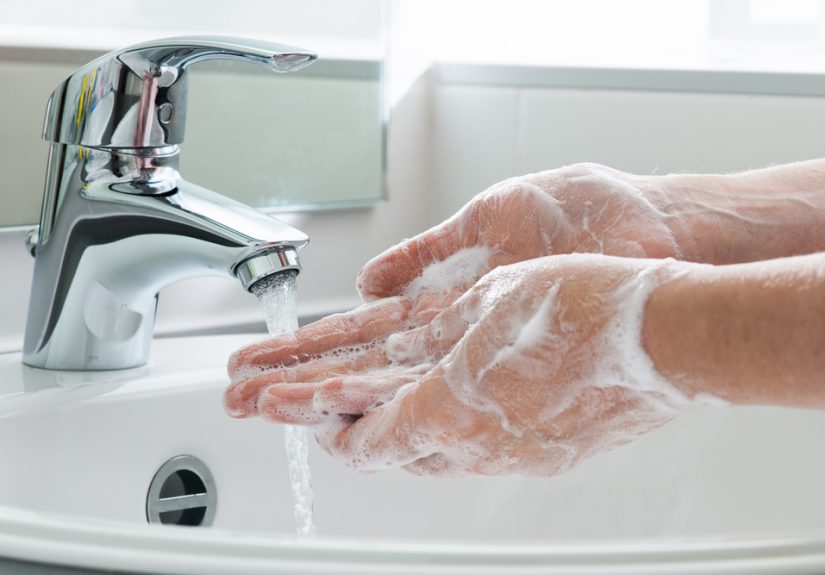
First, wet your hands with clean, running water. Warm or cold water can work; the important part is that the water is clean and running. Next, apply soap and lather well. Rub your palms, the backs of your hands, between your fingers, and under your nails. Scrub for at least 20 seconds. If you need a timer, hum “Happy Birthday” twice, or choose any song that prevents you from pretending three seconds is twenty.
Then rinse your hands under clean, running water. Finally, dry them with a clean towel or an air dryer. Drying matters because germs transfer more easily to and from wet hands. In public bathrooms, using a towel to turn off the faucet can also help prevent recontamination.
Wash at the Right Times
Timing is everything. Wash your hands before preparing food, before eating, before and after caring for someone who is sick, and before treating a cut or wound. Wash after using the toilet, changing diapers, coughing, sneezing, blowing your nose, handling garbage, touching animals, or dealing with pet food. If you have just touched raw meat, public surfaces, gym equipment, or your phone after it has traveled through the known universe, washing is a smart move.
In healthcare settings, hand hygiene is even more critical. Medical workers clean their hands before touching patients, before aseptic tasks, after contact with blood or body fluids, after touching patient surroundings, and after removing gloves. Gloves help, but they are not magic force fields. Clean hands still matter before and after glove use.
Why Handwashing Still Matters Today
The story of Ignaz Semmelweis is not just a dusty chapter from medical history. It explains why handwashing remains one of the most affordable, accessible, and effective health habits in the world. Clean hands help prevent infections at home, in schools, in hospitals, in restaurants, and in every shared space where humans gather and touch things with suspicious enthusiasm.
Handwashing also supports the fight against antibiotic resistance. When fewer people get infections, fewer people need antibiotics. When antibiotics are used less often and more appropriately, bacteria have fewer chances to develop resistance. That means a sink, soap, and 20 seconds of attention can contribute to a much larger public health goal.
There is also a social side to hand hygiene. Washing your hands protects you, but it also protects everyone around you: children, older adults, pregnant people, people receiving cancer treatment, people with weakened immune systems, and anyone who simply does not want your germs as a surprise gift. Handwashing is personal hygiene with community benefits.
The Semmelweis Lesson: Evidence Can Be Uncomfortable
Semmelweis’s legacy is not only about soap. It is about listening to evidence, especially when the evidence makes us uncomfortable. His discovery forced doctors to consider that they were part of the problem. That was painful, so many rejected the message. The same pattern still appears today when new evidence challenges familiar habits, workplace routines, or professional pride.
In that sense, Semmelweis teaches a timeless lesson: being right is not always enough. Good science needs data, but it also needs communication, humility, and systems that help people change behavior. A brilliant idea can fail if it threatens people without guiding them. A lifesaving practice can stall if leaders refuse to make it normal, easy, and expected.
Today, hospitals use hand hygiene protocols, antiseptics, alcohol-based hand rubs, training programs, and monitoring systems. Schools teach children to wash their hands. Public health agencies run campaigns during outbreaks. Restaurants post handwashing signs for employees. These habits did not appear out of nowhere. They are part of a long history in which Semmelweis stands as one of the most important figures.
Everyday Examples: Where Semmelweis Still Shows Up
You can see Semmelweis’s influence in ordinary routines. A nurse sanitizes her hands before checking a patient’s IV. A parent washes after changing a diaper. A cook scrubs before chopping vegetables. A teacher reminds a class to wash up before lunch. A traveler uses sanitizer after touching an airport kiosk that has probably met more fingers than a piano teacher.
These moments may seem small, but they follow the same principle Semmelweis proved in Vienna: invisible contamination can have visible consequences. We wash not because our hands always look dirty, but because germs do not politely announce themselves with tiny flags. Clean hands are a barrier between exposure and infection.
Of course, handwashing is not the only infection-prevention tool. Vaccination, safe food handling, clean water, ventilation, masks in certain situations, surface cleaning, and responsible healthcare practices all matter. But handwashing remains special because it is simple, cheap, and widely available. It is one of the rare health habits that requires no prescription, no subscription, and no influencer discount code.
Experiences Related to Ignaz Semmelweis and Why We Wash Our Hands
Most people do not think about Ignaz Semmelweis while standing at a sink. They think about dinner, work, school pickup, or whether the soap dispenser is empty again. But his story becomes surprisingly personal when you notice how often handwashing quietly protects daily life.
Think about a family kitchen on a weeknight. Someone handles raw chicken, answers a text, opens the refrigerator, touches the faucet, and reaches for a cutting board. Without handwashing, that kitchen can turn into a tiny transportation network for bacteria. The solution is not panic; it is a pause. Wash hands after touching raw meat. Clean the surfaces. Use separate tools when needed. The routine takes less than a minute, but it can prevent a miserable round of foodborne illness. Semmelweis would probably approve, although he might have questions about the group chat.
Or consider a classroom. Children share crayons, pencils, lunch tables, playground equipment, and, with heroic generosity, germs. One child sneezes into a hand, grabs a door handle, and suddenly the handle is part of the class attendance list. When teachers build handwashing into the school day, they are not being fussy. They are practicing public health on a small scale. The habit helps reduce the spread of stomach bugs, colds, and other infections that can move quickly through groups.
Hospitals make the lesson even clearer. A patient may be recovering from surgery, receiving chemotherapy, or fighting an infection. For that person, a healthcare worker’s clean hands are not a courtesy; they are a layer of protection. Modern hand hygiene rules exist because history proved that good intentions are not enough. A caring doctor with contaminated hands can still spread harm. A rushed nurse who skips sanitizer can increase risk. Systems are designed to make the safe action easier and more consistent.
There is also the experience of living through outbreaks, when handwashing suddenly moves from background habit to front-page advice. During flu seasons, norovirus outbreaks, and respiratory virus surges, people rediscover the sink. Public health messages repeat the basics: wash with soap, scrub thoroughly, avoid touching your face with unwashed hands, and stay home when sick. These reminders can feel repetitive, but repetition is part of prevention. The best safety habits are often boring because boring habits are the ones we actually keep.
On a personal level, handwashing can also create a sense of responsibility. It is a small action that says, “My choices affect other people.” That matters in families, workplaces, restaurants, gyms, clinics, and public transportation. Nobody can remove every risk from life, and nobody needs to scrub like a surgeon after touching a book. But regular, well-timed handwashing is a practical way to reduce avoidable harm.
The experience of handwashing also teaches humility. We cannot see most microbes. We cannot always know when we are carrying something that could make someone else sick. Semmelweis’s great insight was recognizing that invisible danger could be controlled by visible behavior. That is why his legacy remains powerful. Every time we wash our hands before caring for someone, eating a meal, or touching a wound, we are practicing a lesson learned the hard way in a nineteenth-century maternity ward.
Conclusion
Ignaz Semmelweis helped reveal one of medicine’s simplest truths: clean hands save lives. His work began with a tragic pattern in a Vienna hospital, grew through careful observation, and produced a handwashing practice that dramatically reduced deaths from childbed fever. Although his ideas were rejected by many during his lifetime, later advances in germ theory and antiseptic medicine proved how important his discovery really was.
Today, handwashing is a basic part of public health, healthcare safety, food preparation, parenting, education, and everyday courtesy. It helps prevent infection, protects vulnerable people, and reduces the spread of germs in homes and communities. The next time you wash your hands, remember that you are not just rinsing away dirt. You are taking part in a medical legacy built from evidence, courage, and one doctor’s refusal to ignore what the numbers were telling him.
Note: This article is based on synthesized historical and medical information from reputable U.S.-accessible sources, including public health agencies, medical reference libraries, science history organizations, academic medical publications, and established educational publishers. No source links or citation markers have been inserted into the article body so the content remains clean for web publication.