Table of Contents >> Show >> Hide
- Why 1.5°C Became the Climate Number Everyone Knows
- Did Earth Actually Pass 1.5°C?
- Why the 2024 Heat Spike Was Such a Big Deal
- Why 1.5°C Is Not “Just a Number”
- What a Warmer World Looks Like in Everyday Life
- Could Surpassing 1.5°C Trigger Bigger Changes?
- So Is the Fight Lost? Absolutely Not.
- Experiences From a World Brushing Past 1.5°C
- Conclusion
For years, the number 1.5°C floated through climate headlines like a warning label everyone recognized but not everyone fully unpacked. Then came the recent wave of record-breaking heat, and suddenly that number stopped feeling abstract. It started feeling personal. A scorched summer. A flooded neighborhood. A winter that forgot its job. A city that felt like a hair dryer with traffic.
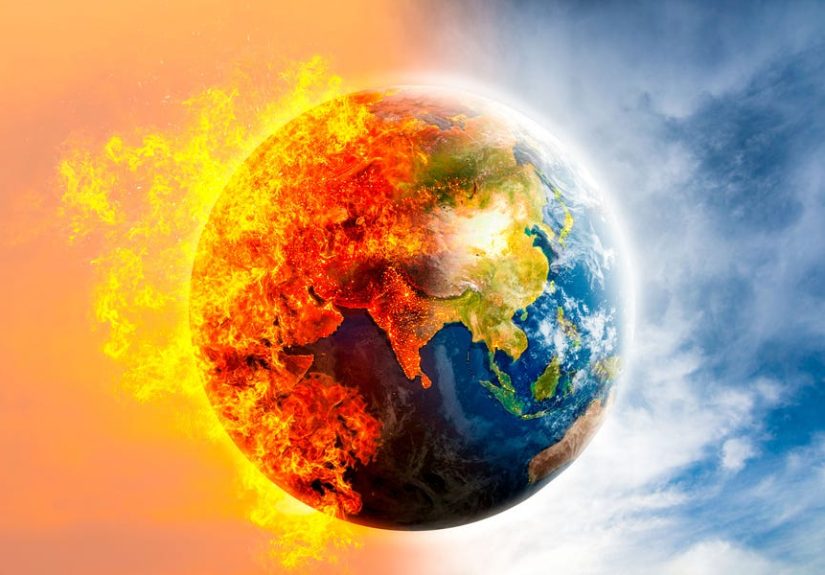
So, has Earth already crossed the 1.5°C warming threshold? The honest answer is: maybe in the short term, not yet in the formal long-term sense. That may sound like a technical dodge, but it matters. Climate science is full of numbers that look tiny on paper and behave like chaos goblins in real life. One and a half degrees does not sound dramatic until you remember it is a global average across oceans, continents, seasons, and ecosystems. Move the average that much, and the extremes start acting like they have had too much coffee.
This article breaks down what the 1.5°C warming threshold really means, why scientists are debating whether we have already passed it, what the latest temperature records suggest, and why the conversation should not stop at one symbolic line. Because even if Earth has not “officially” crossed it in the long-term Paris Agreement sense, the climate system is already delivering a very impolite preview.
Why 1.5°C Became the Climate Number Everyone Knows
The 1.5°C target became a central part of global climate policy because scientists found that every additional fraction of warming increases the risk of severe damage. This is not a movie-style cliff where the planet is fine at 1.49°C and instantly doomed at 1.51°C. Climate change is ruder and more complicated than that. Risks stack up, intensify, and spread.
At lower warming levels, societies already deal with stronger heat waves, heavier rainfall, more intense drought in some regions, coral bleaching, coastal flooding, wildfire conditions, crop stress, and public health strain. Push temperatures higher, and those risks become more frequent, more expensive, and harder to manage. The point of the 1.5°C threshold was never that it represented “safe” in the cozy sense. It represented a limit beyond which the damage grows faster and adaptation gets tougher.
That is why the number matters politically, scientifically, and emotionally. It gives governments a benchmark. It gives scientists a way to compare future risks. And it gives the public a simple phrase to hold onto in an otherwise dense conversation full of emissions curves, forcing pathways, aerosols, and the kind of graphs that make your coffee go cold.
Did Earth Actually Pass 1.5°C?
The short answer: possibly for a year, but not yet for the official long game
Here is where the nuance comes in. In 2024, Earth experienced the hottest year ever recorded. Several major temperature datasets put the annual global average above 1.5°C above preindustrial levels. Others, including estimates from NASA and NOAA, placed 2024 just under that threshold, though close enough to make the scientific distinction feel less like a wall and more like a blurry line painted in a thunderstorm.
That difference does not mean anyone is making things up. It means climate datasets use slightly different baselines, methods, corrections, and coverage. One team may land at 1.46°C, another at 1.47°C, another at 1.54°C, and another near 1.6°C depending on how preindustrial temperatures are estimated and how current data are processed. In other words, the title of this article uses the word “may” for a reason. It is scientifically fair.
But here is the more important point: even if 2024 did exceed 1.5°C for a full year, that does not automatically mean the Paris Agreement target has been formally breached. In climate science and international policy, the 1.5°C goal refers to a long-term average, not a single hot year. Think of it this way: one really bad semester can signal trouble, but it is not the same as your full transcript. It is still alarming. It is just measured differently.
That said, if your full transcript starts trending like 2023, 2024, and 2025, the comforting technical distinction begins to feel less comforting. Record warmth has not disappeared after the recent El Niño bump. Greenhouse gas concentrations remain high, ocean heat content remains elevated, and the overall warming trend keeps marching forward with the energy of someone ignoring every “do not enter” sign on the road.
Why the 2024 Heat Spike Was Such a Big Deal
Recent global temperature records were not just slightly above average. They were startling in both scale and persistence. For more than half of 2024, global average temperatures ran above 1.5°C relative to the mid-19th-century baseline. That turned what once sounded like a future milestone into a present-tense debate.
Part of the heat came from El Niño, the naturally occurring Pacific Ocean pattern that tends to raise global temperatures for a while. But El Niño does not explain the whole story. Scientists have repeatedly emphasized that the dominant driver remains human-caused greenhouse gas emissions, especially from burning fossil fuels. Carbon dioxide, methane, and other heat-trapping gases continue to build up in the atmosphere. NOAA’s greenhouse gas data show that the long-term warming influence of these gases keeps rising, and carbon dioxide levels remain at historically extraordinary levels.
In plain English, El Niño may have pressed the gas pedal, but fossil fuel emissions built the speeding car, paved the road, and removed the brakes. The background climate is now so warm that natural variations are riding on top of a hotter baseline. That is why even a slightly cooler year after 2024 still qualifies as scorching by historical standards.
Why 1.5°C Is Not “Just a Number”
It is easy to underestimate global warming because the number looks small. After all, people live through daily temperature swings of 20 or 30 degrees without thinking the atmosphere has filed a formal complaint. But a global average is different. It includes the entire planet, land and ocean, day and night, summer and winter. Nudging that average upward means the whole climate system is storing more energy.
That extra energy shows up in ways people can actually feel. Heat waves become more intense and more dangerous. Warmer air holds more moisture, which can fuel heavier downpours and more destructive flooding. Warmer oceans stress coral reefs, alter marine ecosystems, and add energy to storms. Snow and ice melt faster. Sea levels keep rising. Fire weather becomes more favorable in many places. Growing seasons shift. Public health systems face more heat illness, poor air quality, and climate-linked disease pressure.
And there is another reason the 1.5°C debate matters: every fraction of a degree still matters after 1.5. Crossing one threshold does not mean the mission is over and everyone should dramatically throw their reusable water bottles into the sea. Limiting warming to 1.6°C instead of 1.8°C, or 1.8°C instead of 2.0°C, still prevents enormous harm. Climate risk is not binary. It is cumulative.
What a Warmer World Looks Like in Everyday Life
Climate change often gets described in charts, but most people do not live inside charts. They live inside routines. And warming enters those routines quietly at first, then all at once.
It looks like schools canceling outdoor sports because the heat index is dangerous before lunch. It looks like an emergency room treating more cases of heat exhaustion during a week that used to feel merely “summer-like.” It looks like air conditioners running longer, power bills climbing higher, and neighborhoods without shade getting punished first and worst.
It looks like flash flooding on streets that were never designed for rain that intense. It looks like crop timing getting weird, allergy seasons stretching longer, and insurance conversations becoming unexpectedly dramatic. It looks like coastal communities planning for nuisance flooding that no longer feels like a rare nuisance. It looks like parents checking wildfire smoke maps before letting their kids play outside. It looks like people learning new words they did not ask for, like “wet-bulb temperature,” because survival now occasionally comes with homework.
Scientists and news organizations have also highlighted how recent warming translated into more dangerous heat exposure around the world. In 2024 alone, researchers estimated that climate change added weeks of dangerous heat for many populations. That does not mean everyone had the same experience. It means climate change is increasingly loading the dice, and the loaded dice keep landing on people’s health, homes, and livelihoods.
Could Surpassing 1.5°C Trigger Bigger Changes?
This is where the conversation gets unsettling. The climate system includes feedbacks and tipping elements that do not always respond smoothly. Ice sheets, permafrost, forests, coral reefs, and ocean circulation systems can shift in ways that amplify damage once warming rises far enough or lasts long enough.
No credible scientist will tell you that the instant Earth touches 1.5°C, every tipping point snaps like a mousetrap. But many researchers warn that higher warming increases the odds of crossing thresholds in natural systems that are very hard, or impossible, to reverse on human timescales.
That is part of why the debate over whether Earth has “already” passed 1.5°C matters so much. It is not just about a headline. It is about how close the planet may be to a climate state where serious disruption becomes more persistent, more compounding, and less manageable. A hotter atmosphere plus hotter oceans plus higher sea levels plus stressed ecosystems is not one problem. It is a problem multiplier.
So Is the Fight Lost? Absolutely Not.
Overshoot is dangerous, but despair is still bad strategy
One of the most common mistakes in climate conversations is treating bad news as permission to give up. That is like seeing smoke in the kitchen and deciding the correct next step is to order more candles. Even if the world temporarily overshoots 1.5°C, or even if the long-term threshold is crossed sooner than hoped, the amount of future warming still depends heavily on what humanity does next.
That means cutting greenhouse gas emissions fast, scaling clean electricity, improving efficiency, reducing methane, building climate-resilient infrastructure, protecting forests and wetlands, and adapting smarter where warming is already locked in. The EPA and other scientific institutions stress that future climate conditions still depend on present-day choices. The future is not fully written. It is being edited, line by line, by policy, technology, economics, and whether leaders can stop treating physics like a negotiable mood.
There is also a crucial communication point here for readers: symbolic thresholds matter, but trajectories matter more. If Earth has already touched 1.5°C in annual averages, that is a warning flare. It is not a reason to shrug. It is a reason to move faster. The difference between “we were too late to avoid one milestone” and “we are too late to avoid much worse outcomes” is enormous.
Experiences From a World Brushing Past 1.5°C
What does this topic feel like outside climate reports and policy briefings? For many people, it feels strangely ordinary until it doesn’t. It feels like waking up in early June and realizing the morning air already has the exhausted quality of late August. It feels like glancing at the weather app and seeing another streak of high temperatures, then changing plans before the day even begins.
In cities, the experience can be especially physical. Sidewalks seem to radiate heat back at you. Bus stops without shade feel like design flaws with consequences. The walk from a parking lot to a grocery store feels longer than it used to, not because the distance changed, but because the body notices more. Parents pack extra water. Elderly neighbors stay indoors. Construction crews start earlier. Delivery workers keep moving anyway. Heat becomes less of a seasonal backdrop and more of a daily negotiation.
For people near the coast, the experience may come with a different rhythm. Sunny-day flooding that once sounded like a weird phrase becomes something residents casually plan around. Storm season gets discussed with a little more tension and a lot less denial. People talk about insurance, elevation, drainage, and evacuation routes in the same tone they once used for garden plans or weekend errands. The vocabulary of risk moves into everyday conversation because the water keeps making introductions.
For farmers, gardeners, and anyone who pays attention to seasons, the experience can be deeply disorienting. Bloom times shift. Pests arrive at odd moments. Rain falls hard and fast instead of slow and useful. Dry spells stretch longer, then end in downpours that the soil cannot absorb well. The calendar still says spring, summer, fall, and winter, but the lived version of those seasons gets less reliable. Nature starts improvising, and not always in charming ways.
For families dealing with wildfire smoke, the experience is even more surreal. The sun turns orange, the air smells burnt, and children are told to stay inside on a day that looks bright from the window. Outdoor exercise becomes a question of particulate matter. People learn which masks work, which HVAC filters help, and how long smoke can linger in curtains, cars, and lungs. Climate change, in that moment, is no longer a debate. It is something you can taste.
There is also the emotional experience, which gets less attention than it deserves. Many people feel climate change as a slow accumulation of unease. Not panic every day, but a steady sense that the familiar is getting less dependable. Summers feel harsher. Storms feel meaner. Headlines feel repetitive in the worst possible way. Even people who are not reading scientific journals can sense that records keep falling with suspicious frequency.
And yet, the human experience of approaching or crossing 1.5°C is not only fear. It is also adaptation, ingenuity, and community. Cities plant more trees. Schools redesign schedules. Neighbors check on elderly residents during heat waves. Architects rethink cooling. Utilities modernize grids. Scientists improve forecasting. Communities rebuild smarter after floods and fires. The experience of warming is not just that the planet is changing. It is that people are being forced to change with it, faster than many institutions were designed to move.
That may be the clearest way to understand this milestone. A world near 1.5°C is not some distant sci-fi planet. It is this one, only hotter, riskier, more expensive, more uneven, and more demanding. It is a world where inconvenience can escalate into danger, where weather affects budgets and health, and where resilience is no longer a bonus feature. It is basic equipment.
Conclusion
Earth may have already surpassed the 1.5°C warming threshold in the sense that one recent year likely crossed it in several major datasets. But the formal Paris Agreement threshold refers to a longer-term average, which means the world has not quite reached the official finish line of failure. Still, nobody should mistake that technical detail for comfort. The climate system is flashing warning lights in bold, underlined, all-caps fashion.
The real takeaway is not whether one dataset says 1.47°C while another says 1.54°C. The real takeaway is that Earth is now operating dangerously close to a warming level scientists have warned about for years, and the consequences are already visible in heat, flooding, sea-level rise, ecosystem stress, and economic disruption. The debate is no longer about whether the planet is warming. It is about how much worse we are willing to let it get.
If there is any encouraging truth here, it is this: every tenth of a degree still matters. The future remains partly in human hands. The line may be near. It may even be under our feet. But what happens after that is still a choice.