Table of Contents >> Show >> Hide
- What Is Cowboy Chicken, Exactly?
- Why BHG’s Cowboy Chicken Became So Save-Worthy
- The Flavor Blueprint Behind Cowboy Chicken
- How BHG’s Version Stands Out From Similar One-Pan Chicken Dinners
- Why One-Pot Meals Keep Winning the Internet
- Best Ways to Serve Cowboy Chicken
- Mistakes to Avoid When Making a Dish Like This
- Who Should Make Cowboy Chicken?
- The Real Reason Cowboy Chicken Took Off
- What the Cowboy Chicken Experience Feels Like in a Real Kitchen
- Conclusion
Every year, the internet picks a handful of dinner recipes and practically carries them around town on its shoulders. In 2025, Better Homes & Gardens found one of those runaway hits in Cowboy Chicken, a smoky, cheesy, one-pot chicken dinner that feels like weeknight food wearing a very confident pair of boots. It is hearty without being fussy, colorful without being precious, and practical in the way that makes busy home cooks want to hit “save” before they have even preheated the oven.
That popularity makes perfect sense. This is the kind of meal that understands the assignment: juicy chicken, pantry staples, a lively Southwestern-style spice blend, beans for body, corn for sweetness, tomatoes for brightness, and cheese because dinner should occasionally feel like it is giving you a high-five. The whole thing lands somewhere between a skillet supper, a burrito bowl’s cooler older cousin, and the answer to the question, “What can I make tonight that looks like I tried harder than I did?”
If you are wondering why Cowboy Chicken took off, this article breaks it down. We are looking at what makes the recipe work, why one-pot chicken dinners keep dominating weeknight cooking, how BHG’s version stands out from similar Southwestern chicken recipes, and why this dish has enough flavor to feel fun without crossing into “I now need nine specialty ingredients and a lie-down” territory.
What Is Cowboy Chicken, Exactly?
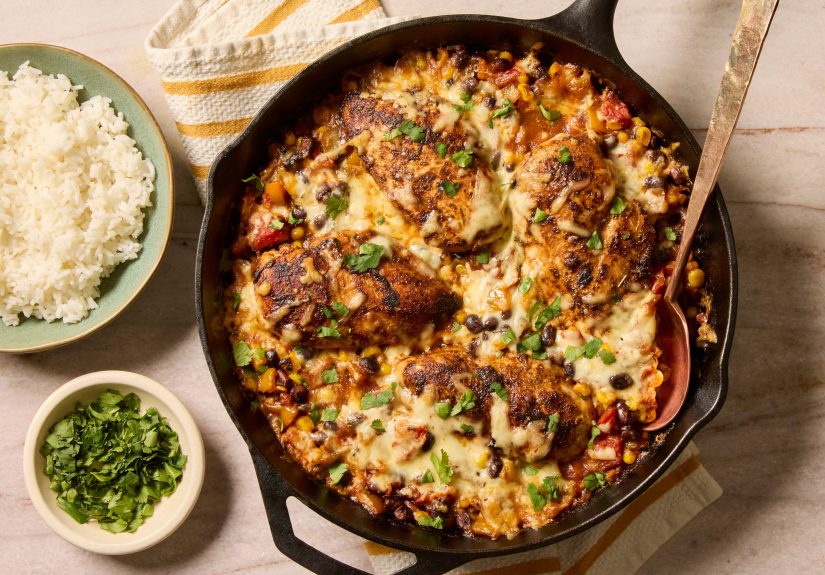
In BHG’s most-saved version, Cowboy Chicken is an oven-finished skillet dinner built around seasoned chicken breasts, sautéed peppers and onions, black beans, fire-roasted corn, tomatoes, lime juice, pepper Jack cheese, and fresh cilantro. It is a recipe designed to feel substantial, deeply savory, and just a little playful. The “cowboy” label does a lot of work here, suggesting rugged comfort and bold flavor rather than anything delicate or dainty. This is not dinner that whispers. This is dinner that kicks open the saloon doors.
What makes the dish especially appealing is that it pulls from ingredients many American home cooks already keep around. Canned beans, canned tomatoes, frozen corn, dried spices, chicken, cheese. No scavenger hunt. No existential crisis in the produce aisle. Just a reliable lineup that transforms quickly into something warm, vibrant, and satisfying.
That ingredient combination also taps into a flavor profile Americans clearly love: smoky spice, creamy beans, sweet corn, sharp cheese, fresh herbs, and a squeeze of citrus at the end. It is familiar enough to feel comforting, but bold enough to avoid the curse of bland chicken breast, which has ruined many a Tuesday.
Why BHG’s Cowboy Chicken Became So Save-Worthy
1. It solves the eternal weeknight problem
Most home cooks are not chasing culinary glory on a random Wednesday. They are chasing dinner that is quick, filling, and does not leave the sink looking like a cookware convention. Cowboy Chicken delivers because it stays focused. Sear the chicken, build the vegetable-and-bean base in the same skillet, return the chicken, finish in the oven, top with cheese, and serve. That workflow feels efficient, not punishing.
2. It uses pantry staples without tasting like a pantry emergency
There is a huge difference between a smart pantry dinner and a desperate one. Smart pantry dinners taste intentional. Cowboy Chicken does. Fire-roasted corn and tomatoes add a smoky edge that keeps the dish from feeling flat, while black beans make it heartier and more budget-friendly. The spice blend, usually built from chili powder, cumin, paprika, oregano, garlic powder, and onion powder, creates depth without asking the cook to toast seven whole spices and commune with the skillet.
3. It knows cheese is not a garnish. Cheese is strategy.
Pepper Jack gives the dish its final bit of swagger. It melts over the top, softens the edges of the spice blend, and ties together the chicken and vegetables so the skillet feels cohesive rather than like separate ingredients politely standing near one another. A good one-pot dinner should taste unified. The cheese helps seal the deal.
4. It is endlessly adaptable
This is the sort of recipe people save because they can already imagine how it will fit their household. Want it milder? Reduce the chili powder. No black beans? Pinto beans work. Need more richness? Add sour cream or avocado. Want to stretch it for extra servings? Spoon it over rice, tuck it into tortillas, or scatter crushed tortilla chips over the top for crunch. Recipes that bend without breaking are the ones that stay in rotation.
The Flavor Blueprint Behind Cowboy Chicken
One reason Cowboy Chicken works so well is that it quietly follows a very dependable flavor formula seen across many successful Southwestern-style chicken dinners.
Smoky + sweet + tangy
The smoky element comes from the spice blend and the fire-roasted vegetables. Sweetness arrives through corn, especially when it gets a little caramelized in the pan. Tomatoes and lime bring acidity, which keeps the overall dish from feeling too heavy. This balance matters. Without the acid, the cheese and beans can make the skillet feel dense. Without the corn, the dish loses contrast. Without the spice, it is just another chicken dinner hoping nobody notices.
Lean protein + creamy texture
Chicken breast is lean, but the surrounding ingredients give it backup. Beans add a creamy, starchy texture. Melted cheese contributes richness. Juices from the tomatoes loosen the skillet enough to create a saucy base without turning the meal into soup. That contrast is part of the magic: tender chicken on top, saucy vegetables underneath, creamy pockets of beans, and a little pull from the melted cheese.
Fresh finishers wake everything up
Cilantro and lime are not decorative afterthoughts here. They are the finishing move. Their freshness cuts through the richer, darker notes in the skillet and gives every bite a cleaner, brighter lift. That is why the dish feels comforting without becoming sleepy. It has energy.
How BHG’s Version Stands Out From Similar One-Pan Chicken Dinners
Plenty of American recipe sites publish Southwestern-style chicken dinners, but BHG’s version has a particularly broad appeal because it sits in the sweet spot between cozy and bold. Some similar recipes lean creamier, some spicier, some more casserole-like, and some more bowl-based. Cowboy Chicken stays straightforward.
Compared with classic skillet chicken recipes that stop at a pan sauce, this one is heartier thanks to the beans and corn. Compared with casseroles, it feels fresher and less heavy. Compared with burrito bowls or foil packets, it delivers the same flavor family without requiring separate assembly components. In other words, it gives you the payoff of a Tex-Mex-inspired dinner with less fiddling.
That middle-ground appeal is a major reason it became such a hit. It can satisfy people who want something cozy and cheesy, people who want vegetables and protein in the same pan, and people who would like leftovers that taste just as good the next day. Not every recipe can handle that many expectations. Cowboy Chicken somehow strolls in and acts like it was born for the job.
Why One-Pot Meals Keep Winning the Internet
The popularity of Cowboy Chicken also says something bigger about how people cook now. One-pot meals continue to dominate because they match real life. They reduce cleanup, simplify timing, and make dinner feel less like a project management seminar. They also tend to be more forgiving. When ingredients cook together, flavors mingle, sauces form naturally, and the dish often tastes more complete with less effort.
There is also a psychological bonus. A full skillet on the table looks abundant. It feels generous. It tells the room, “Yes, dinner happened, and yes, it smells incredible.” That visual warmth matters. We eat with our eyes first, and a bubbling skillet with melted cheese has excellent stage presence.
Another key point: one-pot meals are often highly searchable, highly saveable, and highly repeatable. Home cooks love recipes that answer practical questions before they are asked. Is it fast? Is it flexible? Can I use what I have? Will my family eat it? Can I reheat it tomorrow? Cowboy Chicken gets a lot of “yes” answers, which is basically catnip for recipe-sharing culture.
Best Ways to Serve Cowboy Chicken
The most obvious move is to serve Cowboy Chicken over fluffy white rice, which soaks up the saucy tomato-and-bean mixture beautifully. But that is only the beginning. You can also spoon it over cilantro-lime rice, tuck it into warm flour tortillas, or serve it with tortilla chips for a more scoopable, party-adjacent dinner. Add avocado slices, a dollop of sour cream, pickled jalapeños, or extra lime wedges, and suddenly your weeknight dinner starts acting like it got a glow-up.
A crisp green salad on the side works especially well because it cools down the smoky richness of the skillet. If you want something more substantial, roasted sweet potatoes or a simple slaw with lime vinaigrette would fit the flavor profile nicely. The trick is to pair Cowboy Chicken with something that adds freshness or crunch. The skillet already has the warm, savory, cheesy part handled.
Mistakes to Avoid When Making a Dish Like This
Do not overcook the chicken
This is the big one. Chicken breast can go from juicy to tragic with shocking speed. Searing it first and finishing it in the oven is a smart method, but timing still matters. Pull it when it is done, not when it has entered a new era.
Do not skip seasoning layers
Recipes like this succeed because flavor is built in stages. Season the chicken. Season the vegetables. Let the beans and tomatoes mingle with the spice blend. If you underseason early and hope the cheese will save you later, the cheese will file a complaint.
Do not forget acidity at the end
Lime juice is not optional in spirit, even if a cook omits it in practice. Acid sharpens the whole dish and keeps the richness balanced. Without it, the skillet can taste duller and heavier.
Who Should Make Cowboy Chicken?
Busy families should make it. Beginner cooks should make it. People who are tired of plain chicken should absolutely make it. It is especially ideal for anyone who wants a comforting dinner that does not rely on cream-heavy sauces or a long ingredient list. It also works for meal preppers because the leftovers reheat well and can be repurposed into bowls, wraps, nachos, or stuffed baked potatoes.
If your taste runs toward bold but not punishingly spicy, this recipe lands in a very comfortable zone. It is flavorful enough to feel exciting and accessible enough to make on autopilot after the second try. That is usually the sign of a genuinely useful recipe rather than a one-time internet fling.
The Real Reason Cowboy Chicken Took Off
At its core, Cowboy Chicken became BHG’s most-saved one-pot meal of 2025 because it offers a rare combination: it is easy, colorful, flexible, cozy, and just interesting enough to feel new. It does not ask home cooks to reinvent dinner. It just makes dinner better.
That may be the most valuable trait a recipe can have. Not trendiness. Not shock value. Not a viral gimmick involving seventeen layers and a blowtorch. Just a clear understanding of what people want to cook and eat on a normal night. Cowboy Chicken tastes like comfort with a little personality, and that is exactly the kind of recipe people save, share, and keep making long after the algorithm has wandered off to chase some other cheese-covered distraction.
What the Cowboy Chicken Experience Feels Like in a Real Kitchen
The experience of making a dish like Cowboy Chicken is part of its appeal, and that is something recipe stats alone cannot fully explain. On paper, it is a one-pot chicken dinner. In practice, it feels like the culinary version of finding a parking space directly in front of the store. It is a little victory. You start with a skillet, a cutting board, and a few pantry ingredients that do not look particularly glamorous. Then, about 20 minutes later, the kitchen smells like you secretly know what you are doing.
First comes the spice blend, and this is where the recipe starts building confidence. Chili powder, cumin, paprika, oregano, garlic, onion, salt, pepper. Nothing weird. Nothing expensive. Just a bowl of familiar ingredients that instantly smells like dinner has a plan. When the chicken hits the hot pan, you get that satisfying sizzle that makes even a tired cook perk up a little. It is not dramatic restaurant cooking, but it does have a nice “all right, let’s do this” energy.
Then the vegetables go in. Onion and peppers soften. Garlic wakes up. Corn adds sweetness. Tomatoes and beans turn the skillet from a simple sauté into an actual meal. This is usually the moment where the dish stops looking like ingredients and starts looking like a dinner people will hover around. The colors help. Cowboy Chicken is not beige, and that deserves applause. Between the yellow corn, dark beans, red tomatoes, green cilantro, and melted cheese, it looks cheerful in a way weeknight meals often forget to be.
There is also very little downtime for boredom. You are not waiting for a complicated braise or juggling three side dishes while something fragile threatens to burn. The recipe moves at a steady, friendly pace. It rewards attention, but it does not demand total devotion. That makes it especially appealing for real households, where somebody is asking where their charger is, the dishwasher is beeping for no reason, and at least one person is wandering into the kitchen to ask, “How long until dinner?”
And then there is the serving moment, which is honestly where Cowboy Chicken earns its popularity. Set the skillet on the table and it looks abundant. Spoon it over rice and it suddenly feels like a full, generous meal rather than “just chicken.” Add lime, cilantro, sour cream, or avocado, and people start customizing their plates like they are at a tiny personal taco bar. That interactive element is underrated. A dinner feels more exciting when people can tweak it to their taste.
The leftovers are part of the experience too. This is not one of those recipes that peaks immediately and becomes sad by the next afternoon. Cowboy Chicken often gets even better after the flavors settle. The next day it can become a burrito filling, a rice bowl, a quesadilla stuffing, or a spoon-over-everything situation. That gives the cook a small but real sense of triumph. You made dinner once, and it keeps showing up helpfully afterward like a very delicious overachiever.
Maybe that is the best way to understand why this recipe connected with so many people. It does not just taste good. It feels useful, forgiving, lively, and a little fun. In a year full of flashy food trends, Cowboy Chicken offered something steadier: a meal that fit ordinary life while still tasting like more than the sum of its canned beans, frozen corn, and weeknight ambition. That kind of experience does not just earn clicks. It earns repeat cooking, and repeat cooking is where recipe fame becomes real.
Conclusion
Cowboy Chicken did not become BHG’s most-saved one-pot meal of 2025 by accident. It became a hit because it understands exactly what modern home cooks want: bold flavor, smart shortcuts, pantry-friendly ingredients, minimal cleanup, and leftovers worth saving. It is comforting without being boring, flexible without being vague, and easy without tasting like it cut corners. For a weeknight dinner, that is a pretty impressive résumé.
If you are looking for a meal that brings together smoky spices, juicy chicken, sweet corn, hearty beans, melty cheese, and a bright finish of lime and cilantro, Cowboy Chicken deserves the attention it got. In a sea of one-pan dinners, this one actually has personality. And in the world of home cooking, personality is what turns a recipe from “good enough” into “make that again.”