Table of Contents >> Show >> Hide
- What Balance Really Means in Early Motherhood
- Start with Your Health Before You Worry About Productivity
- Protect Your Mind as Carefully as You Protect the Baby Monitor
- Build a Support System That Actually Supports You
- Create Rhythms Instead of Rigid Routines
- Make Room for Your Identity, Not Just Your To-Do List
- Know When Balance Is Not the Goal
- A More Realistic Definition of Balance for New Moms
- Common Experiences New Moms Share About Finding Balance
- Conclusion
- SEO Tags
Balance as a new mom is one of those phrases that sounds gorgeous on a motivational poster and slightly ridiculous at 3:17 a.m. when you are holding a baby, reheating coffee for the third time, and wondering whether you have brushed your teeth today or only thought about it very passionately. The truth is that balance in early motherhood is not about doing everything evenly. It is about learning what matters most in this season, protecting your health, and building a life that feels steady enough to carry both you and your baby.
For many women, the first months after birth are a mix of joy, exhaustion, identity shifts, healing, and logistics. There is love, yes. There is also laundry that appears to reproduce at night. If you are trying to figure out how to care for a newborn without disappearing as a person, you are not failing. You are doing the complicated work of becoming a parent while recovering from birth and adjusting to a completely new rhythm.
This guide breaks down what balance actually looks like for new moms, how to create it in practical ways, and why a more realistic definition of balance may be exactly what saves your sanity.
What Balance Really Means in Early Motherhood
Let’s clear something up right away: balance does not mean giving equal energy to your baby, your partner, your job, your home, your friendships, your workouts, your hobbies, and a color-coded meal plan. That is not balance. That is an elaborate fantasy created by people who have not tried to clip a newborn’s fingernails.
Real balance as a new mom means knowing your priorities for right now. In the early postpartum months, those priorities are usually simple: physical recovery, feeding and caring for your baby, protecting your mental health, getting support, and keeping daily life functional enough that it does not collapse into a pile of unopened packages and unmatched socks.
Balance also changes from week to week. What feels manageable in week two may feel impossible in week eight. What works during maternity leave may stop working when you return to work. Instead of chasing a perfect system, focus on creating a flexible one.
Start with Your Health Before You Worry About Productivity
One of the biggest mistakes new moms make is treating their own needs like optional upgrades. You know, like heated car seats or fancy sparkling water. Nice if available, but not essential. In reality, your basic health needs are part of your baby’s care plan because you are part of the system.
Protect Sleep Any Way You Can
You may not be able to get perfect sleep with a newborn, but you can still make sleep protection a goal. That means sleeping when there is a genuine chance to sleep, sharing nighttime duties if possible, and letting go of nonessential tasks when rest is available. If a partner is home, work in shifts. If you are solo parenting, think in terms of recovery pockets rather than full, dreamy nights of uninterrupted sleep.
Even small changes matter. Keep nighttime feedings quiet and boring. Set up supplies before bed so you are not scrambling in the dark. If someone offers help, ask for the kind that gives you rest, not the kind that turns into a social visit while you clean the kitchen pretending you are fine.
Eat Like Recovery Matters
New moms often become masters of feeding everyone except themselves. But postpartum recovery and milk production, if you are breastfeeding, both require fuel. Focus on simple meals with protein, fiber, healthy fats, and easy snacks you can eat one-handed. Yogurt, eggs, nut butter toast, soup, trail mix, fruit, rotisserie chicken, oatmeal, and freezer meals are not glamorous, but they are reliable. And in the newborn stage, reliable is beautiful.
Hydration matters too. Keep water where you usually feed the baby. Put snacks in the places where you end up trapped for 40 minutes under a peacefully sleeping infant. This is not laziness. This is logistics.
Move Gently, Not Heroically
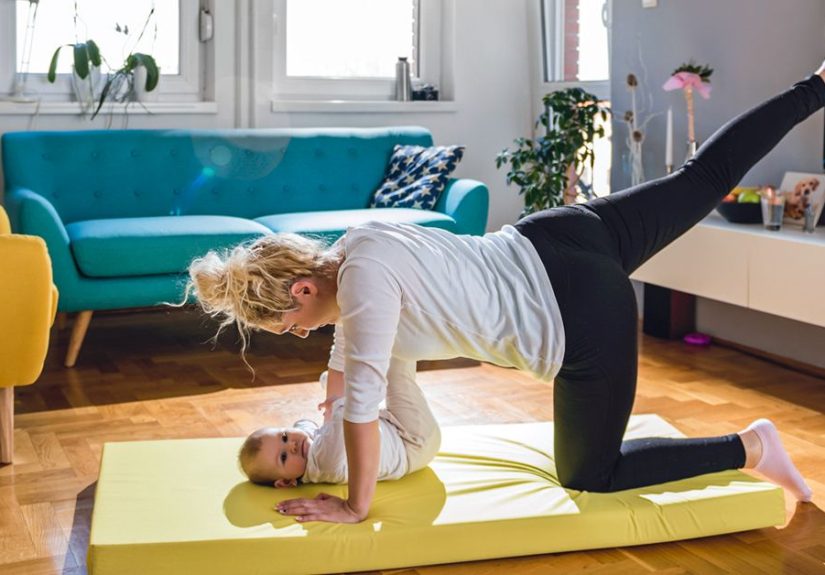
Exercise after birth should support healing, not punish your body for having a baby. For many new moms, the first step is not a boot camp class. It is a short walk, gentle stretching, or a few minutes of movement that helps them feel human again. The goal is not to “bounce back.” The goal is to feel stronger, improve energy, and support physical and emotional well-being.
If you had a complicated birth, C-section, pain, heavy bleeding, or pelvic floor symptoms, get guidance before increasing activity. There is no trophy for ignoring recovery.
Protect Your Mind as Carefully as You Protect the Baby Monitor
New motherhood comes with emotional whiplash. You can feel grateful, overwhelmed, weepy, proud, lonely, and weirdly offended by dishwasher noises all before lunch. Some mood changes are common after birth. But balance becomes much harder when anxiety, sadness, rage, or intrusive thoughts begin to dominate the day.
Learn the Difference Between Stress and Suffering
The “baby blues” are common in the first days after birth and usually ease on their own. But if sadness, hopelessness, panic, constant anxiety, loss of interest, severe irritability, or frightening thoughts are lingering or worsening, it is time to reach out. You do not need to wait until things become dramatic. You do not need to earn help by falling apart first.
Talk to your OB-GYN, primary care clinician, therapist, or pediatrician’s office if you are struggling. Many new moms assume they should be able to handle it alone because everyone else seems to be doing fine online. Online, unfortunately, is where both truth and nonsense go to wear nice lighting.
Reduce the Invisible Mental Load
One of the hardest parts of motherhood is not always the baby care itself. It is being the default brain for the household. Tracking diapers, pediatric appointments, feeding schedules, grocery needs, clean bottles, thank-you texts, and whether there is any coffee left can become exhausting fast.
Get things out of your head. Use a shared note with your partner. Write recurring tasks on a whiteboard. Keep a short daily checklist with only the essentials. Decision fatigue is real, and reducing it creates more calm than most people realize.
Build a Support System That Actually Supports You
Support is not just people saying, “Let me know if you need anything.” Support is people doing specific things that make your day easier. There is a difference.
Ask for Help in Concrete Ways
Instead of saying, “I’m overwhelmed,” try saying:
- Can you hold the baby for 30 minutes while I shower and eat?
- Can you bring dinner on Tuesday?
- Can you run a load of laundry while you are here?
- Can you take the baby after the 6 a.m. feeding so I can sleep for an hour?
People often want to help but do not know how. Specific requests make it easier for them to say yes and easier for you to get the help you actually need.
Give Visitors a Job Description
If visitors come over during the newborn stage, it is completely reasonable to treat them less like honored houseguests and more like a mildly cheerful support crew. They can bring coffee, fold tiny pajamas, wash bottles, take out trash, or pick up groceries. A visit that creates more work for you is not support. It is a plot twist.
Find Community, Not Just Advice
Every new mom gets advice. Not all of it is useful. What many women actually need is community: another parent who says, “Yes, that happened to me too.” A postpartum group, new moms’ meetup, breastfeeding support group, therapist, or trusted friend can make the season feel less isolating. Practical tips matter, but feeling less alone matters too.
Create Rhythms Instead of Rigid Routines
Many new moms search for the perfect routine because routines feel like control. But newborns are not famous for respecting spreadsheets. Rather than forcing a minute-by-minute schedule too early, create a few repeatable anchor points in the day.
Use Daily Anchors
Try building your day around a handful of predictable moments:
- Get dressed by a certain time, even if the outfit is “elastic waistband chic.”
- Eat one solid breakfast every morning.
- Open the blinds and get daylight early in the day.
- Take one walk or step outside once a day.
- Reset one small area of the house in the evening.
These anchors create structure without requiring your baby to follow a perfect timetable.
Lower the Standard for “Caught Up”
The newborn phase is not the time to maintain your pre-baby standard for everything. Your home may be messier. Text replies may be slower. Dinner may be repetitive. Balance gets easier when you stop measuring yourself against an old version of life that no longer fits.
Pick three things that keep your household feeling functional. Maybe that is clean bottles, a clear kitchen counter, and one load of laundry most days. Maybe it is groceries, trash day, and enough clean burp cloths to survive. Good. That is your standard for now.
Make Room for Your Identity, Not Just Your To-Do List
Many new moms do not just lose time. They lose access to themselves. One of the most destabilizing parts of motherhood is realizing that the day can disappear into caregiving before you have done one thing that feels personally grounding.
Keep One Small Thing That Is Yours
You do not need a dramatic self-care routine to stay connected to yourself. You need one or two repeatable things that remind you that you are still a whole person. Read ten pages of a book. Listen to a podcast while feeding the baby. Water your plants. Sit outside for five minutes. Do skincare that is more than accidentally washing your face with baby wipes.
Small rituals count. In fact, in early motherhood, they count a lot.
Check In With Your Partner Honestly
If you have a partner, balance improves when expectations are spoken out loud instead of silently resented. Talk about who is handling nights, meals, errands, mental load, appointments, and breaks. Revisit the plan often. The postpartum season is not static, and neither are people’s energy levels.
A helpful question is: “What would make tomorrow easier for each of us?” It is practical, clear, and far more useful than waiting for one person to become a mind reader.
Know When Balance Is Not the Goal
Some days, balance will not happen. The baby will cluster feed, the laundry will revolt, you will cry because the sandwich place forgot your pickles, and the entire vibe will be “survival mode with snacks.” That does not mean you are doing motherhood wrong.
There are seasons when the most balanced thing you can do is simplify aggressively. Cancel plans. Say no to extra obligations. Ask for more help. Order dinner. Nap when the chance appears. Take symptoms seriously. If you have heavy bleeding, fever, worsening pain, severe anxiety, persistent depression, or thoughts that scare you, call a health professional right away.
Sometimes balance is not about doing more. It is about recognizing that you need care too.
A More Realistic Definition of Balance for New Moms
Balance as a new mom is not a polished life where everything gets equal time. It is a steady-enough life where the important things are supported: your recovery, your baby’s needs, your mental health, and your ability to keep going without burning out.
It looks like accepting help. It looks like lowering certain standards and raising others. It looks like protecting sleep, eating real food, asking better questions, and refusing to confuse exhaustion with failure. It also looks like understanding that this stage is temporary. You are not building the final form of your life in the first few months after birth. You are building the bridge to it.
And bridges are allowed to look practical.
Common Experiences New Moms Share About Finding Balance
One of the most comforting truths about early motherhood is that many women struggle with the exact same things, even if their houses, social feeds, and holiday cards suggest otherwise. A common experience is realizing that the hardest part is not loving the baby. It is adapting to how relentless the care can feel. Many new moms say they expected to be tired, but they did not expect the mental load to be so constant. They were thinking about feeding, burping, sleeping, diaper output, pediatric visits, their own healing, and whether there was enough laundry detergent left, all at the same time. Finding balance often began not when life got easier, but when they stopped expecting themselves to do it all without support.
Another common experience is the guilt that shows up when a new mom tries to care for herself. Women often describe feeling selfish for showering, taking a walk, or handing the baby to someone else so they can rest. But over time, many realize that these short breaks do not take away from the baby. They improve patience, mood, and stamina. A mother who eats lunch, drinks water, and gets twenty quiet minutes may not feel glamorous, but she often feels far more capable. That small shift can change the tone of the whole day.
Many moms also say that balance started to feel possible when they stopped trying to recreate their old productivity. Before the baby, finishing a work task, cleaning the kitchen, answering messages, and running errands in one afternoon may have been normal. After the baby, getting through one feeding cycle, taking a nap, and loading the dishwasher might be the full achievement list. Mothers who adjusted their expectations usually felt less defeated. Instead of asking, “Why can’t I keep up like before?” they asked, “What actually matters today?” That question is often where balance begins.
Support experiences vary too. Some new moms discover that the people they expected to help are not always the most helpful, while others are surprised by the friends, neighbors, or relatives who quietly show up with food, diapers, or an offer to hold the baby while mom sleeps. A lot of women learn to ask more specifically. They stop saying, “We’re okay,” and start saying, “Could you bring soup?” or “Can you come by for an hour so I can nap?” These practical requests often lead to better help and less resentment.
There is also the emotional side. Many women talk about feeling deeply happy and deeply overwhelmed at the same time. They love their baby and still miss their old routines, their independence, or their sense of competence. That mix can be unsettling, especially for first-time moms who expected motherhood to feel more natural and less chaotic. Hearing other women describe the same emotional tug-of-war can be incredibly reassuring. It reminds new moms that ambivalence is not failure. It is a human response to a major life transition.
In the end, the moms who describe the most sustainable balance usually do not have perfect babies, perfect homes, or perfect systems. What they do have is flexibility, support, and permission to be unfinished. They build simple routines, protect their health, let some things slide, and learn their baby over time instead of trying to master everything immediately. Their lives may still look messy from the outside, but inside, there is often something more important than perfection: enough steadiness to get through the day with kindness toward themselves.
Conclusion
Finding balance as a new mom is less about achieving a flawless routine and more about creating a livable rhythm. That rhythm may include naps instead of productivity, convenience meals instead of homemade masterpieces, and asking for help before you are at your limit. It may also include a slower pace, a different version of success, and a more generous definition of what it means to be “doing well.”
If you are in this season right now, remember this: balance is not something you either have or do not have. It is something you build, protect, revise, and rediscover. Usually while holding a baby and looking for your phone.