Table of Contents >> Show >> Hide
- Why Cleaning Your Room Quickly Starts With a Plan
- The 30-Minute Quick Room Cleaning Method
- Step 1: Set a Timer and Grab Supplies
- Step 2: Remove Trash First
- Step 3: Collect Dirty Laundry
- Step 4: Put Away Clean Clothes
- Step 5: Use the “Elsewhere Basket”
- Step 6: Clear Flat Surfaces
- Step 7: Make the Bed
- Step 8: Dust From Top to Bottom
- Step 9: Clean Mirrors and Glass
- Step 10: Vacuum or Sweep Last
- How to Clean Your Room in 10 Minutes
- How to Deep Clean Your Room When You Have More Time
- Smart Organization Tips to Keep Your Room Clean Longer
- Common Room Cleaning Mistakes to Avoid
- Easy Daily Habits for a Cleaner Room
- My Real-Life Experience: The Fast Room Reset That Actually Works
- Conclusion
Let’s be honest: a messy room has a special talent for becoming dramatic. One hoodie turns into a laundry mountain, one snack wrapper starts a tiny paper village, and suddenly your chair has retired from furniture duty and become a “clothes storage system.” The good news? You do not need an entire weekend, a professional cleaning crew, or a heroic movie montage to fix it.
If you want to know how to clean your room quickly and efficiently, the trick is not cleaning harder. It is cleaning in the right order. A fast room reset works best when you remove trash first, gather laundry, clear surfaces, dust from top to bottom, vacuum or sweep last, and finish with a small habit that stops the mess from staging a comeback tour tomorrow.
This easy guide gives you a practical, no-panic system for cleaning your bedroom fastwhether guests are coming over, your parent is walking down the hallway, your video call background looks like a lost-and-found department, or you simply want to sleep in a room that does not whisper, “Try again next week.”
Why Cleaning Your Room Quickly Starts With a Plan
Most people lose time because they start randomly. They pick up a sock, notice a book, open a drawer, find an old charger, remember a school project, and somehow end up sitting on the floor reading a birthday card from three years ago. That is not cleaning. That is an archaeological dig.
A quick room cleaning routine needs a clear path. Think of your bedroom in five zones: trash, laundry, surfaces, floor, and final reset. When you clean in that order, every step makes the next one easier. You are not just moving clutter from the bed to the desk and calling it “interior design.” You are actually removing the mess from the room.
The 30-Minute Quick Room Cleaning Method
This method is designed for real life. You can use it before guests arrive, before bedtime, after a busy week, or anytime your room looks like it has been lightly attacked by your closet.
Step 1: Set a Timer and Grab Supplies
Set a timer for 20 to 30 minutes. A timer creates urgency and stops perfectionism from hijacking the mission. You are not deep-cleaning a historic mansion. You are making your room clean, calm, and usable.
Before you begin, gather a trash bag, laundry basket, microfiber cloth, all-purpose cleaner or mild soap solution, glass cleaner if needed, vacuum or broom, and a small “elsewhere basket” for items that belong in another room. Having supplies ready saves time because you will not wander around looking for wipes and accidentally check your phone for 18 minutes.
Step 2: Remove Trash First
Start with the easiest win: trash. Pick up wrappers, tissues, receipts, empty bottles, broken packaging, old notes, and anything that clearly belongs in the garbage or recycling. Do not debate every object like it is evidence in court. If it is trash, it leaves.
This one step can make a messy room look instantly better. Trash creates visual clutter and can also lead to odors. Once it is gone, the room already feels more manageable. Tie the bag and place it near the door so you can take it out when you finish.
Step 3: Collect Dirty Laundry
Next, gather dirty clothes, towels, socks, gym clothes, and any fabric item that has been living on the floor rent-free. Put everything directly into a hamper or laundry basket. If you are not sure whether something is clean, use the sniff test carefullyor better yet, wash it. Your future self deserves peace.
Laundry is one of the biggest reasons bedrooms look messy. Even a clean room will look chaotic if clothing is draped over chairs, bedposts, desks, and mysterious corners. Once dirty clothes are contained, you will be able to see the floor again. This is always exciting. Sometimes emotional.
Step 4: Put Away Clean Clothes
Clean clothes should not be punished for being clean by living in a pile. Fold them, hang them, or place them in drawers. If you are short on time, do a quick category sort: shirts together, pants together, socks and underwear together, accessories together.
Do not aim for boutique-level folding unless you enjoy that. The goal is quick and efficient room cleaning, not convincing your dresser it works at a luxury hotel. Neat enough is good enough when time is limited.
Step 5: Use the “Elsewhere Basket”
Bedrooms collect things that belong somewhere else: cups, plates, school supplies, mail, chargers, books, hair products, toys, and random objects with no known citizenship. Put these items in your elsewhere basket instead of leaving the room every two minutes.
This is one of the best time-saving cleaning tips. Every trip out of the room creates a chance to get distracted. The basket keeps you focused. At the end, carry it around the house and return each item to its proper place.
Step 6: Clear Flat Surfaces
Now move to nightstands, dressers, shelves, desks, windowsills, and any surface where clutter gathers for its weekly convention. Keep only what belongs there. A lamp, book, water bottle, clock, small tray, or daily-use item is fine. Old cups, loose papers, tangled cords, and three lip balms having a family reunion need to go.
Use a small tray, bowl, or drawer organizer for tiny essentials like jewelry, glasses, earbuds, hair ties, or keys. Small items look messy when scattered, but they look intentional when contained. This is the magic of organization: the same objects, less chaos.
Step 7: Make the Bed
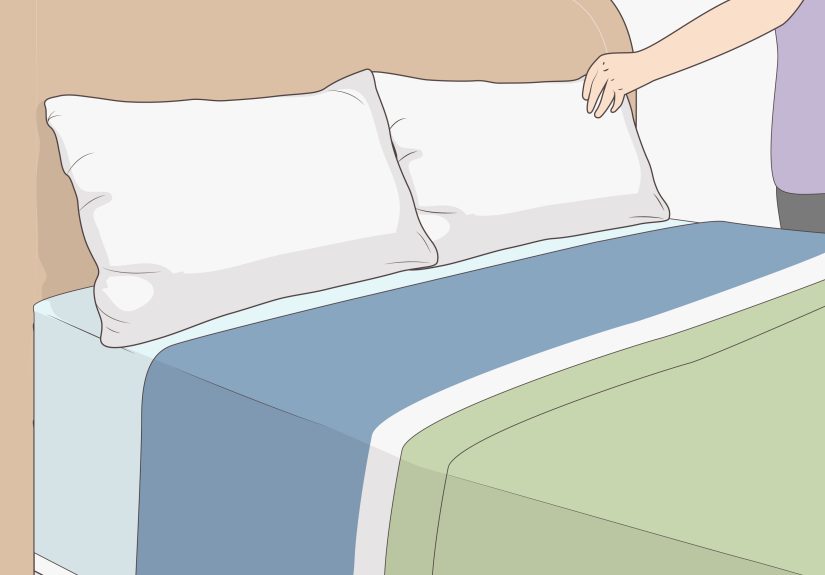
Making the bed is the fastest way to make your bedroom look cleaner. It creates a large, tidy visual center. Even if the rest of the room is still in progress, a made bed tells your brain, “We are becoming responsible now.”
Straighten the sheets, pull up the blanket or comforter, fluff the pillows, and remove anything that does not belong on the bed. If your sheets need washing, strip the bed and start laundry. Clean bedding makes a bedroom feel fresher, and it is one of the simplest ways to improve the comfort of the space.
Step 8: Dust From Top to Bottom
Dust after decluttering, not before. If you dust first and then start moving piles, you will simply redeposit dust everywhere like a tiny indoor weather system.
Use a microfiber cloth or slightly damp cloth to wipe surfaces. Start higher and work downward: shelves, lamps, window ledges, dressers, desk, nightstand, and baseboards if you have time. Dusting from top to bottom prevents you from cleaning the same area twice.
For a super quick clean, focus on visible surfaces and high-touch spots: door handles, light switches, desk areas, drawer pulls, and bedside tables. If someone in the home has been sick, cleaning first and then disinfecting high-touch surfaces is the safer order.
Step 9: Clean Mirrors and Glass
A smudged mirror can make a room feel less clean even after you have worked hard. Spray glass cleaner onto a cloth rather than soaking the mirror directly. Wipe in smooth strokes and dry with a lint-free cloth if needed.
This step takes only a minute or two, but it adds polish. A clean mirror reflects light and makes the room feel brighter, which is a fancy way of saying you get more “wow” for very little effort.
Step 10: Vacuum or Sweep Last
The floor comes last because everything else drops dust, crumbs, hair, and mystery particles downward. Vacuum carpet slowly enough to pick up debris. For hard floors, sweep or vacuum first, then mop if needed.
Pay attention to high-traffic areas: beside the bed, near the door, under the desk, and around the laundry basket. If you have extra time, clean under the bed. If you do not have extra time, do not start an under-bed expedition five minutes before guests arrive. That is how people discover boxes, cables, and regret.
How to Clean Your Room in 10 Minutes
Only have 10 minutes? Do a “visible reset.” This will not deep clean the room, but it will make it look much better fast.
The 10-Minute Emergency Room Clean
Minute 1: Open a window if the weather allows and grab a trash bag.
Minutes 2–3: Remove trash and recycling.
Minutes 4–5: Put dirty laundry in a hamper.
Minute 6: Put items that belong elsewhere into one basket.
Minute 7: Clear the bed and make it.
Minute 8: Wipe the nightstand and desk.
Minutes 9–10: Vacuum or sweep the most visible floor area.
This quick bedroom cleaning routine is perfect when you need fast results. It works because it targets the mess people notice first: trash, clothes, bed, surfaces, and floor.
How to Deep Clean Your Room When You Have More Time
Once a month, give your room a deeper clean. This does not have to be painful. Play music, set a longer timer, and work in sections.
Monthly Bedroom Deep-Clean Checklist
Wash sheets, pillowcases, blankets, and duvet covers according to care labels. Vacuum the mattress and under the bed. Dust ceiling fan blades, vents, shelves, lamps, baseboards, and window treatments. Clean mirrors, windows, doors, handles, and light switches. Declutter drawers, nightstands, and under-bed storage. Vacuum or mop the floor thoroughly.
Deep cleaning is easier when your weekly routine is simple. The less clutter you allow to build up, the less dramatic your monthly cleaning session becomes. Nobody wants to spend Saturday wrestling with a drawer full of old receipts, expired lip balm, and cables from devices that no longer exist.
Smart Organization Tips to Keep Your Room Clean Longer
Give Everything a Home
A room gets messy quickly when items do not have a clear place to go. If your headphones, backpack, skincare products, books, or accessories always end up scattered, they probably need a designated home.
Use bins, baskets, trays, drawer dividers, hooks, shelves, or under-bed containers. The best organizing system is the one you will actually use. If opening a lid feels like too much effort during a busy morning, use an open bin instead. Be honest with your habits. Your room should work with your real life, not your imaginary lifestyle as a perfectly organized person in a linen commercial.
Control the Laundry Zone
If laundry is your main problem, place a hamper where clothes naturally land. If your clothes always end up near the closet, put the hamper there. If they end up by the bathroom door, put the hamper there. Do not fight the pattern; design around it.
For clean clothes, try the “same-day put-away” rule. When laundry comes out of the dryer, put it away before bedtime. It is much easier to fold one load today than to negotiate with a three-load clothing mountain later.
Use the One-Minute Rule
If a task takes less than one minute, do it immediately. Throw away the wrapper. Hang up the jacket. Put the cup in the kitchen. Place the book back on the shelf. Small actions prevent large messes.
This habit is powerful because rooms usually do not become messy all at once. They become messy through tiny delayed decisions. Reverse the process with tiny immediate decisions.
Common Room Cleaning Mistakes to Avoid
Mistake 1: Starting With the Closet
Closets are dangerous territory when you are trying to clean quickly. Open the closet too early and you may create a bigger mess than the one you started with. Save closet organizing for a separate session unless clothing is the main problem.
Mistake 2: Trying to Organize Before Decluttering
Do not buy storage bins before deciding what you actually need to keep. Otherwise, you are just giving clutter a nicer apartment. First remove trash, donate items you no longer use, and return misplaced objects. Then organize what remains.
Mistake 3: Cleaning Around Clutter
Wiping around stacks of paper, bottles, books, and random objects is slow and ineffective. Clear surfaces first, then clean them. Your cloth should not have to perform an obstacle course.
Mistake 4: Forgetting the Floor
A clean floor changes the whole room. Even if your surfaces are not perfect, vacuuming or sweeping makes the space feel finished. Plus, it prevents dust and debris from spreading back onto furniture.
Easy Daily Habits for a Cleaner Room
You do not need a complicated cleaning schedule. A few daily habits can keep your room from sliding back into chaos.
Make your bed each morning. Put dirty clothes directly in the hamper. Spend two minutes clearing surfaces before bed. Take cups and dishes to the kitchen daily. Keep the floor clear enough to walk without performing gymnastics. Once a week, dust, vacuum, change bedding, and empty trash.
These habits are small, but they reduce the need for marathon cleaning. Think of them as room maintenance, not chores. A clean room is easier to enjoy, easier to sleep in, and much easier to clean next time.
My Real-Life Experience: The Fast Room Reset That Actually Works
The best room cleaning method I have ever used is what I call the “no wandering” reset. The rule is simple: once I start cleaning the room, I do not leave until the main reset is done. This sounds small, but it changes everything.
Before using this method, I would pick up a cup, walk it to the kitchen, notice dishes, rinse a plate, remember laundry, check my phone, answer a message, and return to the bedroom 25 minutes later with the room looking exactly the same. Very productive? No. Very human? Absolutely.
Now I start with a trash bag and an elsewhere basket. Trash goes in the bag. Anything that belongs outside the room goes into the basket. I do not deliver each item immediately. This keeps my attention inside the room, where the mess is. It also makes the room look better quickly, which gives me motivation to continue.
The second lesson I learned is that making the bed early creates momentum. A made bed gives you a clean surface for folding clothes and sorting items. It also makes the room look halfway finished, even when the desk still looks like it is preparing for a paperwork festival.
Another experience-based tip: clean in circles. I start at the door and move clockwise around the room. That way I do not bounce between the dresser, desk, nightstand, and closet like a confused pinball. Working in one direction helps me see progress. Once an area is done, it stays done.
I also learned not to deep clean during a quick clean. This is harder than it sounds. You pick up one drawer item, suddenly want to reorganize the entire drawer, and 40 minutes later the room is worse. During a fast clean, I keep a note on my phone called “later cleaning.” If I notice that the closet needs attention or the drawer needs sorting, I write it down and keep moving. Future me can handle it. Current me is on a timer.
The biggest improvement came from changing where I keep things. For example, I used to drop clothes on a chair because the hamper was across the room. So I moved the hamper closer. Problem reduced. I used to leave chargers on the floor, so I added a small cable basket near the outlet. Problem reduced. I used to stack books on the bed, so I cleared one shelf specifically for current reading. Again, problem reduced.
That is the secret: your room does not need a perfect system. It needs a system easy enough to use when you are tired. If your organization method requires patience, precision, and the emotional strength of a professional museum curator, you probably will not maintain it on a normal Tuesday night.
My final experience tip is to end every cleaning session with a “reset lap.” I walk around the room once and check five things: trash gone, laundry contained, bed made, surfaces mostly clear, floor visible. If those five are done, the room feels clean enough for daily life. Not perfect. Not magazine-ready. But comfortable, functional, and peaceful.
And honestly, that is the goal. A clean room should support your life, not become another source of stress. You should be able to find your charger, sleep without moving three hoodies off the pillow, and walk across the floor without stepping on something crunchy. That is not too much to ask from a bedroom.
Conclusion
Learning how to clean your room quickly and efficiently is really about using the right order: trash first, laundry second, clutter third, surfaces fourth, floors last. Add a timer, an elsewhere basket, microfiber cloths, and a few daily habits, and cleaning becomes much easier to manage.
You do not need to clean perfectly. You need to clean strategically. A 10-minute reset can rescue a messy room. A 30-minute routine can make it feel fresh again. A weekly habit can keep it from turning into a disaster zone with pillows. Start small, stay focused, and remember: every item you put away is one less thing silently judging you from the floor.