Table of Contents >> Show >> Hide
- What a Numitron Watch Actually Is
- Why “Practical” Sounds Wrong at First
- Where the Practicality Comes From
- The Real Drawbacks You Cannot Pretend Away
- What Makes a Numitron Watch Work in the Real World
- How It Compares With Other Watch Displays
- Why the Numitron Watch Feels So Different on the Wrist
- Who Should Actually Want One?
- The Bigger Lesson
- Extended User Experience: What Living With a Numitron Watch Feels Like
- Conclusion
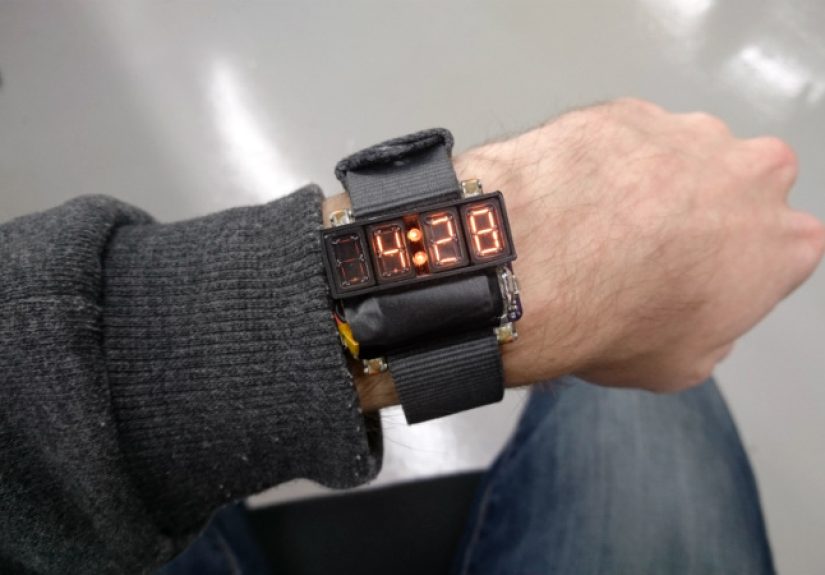
At first glance, a Numitron watch sounds like an idea that escaped from a sleep-deprived electronics lab at 2:13 a.m. It has glowing filaments, glass display modules, unapologetic retro vibes, and exactly the kind of aesthetic that makes sensible people mutter, “That looks cool, but surely it’s a terrible everyday watch.” And honestly, that reaction is fair. A watch based on incandescent seven-segment display tubes does not scream efficiency, restraint, or modernity. It screams, “I own a soldering iron and feelings.”
But here is the twist: a well-designed Numitron watch can be more practical than it looks. Not mainstream practical. Not “replace your smartwatch and join a productivity cult” practical. But genuinely wearable, readable, and usable in normal life. That makes the Numitron watch fascinating. It is not practical because it beats LCD, OLED, or e-paper on efficiency. It is practical because clever engineering turns an apparently ridiculous display technology into a watch that works better than common sense says it should.
What a Numitron Watch Actually Is
A Numitron is a seven-segment numeric display built with tiny incandescent filaments inside a glass envelope. It may look vaguely like a Nixie tube from across the room, but electrically and visually it behaves very differently. Nixies use high voltage and glowing gas discharge. Numitrons use low-voltage heated filaments arranged as segments. In plain English, that means a Numitron is closer to a very dramatic seven-segment display than to a true Nixie tube.
That distinction matters. The big practical advantage of Numitrons is that they do not need the high-voltage power supply that Nixie-based devices usually require. That makes them far easier to integrate with modern low-voltage electronics. For a wearable device, that is not a minor perk. It is the difference between “weird but possible” and “congratulations, you strapped a tiny power-supply problem to your arm.”
Numitron watches are therefore built around a strange but workable compromise. They borrow the romance of tube-era display design without inheriting every single electrical headache of vintage gas-discharge technology. The result is a watch that feels delightfully anachronistic while still being technically manageable.
Why “Practical” Sounds Wrong at First
The case against a Numitron watch is easy to make. The displays are larger than modern microdisplays. The glowing segments consume far more power than LCD. The glass-and-filament construction looks fragile. And because the display technology is old-school seven-segment, it is not exactly ideal for showing notifications, maps, emojis, or whatever else your smartwatch is desperately trying to do while begging for another charger.
On paper, a Numitron watch should be a lovable disaster: beautiful, bulky, battery-hungry, and destined to become an occasionally admired conversation piece rather than a daily-wear object. Yet that conclusion assumes the watch display must stay on all the time, run at full brightness, and behave like a conventional digital watch. Good Numitron watch design rejects all of those assumptions.
Where the Practicality Comes From
1. It Uses Human Behavior as a Feature
Most people do not stare at a watch continuously. They check the time in short bursts. That matters. A Numitron watch becomes much more realistic when the display only lights up on demand. Instead of treating the display like a permanently illuminated billboard, successful builds treat it like a dramatic stage light: on when needed, off when not.
This is where the most practical Numitron watch designs become clever. A tilt-to-wake gesture, a button press, or motion detection can trigger the display for just a few seconds. That sounds obvious now because modern wearables do similar tricks, but it is especially important for a filament-based display. You are not trying to win a battery marathon. You are trying to make brief, satisfying, legible time checks possible throughout the day.
That design logic is what turns the Numitron watch from absurd to usable. If the display is only active for a few seconds at a time, a power-hungry technology becomes surprisingly manageable. One notable build demonstrated exactly this principle by using gesture-based activation, short display windows, and brightness control instead of leaving the tubes on all day.
2. Daylight Readability Is Better Than You’d Expect
Many display technologies look wonderful indoors and then collapse emotionally in bright sunlight. Numitrons do not solve that problem perfectly, but they do have a real advantage: the glowing filament segments are bold, discrete, and visually distinct. Historic RCA material emphasized sunlight visibility, and modern makers continue to value Numitrons because they remain easy to read under bright conditions.
That is a bigger deal than it sounds. A watch can be quirky, bulky, or niche and still succeed if you can glance at it outdoors and immediately read the time. A watch that looks amazing but becomes illegible in daylight is basically wrist jewelry with commitment issues.
3. The Electronics Are Weird, Not Impossible
Compared with Nixie projects, Numitron projects are friendlier to modern maker hardware. Low-voltage operation means the driving electronics can be simpler, safer, and more compact. You still need thoughtful current handling, proper drivers, and serious power budgeting, but the device is not fighting you at every level. That lowers the barrier to practical construction.
In other words, the Numitron watch wins by being the least unreasonable member of the “retro glowing wrist gadget” family.
The Real Drawbacks You Cannot Pretend Away
Battery Life Is the Main Villain
Let us not get carried away. Numitron displays are incandescent. Incandescent means heat. Heat means current draw. Current draw means your battery starts looking nervous. One build that got plenty of attention reported display current in the hundreds of milliamps while lit. That is not a typo. That is the electrical equivalent of clearing your throat loudly.
So no, a Numitron watch is not practical in the “charge it once and forget it for three months” sense. Its practicality is conditional. It works because it accepts short bursts of heavy display use rather than constant illumination. Smart timeout logic, sleep modes, and aggressive power management are not optional bonuses here. They are the entire business plan.
Size Still Matters
Numitron modules are not microscopic. Designers must work around their height, footprint, and glass construction. Some builds solve this with clever PCB geometry, like mounting boards at right angles to reduce overall thickness. Others embrace a chunky industrial look and stop apologizing for it. Either way, a Numitron watch is not pretending to be a slim dress watch. It is a wearable object with presence.
That may sound like a drawback, but it also becomes part of the appeal. Many people who want a Numitron watch do not want it to disappear on the wrist. They want it to look unmistakably mechanical, visibly electronic, and just eccentric enough to make strangers ask questions.
Durability Requires Honest Design
Any watch built around exposed or semi-exposed glass display parts needs thoughtful housing. A flimsy case turns “retro charm” into “expensive sadness.” The better Numitron watch projects succeed not because the tubes are magically rugged, but because the rest of the watch is engineered to support them: sturdy framing, controlled exposure, solid connectors, and case designs that distribute stress instead of daring gravity to have opinions.
What Makes a Numitron Watch Work in the Real World
If you strip away the romance and look at the engineering decisions, a practical Numitron watch usually comes down to a handful of smart choices:
- On-demand display behavior so the filaments are only lit when needed.
- Motion or tilt activation to make time checks feel natural instead of fussy.
- Ambient light adjustment so brightness can stay useful without wasting power.
- Short display windows measured in seconds, not minutes.
- Compact driver architecture that respects the current needs of filament segments.
- Case design that accepts bulk gracefully instead of pretending the watch is thinner than physics allows.
None of that is flashy on its own. But together, those decisions explain why some Numitron watches feel like functioning products while others feel like museum pieces with a charging port.
How It Compares With Other Watch Displays
| Display Type | Best Strength | Biggest Weakness | Numitron’s Position |
|---|---|---|---|
| LCD | Excellent battery life | Can feel visually bland | Far less efficient, far more charismatic |
| LED | Bright and crisp | Historically more power-hungry than LCD | Even more power-hungry, but warmer and more distinctive |
| OLED | Flexible, modern, high-contrast | Less retro charm, potential burn-in issues | Loses on specs, wins on personality |
| Nixie | Spectacular tube aesthetic | High voltage and more complex power handling | Less dramatic, much easier to make wearable |
This comparison reveals the core truth. A Numitron watch is practical not because it dominates modern display tech, but because it occupies a sweet spot between impossible nostalgia and usable electronics. It keeps enough of the romance while dropping enough of the pain.
Why the Numitron Watch Feels So Different on the Wrist
Modern watches aim for invisibility. Even when they are feature-packed, they are designed to blend into everyday life. A Numitron watch does the opposite. It reminds you that timekeeping can be theatrical. The glow is warm rather than clinical. The numerals look like they were assembled by tiny electricians. The watch feels less like software and more like an object with temperament.
That matters more than engineers sometimes admit. Practicality is not only about efficiency. It is also about whether an object encourages use. People tolerate quirks when the interaction is satisfying. A mechanical keyboard is louder than it needs to be. A manual transmission asks more from the driver. A fountain pen is clearly showing off. Yet all three survive because the experience is rewarding. The Numitron watch belongs in that category.
Who Should Actually Want One?
A Numitron watch is ideal for people who enjoy electronics, industrial design, retro tech, and wearable objects that feel personal rather than mass-produced. It is for someone who likes explaining their gear. It is for someone who wants a watch that says more than “I have notifications.” It is for someone who appreciates engineering decisions, not just spec sheets.
It is not ideal for someone who wants maximum battery life, a feather-light case, health tracking, contactless payments, or a polished mainstream experience. A Numitron watch is a niche object, but it is a niche object that can still do the basic watch job well if designed intelligently.
The Bigger Lesson
The most interesting thing about a practical Numitron watch is not the watch itself. It is what the watch proves. It proves that practicality is often contextual. A design can be inefficient in absolute terms and still be sensible in use. It can be technically old and still feel fresh. It can look like a novelty and still solve the actual problem of telling time quickly, clearly, and memorably.
That is why the phrase “surprisingly practical” fits so well. The surprise is not that Numitrons have no drawbacks. They absolutely do. The surprise is that thoughtful design makes those drawbacks negotiable. Once you stop asking a Numitron watch to behave like an LCD watch and instead let it be a gesture-activated, short-burst, high-character timepiece, the idea stops being silly. It becomes coherent.
And coherence is a powerful thing in product design. Sometimes the best devices are not the ones that do everything. They are the ones that know exactly what they are and lean into it with confidence. The Numitron watch, in its own glowing, slightly dramatic way, does exactly that.
Extended User Experience: What Living With a Numitron Watch Feels Like
The day-to-day experience of a Numitron watch is where the whole concept either wins you over or sends you running back to boring, sensible quartz. In practice, it tends to do a little of both. The first thing you notice is that checking the time feels intentional again. You do not passively absorb the display the way you might with a normal digital watch. You wake it, glance, and enjoy a tiny performance. The numerals bloom into view with a warmth that feels almost mechanical, even though the watch is entirely electronic. It turns a basic action into a moment.
That moment matters because it changes your relationship with the object. A smartwatch often feels like a small office stapled to your wrist. A Numitron watch feels like a conversation between engineering and style. You are aware of the hardware. You notice the case thickness, the glow, the shape of the digits, the slight theatricality of the display coming alive. It is more tactile emotionally, even when the interface itself is simple.
In everyday wear, the best surprise is readability. Outdoors, where many novelty displays start acting shy, a good Numitron watch can stay clear and confident. Indoors, the warm filament look is even more charming. At night, it stops being a watch and becomes a tiny neon campfire for nerds. That sounds dramatic, but it is exactly why people fall for this kind of device. It gives time a texture.
Of course, the compromises show up too. You become more aware of charging habits. You learn that power management is not some invisible background feature; it is part of the watch’s personality. You may also notice that the watch has presence on the wrist. This is not the sort of device you forget you are wearing. Depending on the build, that can feel delightfully substantial or mildly ridiculous. Sometimes both before lunch.
There is also a social side to the experience. A Numitron watch attracts attention from exactly the right kind of people: engineers, makers, collectors, curious strangers, and anyone whose brain lights up at glowing retro hardware. Most watches disappear into clothing. This one starts conversations. Someone will ask if it is a Nixie watch. Someone else will ask if it is old. Someone will absolutely ask whether it is safe, as if your wrist is hosting a tiny reactor core. All of that becomes part of the fun.
And that is really the secret. A Numitron watch works when you stop judging it as a failed smartwatch and start appreciating it as a successful wearable artifact. It tells time. It looks fantastic. It rewards brief interactions. It has quirks, but they are coherent quirks, not random annoyances. Living with one is less about efficiency and more about delight with discipline. You accept the charging, the size, and the specialized appeal because in return you get something rare: a watch that feels alive, memorable, and genuinely unlike everything else in the room.
Conclusion
A Numitron watch should not work as well as it does. By every lazy first impression, it ought to be an impractical relic with terrible battery life and too much attitude. Yet when smart engineering meets honest design, it becomes something better: a retro-futuristic watch that is readable, wearable, and weirdly sensible on its own terms. That does not make it universal. It makes it special. And in a world full of optimized rectangles, special is doing better than ever.
Note: This HTML includes only the body content for direct web publishing.