Table of Contents >> Show >> Hide
- What Is Trincomalee?
- A Historic House With a Modernist Twist
- What “Gentle Restoration” Really Means
- The Garden: Where Restoration Becomes Regeneration
- Design Lessons From Trincomalee
- The Role of Memory and Custodianship
- The Cottage at Trincomalee
- Why Trincomalee Matters in Modern Design
- Experience Notes: What It Feels Like to Encounter a Place Like Trincomalee
- Conclusion
Some historic houses arrive with grand staircases, polished marble, and the faint smell of “please do not touch.” Trincomalee, the 1896 waterfront house in Lovett Bay, Australia, tells a different kind of story. It is reached only by water, framed by bushland and Pittwater, and restored not with a heavy hand but with a gardener’s patience. In other words, no design tantrums, no glossy overcorrection, and no attempt to make a 19th-century retreat behave like a showroom wearing white sneakers.
At the heart of Trincomalee is landscape designer Richard Unsworth, co-founder and director of Garden Life and Studio U.C. His approach to this historic house is best described as gentle restoration: preserve what matters, repair what needs care, and allow the natural environment to lead the conversation. The result is a rare example of historic house restoration where architecture, interiors, garden, memory, and ecology all sit at the same tableprobably on a vintage chair, near a window, with a very good view.
What Is Trincomalee?
Trincomalee is a historic waterfront property in Lovett Bay, a quiet pocket of Pittwater north of Sydney. Built in 1896, the house is one of the original old homes in the area and is accessible only by boat, water taxi, or ferry. That detail alone changes everything. A house you cannot simply drive to demands a slower rhythm. Groceries, tools, furniture, guests, and renovation materials all have to arrive with intention. Forget popping out for one more screw. At Trincomalee, even a small project asks, “Did you check the tide?”
The house was originally built as a retreat for a Scottish opera singer. Later, it became associated with the family of Australian businessman Mark Foy, and its name, Trincomalee, was reportedly inspired by a favored holiday place in Sri Lanka. Over time, the property passed into the Johnston family, and Justine Johnston grew up connected to the home. Richard Unsworth first visited as her friend decades ago, eventually joining Justine, their partners, and family history in purchasing and caring for the place.
A Historic House With a Modernist Twist
One of the most fascinating things about Trincomalee is that it is not frozen in one era. It began as a late-19th-century retreat, but the interiors were significantly reworked in the late 1970s and early 1980s with a modernist sensibility. Instead of erasing that chapter, the restoration accepts it as part of the house’s layered identity.
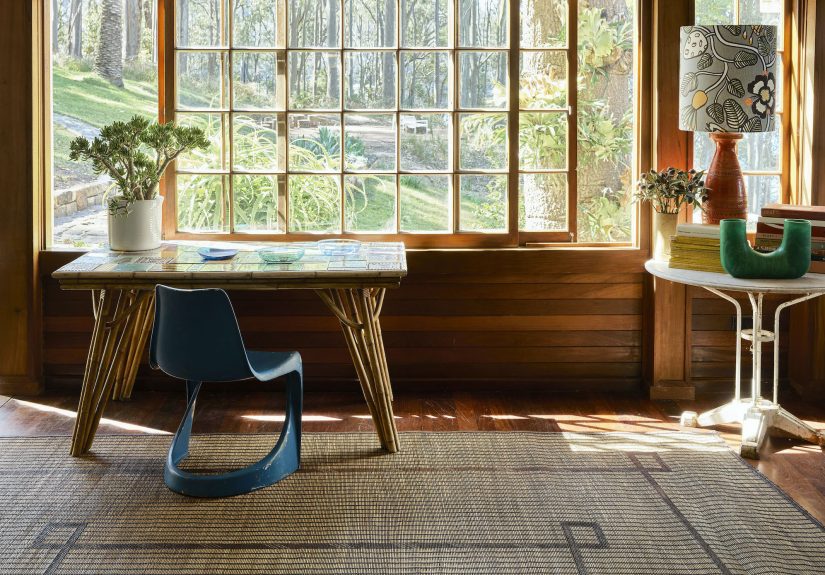
Inside, the house is rich with Australian hardwoods, including red gum, turpentine, Huon pine, and celery top pine. These timbers give the rooms a warm, dense, almost cabinet-like feeling. The surfaces are not timid. They glow, they grain, they announce themselves. In the wrong hands, this much timber could feel heavy, but at Trincomalee it becomes atmosphere: part cabin, part coastal retreat, part time capsule, and part “please sit down with a book and stop checking your phone.”
Rather than stripping the house back to a simplified heritage fantasy, Unsworth and his co-owners have kept the eccentricity alive. Vintage textiles, collected furniture, colorful fabrics, art, rugs from travels, and objects with personal meaning soften the timber and add personality. The goal is not perfection. The goal is belonging.
What “Gentle Restoration” Really Means
Gentle restoration is not the same as doing nothing. In fact, it can be harder than a full renovation because it requires restraint. Anyone can demolish a tired room and order a catalog version of “timeless coastal luxury.” It takes a more sensitive eye to ask which scratches, materials, views, habits, and oddities deserve to stay.
In historic preservation, the best projects usually begin by identifying character-defining features: the materials, spaces, details, and relationships that give a place its meaning. At Trincomalee, those features include the original siting, the boat-only access, the relationship to Pittwater, the timber interiors, the modernist reworking, the old stonework, the boathouse, the tidal pool, and the surrounding bush garden. Remove those elements, and the house might still be beautifulbut it would no longer be Trincomalee.
Preserve Before You Replace
The Trincomalee approach shows the value of preservation before replacement. Timber walls have been cleaned, nourished, and allowed to shine rather than painted into submission. Existing features have been respected rather than disguised. The house’s unusual details are treated as assets, not problems to be corrected.
Let the Site Set the Rules
As a landscape designer, Unsworth understands that every site has its own logic. Lovett Bay is not a blank canvas. It is a living environment with water, sandstone, native woodland, light shifts, wildlife, weeds, old plantings, and community memory. The design does not impose a stiff garden diagram over this complexity. It listens first.
The Garden: Where Restoration Becomes Regeneration
The garden at Trincomalee is not a decorative border around the house. It is the heart of the restoration. The property sits between bushland and Pittwater, with spotted gums, sandstone walls, a mature bunya pine, and a coastal bush atmosphere that makes the house feel nested rather than displayed.
When Unsworth began working on the garden, much of the site had become overgrown. Invasive or overly dominant plants had crowded views and limited light. The early work involved removalclearing weeds, opening space, and allowing the structure of the land to reappear. This is the unglamorous side of garden restoration: less “ta-da” and more sweat, mud, wheelbarrows, and discovering that nature has a wildly successful filing system called roots.
But the goal was never to create a manicured estate garden. Instead, Unsworth looked to the surrounding spotted gum woodland and local bushland for guidance. The garden uses native and resilient plants, encourages endemic growth, and allows the bush to flow toward the house. Around the residence, some exotics and succulents remain, adding texture and color. Farther from the house, the planting becomes looser and more native, creating a gradual transition from domestic garden to wild landscape.
Design Lessons From Trincomalee
1. A Historic Home Does Not Need to Be Perfect
Trincomalee proves that charm often lives in the irregularities. The house is not precious in a museum-like way. It is lived in, layered, and personal. The wood is strong. The furniture has stories. The views do half the decorating. The result feels emotionally intelligent, which is a phrase we should probably use more often for houses and less often for office team-building workshops.
2. Restoration Should Respect Multiple Eras
Many historic homes are altered over time. A sensitive restoration does not automatically erase later changes. At Trincomalee, the 1970s and 1980s modernist interventions are part of the property’s identity. They show how the house evolved, how different generations lived, and how style can become history if given enough time and dignity.
3. Landscape Is Not an Afterthought
The garden is not just scenery. It shapes how the house is approached, experienced, cooled, shaded, framed, and remembered. The stone paths, native plantings, tidal pool, boathouse, and woodland edges create a complete sense of place. For anyone restoring a historic home, Trincomalee is a reminder to look beyond the walls. The story may be growing outside.
4. Patience Is a Design Tool
One of the strongest lessons from Trincomalee is that time can be an active part of design. The garden has not been forced into instant maturity. It has been watched, edited, and allowed to reveal what wants to return. This kind of patience is rare in an age of quick makeovers, but it is essential for ecological restoration and historic preservation.
The Role of Memory and Custodianship
Trincomalee is more than a beautiful property. It is also a house full of relationships. Justine Johnston’s family history is tied to it. Richard Unsworth visited the house for many years before becoming one of its custodians. The restoration therefore carries emotional weight. It is not about ownership in the flashy sense. It is about care.
That wordcustodianshipmatters. A custodian does not simply possess a place; a custodian protects it for the next chapter. At Trincomalee, this means keeping the house’s history legible, maintaining the garden as habitat, honoring the people who loved it before, and making thoughtful updates where needed.
This idea also appears in Unsworth’s broader design philosophy. Garden Life and Studio U.C emphasize meaningful outdoor spaces, environmental awareness, sustainability, and connection to nature. At Trincomalee, those values are not marketing language. They are visible in the way the garden is edited, the way native plants are encouraged, and the way the house continues to feel connected to the bush rather than sealed off from it.
The Cottage at Trincomalee
Another chapter in the property’s story is the restored caretaker’s cottage, often affectionately called Trinco. Like the main house, it dates from the late 19th century and sits within the same remarkable waterside setting. Recent updates gave the cottage new life while preserving its relaxed modernist spirit.
The cottage restoration included a new galley kitchen, an updated bathroom, a reworked bedroom, a daybed, vintage furnishings, and details that reflect the main house’s collected personality. It remains small, warm, and deeply connected to the view. Its appeal is not about excess. It is about waking to water, hearing the landscape, and feeling that the world has been gently put on airplane mode.
Why Trincomalee Matters in Modern Design
In today’s design culture, many homes are renovated until they look strangely similar: smooth surfaces, neutral palettes, expensive lighting, and the occasional bowl placed where no human would ever need a bowl. Trincomalee moves in the opposite direction. It shows that the most memorable homes are often specific, imperfect, and rooted in place.
For historic house restoration, Trincomalee offers a practical model. Preserve original and meaningful materials. Respect later layers when they have become part of the story. Work with the surrounding landscape. Use local ecology as inspiration. Avoid unnecessary demolition. Make modern updates quietly. Let personal objects bring life into old rooms.
For landscape design, the property offers an equally important lesson: gardens do not always need to be controlled to be beautiful. Sometimes the designer’s role is to remove pressure, reduce weeds, restore balance, and let the site breathe again. The best design may look effortless precisely because someone made hundreds of careful decisions you do not notice at first glance.
Experience Notes: What It Feels Like to Encounter a Place Like Trincomalee
Imagine arriving at Trincomalee by boat. This is not the usual driveway drama where hedges part and a garage door blinks at you like a sleepy robot. The approach is slower and more cinematic. Water comes first. The house appears through trees. The shoreline, jetty, and boathouse set the mood before you reach the front door. You do not simply enter the property; you transition into it.
The first experience is likely sound. Pittwater has its own soft vocabulary: water against timber, wind in leaves, birds moving through the canopy, the low bump of a boat, the quiet thud of footsteps on old paths. Then comes texture. Stone steps, timber walls, woven fabrics, vintage rugs, rough bark, warm sun, cool shade. Trincomalee is the kind of place that reminds you that design is not only visual. It is physical, atmospheric, and sometimes wonderfully inconvenient.
Inside the house, the timber creates an enveloping feeling. Many modern interiors chase brightness at all costs, but Trincomalee understands the pleasure of depth. The darker wood surfaces make color feel more alive. A textile on the wall, a painted object, a patterned rug, or a flash of pink from the garden suddenly has power. The rooms feel collected rather than styled. They invite lingering, not performing.
Outdoors, the experience changes again. A restored garden like this is not about marching from one feature to the next. It is about noticing. A native groundcover returning where weeds once dominated. A sandstone wall emerging from overgrowth. A spotted gum catching afternoon light. A path that feels discovered rather than installed. The garden’s beauty comes from its transitions: house to terrace, terrace to planting, planting to bush, bush to water.
For homeowners, designers, and garden lovers, the emotional lesson is powerful. You do not need to erase age to create freshness. You do not need to flatten a landscape to make it usable. You do not need to buy everything new to create comfort. The most satisfying spaces often come from editing, repairing, reusing, and waiting. Yes, waitingthe design tool nobody wants to put on a mood board because it refuses to ship in two business days.
A visit to a place like Trincomalee would likely leave you with practical ideas: wax the old timber instead of painting it, keep the strange inherited chair, study your garden before planting, remove invasive growth before adding new layers, use local stone when possible, and allow outdoor rooms to feel connected to the larger landscape. But it may also leave you with something quieter: the desire to become a better listener. Houses speak. Gardens speak. Historic places definitely speak, though sometimes they mumble through old plumbing and overgrown ferns.
That is the real experience of Trincomalee. It is not only a restored house. It is a reminder that care can be a design language. A place can be improved without being made unrecognizable. A garden can be shaped without being bullied. A historic home can keep its memories and still welcome new life. And if the journey there requires a boat, perhaps that is part of the wisdom: slow down before you arrive.
Conclusion
Trincomalee is a masterclass in gentle restoration because it refuses to separate house from landscape, history from comfort, or beauty from care. Richard Unsworth’s work shows how a historic waterfront home can evolve without losing its soul. The 1896 house, its modernist timber interiors, its restored cottage, its regenerating garden, and its boat-only setting all contribute to a rare sense of place.
For anyone interested in historic house restoration, landscape design, native gardens, or soulful interiors, Trincomalee offers a clear message: the best restoration is not always the loudest. Sometimes it is the quiet act of cleaning timber, opening a view, removing weeds, keeping the odd chair, planting what belongs, and letting time do some of the work. That may not sound dramatic, but in designas in gardeningthe gentle approach often has the deepest roots.