Table of Contents >> Show >> Hide
- What Exactly Is a Picosatellite?
- Why Small Satellites Changed the Space Economy
- What Tiny Satellites Actually Do Up There
- Why Democratizing Space Matters Beyond Aerospace
- The Catch: Space Is More Open, Not Easy
- The Infrastructure Behind the Revolution
- Where Picosatellites Go Next
- What the Experience of Democratized Space Actually Feels Like
- Conclusion
For most of the Space Age, getting to orbit felt a bit like trying to reserve a table at the world’s fanciest restaurant: expensive, exclusive, and definitely not something you did on a student budget. Satellites were massive, custom-built machines that took years to develop and a small mountain of money to launch. Then the industry started shrinking things. Fast.
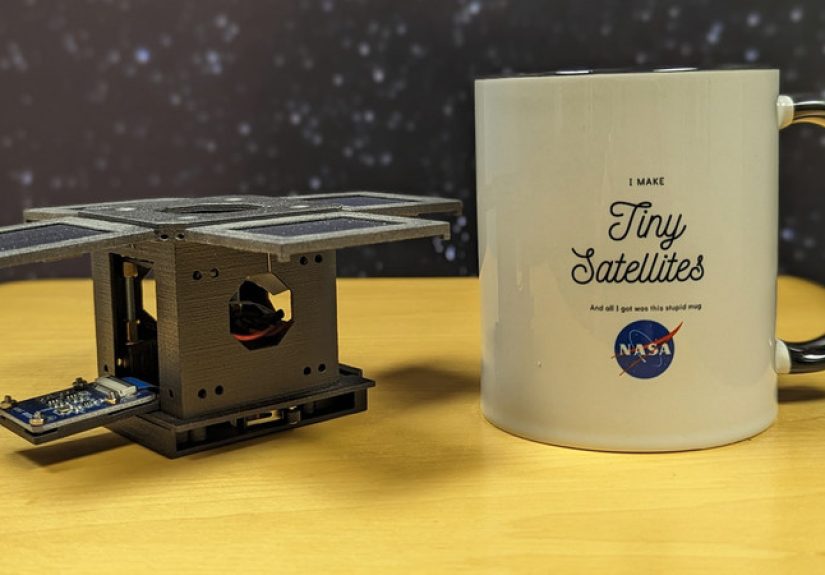
That is where the picosatellite story begins. Tiny spacecraft, often built around standardized designs, have helped turn space from an elite engineering playground into something far more open. Universities can now fly real missions. Startups can test hardware without betting the company on one giant spacecraft. Researchers can gather targeted data faster. Even organizations without a long history in aerospace can find a way into orbit. It is not exactly cheap-cheap, but compared with the old model, it is a bargain with solar panels.
The phrase “democratizing space” gets tossed around a lot, sometimes with enough enthusiasm to power a launch pad. But in this case, the idea has real substance. Small satellites, especially picosatellite-inspired platforms and their close cousins in the CubeSat world, have lowered the barriers to entry in meaningful ways. They have changed who gets to build space hardware, how quickly missions can be designed, and what kinds of questions can be asked from orbit.
What Exactly Is a Picosatellite?
Strictly speaking, a picosatellite is a very small satellite in the mass range below a nanosatellite. In practice, though, the public conversation often blends picosatellites with the broader family of ultra-small spacecraft, including CubeSats and PocketQube-style designs. That overlap matters because the real revolution was not just size. It was standardization.
Instead of reinventing the satellite bus every single time, engineers began building around repeatable formats. That made it easier to mass-produce parts, simplify deployment, and cut development time. The CubeSat standard, created through early collaboration between Cal Poly and Stanford, was especially influential. Its larger impact was cultural as much as technical: it taught the space world that small, modular spacecraft could be useful, educational, and commercially relevant all at once.
In other words, picosatellites did not just shrink the spacecraft. They shrank the ego of the whole system. Suddenly, you did not need a bus-sized satellite to do meaningful work. Sometimes a box the size of a loaf of bread would do. Sometimes even smaller.
Why Small Satellites Changed the Space Economy
Standard parts made access less painful
One reason low-cost space access became more realistic is that standard formats encouraged an ecosystem of off-the-shelf components. Solar panels, radios, flight computers, deployers, and attitude-control hardware became easier to source. Instead of building every part from scratch, teams could buy proven subsystems and focus on the mission itself.
That shift trimmed both cost and risk. A university lab could build something credible without acting like a mini version of a Cold War aerospace prime. A startup could fly an early demonstration mission, learn from it, and improve the next design. The result was a faster feedback loop, and in technology, fast feedback is basically rocket fuel.
Rideshare launches opened the door wider
Small satellites also benefited from a change in launch strategy. Rather than requiring a dedicated rocket, many could hitch a ride as secondary payloads. That rideshare model dramatically expanded launch opportunities. Once a team no longer had to buy the whole launch buffet just to get one tiny appetizer into orbit, the economics started looking very different.
NASA’s CubeSat Launch Initiative helped push that idea into the mainstream by giving educational institutions and nonprofits a path to launch. Programs like that matter because democratization is not just about making something technically possible. It is about creating systems that let more people participate. Hardware standards, deployers, rideshare opportunities, and mission support all work together to turn “nice idea” into “actual flight article.”
What Tiny Satellites Actually Do Up There
This is the part where skeptics usually ask, “Cute, but can a tiny satellite do anything serious?” Fair question. The answer is yes, with one important caveat: small satellites do not replace every big mission. They are best when matched to the right job.
For Earth observation, they are especially powerful. Fleets of small spacecraft can revisit the same location frequently, which is useful for agriculture, disaster response, land-use monitoring, and climate-related analysis. In the commercial world, Planet’s Dove satellites helped popularize the idea that frequent imaging from small platforms could generate real value. The big win was not just resolution. It was cadence. Seeing change every day can matter more than seeing one perfect image once in a while.
Science missions have benefited too. NASA’s TROPICS mission showed how a constellation of CubeSats can improve the monitoring of tropical cyclones by passing over storms far more often than traditional architectures allow. That kind of temporal coverage is gold for forecasting and atmospheric research.
Then there is deep space, which used to sound laughably ambitious for tiny spacecraft. NASA’s MarCO mission helped change that conversation. Those small spacecraft traveled independently toward Mars and demonstrated that CubeSat-class systems could contribute beyond low Earth orbit. That was not a gimmick. It was a proof point.
Education may be the most underappreciated application of all. When students design, build, test, launch, and operate a satellite, they are not learning aerospace in the abstract. They are learning it the hard way, which is usually the useful way. Real requirements, real deadlines, real thermal problems, real communications constraints, real consequences. Nothing clarifies a classroom lecture quite like the possibility of your radio not turning on in orbit.
Why Democratizing Space Matters Beyond Aerospace
The impact of small satellites extends beyond the space sector itself. Lowering the cost of orbital access changes who can collect data, test ideas, and participate in scientific discovery. That has ripple effects across climate science, communications, agriculture, logistics, defense, disaster response, and education.
Think about environmental monitoring. A world with more affordable orbital tools is a world where more organizations can watch coastlines, crops, wildfires, floods, and infrastructure. Think about connectivity. Tiny spacecraft and experimental communications missions can help test ways to support remote regions and Internet of Things applications. Think about research. A fast, lower-cost platform lets teams try higher-risk ideas that might never survive a billion-dollar flagship review process.
That is the quiet genius of the picosatellite movement. It makes experimentation normal. In older space models, failure was catastrophic because each mission cost so much and took so long. In the new model, you can prototype, iterate, and improve. Not recklessly, but realistically. That is how innovation usually works on Earth, and now it works a little more like that in orbit too.
The Catch: Space Is More Open, Not Easy
Now for the part nobody puts on the inspirational poster. Democratizing space does not mean space is simple. It means access is broader. Those are not the same thing.
Tiny satellites operate with brutal constraints. Power is limited. Thermal control is harder. Antennas are tiny. Radiation is rude. Attitude control is a constant headache. If your payload needs exquisite pointing accuracy or lots of onboard energy, physics may gently escort your dreams toward a larger bus.
Communications and regulation are also a big deal. Teams still have to navigate radio licensing, mission assurance, orbital safety requirements, and launch integration rules. The paperwork may not be glamorous, but it is very much part of the mission. You can build the smartest little spacecraft in the world, but if your regulatory homework is a mess, it does not get a boarding pass.
Then there is orbital debris, the issue that turns every cheerful smallsat conference into a slightly more sober conversation. More accessible space has led to more spacecraft in orbit. That makes responsible design, tracking, and end-of-life disposal essential. U.S. regulators have tightened expectations for post-mission disposal in low Earth orbit, and that reflects a simple truth: democratizing space only works if orbit remains usable.
So yes, more players can join the game. But the game still has rules, and increasingly, it needs better traffic management too.
The Infrastructure Behind the Revolution
One reason this movement has become durable rather than trendy is that an entire support ecosystem has grown around it. There are launch providers offering rideshare opportunities, component vendors selling specialized smallsat hardware, software teams building mission-planning tools, and government agencies improving licensing and space-traffic support.
That invisible infrastructure is what turns a small satellite from a cool lab object into an operational mission. A picosatellite is never just a satellite. It is a ground station, a launch arrangement, a regulatory process, a mission operations plan, a power budget, a thermal model, and a very nervous spreadsheet with too many tabs.
In that sense, democratization is not just about cheaper hardware. It is about maturing the whole stack around access to orbit.
Where Picosatellites Go Next
The future of picosatellites and adjacent ultra-small platforms will likely be defined by capability density. Engineers are trying to squeeze better propulsion, more reliable communications, smarter onboard computing, stronger autonomy, and more capable sensors into smaller volumes. That means the next wave of tiny spacecraft may be able to do more than simple demonstration missions.
Constellations will remain important, especially for time-sensitive data collection. Earth observation, weather intelligence, maritime awareness, and responsive science are all areas where many small spacecraft can outperform one big one. At the same time, new form factors beyond the classic cube are being explored to improve power generation and payload flexibility.
But the bigger story is social, not merely technical. As barriers fall, more countries, more schools, more startups, and more interdisciplinary teams can shape what happens in orbit. Space becomes less like an exclusive club and more like a growing marketplace of ideas. That does not eliminate inequality in access, of course. Launch, compliance, and operations still cost real money. Yet the threshold is lower than it used to be, and sometimes progress starts with lowering the first step.
What the Experience of Democratized Space Actually Feels Like
If you want to understand this movement, do not picture only polished renders of satellites floating heroically over Earth. Picture a lab where students are eating cold pizza at 11:40 p.m. while arguing about a power budget. Picture a startup team trying to fit ambition, thermal control, and common sense into one absurdly small enclosure. Picture a test engineer staring at telemetry like it is a horoscope written by an electrical gremlin.
That is the lived experience behind democratized space. It feels less like magic and more like persistence. A small satellite mission often begins with a bold idea and quickly collides with the ancient aerospace tradition known as “having to prove everything.” Can the radio survive vibration? Will the batteries stay within limits? Is the antenna deployment sequence reliable? Did someone remember that space is both vacuum and drama?
For students, these missions can be transformative because they compress an entire engineering career into a couple of intense years. A team member might touch systems engineering on Monday, soldering on Tuesday, documentation on Wednesday, troubleshooting on Thursday, and existential reflection on Friday. They learn that the glamorous part of space is real, but so is the unglamorous part: checklists, verification, redundancy, and the humbling power of a tiny connector installed the wrong way.
For researchers, the experience is often liberating. Smaller missions let them ask sharper questions. Instead of waiting a decade for a massive flagship program, they can design a targeted experiment, fly it faster, and learn sooner. That changes the pace of science. It also changes the psychology of science. A lower-cost mission invites more daring ideas because the price of trying is not quite so terrifying.
For founders and startups, the experience is usually a mix of optimism and disciplined panic. Tiny satellites give them a path to space, but not a free pass. They still have to earn credibility through testing, operations, and performance. The difference is that now they can attempt a first mission without the kind of capital burn that used to keep newcomers locked out.
And for mission operators, the emotional payoff is unforgettable. The first signal from orbit is not just a technical event. It is relief, validation, adrenaline, and disbelief all at once. Months or years of design choices collapse into one moment: does the spacecraft talk back? When it does, even in the simplest way, the room changes. People grin. Some people yell. Someone definitely says, “We have a heartbeat,” because aerospace engineers are romantics pretending to be calm.
That is why the phrase “one picosatellite at a time” feels right. The democratization of space is not a single giant leap. It is thousands of careful, difficult, thrilling small steps. One lab. One launch. One signal lock. One mission that proves somebody new belongs in orbit.
Conclusion
Picosatellites and other ultra-small spacecraft have not made space effortless, but they have made it more reachable. That distinction matters. By lowering development costs, encouraging standardization, expanding rideshare access, and supporting faster mission cycles, these tiny machines have widened the doorway to orbit. Universities can build real missions. Startups can validate new technology. Scientists can gather focused data. Students can move from textbooks to telemetry. That is not a side story in aerospace. It is one of the defining shifts of the modern space era.
So yes, space is still hard. It still demands engineering rigor, regulatory discipline, and sustainable orbital behavior. But it is no longer reserved for the biggest budgets and the oldest institutions. Thanks to picosatellites, CubeSats, and the ecosystem built around them, the cosmos has become a little less exclusive and a lot more interesting. The future of space may still include giant rockets and billion-dollar observatories, but it will also include very small spacecraft doing very smart things. And honestly, that feels like progress with excellent packaging.