Table of Contents >> Show >> Hide
- Who Is the Guy Behind the Viral Disney Photo Mashups?
- Why These Disney Character Photo Edits Work So Well
- This Trend Is Bigger Than One Artist
- Why Disney Fits This Kind of Art Better Than Almost Anything Else
- What Makes These Images So Shareable?
- So, Is It Just Cool? Yes. But It’s Also Smart Visual Storytelling
- The Experience of Seeing Disney Characters Step Into Real Life
Some people take vacation photos. Some people take selfies. And then there is the rare, glorious overachiever who looks at an ordinary picture and thinks, “You know what this needs? A Disney sidekick, a princess, and maybe one mildly chaotic villain for flavor.” That is exactly why the viral appeal of Disney character photo edits works so well. They are funny, nostalgic, technically impressive, and just a little ridiculous in the best possible way.
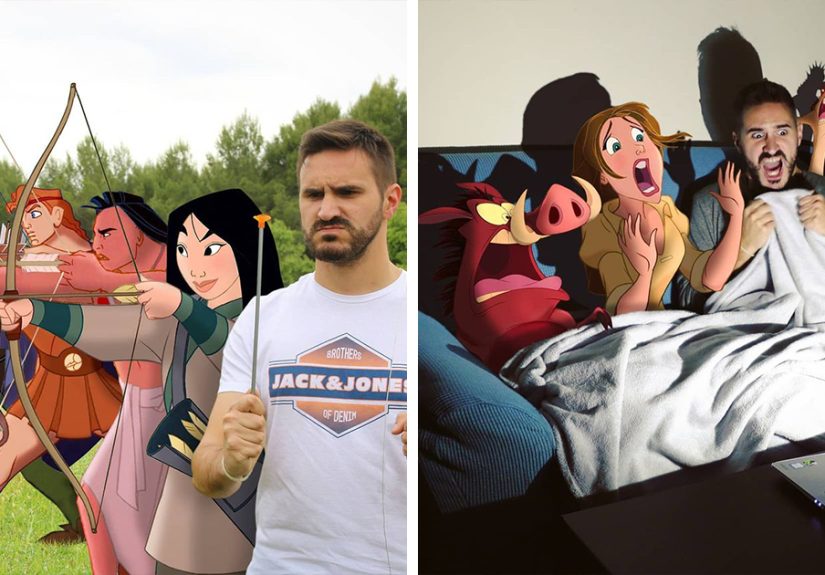
The artist most closely tied to this viral concept is Samuel MB, a creative who has been widely recognized for editing famous Disney characters into his own real-life photos. The result is not just a clever Photoshop exercise. It feels like a tiny portal has opened between childhood imagination and adult life. In one image, he is hanging out with beloved animated characters as if they were old friends. In another, the joke lands because the character appears to belong there, reacting to the moment instead of merely being pasted into it like a sticker on a laptop.
And that is the whole trick: these images are cool because they do more than combine cartoons and photography. They turn Disney fandom into visual storytelling. They make fantasy feel casual. They take characters audiences have loved for years and drop them into everyday settings where they suddenly seem weirdly, hilariously, and almost suspiciously at home.
Who Is the Guy Behind the Viral Disney Photo Mashups?
Samuel MB has been described in coverage as an artist, actor, and primary school teacher, which already sounds like the résumé of someone who would absolutely understand how imagination works. His now-famous edits place Disney characters into scenes from his daily life, travel moments, and playful staged photos. Instead of treating Disney icons like museum pieces, he treats them like scene partners. That choice matters.
His work does not rely on shock value. It relies on chemistry. A character is not floating awkwardly in the corner doing nothing like an unpaid extra in a low-budget remake. The characters interact. They lean, react, cuddle, pose, interrupt, and generally behave like they have every right to be there. That is why the images feel so alive.
One of the most charming things about Samuel MB’s work is how often it plays with time. In some images, he edits his own childhood photos so it looks as if he grew up alongside Disney characters. That idea is simple, but emotionally sneaky. It turns fan art into memory theater. Suddenly, the image is not just saying, “Wouldn’t it be funny if Belle showed up?” It is saying, “What if these characters were with us all along?” That is catnip for anyone who grew up on Disney movies and still remembers exactly where they were when they first heard “A Whole New World.”
Why These Disney Character Photo Edits Work So Well
1. They run on nostalgia, but not the lazy kind
There is nostalgia, and then there is weaponized nostalgia. These edits land because they use familiar characters without simply coasting on recognition. The best ones create a fresh joke, a believable interaction, or a little emotional twist. Viewers are not just recognizing Ariel, Simba, or Hercules. They are seeing those characters behave in an unexpected real-world situation.
That mix of familiarity and surprise is powerful. Disney as a brand has spent decades building emotional ties with audiences, and official company messaging has repeatedly leaned into the idea of shared memories and multigenerational storytelling. So when an artist inserts a beloved character into a modern photo, the image instantly activates memories the viewer already has. It is fan art with a built-in emotional shortcut.
2. The comedy is visual and immediate
A good meme makes you laugh in one second. A good composite makes you do a double take first. That is even better. Samuel MB’s images often work because they preserve the normal rhythm of a snapshot and then derail it with something magical. A perfectly ordinary bench photo becomes a scene with a princess. A travel image becomes a secret crossover event. A quiet domestic moment becomes a full cartoon intervention.
The humor is rarely noisy. It is more of a “wait… is that actually?” reaction. That kind of image performs well online because it rewards both quick scrolling and longer looking. At first glance, it is fun. At second glance, it is craft.
3. The technical work sells the fantasy
Let’s give credit where it is due: if the lighting is wrong, the shadows are weird, and the edges look crunchy, the magic dies immediately. Good photo compositing is part illusion, part discipline. Adobe’s own educational material on composite photography emphasizes the same core principles again and again: layer masks, color matching, opacity adjustments, and blending edges so separate elements feel like they belong to one scene.
That sounds dry, but it is really the difference between “Wow, Stitch looks like he is actually sitting there” and “Why does Stitch look like he was stapled onto the air?” Artists who do this well pay attention to scene direction, perspective, texture, color temperature, and even the emotional logic of the pose. The character has to fit the photo physically, stylistically, and narratively.
Samuel MB’s strongest images succeed because they understand that realism is not only about rendering. It is about behavior. A character must seem to react to the environment, the weather, the object they are touching, and the person they are with. When that happens, the viewer stops analyzing and starts believing, at least for a second. In internet time, that second is everything.
This Trend Is Bigger Than One Artist
Samuel MB is not the only creator who has explored what happens when Disney characters step closer to reality. Other artists have built entire bodies of work around the same fascination. Jirka Väätäinen, for example, became widely known for his “Real Life Disney” interpretations, turning characters such as Cinderella, Ursula, Moana, and Frozen’s Anna and Elsa into realistic portraits. Those works were less comedic than Samuel MB’s, but they tapped into the same cultural curiosity: what happens when an animated icon is translated into our world?
That broader trend matters because it shows this is not just a one-off viral gimmick. It is a genuine visual obsession in digital culture. People love seeing fictional characters cross into reality because it changes the relationship between viewer and story. Cartoons are no longer safely locked inside the screen. They are suddenly in the room, on the sidewalk, at the fountain, or photobombing your trip like they missed the group chat but showed up anyway.
Even newer AI-assisted work has played with this same idea, creating photorealistic versions of animated characters. But the important distinction is that Samuel MB’s appeal comes from deliberate scene construction and storytelling, not just the novelty of pressing a button. His images feel authored. They have timing. They have setup and payoff. They feel like little visual skits.
Why Disney Fits This Kind of Art Better Than Almost Anything Else
There is a reason artists keep coming back to Disney instead of, say, random background characters from a forgotten cereal commercial. Disney characters are designed to be memorable at a glance. Their silhouettes are strong. Their personalities are instantly readable. Their emotional language is huge. You can understand a Disney character’s mood from a pose, a gesture, or a facial expression in half a second.
That design strength has roots in Disney’s long artistic tradition. Disney animators have historically been trained to study anatomy, motion, and gesture through life drawing. The goal has always been to make animated figures feel convincing even when they are stylized. That foundation helps explain why these characters can slide into real-world images so effectively. Their acting reads clearly. Their body language feels intentional. They already carry the illusion of life.
And then there is the history factor. The idea of combining real people and animated worlds is practically baked into Disney’s DNA. The Alice Comedies of the 1920s featured a live girl interacting inside a cartoon world, and later Disney projects kept revisiting the hybrid magic of animation meeting reality. More recently, Once Upon a Studio celebrated Disney Animation by bringing together hand-drawn, CG, and live-action elements, with a staggering number of characters sharing the same playful visual space. In other words, Samuel MB’s art feels modern, but the instinct behind it is old-school Disney through and through.
What Makes These Images So Shareable?
Three things: recognition, emotion, and craft.
Recognition gets the click. People instantly know the characters, which lowers the barrier to engagement. Emotion keeps them looking because the image taps into memory, comfort, or humor. Craft earns the share because viewers can tell there is actual skill involved. A sloppy edit gets a shrug. A polished one gets a “Okay, this is ridiculously good.”
There is also a broader internet truth at work here: people love content that makes childhood feel portable. That is a huge reason Disney-themed edits spread so easily. They allow adults to revisit familiar characters without feeling like they are just rewatching the same movie again. Instead, the characters are updated through context. They are not changing who they are; they are changing where they appear. That is enough to make them feel new.
And the format is flexible. These edits can be sweet, funny, romantic, absurd, or lightly chaotic. One image can feel like a fairy tale. Another can feel like a sitcom. Another can feel like your camera accidentally wandered into another dimension. It is basically nostalgia with range.
So, Is It Just Cool? Yes. But It’s Also Smart Visual Storytelling
At first glance, “guy places Disney characters into his photos” sounds like the kind of headline you click when your brain wants a snack. Fair enough. But the reason it sticks is deeper than novelty. These images work because they combine multiple pleasures at once: technical skill, humor, fan knowledge, emotional memory, and pop-culture shorthand.
Samuel MB’s best work feels less like a gimmick and more like a conversation between worlds. He uses Disney characters not just as decoration, but as collaborators inside the frame. The result is whimsical without being empty, polished without feeling cold, and funny without losing the sense of wonder that made Disney characters matter in the first place.
In a digital landscape packed with disposable visuals, that combination is rare. Plenty of images are quick. Far fewer are quick and memorable. These are memorable because they make viewers feel like imagination is still available to adults, no permission slip required.
The Experience of Seeing Disney Characters Step Into Real Life
Part of the joy of these images is the experience they create for the viewer. You are not just looking at a Photoshop edit. You are experiencing a tiny emotional collision between everyday life and childhood fantasy. The first feeling is usually surprise. You notice the setting before you notice the character. It looks like a normal travel shot, a casual portrait, or a funny little moment from someone’s day. Then your brain catches up and realizes a Disney character is sitting in the scene like this is completely normal behavior. That delay is what makes the image so satisfying. Your eyes see reality, but your memory sees animation, and the two start arguing in the most entertaining way possible.
Then comes recognition. Maybe it is a princess you watched on repeat as a kid. Maybe it is a side character you forgot you loved until that exact second. Suddenly, the image becomes personal. It stops being just “a cool digital artwork” and turns into a reminder of a specific era in your life. You remember the VHS tapes, the blankets, the songs, the little rituals of watching the same movie for the hundredth time and still acting like the ending was somehow a plot twist. These edits are clever because they do not merely show a character. They reactivate a whole set of feelings attached to that character.
There is also a strangely comforting experience in seeing fantasy behave casually. Disney characters are usually framed in epic settings: castles, oceans, jungles, magical kingdoms, dramatic cliffs where somebody is either singing or having a breakthrough. But when they are dropped into a bench photo or a street scene, they become approachable. They feel less like icons and more like companions. That shift changes the mood entirely. The characters are still magical, but the magic becomes portable. It can sit beside you. It can travel with you. It can show up in ordinary life and make the ordinary feel less ordinary.
That is why people keep sharing this kind of work. It offers a brief experience of permission. Permission to be amused, nostalgic, and a little sentimental without apology. It reminds viewers that growing up does not automatically require abandoning whimsy. In fact, part of being an adult may be finding smarter, more creative ways to bring whimsy back into the frame.
And maybe that is the coolest thing about all of it. These images do not ask us to believe Disney characters are real in a literal sense. They ask us to remember how real they once felt. That is a very different kind of realism, and in many ways, it hits harder. It is emotional realism. It is memory realism. It is the feeling of seeing a fictional character placed into a photograph and thinking, for one cheerful second, “Honestly, yes. They belong there.”