Table of Contents >> Show >> Hide
- Why the Original Question Is the Wrong One
- 8 Powerful Ways to Handle a Narcissistic Person More Wisely
- 1. Stop Auditioning for Their Approval
- 2. Set Boundaries Like They Are Real, Not Decorative
- 3. Refuse the Highs-and-Lows Roller Coaster
- 4. Watch Actions, Not Charm
- 5. Keep Your Support System Close
- 6. Protect Your Self-Esteem on Purpose
- 7. Do Not Mistake Intensity for Intimacy
- 8. Know When the Smart Move Is Distance
- What Healthy Change Actually Looks Like
- Common Mistakes People Make Around Narcissistic Traits
- Experiences People Commonly Describe in These Relationships
- Final Thoughts
Note: If you searched for “How to Make a Narcissist Addicted to You,” here’s the honest truth: trying to hook, control, or emotionally outplay someone with narcissistic traits usually creates more chaos, not more love. The healthier move is learning how to protect your peace, spot manipulation, and respond with clarity instead of getting pulled into the world’s most exhausting emotional ping-pong match.
People throw around the word narcissist like it’s confetti at a bad party, but the reality is more serious. Some people have narcissistic traits. A smaller number may have narcissistic personality disorder. Either way, the experience for the person on the receiving end can feel strangely similar: charm at first, confusion later, and eventually the unsettling realization that you’re doing emotional gymnastics while the other person grades your landing.
If you’re hoping to make a narcissistic person obsessed with you, pause right there. That goal sounds powerful on paper, but in real life it can trap you in a cycle of validation-seeking, mixed signals, love bombing, blame shifting, and emotional burnout. Real strength is not getting them addicted to you. Real strength is staying grounded enough that you do not become addicted to the chaos.
This article breaks down eight powerful ways to handle a narcissistic dynamic more wisely, plus what healthy change actually looks like, the mistakes people make, and several real-world style experiences that show how these patterns often unfold.
Why the Original Question Is the Wrong One
Let’s say the quiet part out loud: healthy relationships are not built on addiction. They are built on respect, consistency, accountability, empathy, and boundaries. If someone seems to need constant admiration, reacts badly to criticism, ignores your feelings, or only acts loving when they want something, the issue is not how to make them want you more. The issue is whether the relationship is safe, mutual, and emotionally sustainable.
That shift matters. A lot. Because when people ask how to “make a narcissist addicted,” they often really mean one of three things:
- How do I keep their attention?
- How do I stop them from pulling away?
- How do I win in a relationship that feels unstable?
Those are understandable questions. But the healthiest answers do not involve mind games. They involve boundaries, emotional reality, and knowing the difference between intensity and intimacy. One gives you butterflies. The other gives you a headache and a journal full of screenshots.
8 Powerful Ways to Handle a Narcissistic Person More Wisely
1. Stop Auditioning for Their Approval
One of the easiest traps in a narcissistic dynamic is becoming a full-time performer in someone else’s one-person show. You explain more. You apologize more. You over-give. You try to be more fun, more useful, more attractive, more understanding, more everything. Somewhere along the way, the relationship becomes a never-ending audition for a role you already have: yourself.
Stop auditioning. If someone only values you when you flatter them, rescue them, or reflect their preferred image back to them, that is not deep connection. That is conditional attention. Healthy people do not require a fan club to offer basic decency.
A stronger response is to become less reactive to their approval system. Enjoy praise, sure, but do not build your identity on it. The less your self-worth depends on their mood, the less control they have over your emotional weather.
2. Set Boundaries Like They Are Real, Not Decorative
Boundaries are not cute little quotes for social media. They are rules for access. They tell people how you expect to be treated and what happens when they cross the line.
With a narcissistic person, vague boundaries often get bulldozed. Specific ones work better. Instead of “Please be nicer,” try “If you start insulting me, I’m ending the conversation.” Instead of “I need more respect,” try “Do not text me 20 times in a row and then call me selfish for not answering immediately.”
The magic is not in saying the boundary once. The magic is in enforcing it. Calmly. Repeatedly. Without turning it into a courtroom drama. You are not negotiating your right to be treated well. You are stating the terms of interaction.
3. Refuse the Highs-and-Lows Roller Coaster
Some difficult relationships feel addictive because they swing between extremes. One day, you are adored. The next day, you are ignored. Then suddenly you get affection again, and it feels like winning the emotional lottery. That pattern can hook people fast because unpredictability creates a powerful attachment loop.
Do not confuse emotional whiplash with passion. If the relationship keeps cycling through idealization, criticism, distance, and dramatic reunion, step back and look at the pattern instead of the promise. A person who keeps destabilizing you and then soothing you is not necessarily bonding with you. They may be training you to chase the relief they control.
Healthy love feels warm, not dizzy. It should not require a neck brace.
4. Watch Actions, Not Charm
Many narcissistic people can be extremely charismatic. They may know exactly what to say, especially at the beginning. They may mirror your interests, make bold declarations, hand out compliments like parade candy, and create the sense that this connection is rare, instant, and somehow destiny-approved.
Charming words are easy. Consistent behavior is the real test.
Ask yourself: Do they respect your boundaries when they are frustrated? Do they take responsibility without immediately reversing into excuses, blame, or wounded theatrics? Do they care about your feelings when there is nothing in it for them? Can they handle “no” without turning it into a full Shakespearean betrayal scene?
If the answers are mostly no, trust the pattern. Fancy words cannot fix a foundation made of entitlement and emotional dodgeball.
5. Keep Your Support System Close
People caught in narcissistic dynamics often grow more isolated over time. Sometimes it happens dramatically. Sometimes it happens by inches. You stop telling friends what is happening because it sounds messy. You pull back from family because you are tired of defending the relationship. You begin relying more on the very person who keeps destabilizing you. That is a rough bargain.
Stay connected to people who know you outside the relationship. Keep the friends who tell you the truth kindly. Keep the sibling who can spot nonsense from outer space. Keep the mentor, therapist, counselor, or trusted adult who helps you reality-check confusing situations.
Isolation makes manipulation louder. Support makes your judgment stronger.
6. Protect Your Self-Esteem on Purpose
A narcissistic dynamic can slowly train you to doubt yourself. You start second-guessing your memory, your feelings, your standards, and even your personality. You wonder whether you are too sensitive, too needy, too dramatic, too demanding. Funny how that list always seems to benefit the person treating you badly.
Protecting your self-esteem is not vanity. It is maintenance. Sleep enough. Keep your routines. Spend time on work, school, hobbies, exercise, faith, or creative projects that remind you who you are when you are not busy decoding someone else’s mixed messages. Write things down if the person tends to deny conversations or twist facts. Your memory does not need a defense attorney, but sometimes it does need notes.
The stronger your internal stability, the less likely you are to accept crumbs and call it a feast.
7. Do Not Mistake Intensity for Intimacy
Intensity moves fast. Intimacy builds slow. Intensity says, “We have a once-in-a-lifetime connection after three conversations.” Intimacy says, “I want to know you honestly over time.” Intensity loves urgency. Intimacy respects pacing.
If someone is flooding you with attention, flattery, future talk, jealousy, possessiveness, or pressure to define the relationship immediately, do not assume that means the feelings are deeper. Sometimes it means the pace is dangerous.
Slow the relationship down. Keep your normal schedule. Do not hand over all your emotional access at once. Let time do its job. Masks struggle with long timelines. Character does not.
8. Know When the Smart Move Is Distance
Not every difficult person is abusive. Not every self-centered person has a personality disorder. But if the relationship is built on control, fear, humiliation, manipulation, or repeated emotional harm, your goal should not be to “win” the person. Your goal should be safety, clarity, and support.
Sometimes the most powerful move is not a perfect comeback. It is reducing access. Shorter conversations. Fewer personal disclosures. More neutral responses. More public settings. More time around safe people. In some cases, it may mean ending the relationship and making a plan for support before you do.
Distance is not weakness. It is often the first sign that your nervous system has finally stopped volunteering for overtime.
What Healthy Change Actually Looks Like
People can change, but not because another person loved them hard enough, chased them cleverly enough, or cracked the secret code of their ego. Real change usually requires insight, accountability, willingness to hear feedback, and often therapy. That means the person admits harm, stops blaming everyone else, respects boundaries, and shows consistent behavior over time.
Notice the keyword there: consistent. Not one dramatic apology. Not a bouquet after a blowup. Not a week of excellent behavior after months of emotional confusion. Change is not theater. It is repetition.
Common Mistakes People Make Around Narcissistic Traits
- Trying to heal them by overgiving. Compassion is noble. Self-erasure is not.
- Explaining boundaries instead of enforcing them. You do not need a TED Talk every time someone crosses the line.
- Believing the best version is the real version. The real version is the overall pattern.
- Assuming jealousy equals love. Control can wear a romantic costume.
- Ignoring your body’s signals. If you feel anxious, confused, small, or constantly off-balance, pay attention.
Experiences People Commonly Describe in These Relationships
The following are composite-style experiences based on common patterns people describe in unhealthy relationships. They are included to add practical context, not to diagnose anyone.
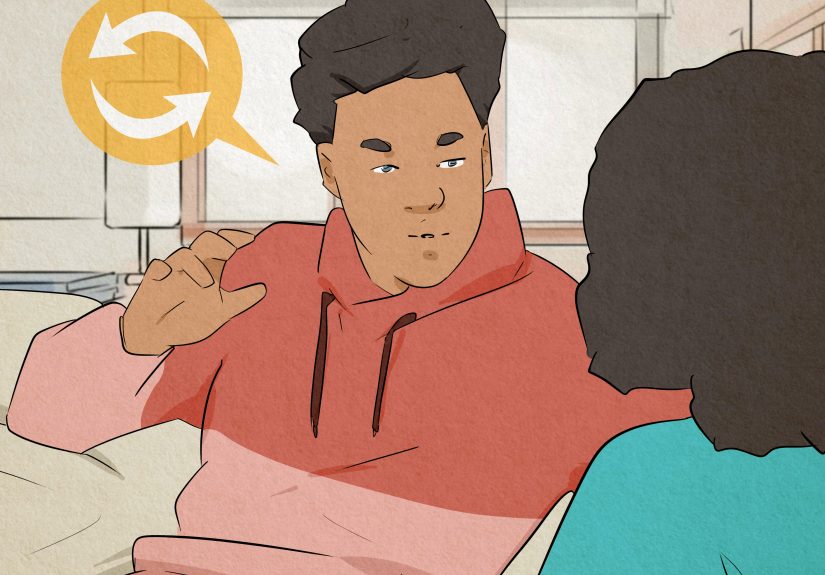
Experience 1: The “perfect beginning” that moved too fast. One woman described meeting someone who seemed almost suspiciously ideal. He texted all day, called her “different from everyone else,” talked about the future early, and made her feel incredibly seen. At first, it felt romantic. Then the speed became pressure. If she took longer than usual to respond, he sulked. If she wanted a quiet evening with friends, he accused her of not caring enough. What she first read as passion turned out to be control dressed up as intensity.
Experience 2: The endless need for reassurance. Another person said the relationship felt less like dating and more like customer service for one very dramatic client. If she praised him, things were calm. If she challenged him, even gently, he became defensive, cold, or cruel. She spent months trying to phrase everything perfectly, hoping there was a magical tone that would make honesty safe. There wasn’t. Her breakthrough came when she realized the problem was not her delivery. The problem was his refusal to tolerate accountability.
Experience 3: The slow erosion of confidence. A college student shared that she did not notice the shift at first because nothing looked outrageous in the beginning. It was little things: jokes at her expense, dismissing her opinions, criticizing her clothes, questioning her memory, making her feel lucky that he “put up with” her. Over time, she became quieter, less certain, and strangely grateful for scraps of kindness. The day she reread old journal entries and realized how much smaller she had become was the day she understood the relationship had been changing her in all the wrong ways.
Experience 4: The isolation happened one tiny choice at a time. One man explained that his partner never directly said, “Don’t see your friends.” Instead, every plan with friends came with punishment: guilt, sarcasm, accusations, or a sudden crisis that required immediate attention. It became easier to cancel than to deal with the fallout. Months later, he looked around and realized he had become emotionally dependent on the person who kept making him feel unstable. Rebuilding his support system took time, but it also restored his perspective.
Experience 5: The relationship improved only after distance. Someone else described finally setting boundaries after years of emotional chaos. She stopped explaining every feeling, stopped responding to midnight drama, stopped rewarding disrespect with extra patience, and started limiting contact. The surprising part was not that the other person liked it. They didn’t. The surprising part was that she began feeling better almost immediately. Her sleep improved. Her anxiety dropped. Her thoughts got quieter. That was the moment she realized peace had been available all along; she just had to stop handing someone else the keys.
Experience 6: The hardest part was giving up the fantasy. Many people say the most painful piece is not losing the relationship itself. It is losing the hope that the charming, attentive, affectionate early version would permanently return. That hope can keep people stuck much longer than the facts. But once they began focusing on patterns instead of promises, things became clearer. The relationship was not confusing because love is complicated. It was confusing because inconsistency had become normal.
These experiences all point to the same lesson: when a relationship repeatedly leaves you drained, confused, anxious, or obsessed with “fixing” the dynamic, that is important information. You do not need to win the game. You may need to stop playing it.
Final Thoughts
If you came here looking for how to make a narcissist addicted to you, the stronger answer is this: do not build your love life around someone else’s instability. Trying to become irresistible to a person who thrives on admiration and control may feel strategic for a minute, but it often turns into emotional quicksand.
The better goal is to become deeply anchored in your own standards. Know what respect looks like. Know what manipulation feels like. Know what your boundaries are. Know who your safe people are. And know that love worth having does not require you to shrink, scramble, or stage-manage another person’s ego.
Power is not making someone obsessed with you. Power is being so grounded that obsession no longer impresses you.