Table of Contents >> Show >> Hide
- What Is the YouTube Miniplayer?
- How to Use the YouTube Miniplayer: 6 Easy Steps
- Why the YouTube Miniplayer Is So Useful
- Common Problems and Quick Fixes
- Best Ways to Use the YouTube Miniplayer
- Desktop, Mobile App, and Browser Differences
- Pro Tips for a Better Miniplayer Experience
- Personal Experience: What Using the YouTube Miniplayer Feels Like in Real Life
- Conclusion
- SEO Tags
The YouTube Miniplayer is one of those tiny features that quietly saves your day. It lets you keep watching a video while you browse around YouTube, look for the next tutorial, check a creator’s channel, scan comments, or build the perfect playlist without losing the video currently playing. In other words, it is the digital version of carrying your snack plate from the kitchen to the couch without dropping the chips.
Whether you are watching a cooking lesson, a music playlist, a tech review, a gaming stream, or a lecture that is somehow both boring and important, the Miniplayer helps you multitask inside YouTube. It is simple, fast, and surprisingly useful once you know where to find it.
In this guide, you will learn how to use the YouTube Miniplayer in six easy steps, how to control it, when it does not work, how it differs from picture-in-picture mode, and how to make it part of a smoother viewing routine.
What Is the YouTube Miniplayer?
The YouTube Miniplayer is a smaller version of the video player that stays on the screen while you continue browsing YouTube. On desktop, it usually appears in a corner of the YouTube page. You can keep the video playing, pause it, return to the full watch page, close the player, or choose another video while still browsing.
Think of it as YouTube’s “don’t make me choose” button. You do not have to choose between watching your current video and searching for the next one. You can do both.
The feature is especially helpful when you are watching playlists, livestreams, educational videos, podcasts, product reviews, or long-form entertainment. Instead of stopping the video every time curiosity strikes, you can keep the current content running while you explore.
YouTube Miniplayer vs. Picture-in-Picture
Many people confuse the YouTube Miniplayer with picture-in-picture mode, often called PiP. They are similar, but not identical.
The YouTube Miniplayer is mainly for browsing within YouTube. It keeps your video visible while you move around YouTube pages. Picture-in-picture, on the other hand, is designed to let a video float outside the app or browser window so you can use other apps or tabs. On mobile devices, PiP behavior depends on your device, app settings, region, subscription status, and video type.
For this article, we are focusing on the YouTube Miniplayer itself, with a few practical notes about PiP where it matters.
How to Use the YouTube Miniplayer: 6 Easy Steps
Step 1: Open YouTube and Choose a Video
Start by opening YouTube in your browser or the YouTube app. Choose any regular video you want to watch. This could be a tutorial, a livestream, a playlist video, a podcast episode, a review, or your favorite background music video.
On desktop, the Miniplayer works best when you are using the standard YouTube website. Make sure the page loads properly and the video starts playing. If the video is paused, that is fine too; you can still switch to the Miniplayer and resume playback from there.
One important note: the Miniplayer is not available for every type of content. YouTube says it is not available for Shorts or videos marked as made for kids. So if the button seems to have vanished like a sock in the laundry, the video type may be the reason.
Step 2: Look for the Miniplayer Button
While the video is playing, move your mouse over the video player controls. On desktop, the Miniplayer button usually appears near the lower-right area of the player controls, close to other viewing options like theater mode and full screen.
The icon may look like a small rectangle inside another rectangle. If you are new to it, do not worry. YouTube’s interface has enough tiny icons to make anyone feel like they are reading ancient hieroglyphics. Hover over the buttons, and YouTube will usually show a label telling you what each button does.
You can also right-click the video and choose the Miniplayer option from the menu when available. This is useful if the button is hard to spot or if YouTube’s layout looks slightly different on your screen.
Step 3: Click the Miniplayer Button or Press “i”
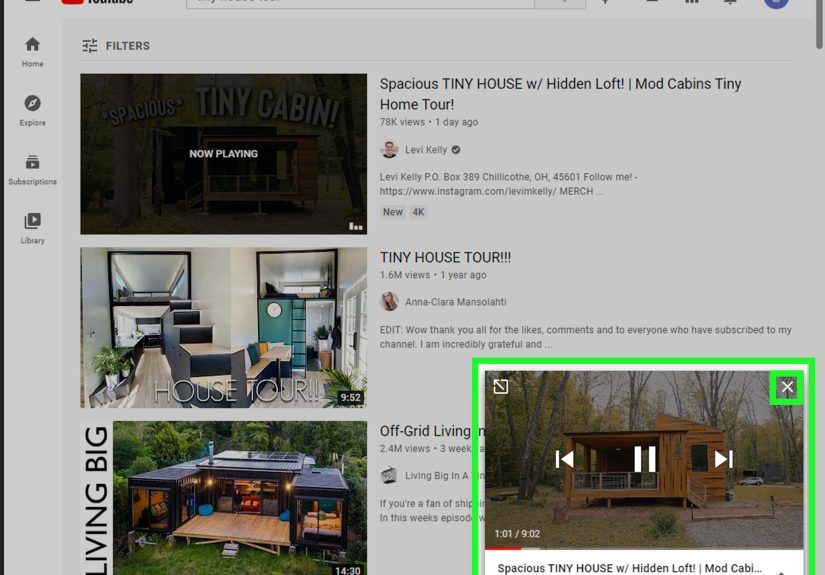
Once you find the Miniplayer button, click it. The video will shrink into a smaller player, and YouTube will take you back to the page you were browsing before, such as the home page, search results, subscriptions, or a channel page.
If you like keyboard shortcuts, press the “i” key while the video player is active. This opens the Miniplayer quickly without requiring you to aim your mouse at a tiny button. It is one of the most useful YouTube shortcuts for people who watch long videos or frequently search for related content.
If the shortcut does not work immediately, click once on the video player first, then press “i” again. YouTube keyboard shortcuts often need the player to be active before they respond.
Step 4: Browse YouTube While the Video Keeps Playing
After the Miniplayer appears, you can browse YouTube without stopping the current video. You can search for another topic, open a creator’s channel, view recommended videos, check your subscriptions, or look through playlists.
This is where the feature shines. Imagine watching a guitar lesson and searching for the next song you want to learn. Or maybe you are watching a product review and want to compare other reviews before making a decision. The Miniplayer lets the current video keep rolling while you continue exploring.
If you click another video thumbnail while the Miniplayer is open, YouTube may load that video directly into the Miniplayer. This makes it easy to jump between videos without constantly opening and closing full watch pages.
Step 5: Control Playback Inside the Miniplayer
The Miniplayer includes basic controls so you do not have to return to the full video page every time you want to pause or resume. You can pause, play, close the Miniplayer, or expand the video back to the full watch page.
On desktop, you can also move the Miniplayer to a different corner of the screen and resize it by dragging its corner. This is especially useful if the small player is covering something you want to read, such as a video title, menu item, or search result.
For keyboard fans, standard YouTube shortcuts may still help when the player is active. For example, “k” is commonly used to pause or play, “m” mutes or unmutes, “j” jumps backward, and “l” jumps forward. These shortcuts can make the Miniplayer feel much faster to use.
Step 6: Exit or Expand the Miniplayer
When you are done multitasking, you have two main options: expand the video or close the Miniplayer.
To return to the full watch page, click the expand icon on the Miniplayer. This brings the video back into the normal YouTube viewing page, where you can see the description, comments, full controls, chapters, recommendations, and other details.
To close the Miniplayer completely, click the “X” button in the corner of the small player. You can also press the Escape key on your keyboard. If you close it by accident, you can usually find the video again in your YouTube watch history or by going back to the original video page.
Why the YouTube Miniplayer Is So Useful
The main benefit of the YouTube Miniplayer is simple: it reduces friction. Without it, you often have to stop a video, go back, search, open a new result, and then return. With it, you can keep watching and keep browsing at the same time.
This is especially helpful for research. If you are comparing tutorials, watching reviews, or studying a subject, the Miniplayer lets you keep one video playing while you look for supporting material. For example, someone learning video editing might watch a tutorial while searching for a follow-up lesson on color correction. Someone shopping for headphones might keep a review playing while checking more comparisons from other creators.
It is also useful for entertainment. You can listen to a music video, comedy clip, podcast, or livestream while searching for what to watch next. Instead of breaking the mood, you stay in the flow.
Common Problems and Quick Fixes
The Miniplayer Button Is Missing
If the Miniplayer button is missing, first check the type of video. Shorts and videos marked as made for kids do not support the Miniplayer. If you are watching one of those, the feature may not appear.
You should also refresh the page, update your browser, or try another video. YouTube frequently tests interface changes, so buttons may look slightly different from one account, browser, or device to another.
The Keyboard Shortcut Does Not Work
If pressing “i” does not open the Miniplayer, click the video player once and try again. The shortcut usually works when the player is active. If your cursor is inside the search box or a comment field, YouTube may interpret your typing as text instead of a command.
The Miniplayer Covers Something Important
Drag it to another corner or resize it. On desktop, the Miniplayer can be moved and adjusted, which is handy when you are reading search results or browsing a channel page.
The Video Stops When You Leave YouTube
That is expected for the YouTube Miniplayer. It is designed for browsing within YouTube. If you want a floating video while using other apps or tabs, you may need picture-in-picture mode, depending on your device, browser, app settings, and content eligibility.
Best Ways to Use the YouTube Miniplayer
Use It for Tutorials
Tutorials often lead to more tutorials. You start with “how to change a bicycle tire” and ten minutes later you are deep into “best portable air pumps for beginners.” The Miniplayer lets you keep the original lesson visible while searching for related explanations.
Use It for Playlists
If you are building a workout playlist, study playlist, or road-trip queue, the Miniplayer helps you preview videos while still browsing. You can keep one video running while adding others to your queue or playlist.
Use It for Livestreams
Livestreams are perfect for the Miniplayer because you may not want to miss what is happening while browsing. Whether it is a gaming stream, news stream, product launch, or live Q&A, the small player keeps the stream in view.
Use It for Research
Students, creators, bloggers, and curious humans can use the Miniplayer to compare information faster. Watch one source while searching for another. Just remember to pause when you need to focus deeply, because multitasking can make your brain feel like it has 47 browser tabs open.
Desktop, Mobile App, and Browser Differences
The YouTube Miniplayer can behave differently depending on whether you are using desktop YouTube, the mobile app, or a mobile browser.
On desktop, the Miniplayer is built into the YouTube website and is mainly used for browsing around YouTube. It appears as a small video window and gives you basic playback controls.
On the YouTube mobile app, the Miniplayer experience may look different depending on your app version and device. YouTube has updated the mobile Miniplayer over time with more flexible controls, including the ability to move or resize it in supported versions.
In a mobile browser, behavior can vary more. Some browsers support picture-in-picture features, while others may limit background playback or floating windows. For the smoothest experience, use the official YouTube app or an updated desktop browser.
Pro Tips for a Better Miniplayer Experience
Learn the “i” Shortcut
The “i” shortcut is the fastest way to open the Miniplayer on desktop. Once it becomes muscle memory, you will wonder why you ever hunted for the button like it was hidden treasure.
Use Search While Watching
The Miniplayer is most powerful when paired with YouTube search. Keep the current video playing while you search for a follow-up, a different creator, or a more detailed explanation.
Do Not Overload Yourself
The Miniplayer is great, but it is still multitasking. If you are studying something important, use it wisely. Let the video run while browsing related material, but pause when you need to take notes or understand a complex point.
Keep Your Browser Updated
If buttons are missing or the player behaves strangely, update your browser or app. YouTube features often depend on current browser support and app versions.
Use Watch History as a Safety Net
Accidentally closed the Miniplayer? Do not panic. Your watch history can usually help you find the video again. It is like a breadcrumb trail, but with more thumbnails and fewer birds eating the evidence.
Personal Experience: What Using the YouTube Miniplayer Feels Like in Real Life
The YouTube Miniplayer sounds like a small feature, but in daily use it can completely change how you browse. The first time many people notice it, they treat it like a convenience. After a week, it becomes part of their routine. After a month, browsing YouTube without it feels oddly slow, like trying to text with mittens on.
One of the best real-world uses is learning. Suppose you are watching a video about setting up a home office. The creator mentions monitor height, keyboard position, and lighting. Instead of stopping the video, you can open the Miniplayer and search for “best desk lighting setup” or “ergonomic monitor height.” The original video keeps playing, and you can decide whether to return to it or open something more specific. This is perfect for people who learn by jumping between related ideas.
It is also excellent for tech tutorials. Let’s say you are watching a guide about editing videos. The creator says, “Now open the color panel,” and suddenly you realize you need a beginner explanation of color grading. With the Miniplayer, you can keep the original lesson running in the corner while searching for a simpler video. This prevents that annoying situation where you lose your place, open five new tabs, and forget why you came to YouTube in the first place.
For entertainment, the Miniplayer works like a tiny personal TV. You can keep a music video, podcast, or livestream playing while browsing recommendations. It is especially nice when you are not ready to commit to the next video. You can scroll, compare thumbnails, read titles, and judge whether a video deserves your precious attention span. The Miniplayer keeps the current video alive while you decide.
The feature is also useful for creators and bloggers. If you are researching a topic, you may need to compare several videos quickly. The Miniplayer lets you continue listening while you scan other results. For example, a blogger writing about smartphone photography might keep a camera tutorial playing while searching for examples of night mode, portrait mode, and editing workflows. It saves time because you are not constantly bouncing back to the watch page.
Of course, there are moments when the Miniplayer is not perfect. Sometimes it covers a title you want to read. Sometimes you close it accidentally. Sometimes a video type does not support it. But these are small trade-offs. Once you learn to move, resize, expand, and close it quickly, the Miniplayer becomes one of those features that quietly makes YouTube feel more organized.
The best advice is to use it intentionally. If you are relaxing, let it play while you browse. If you are studying, use it to search related material but pause when you need to focus. If you are building a playlist, keep it open while you add videos. Used well, the YouTube Miniplayer is not just a small screen in the corner; it is a better way to move through YouTube without constantly interrupting yourself.
Conclusion
Learning how to use the YouTube Miniplayer takes less than a minute, but it can make your viewing experience much smoother. Open a video, click the Miniplayer button or press “i,” browse YouTube while the video keeps playing, control playback inside the small window, and expand or close it whenever you are done.
It is ideal for tutorials, playlists, livestreams, research, music, product reviews, and casual browsing. It keeps your current video close while giving you the freedom to explore what to watch next. Just remember that it does not work with every video type, and it is mainly designed for browsing within YouTube rather than floating over every app or tab.
Once you get used to it, the Miniplayer feels less like a hidden feature and more like common sense. Because honestly, why should one video stop you from finding the next great one?