Table of Contents >> Show >> Hide
- The Funeral Joke That Refused To Behave Like a Funeral Joke
- Why the Story Went Viral So Fast
- Who Shay Bradley Was Matters as Much as the Recording
- Can Laughter Really Belong at a Funeral?
- The Strange Genius of Dark Humor
- What This Story Says About Modern Funerals
- Why Mourners Cried and Laughed at the Same Time
- The Last Laugh, and Why It Lasts
- Experiences Related to This Story: When Humor Walks Into Grief and Somehow Belongs There
- Conclusion
Most funerals follow a familiar emotional script: hushed voices, damp tissues, solemn music, and that strange group agreement that everyone should try very hard not to ugly-cry in public. Then along came Shay Bradley, an Irish man who apparently looked at that script, laughed, and said, “Needs more chaos.”
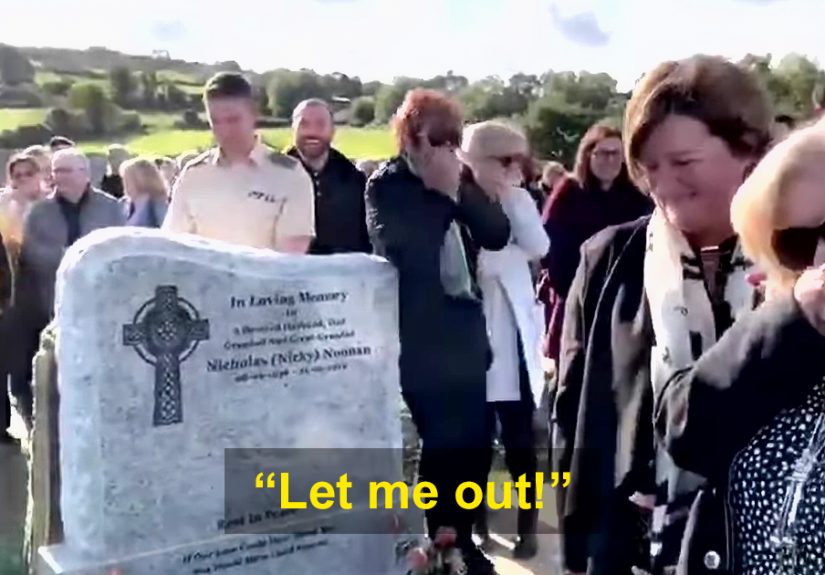
His now-famous pre-recorded message, played as his coffin was lowered into the ground, turned a moment of deep sadness into one of unforgettable laughter. Instead of a perfectly composed farewell, mourners heard what sounded like Bradley calling out from inside the coffin, joking that he was stuck in the dark and asking to be let out. It was shocking, absurd, slightly outrageous, andjudging by the reaction around the graveexactly right for the man being buried.
That is why this story still lands years later. On the surface, it is a viral funeral prank. Underneath, it is something richer: a lesson in how humor can survive death, how personality can outlive ceremony, and how laughter sometimes says “I loved him” just as clearly as tears do.
The Funeral Joke That Refused To Behave Like a Funeral Joke
What made the moment so powerful was not just the punchline. It was the timing. Funerals are one of the few places where people arrive emotionally unarmored. Even the most stoic attendee is usually one violin note away from becoming a human puddle. So when Bradley’s voice suddenly rang out as if from inside the coffin, it broke the tension with the force of a champagne cork.
That tension mattered. Without it, the recording would have been merely funny. Because of it, the joke became memorable. It disrupted sorrow without mocking it. It interrupted grief without denying it. And that is a difficult line to walk. Funeral humor can go wrong if it feels performative, disrespectful, or designed for strangers instead of the people actually mourning. Bradley’s message worked because it sounded deeply personal, like one final act of mischief from someone whose family knew his style well.
In other words, this was not random comedy tossed into a sacred moment like confetti at the wrong wedding. It was a farewell engineered around personality. Bradley was not trying to make death seem small. He was making sure his character stayed large.
Why the Story Went Viral So Fast
The internet loves two things almost equally: emotional authenticity and beautifully timed nonsense. This story offered both.
First, it felt real. There was no polished studio edit, no carefully staged “viral moment,” no suspicious influencer energy. It was a graveside recording, family laughter, and the kind of raw reaction you cannot fake. You could hear the sadness and the joy colliding in real time. People were laughing, but they were also grieving. That combination made the clip feel human rather than gimmicky.
Second, the humor was instantly understandable. You did not need context, subtitles, or a PhD in mourning rituals to get the joke. A voice from the coffin yelling to be let out is the kind of dark comedy that translates in five seconds flat. It is almost cartoonish, except for the tiny detail that it happened at an actual funeral.
Third, the story tapped into a growing appetite for more personal, less scripted goodbyes. Many people no longer want funeral services to feel like generic ceremonies assembled from preselected hymns, beige flower arrangements, and emotional small talk in a carpeted room with mysterious coffee. They want farewells that reflect the actual person who died. Bradley’s recording did that in a way no standard eulogy ever could.
Who Shay Bradley Was Matters as Much as the Recording
Part of what made the moment resonate was the image of Bradley that emerged afterward: a man remembered as funny, sharp, and playful, someone whose family was not shocked that he would try to land one last joke from beyond the grave. The prank did not rewrite his identity. It confirmed it.
That distinction is important. A successful funeral tribute should feel less like a branding exercise and more like recognition. The best eulogies, songs, photos, and stories do not invent a person. They reveal one. Bradley’s message worked because it sounded like him, not like what someone else thought would “play well” online.
And that is why the recording keeps circulating. It is not just memorable because it is funny. It is memorable because it feels like a truthful expression of who he was. People do not simply share the clip to say, “Look at this outrageous thing.” They share it because it raises a quieter question: if your final goodbye could sound like you, what would it say?
Can Laughter Really Belong at a Funeral?
Absolutely. In fact, for many families, it already does.
Popular imagination often treats grief like an all-black dress code for the soul. You are supposed to be solemn, reflective, and permanently one candle away from a dramatic monologue. Real mourning is messier. Laughter often appears right in the middle of heartbreaknot because people are insensitive, but because memory is rarely tidy.
Think about what actually happens when families gather after a loss. Yes, there are tears. But there are also stories. Someone remembers the time Dad locked himself out in slippers. Someone imitates Grandma’s impossible voice mail greeting. Someone mentions an old vacation disaster, and suddenly half the room is laughing into napkins. Humor slips in because love remembers details, and details are often funny.
That is not emotional betrayal. It is emotional range.
Research on grief and humor backs this up. Studies and expert commentary have found that humor can coexist with mourning, ease tension, strengthen connection, and sometimes help people manage unbearable moments without erasing the loss itself. At the same time, it is not a universal cure-all. Humor can comfort, but it can also sting if it feels forced, mistimed, or out of sync with the mourners present. The trick is not “add jokes everywhere.” The trick is understanding the person, the family, and the emotional truth of the room.
Bradley’s recording landed because it was not humor pasted onto grief. It was humor emerging from it.
The Strange Genius of Dark Humor
Dark humor has always occupied a weird little corner of human coping. It shows up in hospitals, military circles, emergency services, family kitchens during medical crises, and yes, funeral homes. That does not mean everyone loves it. But it does mean many people use it when reality becomes too heavy to hold with straight hands.
There is a practical reason for that. Humor changes the emotional rhythm of a room. It gives people a breath. It loosens shoulders. It breaks the trance of shock. Even one laugh can remind mourners that they are still here, still together, still capable of responding to something besides pain.
Bradley’s final joke did exactly that. It did not ask mourners to stop feeling sad. It simply gave them a second feeling to hold alongside the sadness. That is a meaningful gift. Grief can be overwhelming partly because it tries to become total, as if it wants exclusive rights to the emotional landscape. Laughter pushes back and says, “Not so fast. Love lived here too. Personality lived here too. You do not get to flatten this person into tragedy alone.”
And frankly, there is something admirably cheeky about refusing to exit life quietly when you spent your time in it making people laugh. Some people leave behind wisdom. Some leave behind carefully labeled photo albums. Bradley left behind a jump scare for mourners. Different paths, same destination.
What This Story Says About Modern Funerals
Funerals are changing. Slowly, unevenly, and sometimes with baffling playlist choices, but changing all the same.
More families now want ceremonies that feel individualized rather than generic. That can mean favorite songs instead of standard hymns, colorful dress requests instead of all black, memory tables filled with personal objects, video montages that include goofy snapshots, or obituaries written with wit instead of formal stiffness. The idea is not to make death cute or casual. It is to make remembrance honest.
Bradley’s recording fits squarely into that shift. It was memorable because it rejected the idea that every funeral must sound identical. Instead, it suggested that the most meaningful goodbye may be the one that most clearly reflects the life that was lived.
There is also a practical lesson here for families planning memorials. Personality is not a side dish. It is the meal. If the deceased was dignified and quiet, then a loud joke from the grave would feel all wrong. If they were warm, mischievous, and allergic to excessive seriousness, then a service that never once let people laugh might feel just as false. The most moving tribute is usually the truest one.
Why Mourners Cried and Laughed at the Same Time
The phrase “tears of laughter” is not just a dramatic headline flourish here. It gets at something emotionally precise. People often cry harder when laughter arrives in the middle of grief because the body is already loaded with feeling. Relief opens the floodgates. Humor does not cancel sorrow; it can actually intensify the release.
That is part of why Bradley’s funeral moment felt so unforgettable. It was not merely funny in the abstract. It was funny against the backdrop of loss. The contrast made it hit harder. One second mourners were bracing for finality, and the next they were hearing a familiar voice create chaos. Of course they laughed. Of course they cried. It would almost be stranger if they had done only one.
We often speak as though emotions need orderly lanes: grief in one box, joy in another, humor in a third, dignity off to the side clutching its pearls. Real life does not work like that. At meaningful moments, emotions pile in together like overbooked passengers. The Bradley story captured that pileup perfectly.
The Last Laugh, and Why It Lasts
Years after the clip first spread online, people still return to it because it offers something rare: a story about death that does not feel flattened by fear. It feels intimate, specific, and oddly life-affirming. Bradley’s prank did not make death less sad. It made the farewell more human.
And perhaps that is why the story keeps earning new readers and viewers. In a culture that often struggles to talk about death without either turning clinical or sentimental, this moment found a third way. It acknowledged the pain, kept the personality, and reminded everyone at the graveside that love does not suddenly lose its sense of humor just because a person is gone.
There is something beautiful in that. Also slightly unhinged. But mostly beautiful.
Experiences Related to This Story: When Humor Walks Into Grief and Somehow Belongs There
Stories like Shay Bradley’s resonate because so many people have lived some version of that emotional whiplash. Maybe not a voice from a coffinfew families are operating at that level of theatrical commitmentbut something close. A joke in a hospital room. A funny line in an obituary. A ridiculous song unexpectedly played at a memorial. A eulogy that starts solemnly and then swerves into the story about the time the deceased tried to fix a sink, flooded the kitchen, and declared himself “an engineer of atmosphere.”
One common experience is the laugh that escapes before anyone has given permission for laughter to return. It catches people off guard. There is often a split second of guilt, as if joy has shown up overdressed for the wrong event. Then someone else laughs too, and suddenly the room relaxes. What felt inappropriate one heartbeat earlier starts to feel necessary. Not because the loss has become easier, but because the person being remembered was never only their ending.
Another familiar experience happens in the storytelling phase after the formal service. People gather in living rooms, church halls, pubs, driveways, kitchensbasically any place where there are chairs, casseroles, and at least one relative determined to retell a story with increasingly suspicious accuracy. At first, the conversation stays careful. Then one memory breaks through. It is funny, vivid, unmistakably specific. Everyone recognizes the person instantly in that story, and the mood shifts. Grief stops being a wall and becomes a room with windows.
There is also the experience of discovering that the person who died planned ahead for laughter. Some leave notes. Some request odd songs. Some ask to be remembered with bright clothes, not black ones. Some write their own obituary in a voice so unmistakably theirs that readers can practically hear them rolling their eyes at conventional sentiment. These choices often comfort families because they remove guesswork. Instead of wondering how to make the service “proper,” loved ones realize the person already told them what proper means: make it honest, make it human, and please do not make it boring.
Then there are the quieter examples, the ones that never go viral but linger just as powerfully. A widow wearing her husband’s favorite ridiculous tie to the reception because he would have found it hilarious. A daughter serving the pie her mother insisted on bringing to every holiday, even though the crust was legendary for all the wrong reasons. A son quoting his father’s terrible jokes during the eulogy, to the horror and delight of everyone present. These are not comic detours from grief. They are often the very shape grief takes when love is remembering accurately.
What people often report afterward is not “I forgot I was sad.” It is “For a moment, I felt like they were with us again.” That may be the deepest link between Bradley’s story and the many experiences surrounding it. Humor can create presence. A familiar joke, a recognizable phrase, a perfectly timed bit of absurdity can make a lost person feel startlingly near. Not literally, of course. But emotionally, unmistakably.
That is why these moments matter. They remind mourners that grief is not only about absence. It is also about continued relationshipthrough memory, voice, rhythm, and the things a person always did that nobody else quite can. When laughter shows up in mourning, it often means identity has survived the silence. And for many families, that is not a distraction from love. It is one of love’s clearest echoes.
Conclusion
The story of the Irish man who pre-recorded a message to play at his funeral endures for one simple reason: it understood something many people only realize in hindsight. The best farewell is not always the most polished one. It is the one that sounds most like the person who has gone.
Shay Bradley’s final joke was funny, yes. But it was also generous. It gave mourners relief, gave the internet a rare viral story with a heart, and gave all of us a reminder that grief does not have to erase humor in order to prove it is real. Sometimes the most loving thing a person can do is leave behind one last moment that says, “I know you are hurting, so herehave a laugh on me.”
That kind of goodbye does not shrink loss. It expands memory. And that may be why, long after the recording ended, the last laugh still feels like an act of love.