Table of Contents >> Show >> Hide
Rainbow hair is what happens when creativity, chemistry, and a little bit of bathroom bravery all move into the same apartment. Done well, it looks magical. Done badly, it looks like a highlighter pack lost a custody battle in your shower. The good news is that colorful hair is absolutely doable at home if you understand what you’re working with, pick the right dyes, and respect the fact that bleach is not a motivational speaker. It is a chemical process, and it demands manners.
This guide breaks down 38 things to know about DIY rainbow hair, from bleaching and semi-permanent dye to style ideas, maintenance, fading, and common mistakes. Whether you want a soft pastel halo, hidden peekaboo panels, oil slick tones on dark hair, or a full unicorn situation, here’s how to make your rainbow hair look intentional instead of accidental.
Before You DIY: What to Know First
- Your starting color decides almost everything. If your hair is naturally dark, vivid rainbow shades usually need a lighter base to show up clearly. If your hair is already blonde or previously lightened, you have a much easier road to bright pinks, blues, greens, and pastel tones.
- Bleach is often the real project, not the fun color. Many people focus on the dye shades and forget that lifting the hair is what makes rainbow color pop. If the base is too warm or too dark, the final result can look muddy instead of crisp and vibrant.
- Bleaching can rough up the hair shaft and increase damage. That is why healthy-looking rainbow hair usually starts with realistic expectations, not wishful thinking and a ring light. If your hair already feels stretchy, snaps easily, or has been colored repeatedly, take that as a warning, not a challenge.
- Pastels are high-maintenance divas. Lavender, baby blue, blush pink, and mint typically need a very pale base. Jewel tones like magenta, teal, cobalt, and emerald are more forgiving and often look better on hair that is not lifted quite as far.
- A strand test can save your whole weekend. Before putting dye everywhere, test bleach and color on a small hidden section. You’ll see how quickly your hair lifts, whether it grabs color evenly, and whether the shade turns dreamy or unexpectedly swamp-adjacent.
- Patch test every time you color. Even if you have used hair dye before, reactions can still happen. That small test is annoying, yes, but much less annoying than a red, itchy, burning scalp that makes you question every life choice that led to electric orange roots.
- Wear gloves and keep a timer nearby. Dye-stained hands are not a personality trait. Gloves help protect your skin, and timing matters because leaving products on too long does not make you more committed; it just increases the odds of irritation or damage.
- Never mix random formulas because you feel adventurous. Hair color is chemistry, not soup. Using different formulations together without instructions can give unpredictable results and can also increase the risk of damaging your hair or irritating your scalp.
- Do not use hair dye on eyebrows or eyelashes. This is one of those rules that exists because eye injuries are not cute. Keep rainbow dreams on the hair on your head and far away from anything involved in seeing.
- Previous color history matters more than people think. Old box dye, henna, toner, and uneven fading can all affect how rainbow shades develop. Hair remembers everything, which is rude but true.
Understanding Dyes, Tones, and Color Logic
- Temporary color is the lowest-commitment option. Think sprays, chalks, color wax, or wash-out pigments. They sit on the surface, usually rinse out quickly, and are great for trying a look before turning your entire head into a long-term art installation.
- Semi-permanent dye is the DIY rainbow favorite. These direct dyes deposit color without actually lightening the hair. They are ideal for bright fashion shades, fade more gently than permanent color, and are usually the best match for home rainbow experiments.
- Demi-permanent color is more about tone and gloss than full fantasy color. It can refresh, deepen, or soften a shade and is useful for blending, correcting, or adding shine. It is not usually the star of a bold rainbow look, but it can be a very helpful supporting actor.
- Permanent dye is usually not necessary for classic rainbow hair. Most vivid shades people want are achieved with pre-lightening plus semi-permanent color. Permanent formulas are more useful when the goal is major base-color change or gray coverage, not neon mermaid drama.
- Semi-permanent color does not lighten hair. It only adds tone on top of what is already there. If you put pastel pink on dark brown hair and expect cotton-candy magic, your hair may respond with a polite but firm “absolutely not.”
- Porosity affects how evenly color grabs. More porous hair tends to soak up pigment fast, sometimes too fast, which can create patchiness or overly dark ends. That is why one person gets airy watercolor rainbow hair while another gets “accidentally intense traffic cone” sections.
- Color theory is your secret weapon. Purple helps cancel yellow, blue helps counter orange, and green can offset unwanted red. If your lifted hair is brassy, the right toner or pigmented shampoo can make the difference between intentional color and fried citrus.
- Toning shampoo and color-safe shampoo are not the same thing. A regular color-safe shampoo is designed to cleanse gently without stripping your shade. A toning shampoo deposits pigment to neutralize unwanted warm tones, which is why many blondes and lightened brunettes use both.
- Bright shades behave differently from one another. Blue and green can cling stubbornly, red and pink often fade faster, and purple can be surprisingly moody depending on your base. Choosing your palette is not just about aesthetics; it is also about how much maintenance you can tolerate.
- For low-bleach looks, jewel tones are often smarter than pastels. If you do not want to lift to the lightest blonde, deeper sapphire, burgundy, teal, plum, and emerald shades usually look richer and more believable. They can also be more flattering on naturally darker hair.
Application Tips That Make DIY Rainbow Hair Look Better
- Sectioning is the difference between artistry and chaos. Clean, clipped sections make placement easier and keep colors from bleeding into one another. The more shades you use, the more organized your setup needs to be.
- Pick a placement strategy before you open a single bowl. Decide whether you want vertical panels, horizontal bands, face-framing streaks, split dye, peekaboo sections, ombré ends, or all-over color. “I’ll just wing it” is how people end up inventing accidental camouflage.
- Rainbow hair does not have to mean every color everywhere. Sometimes the prettiest version is selective: a hidden underlayer, a money-piece moment, or multicolor ends. Strategic placement can look more polished and grow out more gracefully.
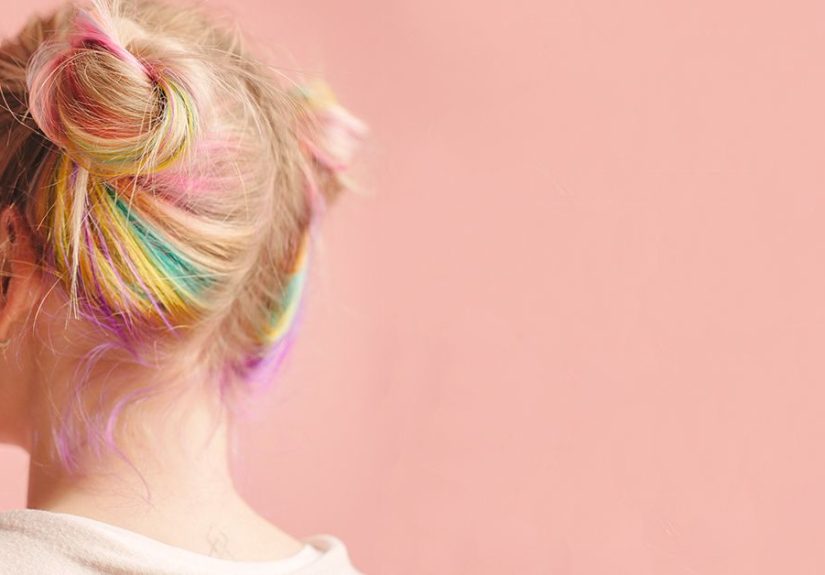
- Peekaboo rainbow is the stealth bomber of vivid hair. The colorful sections sit underneath the top layer, so you can show them off or hide them depending on how you style your hair. It is one of the most wearable options for school, work, or anyone who enjoys having a secret personality under their part line.
- Oil slick hair is a great choice for darker bases. This style uses jewel-toned, light-catching shades that mimic the shimmer of an oil slick. It gives you rainbow energy without demanding a bright, all-over pastel foundation.
- Dip-dyed ends are lower-commitment than full-head color. If you are rainbow-curious but not ready for a root-to-tip relationship, colorful ends let you experiment while keeping most of your natural color intact. They also trim away more easily if you decide the era is over.
- Extensions can be a smart test run. If you want to see how violet, teal, or hot pink fits your vibe, coloring extensions first is a low-stakes way to experiment. It is also a nice workaround for people whose natural hair is too fragile for frequent processing.
- Apply carefully where colors meet. Rainbow blends can look gorgeous, but muddiness happens when neighboring shades overlap too much. Keeping sections neat and using enough product for full saturation helps preserve a cleaner result.
- Cool water matters when rinsing. Hot water can encourage fading and dryness, especially on freshly colored hair. Cooler rinses help vivid shades stay fresher longer, even if your shower spirit strongly prefers tropical lava mode.
- Wait before the first shampoo if you can. Giving freshly colored hair a little time before washing helps the shade settle in better. It may feel dramatic to avoid shampoo for a day or two, but rainbow hair rewards patience more than impatience ever will.
Maintenance, Fading, and Reality Checks
- Wash less often if you want the color to last. Frequent shampooing is one of the fastest ways to fade vivid tones. Many color-care routines work best with washing only a few times a week, not daily.
- Sulfate-free shampoo is usually worth it. Harsh cleansers can strip both moisture and dye, which is not ideal when your color already wants to slide down the drain with the enthusiasm of a getaway vehicle. Gentle, color-safe formulas tend to treat bright shades more kindly.
- Heat styling speeds up color loss. Flat irons, hot tools, and even frequent blow-drying can dull vivid shades faster. If you are going to style, use heat protectant and keep temperatures reasonable instead of trying to roast your hair into obedience.
- Sun exposure fades color, too. Dyed hair is more vulnerable to becoming dry, brittle, and faded with UV exposure. Hats, scarves, and shade are not just fashion choices; sometimes they are survival gear for your pink pieces and blue panels.
- Moisture is part of maintenance. Bleached or frequently colored hair often needs conditioning masks, leave-ins, and gentler handling. Soft, hydrated hair reflects light better, tangles less, and makes rainbow shades look shinier instead of tired.
- Expect touch-ups. Vivid colors are not a one-and-done situation, especially if you wash often, swim, use heat, or started with very porous hair. Some placements need a refresh every few weeks, while lower-maintenance versions can stretch longer.
- Hidden roots, shadow roots, and blended placements make life easier. A little natural depth at the root can make grow-out look intentional instead of neglected. This is one of the smartest tricks for DIY rainbow hair that still needs to function in the real world.
- Know when to call a professional. If your hair is heavily damaged, unevenly colored, very dark, or packed with old dye, a salon correction may cost less than fixing a home disaster in three separate emotional stages. DIY is fun until it becomes a chemistry lawsuit against your own bangs.
Best Rainbow Hair Styles to Consider
If you are still choosing your look, here are some of the most flattering and practical rainbow hair styles to consider. A full rainbow melt blends several shades from root to end for maximum impact. Peekaboo rainbow hair hides the color underneath for a more flexible look. Oil slick hair uses jewel tones on a darker base for a sophisticated, lower-key version of the trend. Split dye creates drama with contrasting sides, while dip-dyed ends are perfect for first-timers. If you love movement, braids and waves make multicolor sections pop beautifully because each bend in the hair catches a different shade.
Conclusion
Rainbow hair can be playful, artistic, edgy, soft, rebellious, or weirdly elegant depending on how you place the color and care for it afterward. The secret is not buying the loudest dye and hoping for cinematic results. The secret is understanding your starting hair, choosing the right dye type, respecting bleach, planning your sectioning, and committing to maintenance after the selfies are taken.
Done thoughtfully, DIY rainbow color can look stunning and surprisingly wearable. Done recklessly, it can fade into a cautionary tale with a purple towel and a very tired shower curtain. Aim for the first option. Your future hairbrush will thank you.
Real-World Rainbow Hair Experiences
The first experience most people have with rainbow hair is not the color itself. It is the preparation. You spread out bowls, clips, gloves, old towels, and enough conditioner to make your bathroom look like a tiny backstage salon. At that moment, rainbow hair feels glamorous. Then the bleach starts processing, and suddenly it feels less like a beauty ritual and more like supervising a science fair volcano that lives on your head. The lesson? The actual transformation is only half the story. The setup, timing, patience, and cleanup are part of the experience, too.
Then comes the mirror moment. Fresh rainbow hair can be shockingly emotional in the best possible way. Even people who planned carefully often have a split second of, “Wow, that is very blue.” But once the hair is dried and styled, that initial panic usually turns into excitement. Braids reveal hidden sections. Waves make the colors melt into each other. Straight styles show off crisp panels and cleaner placement. The same head of hair can look soft in one style and gloriously unhinged in another, which is part of the fun.
By week one, the experience becomes more practical. You start noticing what affects fading. One overly hot shower can steal the brightness from pink faster than expected. Heavy shampooing can turn vivid shades into whispery versions of themselves. If your hair is porous, some tones may hang on forever while others vanish like they had travel plans. Blue might linger. Teal may evolve into something ocean-adjacent. Pink might fade into a pretty blush and leave you briefly convinced you are now a pastel person. Rainbow hair teaches flexibility because color never stays perfectly frozen in time.
There is also the social side. Rainbow hair gets noticed. Friends ask who did it. Strangers compliment it in grocery store lines. Someone inevitably says, “I could never pull that off,” which usually means they absolutely could. Hidden rainbow placements can be especially fun because they let you choose the level of drama. Hair down looks polished. Hair up becomes a surprise reveal. It is basically mood jewelry, except attached to your scalp and slightly more expensive to maintain.
The most honest long-term experience is that rainbow hair becomes a routine, not a one-time event. You learn which shampoos are gentle, which shades fade prettily, how often your ends need moisture, and whether you are truly a “touch up every three weeks” person or more of a “let it fade into a cool watercolor and call it intentional” person. In that way, rainbow hair is oddly personal. It starts as a trend, but it ends up teaching you what kind of maintenance, expression, and beauty effort actually fits your life. And that, more than the color itself, is what makes the whole experience memorable.