Table of Contents >> Show >> Hide
- Why a Mel Brooks Spoof Helped Shape a Gothic Horror Film
- The Dracula Problem: Everyone Already Knows the Castle
- Eggers’ Solution: Go Back Before the Clichés
- Comedy as a Checklist of Things to Avoid
- How ‘Nosferatu’ Reclaims Fear From Familiarity
- Mel Brooks and Robert Eggers Share More Than You Think
- Why Parody Can Protect Horror From Becoming Self-Parody
- The Invaluable Lesson: Know What the Audience Might Laugh At
- Experience Section: Watching Brooks Before Eggers Changes the Whole Bite
- Conclusion
- SEO Tags
At first glance, Robert Eggers and Mel Brooks seem like they live in opposite wings of the cinematic castle. Eggers is the meticulous modern master of fog, folklore, old-world dread, and historical detail. Brooks is the king of lovingly chaotic parody, the man who can turn a gothic hallway, a creaky door, and a dramatic cape swish into a punchline before the thunder even finishes rolling.
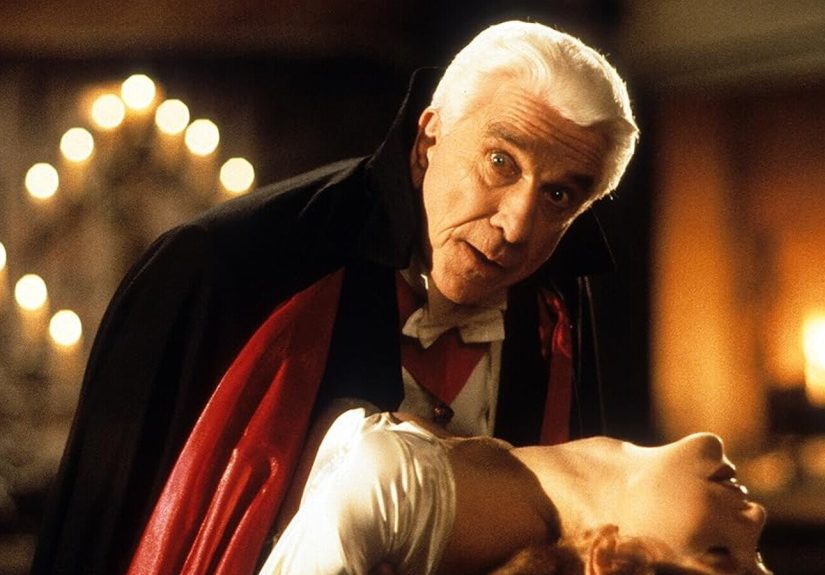
And yet, while writing Nosferatu, Eggers found an unexpectedly useful companion in Brooks’ 1995 vampire spoof Dracula: Dead and Loving It. Not because Eggers wanted Count Orlok to start pratfalling across Transylvanian furniture, although that would certainly be one way to wake up the arthouse crowd. Instead, Brooks’ comedy helped Eggers see something crucial: the Dracula tradition is packed with famous moments, repeated images, and plot habits that can become unintentionally silly when played too straight.
That is the delicious irony. A parody designed to laugh at vampire movie conventions became a serious creative tool for one of the most atmospheric horror films of the 2020s. In other words, Mel Brooks handed Robert Eggers a garlic necklacenot to repel Dracula, but to ward off lazy storytelling.
Why a Mel Brooks Spoof Helped Shape a Gothic Horror Film
Eggers is known for research-heavy filmmaking. His movies do not simply borrow a historical period as wallpaper; they try to breathe its air, speak its language, and smell faintly of candle wax, damp wool, and impending doom. With Nosferatu, he was not merely remaking F.W. Murnau’s 1922 silent classic. He was stepping into more than a century of vampire cinema, from Bram Stoker’s Dracula to Bela Lugosi, Hammer horror, Werner Herzog, Francis Ford Coppola, Anne Rice, and a whole coffin full of pop-culture bloodsuckers.
That is a lot of baggage for one undead nobleman to carry. The vampire genre is so familiar that viewers often know the rules before the characters do. We know the castle visit will go badly. We know the mysterious bite marks are not a mosquito problem. We know Renfield is not just going through a protein-heavy fly phase. Familiarity can create comfort, but in horror, comfort is dangerous. A comfortable audience is an audience checking the runtime.
This is where Dracula: Dead and Loving It became useful. Brooks’ film is a broad parody, but parody has a strange superpower: it exposes the machinery of a genre. It points at the trapdoor, shines a flashlight on the wires, and says, “Look, this is where the dramatic nonsense lives.” For a filmmaker like Eggers, who wanted Nosferatu to feel frightening, sensual, strange, and emotionally serious, that kind of exposure was valuable.
Comedy can be a brutally honest editor. A joke works when it reveals a contradiction. A parody works when it identifies a pattern so recognizable that exaggerating it makes everyone laugh. By watching Brooks poke fun at Dracula traditions, Eggers could identify which beats needed rethinking, which scenes demanded fresh logic, and which inherited vampire habits might collapse under the weight of modern scrutiny.
The Dracula Problem: Everyone Already Knows the Castle
One of the biggest challenges in writing Nosferatu is that the story’s bones are famous. A young estate agent travels to a remote castle. A mysterious Count wants property in a civilized city. A woman becomes the object of supernatural obsession. A plague-like horror follows. Men of science, faith, and reason struggle to understand what they are facing. These beats are foundational to the vampire myth on screen.
The trouble is that foundational can become formulaic. When a scene has been played seriously, romantically, campily, and parodically across decades, a writer cannot simply repeat it and expect terror to magically rise from the coffin. The castle arrival, the strange host, the suspicious meal, the documents, the locked roomsthese moments must feel dangerous again.
Brooks’ Dracula: Dead and Loving It shows how easily those familiar beats can turn into comedy. Leslie Nielsen’s Dracula, Peter MacNicol’s frantic Renfield, and Brooks’ own Van Helsing send up the old rhythms of vampire storytelling. The fog, the dramatic pauses, the hypnotic stares, the Victorian paniceverything is exaggerated until the genre’s habits become visible. Once visible, they can no longer be treated as invisible shortcuts.
For Eggers, that meant asking harder questions. Why does this scene happen this way? What does the character actually want? What would this superstition mean to people who believed in it? How does the vampire’s presence change the room beyond “it is time for spooky music”? Those questions are exactly what separate a remake from a wax-museum exhibit.
Eggers’ Solution: Go Back Before the Clichés
Rather than treating the vampire as a sleek aristocrat in evening wear, Eggers leaned into older folklore. His Count Orlok is not a charming nightlife influencer with fangs. He is a dead Transylvanian nobleman, a corpse-like predator rooted in disease, decay, appetite, and ancient terror. That choice matters because it strips away later romantic polish and returns the vampire to something more frightening: the dead who will not stay dead.
This approach also helps Nosferatu avoid simply copying the most famous images from the 1922 film. Max Schreck’s original Count Orlok remains one of cinema’s most unforgettable monsters: bald skull, pointed ears, long fingers, ratlike presence. Eggers honors that legacy without merely dressing Bill Skarsgård in a museum-quality Halloween costume. His Orlok has different cultural and historical textures, including the much-discussed mustache, which is less random than it first appears. Eggers’ goal was not to make Orlok “cool.” It was to make him plausible within the world of the film.
That is where Brooks’ spoof becomes unexpectedly relevant again. A parody often attacks surface conventions: the cape, the accent, the melodramatic stare, the suspiciously convenient exposition. Eggers’ response was to burrow underneath those surfaces. Instead of asking, “How do I make Dracula stylish?” he asks, “What kind of world would produce a fear like this?”
The answer is not a theme-park vampire. It is a nightmare shaped by folklore, repression, disease, sexuality, faith, and death. You know, light holiday viewing.
Comedy as a Checklist of Things to Avoid
It may sound strange to say a comedy can improve a horror script, but filmmakers have long used parody as a diagnostic tool. If a trope has become famous enough to be mocked, it may need a new angle. This does not mean the trope is unusable. It means the writer must understand why audiences might laugh at it before they can make audiences fear it again.
In vampire stories, certain ideas are especially vulnerable to accidental comedy. The rules can feel arbitrary. The characters can be slow to recognize obvious danger. The gothic atmosphere can become over-seasoned, like a stew made entirely of fog and organ music. The seduction can tip into melodrama. The “wise expert” figure can become a walking instruction manual with a medical bag.
Dracula: Dead and Loving It turns these hazards into jokes. Renfield’s madness becomes physical farce. Dracula’s elegance becomes clumsiness. Victorian solemnity becomes stiff theatricality. The more Brooks exaggerates the genre, the more he reveals what a serious version must handle carefully.
For Eggers, the lesson was not “avoid everything old.” That would be impossible and, frankly, cowardly. Nosferatu depends on oldness. It wants the weight of myth. The lesson was to avoid unexamined oldness. If a scene is familiar, it must earn its place. If a rule appears, it must feel connected to belief and consequence. If a character behaves strangely, the film must make that strangeness emotionally or culturally legible.
How ‘Nosferatu’ Reclaims Fear From Familiarity
Eggers’ Nosferatu does not pretend audiences have never heard of vampires. Instead, it uses atmosphere, performance, and psychological intensity to make the familiar feel diseased and newly intimate. The film’s central obsession between Ellen Hutter and Count Orlok is not treated as a simple monster-stalks-woman plot. It becomes a dark triangle of desire, possession, misunderstanding, and social repression.
Lily-Rose Depp’s Ellen is not merely a fainting victim waiting for men to solve the supernatural problem. She is perceptive, haunted, and trapped inside a world that lacks the vocabulary to understand her experience. Nicholas Hoult’s Thomas is not just a plot delivery system with luggage. His journey into Orlok’s domain becomes a confrontation with forces he cannot rationally contain. Bill Skarsgård’s Orlok is not a smooth seducer; he is a grotesque embodiment of hunger that still possesses a dreadful magnetism.
This tonal balance is difficult. Make Orlok too romantic and he becomes a perfume commercial with dental complications. Make him too monstrous and the story loses its seductive psychological pull. Make the period setting too pretty and it becomes gothic wallpaper. Make it too grim and viewers may feel trapped in a very expensive mud puddle.
Eggers threads that needle by making the world feel physically and spiritually heavy. The shadows matter. The costumes matter. The dialects, rituals, illnesses, and superstitions matter. These details are not decoration; they form the emotional logic of the film. When horror grows from a coherent world, audiences are less likely to laugh at the wrong moment.
Mel Brooks and Robert Eggers Share More Than You Think
Despite their obvious tonal differences, Brooks and Eggers have something important in common: both take genre seriously. Brooks’ best parodies work because he understands the movies he is teasing. Young Frankenstein is funny partly because it is also a loving tribute to classic Universal horror. The joke lands because the craft is real. The lighting, performances, sets, and timing all show affection for the source material.
Dracula: Dead and Loving It may not enjoy the same reputation as Young Frankenstein, but it still demonstrates Brooks’ deep awareness of vampire cinema. It knows the solemn poses, the bat transformations, the bedroom visits, the asylum scenes, the hypnotic gestures, and the old-fashioned horror grammar. Even when a gag misses, the target is recognizable.
Eggers also works from deep knowledge, but his goal is immersion rather than deflation. He wants the viewer to believe in the old nightmare again. Brooks says, “Look how absurd this can be.” Eggers replies, “Yesand now let’s rebuild it so the absurd becomes terrifying.” That creative conversation across decades is one of the most fascinating parts of the Nosferatu story.
Why Parody Can Protect Horror From Becoming Self-Parody
There is a thin line between gothic grandeur and accidental silliness. A candlelit corridor can be eerie. Ten candlelit corridors can start to feel like a haunted real-estate listing. A vampire whisper can chill the blood. Too many vampire whispers and the audience begins wondering whether the undead have indoor voices because of HOA rules.
Parody helps horror creators see that line. It reminds them that audiences are genre-literate. Viewers have seen the cape. They have heard the thunderclap. They have watched villagers clutch crosses like they are trying to win a religious game show. To scare people now, a filmmaker must either reinvent the image, deepen it, or use it with such conviction that it regains power.
Eggers’ Nosferatu succeeds because it does not run from the past. It studies the past, including the parts that comedy has already punctured. That study allows the film to feel both antique and immediate. It is not a wink-heavy postmodern vampire movie, but it is not naïve either. It understands that every serious Dracula-inspired film now exists in a world where Mel Brooks has already danced through the crypt.
The Invaluable Lesson: Know What the Audience Might Laugh At
One of the smartest things a horror writer can do is ask, “Where might the audience laugh when I do not want them to?” That question is not an enemy of seriousness. It is a defense mechanism. Horror and comedy are closely related because both depend on timing, surprise, escalation, and release. The difference is whether the release comes as a scream or a laugh.
By treating Dracula: Dead and Loving It as a resource, Eggers acknowledged that serious horror cannot survive on reverence alone. Reverence can become stiff. Stiffness can become funny. Funny can become fatalat least for dread. Brooks’ film, with its exaggerated gags and affectionate mockery, helped identify the weak beams in the Dracula mansion before Eggers invited audiences inside.
That does not make Nosferatu secretly a comedy. It makes it a smarter horror film. It knows the genre’s history includes masterpieces, remakes, misfires, spoofs, Halloween costumes, cereal mascots, romance novels, prestige dramas, and memes. The vampire has survived all of it. To make the monster frightening again, Eggers had to understand not only why people fear Dracula, but why they laugh at him.
Experience Section: Watching Brooks Before Eggers Changes the Whole Bite
For anyone interested in film craft, watching Dracula: Dead and Loving It before Nosferatu is a surprisingly rich experience. It is like eating candy corn before entering a candlelit cathedral: odd, maybe not nutritionally defensible, but strangely illuminating. Brooks’ movie primes the viewer to notice how many vampire conventions have become second nature. Then Eggers’ film arrives and shows how those same conventions can be made strange again.
The experience works best if you do not treat the Brooks film as homework or as a sacred comedy classic that must be defended at sword point. Watch it as a genre map with doodles in the margins. Notice the scenes it chooses to exaggerate: the arrival at the castle, the servant’s madness, the blood-drinking rituals, the bedroom visit, the vampire hunter’s confidence, the dramatic reveal. Each joke points toward a pressure point in the Dracula formula.
Then, when you watch Nosferatu, those pressure points become easier to appreciate. The castle is no longer just “the castle scene.” It becomes a test of how sound, architecture, pacing, and performance can make an old setup feel alive. Orlok is no longer just “the vampire.” He becomes a problem of design: how do you make a creature repellent, magnetic, ancient, and specific? Ellen is no longer just “the endangered woman.” She becomes the emotional and metaphysical center of the story, a character whose suffering exposes the limits of the men around her.
This double feature also reveals a useful truth about adaptation: every remake is in conversation with more than its official source. Eggers is adapting Murnau, who was unofficially adapting Stoker, whose novel reshaped older vampire folklore, which cinema then reshaped again and again. Brooks enters that conversation by laughing at the accumulated habits of the tradition. Eggers listens to the laughter and uses it as a warning bell.
That is a valuable creative lesson beyond vampire movies. Whether someone is writing horror, romance, fantasy, or a family drama about people who really need to stop holding secrets until Thanksgiving dinner, parody can reveal what has gone stale. If a scene has been mocked too easily, the answer is not always to remove it. Sometimes the answer is to make it more honest, more specific, and more grounded.
In that sense, Dracula: Dead and Loving It becomes more than a late-career Mel Brooks curiosity. It becomes a mirror held up to vampire storytelling. The reflection is goofy, sure. There may be exaggerated accents and suspiciously energetic cape work. But the mirror still shows something real. It shows where the myth has hardened into routine. Eggers’ Nosferatu matters because it takes that reflection seriously and then steps back into the darkness with sharper teeth.
Conclusion
Mel Brooks’ Dracula: Dead and Loving It helped Robert Eggers not by inspiring him to make Nosferatu funny, but by helping him see where Dracula stories can accidentally become funny. That distinction is everything. Brooks exposed the creaky boards in the gothic floor; Eggers rebuilt the house and invited the vampire back in.
The result is a fascinating example of how parody and prestige horror can feed each other. A spoof can sharpen a serious film. A joke can protect dread. A silly vampire comedy can become an unlikely guidebook for one of modern horror’s most carefully crafted nightmares. Somewhere, Count Dracula is probably offended. Count Orlok, on the other hand, would simply stare from the shadows and let the silence do the talking.