Table of Contents >> Show >> Hide
- Who Is Oscar Tusquets Blanca?
- Why Staircases Fascinate Him
- The Book That Turns Ascent Into Architecture
- When a Stair Becomes Furniture
- From Domestic Drama to Urban Spectacle
- A Defense of the Staircase in an Age of Rules
- What Makes a Tusquets Staircase Feel Different?
- Lessons for Designers, Homeowners, and Anyone With Two Floors
- Experiencing Staircases the Oscar Tusquets Way
- Conclusion
Some architects design stairs because a building needs them. Oscar Tusquets Blanca seems to treat them as if architecture would feel emotionally underdressed without them. That difference matters. In the work and writing of Tusquets, staircases are not merely routes from one level to another. They are stages, sculptures, dramatic pauses, and occasionally the architectural equivalent of a raised eyebrow. A staircase can organize a room, steal the spotlight from the furniture, frame light, slow the body down, and make a person aware that moving through a building is never just movement. It is experience.
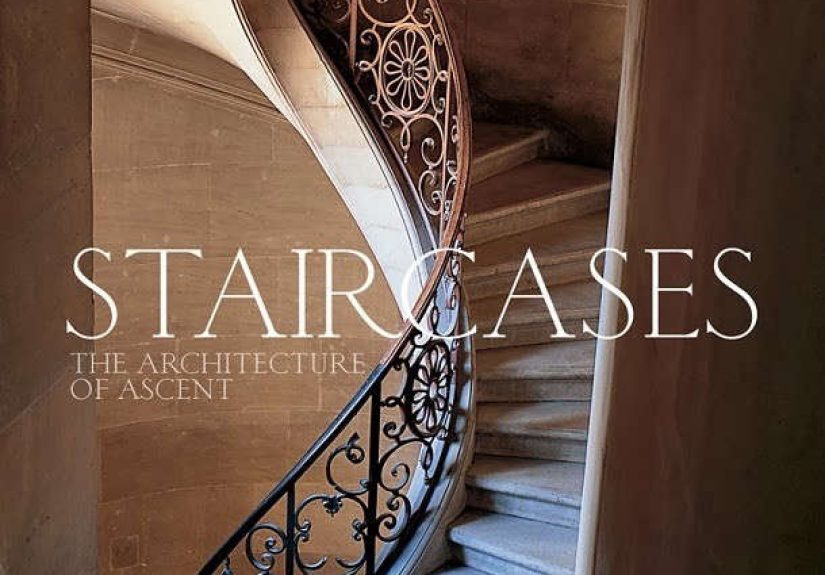
That idea sits at the heart of The Staircase: The Architecture of Ascent, the richly visual volume associated with Tusquets and architectural historians, and it echoes through some of his best-known design thinking. The premise is simple enough: stairs are practical. You go up, you come down, and hopefully you do not do either while holding six grocery bags and regretting your life choices. But Tusquets pushes far beyond function. He treats the staircase as one of architecture’s oldest and most expressive inventions, a device capable of carrying symbolism, delight, elegance, and even a little swagger.
Who Is Oscar Tusquets Blanca?
Oscar Tusquets Blanca is one of those gloriously hard-to-file creative figures who make tidy labels give up and go home. Trained as an architect in Barcelona, he has also worked as a designer, painter, and writer. That multidisciplinary identity matters because it explains why his architecture rarely behaves like architecture in the narrow, technical sense. He thinks like a builder, yes, but also like a draftsman, storyteller, set designer, and collector of visual references. When Tusquets looks at a staircase, he does not only see structure. He sees image, ritual, theater, memory, and proportion all climbing the steps together.
His wider design language has long been associated with a distinctly Mediterranean intelligence: serious about craft, playful about form, and unafraid of beauty. There is a modern backbone in his work, but it is not the austere sort that tries to make joy feel illegal. Instead, Tusquets belongs to a tradition that allows ornament, wit, historical memory, and sensual materials to coexist with rational planning. In other words, he understands that buildings can be smart without acting smug.
Why Staircases Fascinate Him
Tusquets has written and exhibited on staircases in a way that reveals genuine obsession, and honestly, architecture could use more obsessions of this caliber. In his staircase-related work, he argues for the stair as a central actor in architectural history. That is a telling phrase: central actor. He is not talking about a supporting prop hidden in the background while lobbies, façades, and famous chairs soak up all the applause. He is saying the staircase has often been the scene-stealer.
It is easy to see why. Staircases do several jobs at once. They solve circulation, of course, but they also choreograph how the eye moves through space. They create anticipation. They can be grand and ceremonial, tight and intimate, airy and floating, or stern and monastic. They can transform a vertical problem into a psychological event. That is not bad for a bunch of treads and risers.
Tusquets is especially compelling when he treats stairs as a meeting point between necessity and imagination. A staircase must work. Its geometry, safety, comfort, and proportion are non-negotiable. Yet within those constraints, there is immense room for invention. This tension between discipline and freedom is one reason his writing on the topic feels fresh. He does not romanticize stairs as abstract art objects detached from use. He admires them precisely because they are useful and poetic at the same time.
The Book That Turns Ascent Into Architecture
The Staircase: The Architecture of Ascent is a perfect lens through which to understand Tusquets. The book presents staircases across centuries, from ancient stepped forms to Renaissance elegance, Baroque flourish, and contemporary digitally aided feats. That historical range matters because it prevents the subject from shrinking into a narrow design trend. For Tusquets, the staircase is not a fashionable detail. It is a recurring architectural language spoken differently by every era.
The brilliance of this approach is that it teaches readers to look again at something they normally treat as background. Most people do not walk into a building and say, “Ah yes, the treads are making an argument.” They simply use the stair. Tusquets invites a deeper reading. He asks us to notice proportion, procession, landing, balustrade, light, shadow, and the emotional character of ascent. Is the climb solemn? Theatrical? Efficient? Seductive? Slightly bossy? Good staircases, in his view, are never neutral.
That larger historical sweep also reflects a key aspect of his design temperament: he is not allergic to the past. Tusquets does not treat history as an antique shop where ideas go to nap. He mines it for intelligence. Renaissance stairs, Baroque stairs, and contemporary stairs all belong to the same conversation. What changes is not the importance of the staircase, but the cultural attitude wrapped around it.
When a Stair Becomes Furniture
One of the clearest examples of Tusquets’s staircase philosophy appears in the Tusquets Penthouse in Barcelona. There, the staircase was not left to sit quietly in the corner like a polite but forgettable guest. It was given unavoidable visual dominance, so Tusquets turned that dominance into a strength. Instead of treating the stair as a problem to minimize, he transformed it into a central piece of furniture that absorbed other functions, including a desk, a library, and storage.
This is classic Tusquets thinking. If a staircase must occupy the room, let it earn the real estate. Let it become architecture, furniture, and organizing device all at once. The result is clever without feeling gimmicky. It also reveals an important lesson for contemporary interiors: the best multifunctional design is not always the one that hides. Sometimes it is the one that boldly declares itself and then works harder.
There is also a practical poetry in this idea. A stair-library suggests that climbing and reading are cousins. Both take you elsewhere. One moves the body upward; the other moves the mind. Tusquets may not spell it out in such sentimental terms, but the spatial metaphor is delicious, and architecture should be allowed a little deliciousness now and then.
From Domestic Drama to Urban Spectacle
If the penthouse stair shows Tusquets at the scale of domestic invention, Naples’s Toledo Station shows him thinking on a public, almost cinematic level. The station is widely recognized for its immersive descent, where escalators and underground movement are transformed into an art-filled spatial event. In discussions of the station, the experience of going down is treated not as a grim commute but as an orchestrated visual journey through light, color, and atmosphere. The famous Crater de Luz creates a striking vertical connection, pulling daylight deep into the station and making descent feel unexpectedly cosmic.
This public work is especially revealing because it proves Tusquets’s fascination with ascent and descent is not limited to classic staircases in mansions, museums, or old palaces. He understands vertical circulation in a much broader sense. Escalators, shafts of light, underground transitions, and layered public movement can all participate in the same architectural drama. In Toledo Station, the path downward becomes a kind of anti-basement experience. Instead of feeling buried, the visitor feels suspended between city, sea, and sky.
That is a very Tusquets move. He takes an infrastructural necessity and gives it emotional ambition. Commuters may still be late, mildly annoyed, and checking their phones with heroic dedication, but the architecture refuses to surrender to dullness.
A Defense of the Staircase in an Age of Rules
Another striking element in Tusquets’s thinking is his concern that the staircase, as a rich architectural device, has been weakened by overregulation and cautious standardization. He has suggested that stairs are in danger of extinction as expressive forms, squeezed by codes, by-laws, and the larger tendency to reduce architecture to managed compliance. This is not an argument against safety. It is an argument against creative surrender.
His point lands because modern architecture often treats risk management as the only acceptable narrative. Of course buildings should be safe. Nobody needs a poetic staircase that doubles as an orthopedic business model. But Tusquets reminds us that regulation should not flatten invention. A staircase can meet practical requirements and still offer delight, symbolic weight, and formal intelligence. The choice is not between safety and imagination. The best designers insist on both.
What Makes a Tusquets Staircase Feel Different?
1. It has presence.
Tusquets does not treat a staircase as an invisible connector. It has mass, identity, and authority. It participates in the room rather than apologizing for being there.
2. It often performs more than one role.
In his work, stairs can become furniture, storage, viewpoint, light device, urban theater, or visual anchor. They solve circulation while creating meaning.
3. It respects history without becoming nostalgic.
Tusquets loves the long history of staircases, yet he does not imitate historical models mechanically. He borrows their seriousness, not their costume jewelry.
4. It understands movement as choreography.
Going up or down changes how a body feels. Tusquets designs for that sensation. The staircase is not simply drawn; it is staged.
5. It values visual pleasure.
Whether in a private penthouse or a major transit project, he believes circulation can be beautiful. That sounds obvious until you look around and realize how many stairs are built like punishment.
Lessons for Designers, Homeowners, and Anyone With Two Floors
Oscar Tusquets Blanca’s staircase philosophy offers practical lessons even for readers who are not designing a metro station or writing passionate essays about balustrades. First, treat the staircase as a major design decision, not leftover geometry. Second, think about what happens around the stair: light, storage, sightlines, and pauses matter as much as the steps themselves. Third, do not assume minimal means characterless. Tusquets proves that clean forms can still feel witty, warm, and loaded with personality.
Most importantly, he reminds us that circulation is part of a building’s emotional life. A staircase can welcome, intimidate, seduce, calm, or surprise. It can make a small interior feel larger or turn a public project into a memorable experience. In the hands of Tusquets, the staircase becomes a lesson in how architecture earns affection: not by shouting, but by making ordinary actions feel newly significant.
Experiencing Staircases the Oscar Tusquets Way
To really understand Tusquets, it helps to imagine not just seeing one of his staircase ideas, but moving through it. The experience begins before your foot hits the first step. That is the key. A Tusquets staircase announces itself in advance. It frames a room, catches light, suggests direction, and creates a tiny moment of psychological preparation. You do not just use it. You approach it.
In a home, that experience can feel unexpectedly intimate. A staircase that doubles as a library or piece of furniture changes the whole mood of living. Instead of a dead zone between floors, the stair becomes inhabited territory. Books, objects, shadows, and changing daylight make it part of daily life. In the morning, it might feel crisp and practical. At night, with softer light, it becomes reflective, almost theatrical. The same steps do not feel exactly the same twice. That variability is part of the pleasure.
In a public setting, the emotional register changes, but the effect remains powerful. Think of moving through a transit space that has been designed with actual imagination. Suddenly the descent underground is not a surrender to utility. It is a sequence. Light arrives from above. Color cools as you go deeper. Surfaces shimmer. The body remains aware of gravity, but the mind is entertained. For a few seconds, the commute becomes an event rather than a chore. That is not a small achievement. Good architecture does not always have to transform your life; sometimes it just has to rescue ten minutes from total banality.
There is also something almost philosophical in Tusquets’s treatment of stairs. A staircase is one of the few architectural elements that makes you physically register transition. Doors can be pushed open absentmindedly. Hallways can be crossed while thinking about lunch. But stairs ask for a little more presence. You adjust your balance. You measure distance with your body. You feel the rhythm of each step. Tusquets seems fascinated by that bodily awareness. He understands that architecture becomes memorable when it engages not just the eye, but posture, pace, and anticipation.
That may be why his staircase thinking stays with people. It honors a simple truth: buildings are not only looked at, they are lived through. A staircase condenses that truth beautifully. It is structure, motion, and perception all at once. And in Tusquets’s hands, it often gains an extra ingredient: charm. Not cute charm, not decorative fluff, but the kind of intelligence that makes you smile because someone clearly cared enough to make a necessary thing wonderful.
So the next time you walk up a flight of stairs, it may be worth asking a very Tusquets question: is this merely taking me somewhere, or is it making the journey itself matter? The best staircases do both. They move the body and wake up the imagination. Oscar Tusquets Blanca has spent years proving that the distance between floors can also be the distance between ordinary design and unforgettable architecture.
Conclusion
Staircases : Oscar Tusquets is ultimately a story about more than one designer’s favorite architectural element. It is about the overlooked power of movement, sequence, and vertical drama in the built environment. Tusquets treats the staircase as history, art, engineering, furniture, and human experience wrapped into one elegant problem. That is why his perspective still feels relevant. In an era obsessed with efficiency, he makes a persuasive case for delight. In a world full of buildings that rush us through space, he reminds us that how we rise and descend matters.
If architecture has a heartbeat, staircases often provide the rhythm. Oscar Tusquets Blanca simply had the good sense to listen to it more carefully than most.