Table of Contents >> Show >> Hide
- Why “Worth Sharing” Is a Higher Bar Than “It Works”
- From Breadboard Heroics to Real PCB Design
- Documentation Is Not Boring. It Is a Love Letter to Future Builders.
- Hardware Needs an Exterior Life, Too
- Design for Manufacturing Is Where Idealism Meets Reality
- Quality Control Is Not Optional Once Other People Are Involved
- Open Hardware Does Not Mean Low Standards
- The Best Hardware Tells a Clear Story
- Conclusion: Build Something People Can Carry Forward
- Experiences From the Workbench: What Building Shareable Hardware Really Feels Like
- SEO Tags
There is a special kind of optimism that lives on a breadboard. It blinks. It buzzes. It works perfectly until someone breathes near it. Then one jumper wire pops loose, the sensor starts hallucinating, and suddenly your “finished prototype” looks like modern art made by caffeine.
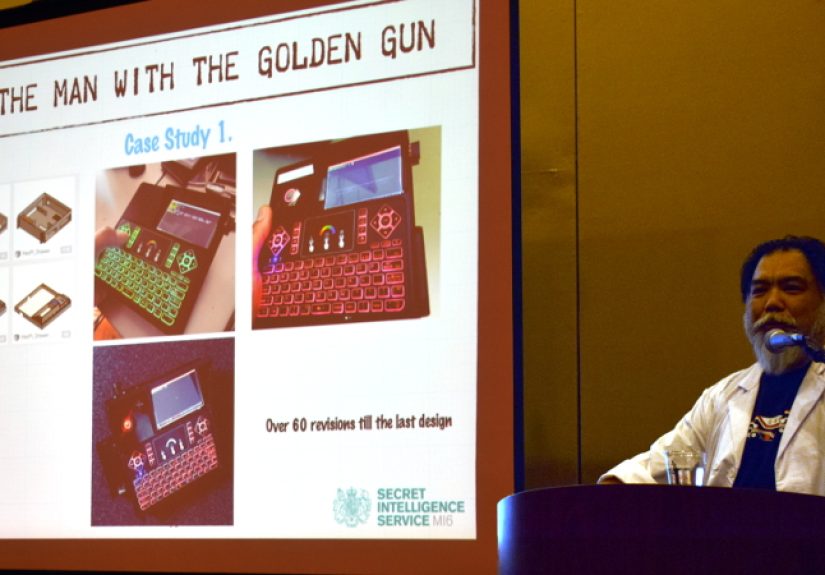
That is exactly why the idea behind WOPR: Building Hardware Worth Sharing matters. It is not really about one gadget, one badge, or one conference talk. It is about a bigger shift in hardware design: moving from “look, it works on my desk” to “someone else can build this, understand it, trust it, and maybe even improve it.” That leap is where a fun electronics project becomes shareable hardware.
And honestly, that leap is where the magic happens.
Anyone can make an LED blink. Plenty of us have also made an LED blink in a way that somehow threatens the USB port, our dignity, or both. But the moment you decide your project should be replicated, sold, open-sourced, or handed to a friend without a ten-minute apology speech, the rules change. Suddenly PCB design, documentation, enclosure fit, manufacturability, licensing, testing, and user experience all matter. A lot.
That is the real WOPR lesson: hardware worth sharing is not just functional. It is intentional.
Why “Worth Sharing” Is a Higher Bar Than “It Works”
A working prototype proves an idea. A shareable product proves judgment.
Those are not the same thing. A one-off build can get away with heroic hacks, mystery wires, hand-soldered miracles, and a shopping list that includes one impossible-to-find part from a seller with a username like “BestChip4U_Official_Maybe.” A project meant for other people cannot.
That is why good product development starts with an uncomfortable question: Would anyone else enjoy owning, assembling, or maintaining this thing? If the answer is “only if I stand next to it and explain the quirks,” then the project is not ready yet.
Shared hardware must survive contact with real life. It needs clear inputs, stable power, sensible parts, readable silkscreen labels, and enough design discipline that future-you does not open revision three and wonder who designed this mess. Spoiler: it was you. It was always you.
From Breadboard Heroics to Real PCB Design
The first major step in making hardware worth sharing is leaving the breadboard stage behind. Breadboards are wonderful for exploration. They are fast, forgiving, and perfect for figuring out whether an idea deserves a second date. They are not, however, a great long-term home for anything that needs reliability, portability, or repeatability.
This is where custom boards earn their keep. A proper PCB does more than make a project look polished. It reduces wiring errors, improves durability, shortens assembly time, and gives your design a stable form that other people can actually reproduce. A board says, “This is not a pile of parts anymore. This is a system.”
That does not mean every project needs to be wildly ambitious. In fact, the smartest hardware teams often start simpler than expected. They use proven modules when it makes sense, keep the part count under control, and resist the urge to design every subsystem from scratch just because they technically could. Reinventing the wheel is noble only until your custom wheel delays the whole build by six weeks.
Practical prototype-to-production thinking means choosing battles carefully. Maybe your real contribution is the interface, the form factor, the enclosure, or the user workflow, not a custom Wi-Fi radio or charger circuit. Great hardware makers know when originality matters and when reliability matters more.
Documentation Is Not Boring. It Is a Love Letter to Future Builders.
If your project cannot be understood without you narrating it live, it is not really shareable.
This is where many promising open hardware projects quietly trip over their own shoelaces. The board may be excellent. The firmware may be clever. But the documentation is one grainy photo, a missing bill of materials, and a README that says, “You know, just wire it up normally.” Sir, what is normal here?
Real open-source hardware asks for more. It asks you to publish the original design files, not just a flattened image. It asks for schematics, board layout files, a useful BOM, setup instructions, assembly guidance, licensing clarity, and enough context that someone else can modify the work instead of merely admire it from a respectful distance.
That sounds like extra labor because it is extra labor. But it is also the difference between a project that inspires people and one that frustrates them. Good documentation lowers the barrier to entry. It welcomes students, hobbyists, engineers, tinkerers, and curious weirdos who want to learn by opening the hood.
Even better, documentation makes your project more durable than your own attention span. When life gets busy and you move on to other ideas, the project can still live on because the knowledge did not stay trapped inside your head.
Hardware Needs an Exterior Life, Too
A board can be electrically brilliant and still feel unfinished. That is because people do not interact with schematics. They interact with buttons, ports, labels, displays, edges, screws, and enclosures.
In other words, they interact with industrial design, whether you planned for it or not.
One of the smartest lessons in modern hardware development is that ECAD and MCAD should not live in separate universes. Your electronics affect the enclosure, and the enclosure affects the electronics. Connector placement, mounting holes, thermal needs, cable routing, finger clearance, display windows, and screw bosses all start arguing with each other early. If you ignore that conversation until the end, the enclosure will win in the most embarrassing way possible.
This is why good builders think about physical presentation sooner than they used to. An enclosure is not just decoration. It is usability. It protects the board, helps explain the product, and tells users where to touch and where to absolutely not touch unless they enjoy tiny sparks and personal growth.
Even simple projects benefit from this mindset. Off-the-shelf enclosures can speed deployment. 3D printing can validate fit and feel. A polished shell can turn a clever module into something people actually want to keep on a desk instead of hiding in a drawer labeled “electronics crimes.”
Design for Manufacturing Is Where Idealism Meets Reality
This is the part where hardware stops being purely romantic.
Design for manufacturing is not glamorous, but it is where projects either mature or fall apart. A board that works in one copy may become painful in ten, and catastrophic in a hundred. Tiny footprints, awkward part orientation, poor spacing, fragile connectors, vague version control, or hard-to-source components can all turn a clever design into a support-ticket vending machine.
Manufacturability asks annoying but necessary questions. Are your trace widths realistic? Are holes, pads, and clearances buildable? Will assembly create solder bridges? Should you order a stencil? Have you labeled revisions? Can your board be panelized efficiently? Does your BOM survive contact with the actual market?
Those questions are not buzzkill questions. They are kindness questions. They protect your time, your budget, your customers, and your reputation.
The same goes for parts sourcing. Hardware worth sharing uses components people can actually get. That does not always mean the cheapest part. It often means the part with stable availability, clear documentation, decent lead times, and a realistic replacement path. A project built around a unicorn chip may look brilliant on launch day and impossible six months later.
That is one reason proven modules still matter. Used wisely, they reduce risk and speed development. Used lazily, they bloat cost and make assembly awkward. The trick is not to worship modules or reject them on principle. The trick is to know why you are using them.
Quality Control Is Not Optional Once Other People Are Involved
The moment hardware leaves your own bench, quality control becomes a moral issue as much as a technical one.
That sounds dramatic, but it is true. When someone else buys, builds, or relies on your device, your little shortcuts stop being private. Weak testing becomes their headache.
That is why serious hardware makers build test strategy into the process instead of bolting it on at the end. They think about engineering validation, repeatable test procedures, programming steps, inspection checkpoints, and how to identify root causes when a revision goes sideways. They add version labels. They log changes. They assume that the first batch will teach them humility, because it always does.
Good QC is not about perfection. It is about predictability. A project people can trust will always travel farther than a project that merely impressed a few friends in a lab.
Open Hardware Does Not Mean Low Standards
There is a lazy myth that open hardware is somehow less polished than commercial hardware. In reality, the best hardware projects that publish their files often have to be more disciplined, not less. Once your schematics, layout, BOM, and firmware are visible, your design has nowhere to hide.
That transparency is a feature. It invites scrutiny, collaboration, remixing, and trust. It also forces better habits. Clear licensing matters. Accessible repositories matter. Editable source files matter. Public issue tracking matters. Build instructions matter. Even small things, like naming conventions and folder organization, suddenly matter a lot more when strangers are trying to use your work.
And no, open hardware does not mean you cannot build a business. Sharing design knowledge and building a sustainable product are not enemies. Plenty of respected hardware brands have proven that people will pay for convenience, quality control, support, assembly, availability, and confidence. They are not just buying atoms. They are buying a better experience around those atoms.
The Best Hardware Tells a Clear Story
There is also a philosophical side to WOPR thinking that deserves more attention. Hardware worth sharing should not only work well. It should make sense fast.
Users should understand what it is for, how to use it, what problem it solves, and why it deserves space in their life or toolkit. That is partly a branding question, partly a UX question, and partly a ruthless editing question. Every confusing feature, sloppy label, awkward port location, or unexplained setup step adds friction to the story.
Great hardware feels coherent. The outside matches the inside. The documentation matches the design. The design matches the purpose. There is a reason some devices feel instantly lovable even before you know their full specs. They communicate intent.
That is not fluff. That is shareability.
Conclusion: Build Something People Can Carry Forward
WOPR, at its heart, is a challenge to stop treating hardware as a private performance and start treating it as a public craft. Build the board, yes. But also build the files, the instructions, the enclosure, the revision history, the sourcing plan, the tests, and the user confidence around it.
That is what makes hardware worth sharing.
A blinking prototype can win you a smile. A well-documented, manufacturable, thoughtfully packaged device can win you a community. And in the long run, the community matters more. It improves the design, extends the project’s life, and turns your clever little invention into something bigger than your own desk.
So by all means, start with the breadboard. Everyone does. Just do not fall in love with the spaghetti. The real goal is not to prove you can build something once. The real goal is to build something that other people can understand, trust, reproduce, and proudly pass along.
That is when hardware stops being a hack and starts becoming a contribution.
Experiences From the Workbench: What Building Shareable Hardware Really Feels Like
Anyone who has tried to turn a rough electronics prototype into something shareable knows the emotional plot twist: the first 80% feels like invention, and the last 20% feels like negotiating with reality. You begin with excitement. The sensor reads data, the microcontroller behaves, the LEDs dance like they have unionized. You feel unstoppable. Then comes the part nobody romanticizes enough: naming files correctly, rewriting assembly notes, checking whether the connector is mirrored, discovering your enclosure blocks the reset button, and realizing your favorite part is suddenly out of stock everywhere. Hardware has a remarkable way of humbling people who were feeling a little too poetic.
But those experiences are also where better habits are born. Many builders learn, sometimes painfully, that the second version of a board is rarely about new features. It is about fixing all the little choices that only looked reasonable at midnight. Silkscreen labels get larger. Mounting holes move a millimeter and save the whole enclosure. Test pads appear. Power input gets cleaned up. The BOM loses that one weird component you only chose because it was cheap and “probably fine.” Version numbers stop feeling like bureaucracy and start feeling like mercy.
There is also a special satisfaction in watching a project become understandable to someone else. The first time another person assembles your board without sending a confused message, it feels absurdly good. The first time someone forks your design files, tweaks the firmware, or prints a custom case for your project, you realize sharing hardware is not just about generosity. It is about momentum. Your idea becomes more useful because it is no longer trapped in your exact workflow, your exact parts drawer, or your exact taste in connectors.
Of course, there are bruises along the way. A board might come back from fabrication with one tiny footprint mistake that somehow has the power to ruin an entire weekend. A supposedly “drop-in” module may refuse to behave in production. A gorgeous enclosure may turn out to be hostile to human fingers. Those moments are annoying, but they also teach the deep truth of hardware: polish is earned through iteration, not declared through confidence.
In the end, the most memorable experience is not when the prototype first works. It is when the project finally stops needing excuses. You can hand it to someone, publish it, sell it, or open the repository without writing a paragraph that begins with “Please ignore the mess.” That is a quiet but meaningful milestone. It means the hardware has crossed a line from personal experiment to shared object. And once a project reaches that point, it carries something more than circuits and code. It carries trust.