Table of Contents >> Show >> Hide
- Quick Overview: Missouri Gun Buying Rules
- Way 1: Buy From a Licensed Gun Store or FFL Dealer
- Way 2: Buy a Gun Online and Transfer It Through a Missouri FFL
- Way 3: Buy Through a Private Sale in Missouri
- Do You Need a Permit to Buy a Gun in Missouri?
- Who Cannot Buy or Possess a Gun in Missouri?
- Choosing the Right Firearm for Your Purpose
- Responsible Ownership After the Purchase
- Common Mistakes to Avoid When Buying a Gun in Missouri
- of Practical Experience: What Buying a Gun in Missouri Often Feels Like
- Conclusion
Buying a gun in Missouri is not complicated, but it is not something to treat like grabbing a gallon of milk, a fishing lure, or a suspiciously large bag of barbecue chips. Firearms are regulated by a mix of federal law, Missouri law, dealer policies, and common-sense safety practices. That means the process can feel simple on the surfaceshow identification, complete paperwork, pass the required check when buying from a licensed dealerbut the details matter.
Missouri does not require a state permit to purchase most firearms. The state also does not require firearm registration for ordinary gun purchases. However, federal law still applies, and licensed gun dealers must follow federal rules, including identity verification, ATF Form 4473, and the National Instant Criminal Background Check System, commonly called NICS. In plain English: Missouri may be gun-friendly, but “gun-friendly” does not mean “rule-free.”
This guide explains the three most common ways to buy a gun in Missouri: buying from a licensed firearm dealer, buying online and completing the transfer through a Missouri Federal Firearms Licensee, and buying through a private sale. Along the way, we will cover age limits, background checks, concealed carry permits, private transfers, safety considerations, and practical tips that can save buyers from confusion, delays, and awkward counter conversations.
Quick Overview: Missouri Gun Buying Rules
Before looking at the three buying methods, it helps to understand the basic legal landscape. In Missouri, a buyer generally does not need a state purchase permit to buy a handgun, rifle, or shotgun. Missouri also does not have a state firearm registration system for ordinary purchases. But federal rules still control important parts of the process.
When buying from a licensed dealer, federal law generally requires the buyer to complete ATF Form 4473 and pass a background check unless a valid qualifying exception applies. A buyer must usually be at least 18 years old to purchase a rifle or shotgun from a licensed dealer and at least 21 years old to purchase a handgun from a licensed dealer. A firearm frame or receiver is also generally treated like an item that cannot be transferred by a dealer to someone under 21.
Missouri law also prohibits firearm possession by certain people, including people with felony convictions, fugitives from justice, and certain other disqualified individuals. Federal law has its own list of prohibited persons, including people convicted of felonies, people subject to certain protective orders, people convicted of misdemeanor domestic violence offenses, and others. If a person is legally prohibited from possessing a firearm, there is no “Missouri shortcut” around that rule.
Way 1: Buy From a Licensed Gun Store or FFL Dealer
The most straightforward way to buy a gun in Missouri is through a licensed firearm dealer. This may be a local gun shop, sporting goods store, pawn shop with a firearm license, or another business holding a Federal Firearms License, often called an FFL.
How the Dealer Purchase Process Works
The process usually begins with choosing the firearm that fits your lawful purpose. For example, a first-time buyer looking for home defense may compare handguns, while a hunter may look at shotguns or bolt-action rifles. A recreational shooter might focus on affordability, ammunition availability, and comfort at the range. A good dealer will not just sell a gun; they will answer questions about fit, safe handling, storage, maintenance, and ammunition compatibility.
Once a buyer selects a firearm, the dealer will ask for government-issued photo identification. The buyer then completes ATF Form 4473. This form asks for identifying information and includes questions about legal eligibility. It is important to answer carefully and honestly. False statements on firearm paperwork can create serious legal problems, even if the buyer thinks the mistake is “just paperwork.” Spoiler: federal firearm forms are not the place for creative writing.
After the form is completed, the dealer contacts NICS for the background check. The result may come back as proceed, delayed, or denied. A “proceed” means the dealer may complete the transfer if all other requirements are satisfied. A “delayed” result means the dealer must wait while the system reviews additional information. A “denied” result means the transfer cannot go forward unless the denial is successfully appealed or corrected through the proper process.
Why Buying From a Dealer Is Often Best for Beginners
Buying from a licensed gun store is often the best option for first-time buyers because it provides structure. The dealer is responsible for following federal transfer rules. The buyer can handle different models, ask questions, compare prices, and get guidance on accessories such as a lockbox, cleaning kit, ear protection, and eye protection.
Dealers also help prevent common beginner mistakes. For example, some buyers choose a handgun that is too large to carry comfortably or too small to shoot accurately. Others overlook ammunition cost, recoil, grip size, or safe storage. A knowledgeable dealer can help match the firearm to the buyer’s experience level and lawful purpose.
Example: Buying a Handgun From a Missouri Gun Store
Imagine a 28-year-old Missouri resident walks into a licensed gun store in Columbia and wants to buy a 9mm handgun for lawful personal protection and range practice. The buyer compares several models, chooses one that fits comfortably, presents a Missouri driver’s license, completes ATF Form 4473, and waits while the dealer runs the background check. If the buyer is legally eligible and the check proceeds, the dealer can complete the transfer. The buyer leaves with the firearm, a case, a lock, and hopefully a plan to take a safety class before pretending to be an action hero at the range.
Way 2: Buy a Gun Online and Transfer It Through a Missouri FFL
The second common way to buy a gun in Missouri is online. This method is popular because online retailers often have a wider selection than local stores. However, there is one major point that every buyer should understand: buying a firearm online does not mean the gun ships directly to your front porch like socks, coffee beans, or a questionable impulse purchase at midnight.
In most ordinary online firearm purchases, the firearm is shipped to a licensed FFL dealer in Missouri. The buyer then visits that dealer in person, completes the required paperwork, shows identification, and goes through the same background check process used for in-store purchases.
How Online Firearm Purchases Work
First, the buyer chooses a firearm from an online retailer or auction platform. During checkout, the buyer selects a local FFL dealer to receive the firearm. Many online sellers have a list of participating FFLs, but the buyer should still contact the receiving dealer before placing the order. This avoids surprises about transfer fees, store policies, business hours, and whether the dealer accepts shipments from the chosen seller.
After the firearm arrives at the Missouri FFL, the dealer contacts the buyer. The buyer goes to the shop, presents identification, completes ATF Form 4473, and undergoes the required background check. If the transfer is approved, the buyer pays the transfer fee and takes possession of the firearm.
Benefits of Buying Online
Online buying can be useful for people looking for a specific model, left-handed configuration, hunting rifle caliber, competition pistol, collectible firearm, or better pricing. It also allows buyers in smaller towns to access inventory that might not be available locally.
However, online purchases require more patience. Shipping time, transfer fees, return policies, and background check delays can all affect the final experience. A firearm that looks cheaper online may not be cheaper after shipping, taxes, and FFL transfer fees. The internet is great at making a price look tiny until the checkout page starts adding numbers like it is training for a math competition.
Example: Buying a Rifle Online in Missouri
Suppose a hunter in Cape Girardeau wants a specific bolt-action rifle that local stores do not have in stock. The buyer finds it online and selects a nearby Missouri FFL for delivery. Before ordering, the buyer calls the dealer and confirms the transfer fee and required documents. Once the rifle arrives, the buyer visits the dealer, completes the paperwork, passes the background check, and takes the rifle home. The process is legal and routine, but it still goes through a licensed dealer before the buyer receives the firearm.
Way 3: Buy Through a Private Sale in Missouri
The third way to buy a gun in Missouri is through a private sale. A private sale usually means one private individual sells a firearm to another private individual. This might happen between friends, family members, neighbors, collectors, or people who meet through a lawful listing or at a gun show.
Missouri does not generally require private sellers to run a background check for occasional private transfers between Missouri residents. However, that does not mean private sales are risk-free or responsibility-free. Both the buyer and seller must comply with state and federal law. A seller must not knowingly transfer a firearm to someone who is prohibited from possessing one. Missouri law also prohibits certain unlawful transfers, including knowingly giving or selling firearms or ammunition to people who are not legally entitled to possess them.
Private Sale Safety and Documentation
Even when a background check is not required for a private sale, responsible buyers and sellers should take precautions. The buyer should be a Missouri resident when required by law, should be legally eligible to possess the firearm, and should be old enough under applicable state and federal rules. The seller should ask to see identification and should refuse the sale if anything feels suspicious.
Many private sellers use a simple bill of sale that records the date, firearm description, serial number, buyer and seller names, and a statement that both parties believe the transfer is lawful. A bill of sale is not the same as registration, but it can document that the seller transferred the firearm in a responsible manner. Some private parties also choose to complete the transaction through an FFL voluntarily, even when not required, because it adds a background check and a professional transfer record.
Gun Shows in Missouri
Gun shows can include both licensed dealers and private sellers. If the seller is a licensed dealer, the transaction still requires the dealer process, including Form 4473 and a background check. If the seller is a true private seller making an occasional lawful sale, Missouri may not require a state background check. However, federal rules about who is “engaged in the business” of dealing firearms matter. A person who repeatedly buys and sells firearms to predominantly earn a profit may need to be licensed and conduct transfers like a dealer.
For buyers, the practical advice is simple: do not assume every table at a gun show follows the same process. Ask whether the seller is an FFL. Ask what paperwork is required. Confirm that the firearm is legal to own. If the seller pressures you to skip obvious safeguards, walk away. There will always be another firearm; there may not be another chance to avoid a bad decision.
Do You Need a Permit to Buy a Gun in Missouri?
Generally, no. Missouri does not require a state permit to purchase a handgun, rifle, or shotgun. This is different from some states that require a permit-to-purchase, firearm owner identification card, or waiting period before buying a gun.
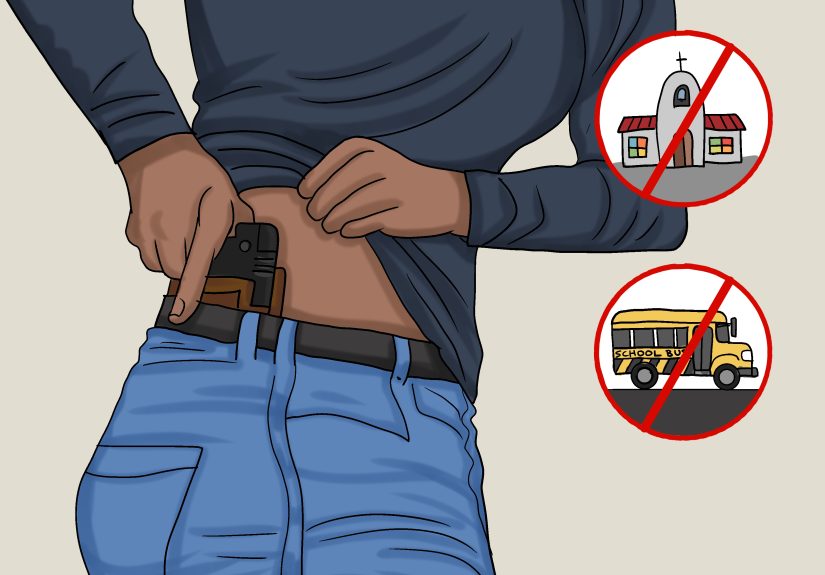
Missouri also allows permitless concealed carry for many adults who may lawfully possess firearms, but that does not erase all rules. A Missouri concealed carry permit can still be useful for reciprocity in other states, certain local issues, and in some cases as a qualifying permit related to federal background check procedures. Missouri concealed carry permits are issued through the local sheriff and generally require eligibility, application paperwork, fees, and firearms safety training.
Who Cannot Buy or Possess a Gun in Missouri?
A person should not attempt to buy a firearm in Missouri if they are prohibited under federal or state law. Prohibited categories can include people convicted of felonies, fugitives from justice, certain people with domestic violence convictions, people subject to qualifying protection orders, unlawful users of controlled substances, and people who have been adjudicated mentally incompetent or committed under certain legal standards.
Missouri law also includes restrictions on firearm possession by certain individuals, including convicted felons. If there is any doubt about eligibility, the smart move is to consult a qualified attorney before attempting a purchase. Guessing wrong on firearm eligibility is not like guessing wrong on a restaurant menu. One gives you a disappointing sandwich; the other can give you criminal charges.
Choosing the Right Firearm for Your Purpose
Legal buying method is only one part of the decision. A responsible buyer should also consider why they want the firearm. A gun for deer hunting is different from a gun for concealed carry, which is different from a shotgun for clay shooting, which is different from a rifle for target practice.
For Home Defense
Buyers considering a firearm for home defense should think about safe storage, training, recoil, ammunition selection, and who else lives in the home. A firearm locked away safely is more responsible than one tossed into a nightstand like a TV remote with consequences.
For Hunting
Hunters should match the firearm to Missouri hunting regulations, game type, terrain, and season. A shotgun used for turkey hunting is not the same tool as a rifle used for deer hunting. Buyers should also check Missouri Department of Conservation rules before heading into the field.
For Concealed Carry
Concealed carry buyers should focus on reliability, comfort, safe holsters, and training. Small pistols are easier to carry but can be harder to shoot well. Larger pistols may be easier to control but harder to conceal. The best choice is not always the smallest, cheapest, or coolest-looking option.
Responsible Ownership After the Purchase
Buying the firearm is only step one. Responsible ownership starts the moment the transfer is complete. New owners should learn the four basic safety rules: treat every firearm as loaded, keep the muzzle pointed in a safe direction, keep your finger off the trigger until ready to shoot, and know your target and what is beyond it.
Safe storage is equally important. A quality safe, lockbox, or cable lock can help prevent unauthorized access, especially in homes with children, guests, roommates, or anyone who should not handle a firearm. Missouri buyers should also consider formal training. A beginner class can turn confusion into confidence and help prevent dangerous habits before they become permanent.
Common Mistakes to Avoid When Buying a Gun in Missouri
One common mistake is choosing a firearm based only on appearance. A gun may look fantastic in a photo but feel uncomfortable in the hand. Another mistake is ignoring ammunition availability and cost. A firearm chambered in an unusual caliber may be fun until the buyer realizes practice ammo costs more than dinner.
Another mistake is misunderstanding online sales. Again, firearms bought online usually go to an FFL, not directly to the buyer’s home. Some buyers also forget to budget for transfer fees, sales tax, shipping, a secure storage device, cleaning supplies, training, and range time.
Private sale mistakes can be more serious. Buyers should avoid rushed transactions, sellers who refuse basic documentation, prices that seem too good to be true, or firearms with altered or missing serial numbers. A lawful buyer should want a clean transaction. A lawful seller should want the same.
of Practical Experience: What Buying a Gun in Missouri Often Feels Like
For many Missouri buyers, the experience starts with research. You may watch reviews, compare models, ask friends, visit a range, or stand at a gun counter trying to remember the difference between striker-fired and hammer-fired while pretending you absolutely did not just learn those terms yesterday. That is normal. Everyone starts somewhere.
The best experiences usually happen when buyers slow down. A first-time buyer who visits a reputable shop and says, “I’m new, and I want to learn,” is more likely to get useful help than someone who tries to sound like a movie armorer. Good dealers have heard every beginner question. They know that comfort, grip, recoil control, and safe handling matter more than internet arguments about which brand is “best.”
A smart Missouri buyer might visit two or three stores before deciding. Prices can vary, but customer service matters too. One shop may have the lowest price but little patience for questions. Another may charge slightly more but explain the paperwork, recommend a safety class, and help choose a secure storage option. For a first firearm, that guidance can be worth more than saving a few dollars.
Online buying can feel convenient, but it rewards organized people. The smoothest online purchases happen when buyers contact the receiving FFL first. Ask about transfer fees, accepted shipments, pickup procedures, and what happens if the background check is delayed. This five-minute call can prevent five days of frustration. No one enjoys discovering that their chosen dealer is closed for vacation while their new rifle is sitting in shipping limbo.
Private sales require the most judgment. Some private transactions are perfectly ordinary: two Missouri residents meet, verify identification, complete a bill of sale, and transfer a lawful firearm. Others feel wrong from the beginning. If the seller avoids questions, refuses to provide basic details, or wants to meet in a strange location at a strange hour, trust your instincts. A bargain is not a bargain if it comes wrapped in legal risk.
Another real-world lesson is that buying the firearm is cheaper than becoming competent with it. Ammunition, range fees, training, cleaning supplies, holsters, safes, and replacement parts all add up. Responsible ownership is a continuing commitment, not a one-receipt event. The buyer who budgets for practice and storage will be better prepared than the buyer who spends everything on the firearm and then stores it in a sock drawer like a dramatic raccoon.
Finally, experienced Missouri gun owners often recommend taking a safety course even when the law does not require one for the purchase itself. Training builds confidence and reduces anxiety. It also teaches details that online videos cannot fully replace: grip, stance, loading, unloading, clearing malfunctions, safe storage, and range etiquette. In short, the best gun-buying experience is not just legal; it is thoughtful, patient, and safety-focused.
Conclusion
There are three common ways to buy a gun in Missouri: through a licensed dealer, through an online purchase transferred by a Missouri FFL, or through a lawful private sale. Each method has advantages, but each also comes with responsibilities. Licensed dealers offer structure and guidance. Online buying offers selection but still requires an in-person FFL transfer. Private sales may be legal in many ordinary situations, but buyers and sellers must be careful, honest, and certain the transfer is lawful.
Missouri does not generally require a state purchase permit or firearm registration, but federal laws, background check rules for licensed dealers, age limits, prohibited-person restrictions, and safe ownership practices still matter. The smartest buyer is not the one who rushes. It is the one who understands the process, asks good questions, stores the firearm securely, and gets proper training.
Note: This article is for general informational and educational purposes only. Firearm laws can change, and local situations can vary. Readers should verify current Missouri and federal law or consult a qualified attorney before buying, selling, carrying, or transferring any firearm.