Table of Contents >> Show >> Hide
- Why Dwayne Johnson’s Slim Look Went Viral
- The Real Context: The Smashing Machine
- Fans Defend Dwayne Johnson Against Health Speculation
- What Johnson Has Said About Training and Transformation
- Why the Reaction Says More About Celebrity Culture Than Johnson
- The Career Angle: A Serious Role With Awards Buzz
- How Fans Framed Their Defense
- What This Means for Dwayne Johnson’s Public Image
- Experience-Based Reflection: Why This Story Feels So Familiar
- Conclusion
Dwayne Johnson has spent decades being described with words usually reserved for weather events, construction equipment, and very ambitious protein shakes. Huge. Massive. Built. Superhuman. So when the actor known worldwide as “The Rock” appeared noticeably leaner during the 2025 Venice International Film Festival, the internet did what the internet does best: stared, zoomed in, argued, diagnosed from a couch, and then argued about the arguing.
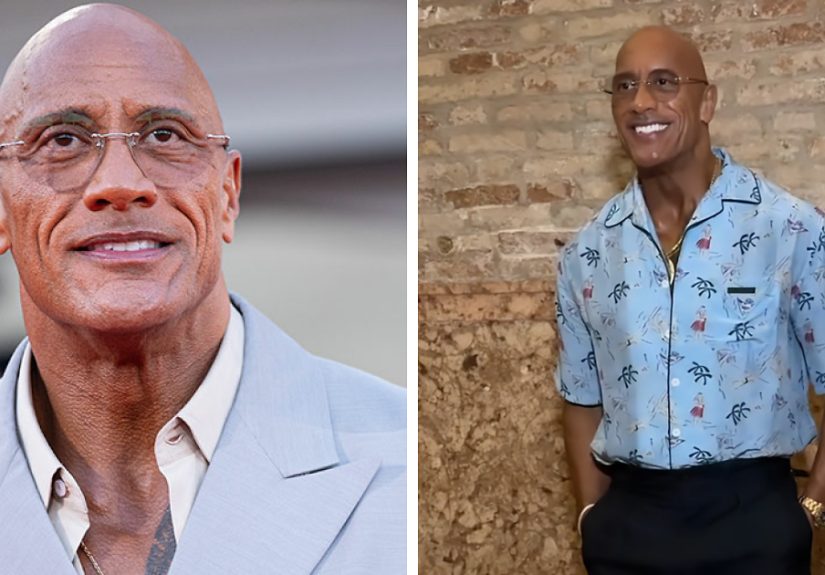
The viral conversation began after Johnson stepped out in Venice while promoting The Smashing Machine, Benny Safdie’s A24 sports drama about legendary MMA and UFC fighter Mark Kerr. Photos and clips showed the 53-year-old actor looking slimmer than many fans expected, especially compared with the ultra-muscular image he has maintained through wrestling, action films, fitness branding, and years of headline-making gym routines.
Some viewers immediately expressed concern. Others went further, speculating about weight loss, aging, health, medication, and lifestyle changes without evidence. But a strong wave of fans pushed back, reminding people that bodies change, actors transform for roles, and public figures should not be treated like walking medical charts. In other words: maybe let the man wear a suit in peace.
Why Dwayne Johnson’s Slim Look Went Viral
Johnson’s Venice appearance stood out because it challenged one of Hollywood’s most familiar visual brands. For years, audiences have associated him with a towering, heavily muscled physique. From WWE arenas to blockbuster franchises such as Fast & Furious, Jumanji, Black Adam, and Moana, Johnson’s body has often been part of the spectacle.
That is exactly why a leaner version of Johnson caused such a dramatic double take. Fans were not simply reacting to a celebrity looking different. They were reacting to a change in a public image that has been reinforced for more than twenty years. When someone has been marketed as a human mountain, even a normal shift in body composition can look like breaking news.
The Venice timing also mattered. Johnson was not casually photographed leaving a grocery store. He was attending one of the film world’s most prestigious events, promoting a serious dramatic role that many critics saw as a major turning point in his acting career. The conversation about his appearance quickly merged with the conversation about his performance, his career ambitions, and his willingness to move beyond the action-star lane that made him famous.
The Real Context: The Smashing Machine
The Smashing Machine stars Dwayne Johnson as Mark Kerr, a real-life mixed martial arts pioneer and former UFC heavyweight tournament winner. The film explores Kerr’s rise in the early days of MMA, the emotional pressure of combat sports, his complicated relationship with Dawn Staples, played by Emily Blunt, and his struggles with painkillers and personal turmoil.
Directed by Benny Safdie, the movie represents a dramatic departure for Johnson. Instead of delivering the polished charm, big grin, and family-friendly muscle-comedy energy that audiences know well, he steps into a rawer, quieter, more vulnerable character study. That shift is central to understanding why his physical appearance has been discussed so intensely. This was not just a red-carpet look; it was part of a larger period of transformation.
Johnson has spoken about wanting to challenge himself creatively. At Venice, he described feeling hungry for a role that allowed him to do more than repeat the formulas that made him bankable. That honesty resonated with many fans, particularly those who have watched him evolve from wrestling entertainer to global movie star to producer and businessman.
Fans Defend Dwayne Johnson Against Health Speculation
As photos circulated, some social media users expressed alarm, saying Johnson looked “too thin” or suggesting that his appearance signaled a health problem. Others made jokes, including predictable riffs on “The Rock” becoming “The Pebble.” The internet loves a nickname almost as much as it loves a conspiracy theory.
But many fans defended him quickly and firmly. Their argument was simple: no one can accurately assess a person’s health from a red-carpet photo. Lighting, posture, camera angles, clothing, aging, training cycles, film roles, and normal life changes can all affect how someone looks on a given day. A celebrity may appear different without being in danger.
Supporters also pointed out that Johnson is in his 50s. Muscle mass, recovery, training priorities, and body composition can change over time, even for people who have elite fitness habits. For someone whose public identity has long been attached to extreme size, a leaner look can be exaggerated by comparison. A regular person changing from huge to still-pretty-huge might not make headlines. But when that person is Dwayne Johnson, the internet calls a family meeting.
What Johnson Has Said About Training and Transformation
Johnson’s body has changed more than once during this recent chapter. For The Smashing Machine, he reportedly had to build a specific type of size and movement quality to portray Mark Kerr convincingly. He later discussed gaining weight for the role in a disciplined way, not simply by eating junk food, because Kerr’s physique reflected the fast-twitch power of an elite wrestler and fighter.
At the same time, Johnson has also discussed slimming down for another Benny Safdie project, Lizard Music, in which he is set to play an eccentric older character known as the Chicken Man. That context matters because it shows his leaner appearance was connected not only to public speculation, but also to an actor actively reshaping himself for different roles.
This is common in Hollywood, although it can be risky when done without expert supervision. Actors often gain or lose weight, alter training, change posture, use prosthetics, or modify their voice and movement to disappear into a character. Johnson’s transformation also involved extensive prosthetics for The Smashing Machine, including work designed to help him resemble Kerr physically.
Why the Reaction Says More About Celebrity Culture Than Johnson
The conversation around Dwayne Johnson’s slim look reveals a bigger cultural habit: audiences often feel entitled to comment on celebrity bodies as if fame cancels out privacy. When a star gains weight, people speculate. When a star loses weight, people speculate. When a star looks the same, people speculate about how they manage to look the same. It is an exhausting sport, and nobody wins except the comment section.
Johnson is a particularly interesting case because his physique has been part of his brand. Fans have followed his workouts, cheat meals, training videos, and motivational posts for years. That visibility creates connection, but it also creates unrealistic expectations. If someone is known for discipline and size, any visible change can be interpreted as a clue, a scandal, or a crisis.
The problem is that bodies are not press releases. A person’s appearance rarely tells the whole story. A leaner frame could reflect a role, a new training goal, a demanding schedule, aging, stress, recovery, or a personal preference. Without direct confirmation, health speculation remains just that: speculation.
The Career Angle: A Serious Role With Awards Buzz
While the internet debated his body, film journalists and festival audiences focused on Johnson’s performance. The Smashing Machine received a major Venice reception, including an extended standing ovation. For Johnson, who has often been boxed into action-comedy and franchise roles, the film opened a new conversation about his range as an actor.
That may be the most important part of the story. The slim-look debate is attention-grabbing, but the deeper headline is that Johnson appears to be entering a more experimental phase. He has already conquered wrestling, family entertainment, action franchises, tequila branding, motivational media, and the art of looking cheerful next to jungle animals. Now he seems interested in roles that ask for discomfort, vulnerability, and reinvention.
Fans defending him are not just protecting a celebrity from rude comments. They are also defending an artist’s right to change. If actors are praised for disappearing into roles, then audiences should expect them to look different sometimes. Transformation is part of the job. The trick is discussing that transformation without pretending to be someone’s doctor.
How Fans Framed Their Defense
The fan defense generally fell into three camps. First, there were the practical defenders, who said Johnson looked different because he was working. They connected the appearance to film preparation, red-carpet styling, and the demands of portraying different characters.
Second, there were the aging defenders, who reminded people that even extremely fit celebrities are human. Johnson is not frozen in the late-1990s WWE era, no matter how many nostalgic fans still hear entrance music when he raises one eyebrow. Aging is not a scandal. It is a calendar doing its job.
Third, there were the privacy defenders, who objected to strangers making extreme health claims about someone they do not know. This group made the strongest point: concern can become invasive when it turns into public diagnosis. It is fair to say, “He looks different.” It is not fair to invent medical explanations without evidence.
What This Means for Dwayne Johnson’s Public Image
Johnson’s leaner look may actually help him in the long run. For years, critics have argued that his movie-star persona sometimes overwhelms his characters. He has been charming, reliable, and commercially powerful, but often unmistakably himself. A visible transformation tells audiences that he is willing to step away from the safe version of “The Rock” and take creative risks.
That matters in an industry where reinvention can extend a career. Many stars reach a point where they must choose between repeating what works and exploring what scares them. Johnson appears to be choosing the scarier option, at least for this chapter. The public may need time to adjust, but the adjustment could be healthy for his career.
It also gives his fans something new to defend. They are not simply defending muscles, charisma, or nostalgia. They are defending the idea that a performer can evolve. That is a more interesting kind of fandom than arguing over biceps.
Experience-Based Reflection: Why This Story Feels So Familiar
Anyone who has followed celebrity culture for more than five minutes has seen this cycle before. A famous person steps out looking slightly different, and suddenly the internet becomes a 24-hour panel discussion hosted by people with profile pictures of dogs, sunsets, or gym mirrors. The comments begin with curiosity, then slide into concern, then sprint straight into wild theories. By lunchtime, someone has decided they know exactly what is happening based on one photo taken under festival lighting.
The Dwayne Johnson conversation feels familiar because many people have experienced smaller versions of it in everyday life. A coworker loses weight and immediately hears, “Are you okay?” A relative gains weight and suddenly everyone has opinions. A friend changes their workout routine, and the group chat becomes a nutrition committee. Now multiply that by millions of followers, add paparazzi photos, entertainment headlines, and social media algorithms, and you get the Johnson situation.
What makes this case more intense is that Johnson’s body has always been part of the public story. Fans remember the wrestler with the raised eyebrow, the action hero with the impossible arms, the gym devotee posting meals that look like they require their own ZIP code. So when he appears leaner, people do not see a normal body change. They see a change in a symbol. That is why the reaction became emotional so quickly.
But the healthiest way to read this moment is not as a crisis. It is as a reminder that public figures are still allowed to have private bodies. Johnson may train differently for different films. He may slim down for a character. He may bulk up for another. He may simply age, recover, rest, experiment, or decide he does not need to look like a superhero every day of the year. None of those possibilities require strangers to panic.
Fans who defended him offered a more grounded model of celebrity conversation. They did not deny that he looked different. They simply rejected the leap from “different” to “dangerous.” That distinction matters. Observing is human; diagnosing is reckless. Curiosity is natural; entitlement is not.
The experience also shows how quickly admiration can become pressure. When fans celebrate a star for looking superhuman, they may unintentionally punish that same star for looking human later. Johnson’s leaner appearance gave people a chance to ask a better question: do we admire performers only when they match the image we built for them, or do we allow them to change as artists and people?
In the end, the defense of Dwayne Johnson is bigger than one red-carpet appearance. It is a defense of normal change, creative transformation, and basic restraint. The man once made an entire wrestling arena react with one eyebrow. Surely we can handle him changing shirt size without launching a public health tribunal.
Conclusion
Dwayne Johnson’s shocking “slim” look sparked concern because audiences are used to seeing him as one of Hollywood’s most muscular stars. But the public reaction also revealed how quickly celebrity body talk can become exaggerated, invasive, and unfair. His recent appearances were tied to a serious acting chapter, including The Smashing Machine and another upcoming transformation for Lizard Music. Fans who defended him made the clearest point: looking different is not proof that something is wrong.
Johnson’s career has always been built on transformation, from football hopeful to wrestling icon, from WWE superstar to movie mogul, from action hero to dramatic actor. This latest conversation may look like a debate about weight, but it is really about change. And if there is one thing The Rock has proven again and again, it is that reinvention is part of the brand.